
Health Buzz
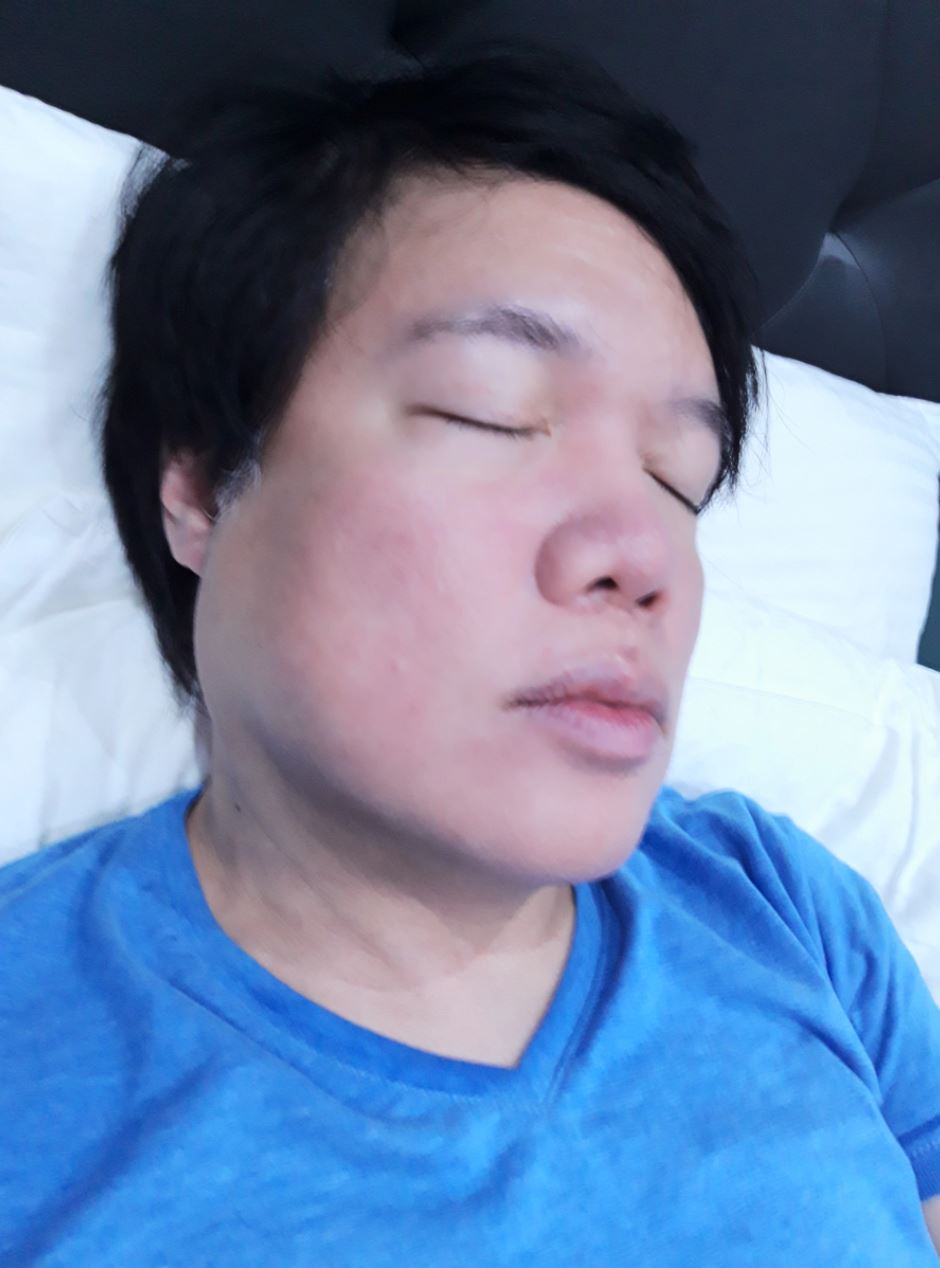
Fatigue started to kick in 12 hours after injection
Yes, I got vaccinated. COVID vaccine that is. It was a personal choice. I know there are still a lot of questions on vaccines that are still left unanswered, but I felt that I needed it. Not want, but need. As I’ve said, it was a choice and respecting the choices that other people make, such as not getting vaccinated, is paramount. As long as we keep our masks on and maintain our distance (even pre-COVID times, there are people who have no concept of personal space), we can all co-exist without prejudice and discrimination. We just need to constantly remind ourselves that we still have the right to decide what’s best for our bodies, yet we also have a responsibility to each other. As the basic law provides, one’s rights end where the rights of another begin (ok, I’m a frustrated lawyer lol).
Which vaccine did I have? I remember last year, around the time of the US election, while I was religiously watching the coverage (I wrote about it in my earlier article “Biden-Harris Presidency: What It Means To The World” https://columbusbee.blog/2020/11/08/biden-harris-presidency-what-it-means-to-the-world/) when in one of its news segments, CNN featured a doctor (or a scientist, can’t exactly remember now) who is part of the team that developed the Moderna vaccine. In the interview, she talked passionately about the work that they did and how much she believes in their product. She was so proud of what they have created that she even volunteered during the clinical trials. I thought that if this person made a conscious choice to get a jab of the vaccine while still on clinical trials and came out unscathed and praising the same, then it must be something good. Days later, I started researching about it, as well as the other types of vaccines (vaccines are based on different technologies, some cutting edge like Moderna and Pfizer, others old school like Johnson&Johnson and AstraZeneca).
So that’s how my love affair with Moderna started. It has always been my first choice, even if Pfizer would eventually beat her to the punch. During the course of my research, I found out that Moderna, along with Pfizer, uses the same mRNA (messenger RNA) technology. So in layman’s terms, what it does is to tell your body to create spike proteins that your natural antibodies would recognize. This spike protein mimics the viral antigen in COVID. So it essentially helps your immune system recognize the virus once you get infected so that the same can develop antibodies that can neutralize the spike protein (as to how, you’ll find out as you read along). It’s like fashion gurus knowing what to do when they see a fashion victim. Like a Meryl Streep to a Anne Hathaway in “The Devil Wore Prada” (alternatively, think of Prada as the spike protein, so conspicuous and recognizable, both original and knock off).
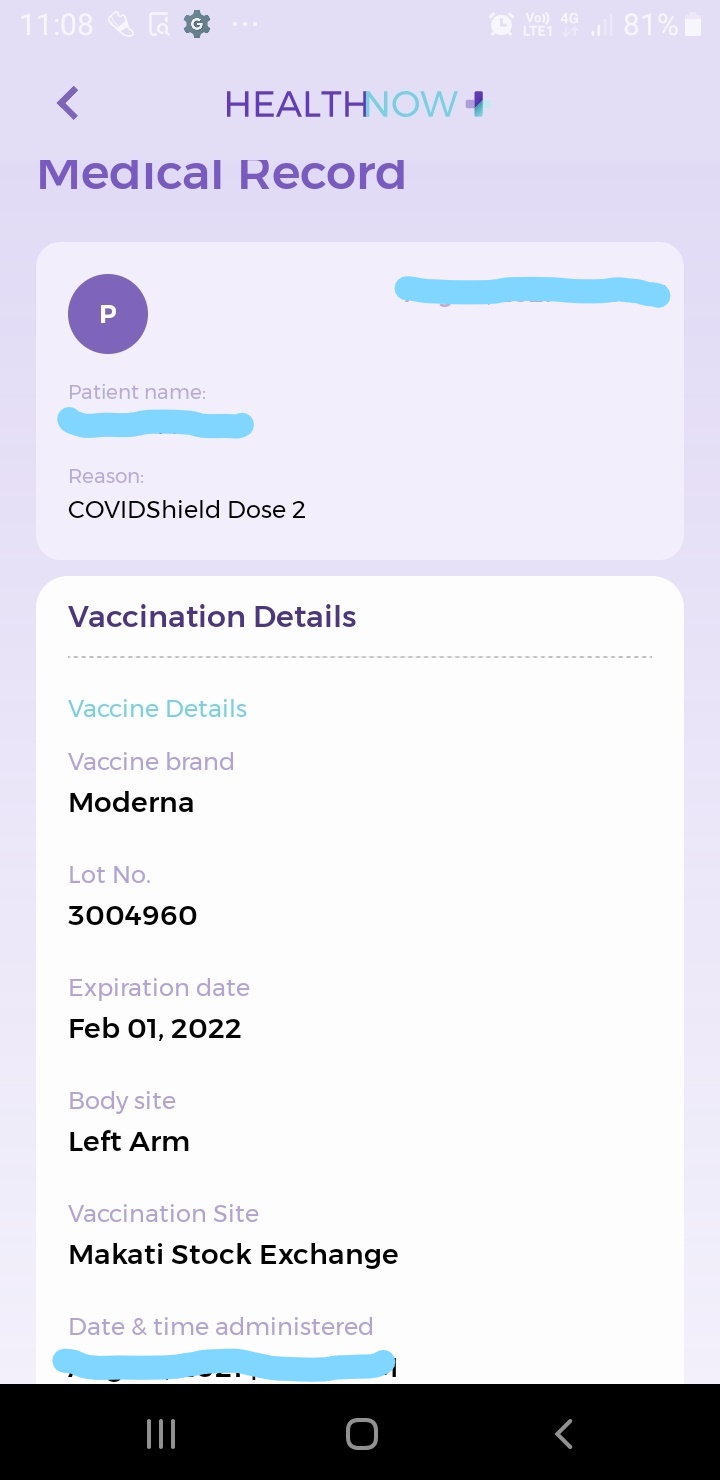
HealthNow app showing Moderna 2nd dose vaccination record. Hope to travel soon and see if this is acceptable digital proof of vaccination.
It took months though before I had the vaccine. Here in the Philippines, there is limited supply of vaccines, so there is a hierarchy in terms of priority groups. I fall under the 4th category, that’s why it took a while before I finally got it (thanks to the company I work for who gave me a slot when the first batch of Moderna vaccines arrived in the country). It was under the private sector vaccination program called COVIDShield and you register thru the HealthNow app. Then you get notified of the vaccination date and time (the date and time for your 2nd dose is also set) as well as location. So off I went to have my first jab on the said date. Other than quite disorganized (before going, you register thru the app where you will receive a QR code that can be scanned for your details when you get to the vaccination site, only to end up queuing and waiting because everyone has to go thru registration again), it was uneventful.
What was eventful though was what happened after. A few hours later, I felt numbness then pain on the injection site. Fatigue started to kick in about 12 hours after injection and you would feel feverish, tired, and sluggish for the next 12 hours. In my case, since the side effects manifested at night time, I was able to sleep it thru the night that when I woke up the next day, I realized that I have slept for more than 10 hours (I rarely have that much sleep nowadays). The pain on the injection site lasted for a few more days. Then before the first week since the jab ended, I had another bout with that feverish feeling. I thought it might be my immune system developing more antibodies.
When the time came for my 2nd dose (4 weeks or not less than 28 days between doses for Moderna), I kinda knew already what to expect, so off I went for round two. This time it was easy breezy, where I just presented the COVIDShield vaccination card that was issued during the 1st dose and they printed another card issued by the local government probably to signify that the private sector vaccination records are also captured in the government/public vaccination records. After which I was seated to be injected. There are a few things that you may opt to be particular about while in the midst of being injected during each dose. First is to check the vial for the brand name (I see Moderna label). It would be nice also to see the health practitioner shaking the vial so that the contents become cloudy and white. I also appreciate during my 1st dose that the health practitioner showed me that the syringe contains the correct dosage (0.5 ml) of the vaccine before injecting and that the syringe is empty after. These little details actually help ensure that you get not only the vaccine of choice but also the right amount of the same. There are a lot of documented errors during vaccination, such as the highly publicized local incident where the syringe wasn’t emptied by the health practitioner and those in the US, from vaccine dilution errors (there is no dilution needed for Moderna, unlike Pfizer where each vial still needs to be diluted making it susceptible to errors, where you may end up with either more of the vaccine or less of it) to look-alike product mix-up.

An article I stumbled upon about vaccination errors. With health at risk and limited vaccine supply, we can’t afford not to get it right the first time.
Then the side effects. I actually anticipated the potential side effects that I took some days off from work (I still have a lot of leaves so I might as well use them). I knew it’s gonna be worse than the first one, and true to form, Moderna delivered. Like groundhog day (or deja vu if you like that one better), fatigue sets in after a few hours, then the pain in the injection site. About 12 hours after injection, instead of feeling feverish, I was burning with fever (I can’t even remember the last time I had high fever) and chills that I have to wear a bathrobe over my clothes even after I turned off the aircon (and this is in a tropical country where it is very humid during this time of the year) just to keep me warm. It was like that the whole night and I was only able to sleep in the wee hours of the morning when the fever started to subside. I was still feeling feverish, tired, and sluggish on the second day, not to mention the excruciating pain on the injection area. My mistake was that I took the 2nd jab on my right arm (not left as incorrectly keyed in the app), which makes it painful and difficult to move if you’re right-handed. I only started to feel better on the third day.
What does this experience mean to me? Simple. It means that the 1st dose was effective. From my readings, the 1st dose is crucial given that it’s what they called the “primary” shot (that’s why it is uber important that you got the 1st dose right). It is the dose that gets introduced in your system for the first time. The reason why your body didn’t react as much is because it takes time for the body to develop antibodies that can neutralize the new viral antigen (spike protein). That’s also probably the reason why Moderna is very particular about the intervals between doses (not less than 28 days but not more than 42 days). You need to give your immune system time for antibodies to peak as well as not wait too long for the antibodies to decline. Moderna vaccine can already provide you protection 14 days after the 1st dose, but you would still need the 2nd dose which is what they called the “booster.” This 2nd dose is what completes the vaccination. The reason why your body did react as much is because you already developed antibodies from the 1st dose and your immune system is now active that causes you to experience all these side effects (and this is why the 1st dose was effective), boosting your immunity against the viral antigen. Think of it like Meryl Streep was already effective in repelling Anne Hathaway, but you still need an Emily Blunt to make her feel more like a fashion outcast.
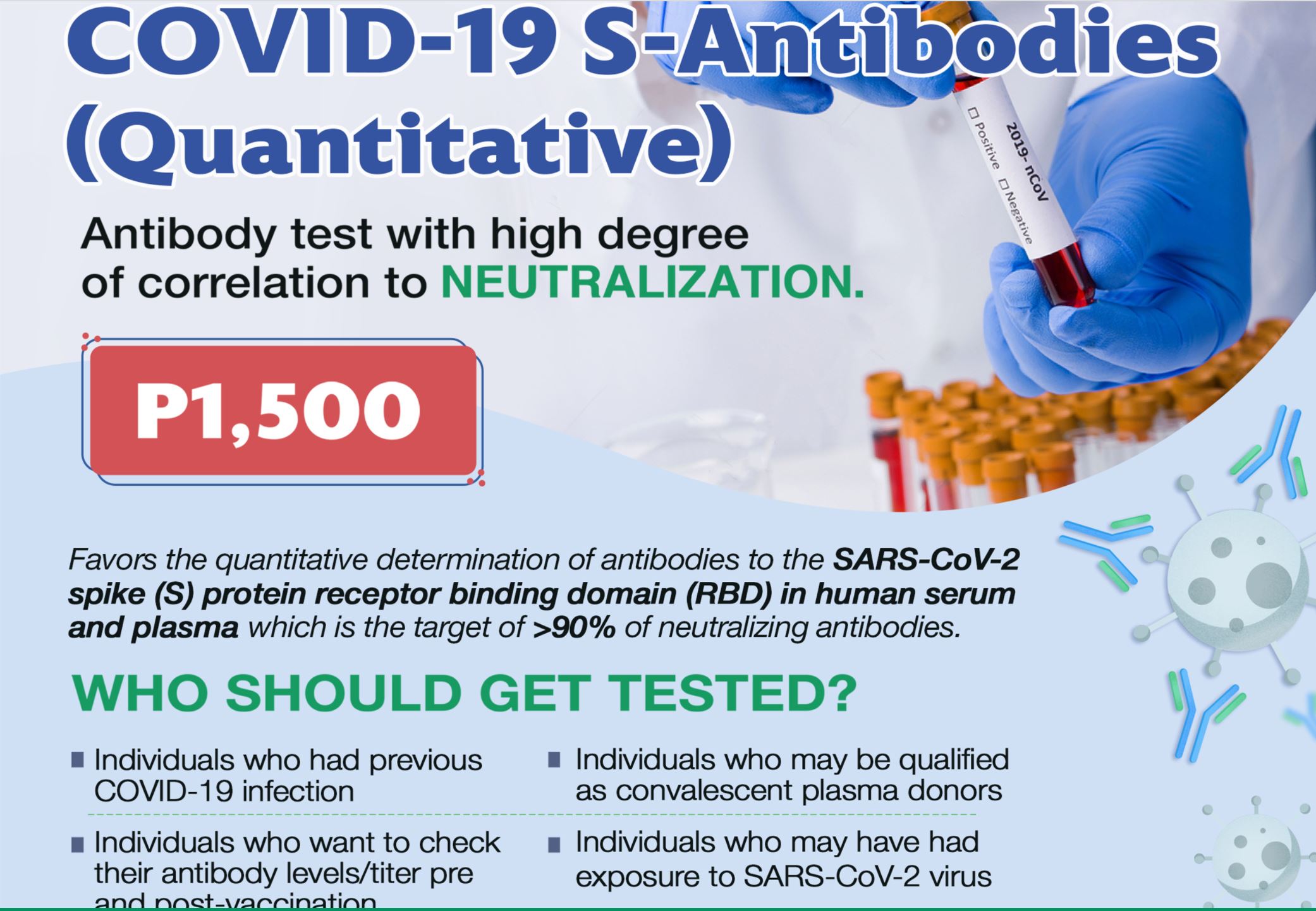
I came across this ad while looking for a post-vaccination test that can determine whether I’m protected or not. This is the test that I took 3 weeks after my 2nd dose.
To prove my point, I took this COVID S-Antibodies (spike protein antibodies) quantitative test when I came across it. There are two types of tests out there, one is quantitative which depending on the technique or method, would detect the amount of antibodies in your system while the other is qualitative, which just detects whether you are positive (reactive) for antibodies or not (non-reactive) and can’t be used to determine the amount of antibodies. Why is this distinction important? My reason for taking the test (aside from proving a point) is to know not only if I have the antibodies (positive or reactive) but whether I have enough protection after being fully vaccinated. In order for me to know that, I need to understand first what is the protection threshold level which I can use as benchmark against the amount of antibodies that I have.
There is this Youtube video of Dr. Been where he talked about antibody levels that are necessary for COVID protection. It is very informative and that became the source of benchmark level that I can use to compare against the quantitative test results. Going into the test, I know that the technique or method that will be used is one that measures antibodies against the receptor binding domain (RBD) of the viral antigen (I found out after getting my test results that the method used was ECLIA or Electrochemilluminescence Immunoassay by Roche Diagnostics). In layman’s terms, in order for the virus to infect a cell, it needs to bind itself first to the cell, like a parasite (that’s why I always see viruses as parasites). That’s why viruses cannot survive long once they are outside of our bodies (such as when we sneeze or cough) since their host cells will die eventually. Our antibodies do the same by binding to the viral antigen. That binding strength increases over time, or what they call affinity maturation. Which means that high-affinity antibodies will have strong neutralizing capacity against the viral antigen particularly if directed on the RBD to prevent the virus from binding to the healthy cells. This particular test quantifies the amount of such antibodies.
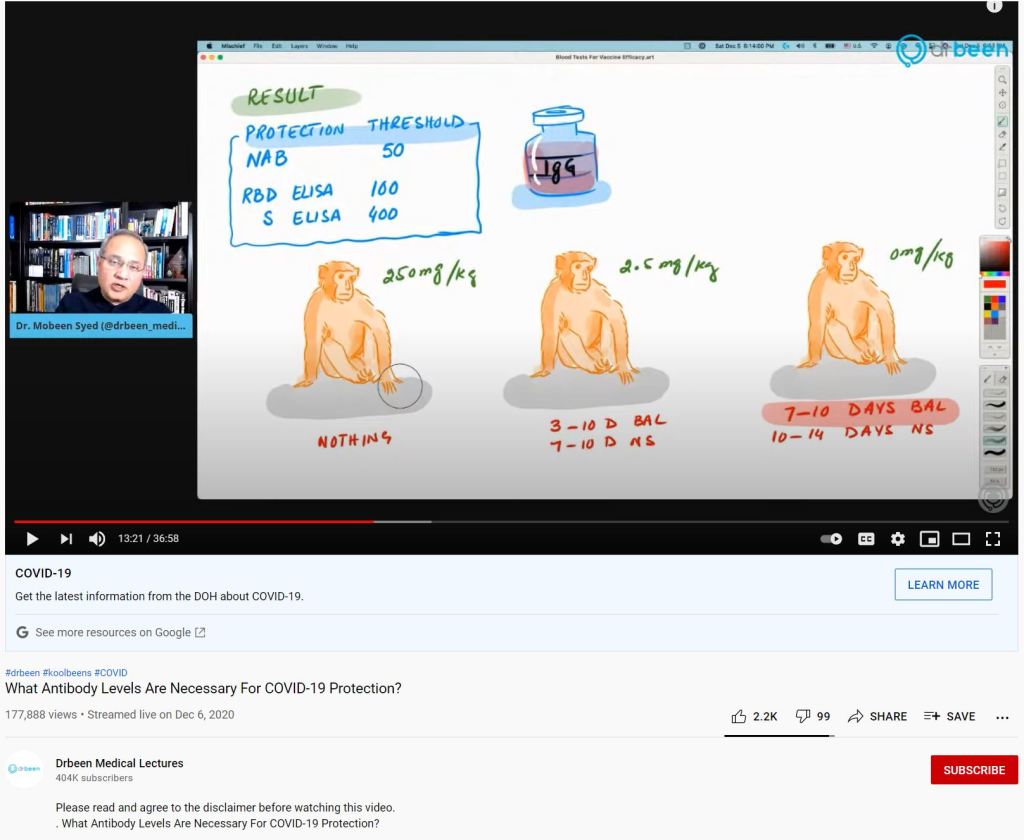
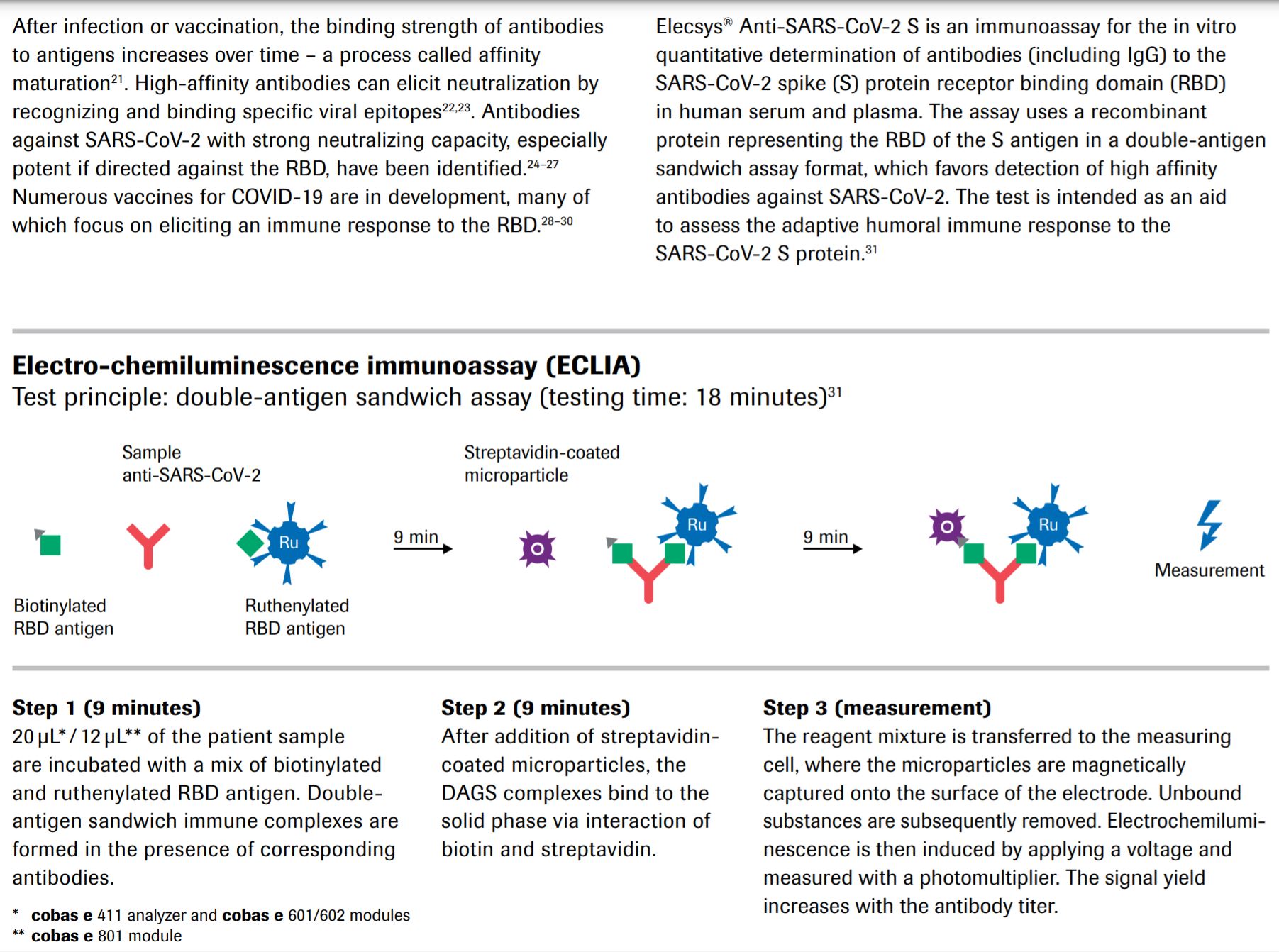
(Top) Dr. Been Youtube video where he talked about protection threshold levels; (below) testing technique/method used (ECLIA) in the quantitative test that I took
Per Dr Been, the protective threshold level for RBD is 100 U/mL. However, such level is based on another quantitative technique called ELISA or Enzyme-linked Immunosorbent Assay. Though there’s a study which results show that there is no significant quantitative correlation between the two testing techniques, I would like to think that since the two are the most commonly used techniques to detect antibodies, the RBD ELISA protection threshold level of 100 U/mL may still be applicable to ECLIA given that at the end of the day, both tests measure the amount of specific antibodies in the blood, which in this case are the high-affinity antibodies to the SARS-CoV-2 spike (S) protein RBD..
So how did my immune system fare? Well, not bad. As the title suggests, my COVID antibodies are off the roof! My high-affinity antibodies against the spike protein RBD are more than 2500 U/mL (compared to the RBD protection threshold of 100 U/mL). There’s a comment in my test results that says “Value obtained is above machine detection limit of 2500 U/mL.” I guess my high-affinity antibodies broke the machine. Funny coz aside from the comment, there’s another note that says “Specimen rechecked, results verified.” Maybe the medical technologist, quality control, and pathologist who all signed the results were dumbfounded. Even I was dumbfounded when I read the results and the comments/notes. Coz not only did it prove my point earlier about the effectiveness of the 1st dose and how the 2nd dose boosted the immune response, but I was also not prepared to acknowledge that my immune system is a superstar (the Meryl Streep of immune systems lol). I know that each person’s immunity is different and each person’s immune response to the vaccine varies, but I guess I could proudly say now that I made the right choice. No wonder why that doctor/scientist that helped develop the vaccine was heaping praises on the effectiveness of Moderna. It simply works.
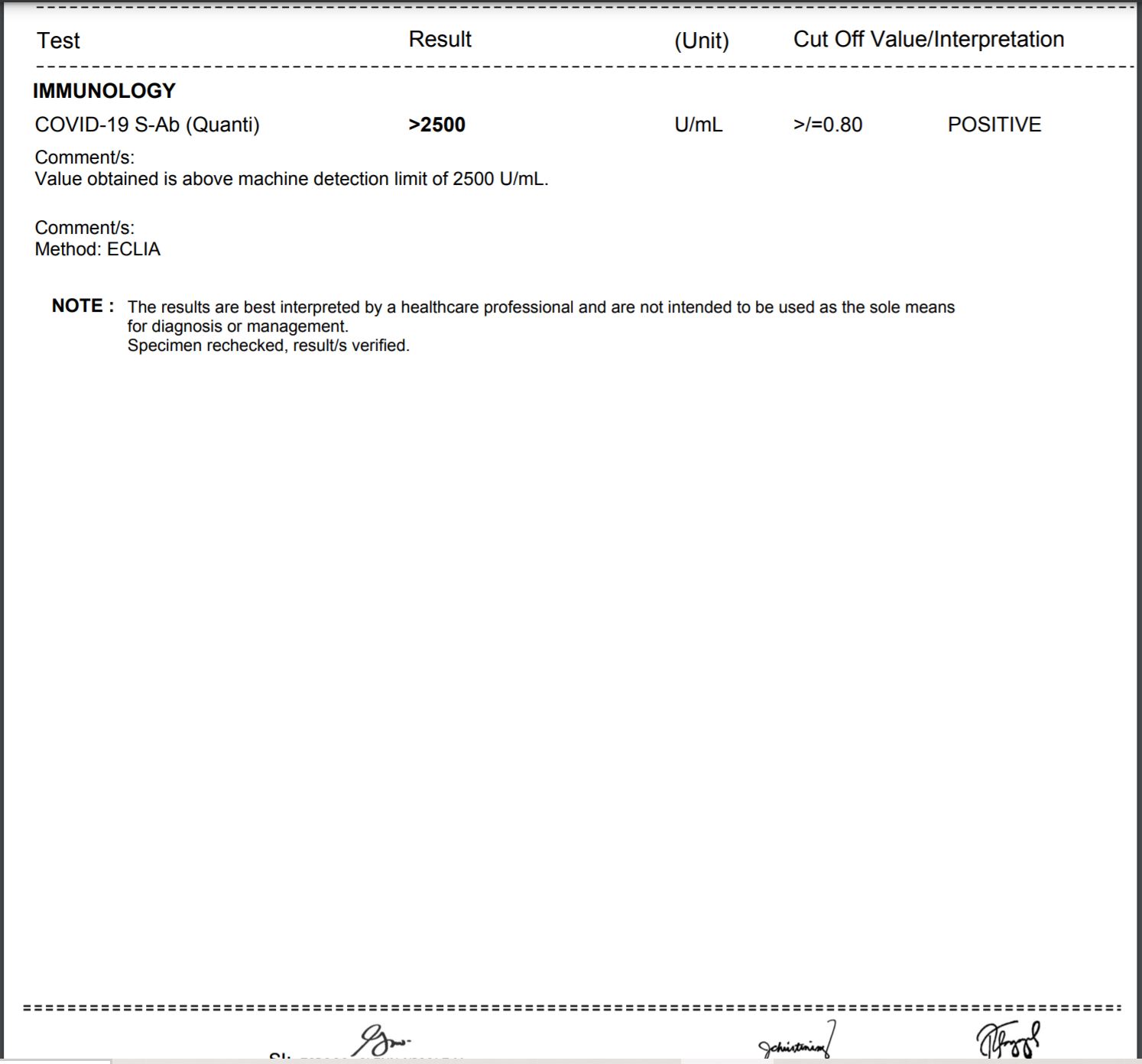
My test results showed that my high-affinity antibody level broke the machine (lol)
Of course, continue to work on your immunity. Keep your immune system in tip top shape. I wrote about how I keep my immunity in check (“My Gut Feel Against The Virus” https://columbusbee.blog/2020/03/28/my-gut-feel-against-the-virus/) but take it easy on the probiotics particularly if you suspect you have SIBO (small intestine bacteria overgrowth). I learned it the hard way (which is a topic for another article) but as mentioned in that article, I continue to listen to my body. I suggest you do too.
Make that choice today. Regardless what that is, be safe always.



















 columbusbee