My Gut Feel Against The Virus

Health and Positivity Buzz

(Disclaimer: The blogger is not a doctor, microbiologist, virologist, or homeopathic specialist. He is none of such kind. What you will read in this article comes from his own personal experience and common sense.)
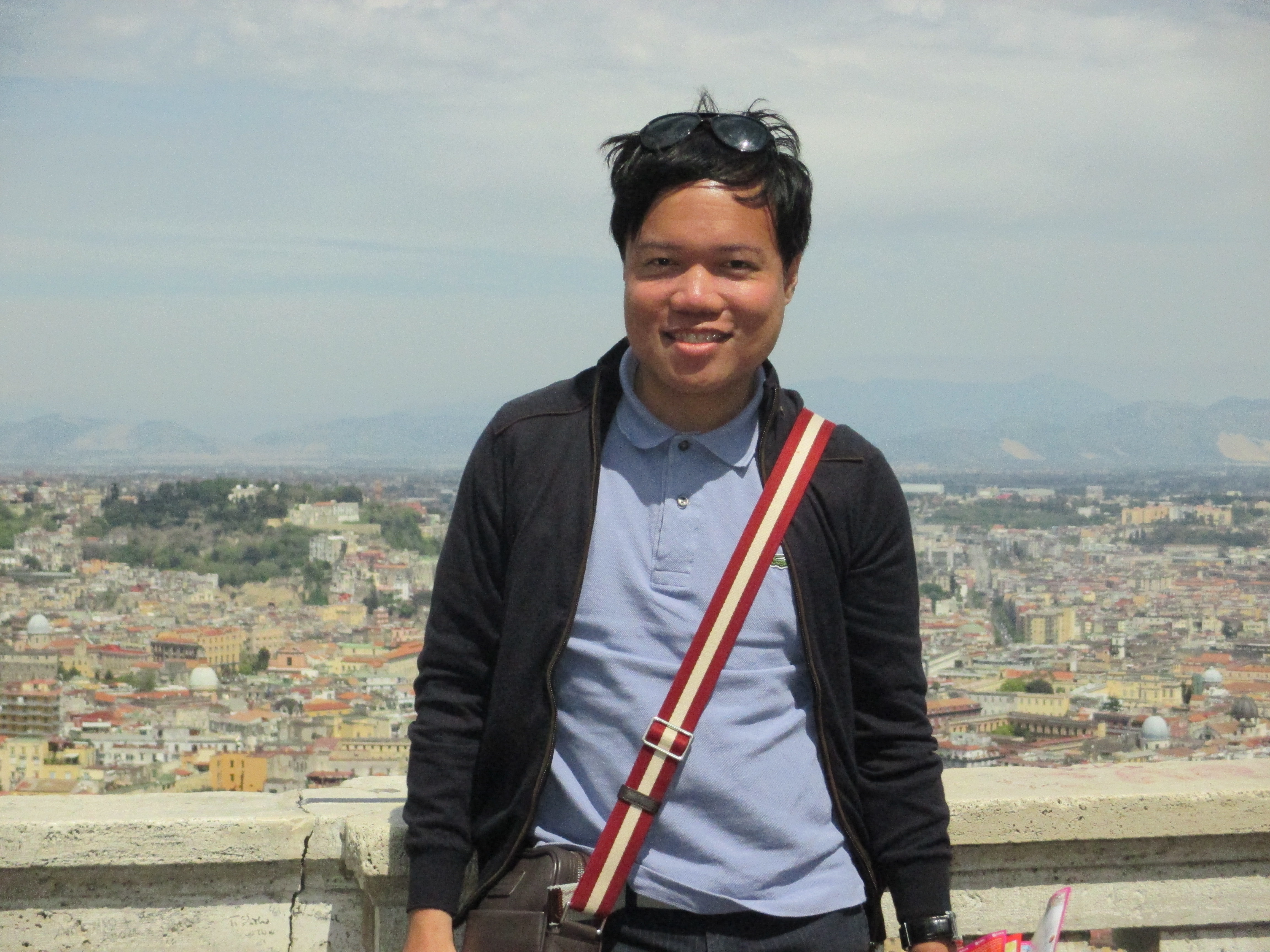
Italy, the current epicenter of COVID-19 pandemic in Europe. My heart goes out to all of you.

During these past few days that I have been on self-quarantine (only goes out to buy food and groceries but always with a mask and alcohol spray on hand not only to protect myself but also to protect others), I’m besieged with both heartwarming and disappointing news. I was already set to write an article with working title “The Politics of Toilet Paper” which would be about how a health crisis (or any other crises for that matter) brings out the best and the worst in us. On second thought though, what good will that article bring during this time when COVID-19 cases are rising and lives taken? So such article may not be appropriate at this time that I have to rethink that one. In the meantime I have been wondering how I can help in my own little way through this blog.

What drove me into writing this article instead was the news of the death of the Dad of someone I know. He died before knowing that he tested positive of COVID-19. Because of quarantine protocols, his family wasn’t able to say goodbye as his remains have to be cremated right away. I know the feeling. I went thru a similar situation where I wasn’t able to say goodbye when a loved one passed on. Believe me, I went through all the phases: grief, sorrow, anger, denial, depression, and eventually acceptance. It is only through the latter that one can truly move on. It’s not easy, but at the end of the day you still have a life to live and you have to stay strong for those you still hold dear.

So what are my thoughts about this virus? It helped that I have a doctor for a sister who initially told me that like SARS earlier, the virus that causes COVID-19 also belongs to the same family of coronavirus. The primary mode of transmission is thru droplets, which demystify the earlier notion that it is airborne (in a way that tuberculosis is spread). So it is only transmitted when someone coughs or sneezes (this is where social distancing makes real sense) and not thru breathing the same air that an infected person also breathes. It is spread further when an infected person, thru his hands, get in contact with the droplets and body fluid such as when he covers his face when he coughs or sneezes and then touches anything from doors, elevator buttons, grocery items, etc. Anyone who touches the same and get his hands in contact with soft body tissues (membranes) like the eyes, nose, and mouth will potentially get infected, given that the virus can live in surfaces for sometime (no one really knows how long it can survive outside of its host, but apparently it can live longer on smooth surfaces compared to uneven ones like in clothing materials). This is where frequent hand washing or disinfecting (thru spraying alcohol) is essential, as well as cleaning all surfaces that are being touched or used (such as door handles, elevator buttons, eating utensils, even grocery items like those chips in foils where you touch the potentially infected packaging before eating the contents with your hands). On the other hand, the mask is a protective gear that you may need when in enclosed spaces such as elevators, cars, or when social distancing may subconsciously be forgotten (like queuing in a supermarket check out counter or drugstore). So my thoughts are that this is no different than how one catches a flu or a cold virus and how one fights and recovers from the same may also work for this virus.

Though COVID-19 virus may be more deadly than its cousins (though casualties from flu and cold virus infections worldwide are significant particularly during winter), there has been no cure but only prevention thru getting vaccinated. As of this writing, there is still no vaccine in sight for COVID-19 (unlike its cousins where you can now get vaccinated for certain flu virus strains) and having that vaccine available may take a while. So how do you fight a virus that is nothing more than a flu or cold virus strain but can wreck havoc on our internal organs? Methinks that the answer lies in the gut.

As some would say, the best offense is a good defense. Our bodies respond to any foreign matter or substances that breach our first line of defense (skin, mucus membrane, etc.). This is triggered by our immune system. Our immunity will fight off anything from microbes (bacteria and virus) to body organs (such as organ transplant). It is the same immunity that will help in our recovery and may even hold back future invasion (ie developing immunity to certain bacteria strains which infection you have recovered from previously). That’s why when we were kids, every time we get sick, we actually develop resistance and immunity. Unless one is immuno compromised (such as having weak immunity by taking immuno suppressant drugs for transplant recipients or suffering from a hyper active immune system resulting to autoimmune diseases), it is imperative that we need to keep a healthy immune system not only to hold the fort but to keep our defenses in check.

How do I keep my immunity in check? How do I support my immune system to fight viral infections? There are five (5) ways and all these are from my own personal experience. But before I share the same, there is one very important thing to note: you need to first understand your body. You need to know how to listen to your body. I know the stages that my body would go thru when I get sick. It would start with a sore throat, runny nose, sneezing, feeling feverish, darkening and thickening of phlegm or sputum (the last two would already confirm that I have an infection), coughing, asthma, lightening of phlegm or sputum, coughing to expel the sputum (the last two means that I’m on my way to recovery). I have observed before that my body does not respond well to synthetic medicines (pharmaceuticals). That’s why I hate getting sick. Coz aside from what my body goes thru when I get sick, the medicines I’m taking (at least before I ventured into alternative medicines) have different effects on me, depending on what medicine I’m taking. It may come in the form of drowsiness, shaking of hands, lethargy, and overall weakness. So it exacerbates what one would already consider a miserable situation. So understanding and listening to your body would tell you what works for you. This leads you to explore and discover the best health alternatives and options.

So after years of understanding and listening to my body, the first way of keeping my immunity in check is keeping my gut healthy. A strong and healthy immunity starts with a well balanced gut. It can be achieved by having a healthy biome in the gut. This is where probiotics come into play. For those who are not familiar with probiotics, these are good bacteria that reside in the gut and intestines. A healthy person would normally have a healthy balance of good and bad bacteria. When bad bacteria overruns the good ones, that’s when our immunity is compromised and weakens our defenses. Taking antibiotics when we get sick will kill the bad bacteria but will also kill the good ones. So I never had antibiotics in the last 20 years (except when I went thru my spinal surgery last year) because I have become a probiotic advocate. Right now, I’m taking different probiotic supplements and have tried different strains, such as those produced in Japan, New Zealand, and US. Probiotcs are also found in natural sources, such as yogurt, kimchi, and balsamic vinegar. If you decide to start on a probiotic regimen, choose the one with multi strains, coz there are nuances in the roles that these good bacteria play in our bodies.

The second way is preempting the progression of the infection. At the first sign of symptoms (in my case sore throat), I would already take my herbal and organic supplements. An effective way of suppressing the initial infection is by taking manuka honey. I discovered manuka honey in one of my trips to New Zealand and has proven to be very potent in fighting and helping recover from initial stage of the infection. By preempting its progression, you are effectively preventing a full blown infection. In my case, this means my body won’t have to go thru subsequent stages after the initial sore throat. This means I have averted a miserable situation.

New Zealand, where I have discovered some of the best herbal and organic supplements

The third way is supporting your immune system fight against the virus thru the use of enzymes and certain essential amino acids. I know that unlike amino acids, little is known about beneficial enzymes (or some would not even know what enzymes are), but based on my readings, I have discovered that there are enzymes that can actually help kill viruses and other microbes. Our bodies produce enzymes (such as digestive enzymes) but there are enzymes that are not found in our bodies that can actually assist in destroying viruses. Viruses (and other microbes), just like any other organism’s survival instinct, would produce what they call biofilm or ‘envelope’ to protect themselves. This biofilm is impenetrable for most pharmaceuticals and can actually mask the virus that our immune system may not be able to detect its presence. You can liken it to Harry Potter’s cloak of invisibility. So while it is already wrecking havoc on our internal organs, particularly our respiratory system, our immune system may have a hard time getting into the virus because of this biofilm. Aside from the biofilm, the virus also has a protein shell (capsid) that protects the nucleus (nucleic acid). To kill the virus is to get to its nucleus. So with this dual protection (biofilm and shell), our immune soldiers (T-cells) will have to fight harder. Compounding this is the ability of the virus to replicate itself. Think of it like the fight scene between Doctor Strange and Thanos in Avengers: Infinity War where in this case, the virus is the former (when he replicated himself) while the latter is your T-cells.

There are at least two enzymes that I’m taking and at least one essential amino acid when I feel that I’m about to get sick. These are serrapeptase and nattokinase for the enzymes and lysine for essential amino acid. Serrapeptase is an enzyme produced by bacteria of silkworm which the same uses to dissolve the cocoon when it becomes a moth. Nattokinase on the other hand, is derived from the Japanese fermented soybean called natto and produced by a particular type of bacteria during the fermentation process. Apparently, both enzymes can penetrate through the biofilm in the same way that it can dissolve the cocoon (in the case of serrapeptase). Once the biofilm is dissolved, the cloak of invisibility is removed. To breach the protein shell, some of the supplements I’m taking contain hydrolytic enzymes such as protease and cellulase. These enzymes break down proteins into amino acids thru hydrolysis. Since both biofilm and shell are made of proteins, this combination of enzymes that are not produced by our bodies will work together to break down the proteins, hence destroying the virus shield and exposing the nucleus This is when the other enzymes produced by our bodies can digest the nucleic acid, hence “killing” the virus. However, some of these enzyme supplements have side effects, such as thinning of blood. So if you are suffering from low blood pressure or taking any blood thinning drugs, you have to avoid taking these supplements. Lysine, on the other hand, is an essential amino acid that can apparently suppress viral replication. It’s called “essential” coz it’s one of amino acids that are not produced or found in the body.

The fourth way is to have inflammation in control. I came across this newspaper article yesterday (https://technology.inquirer.net/97774/covid-19-lung-patterns-show-few-clues-for-treating-pneumonia) which only further validates what I’ve known all along: the root cause of all illnesses is inflammation (at least from my experience). The infection (bacterial or viral) is the trigger but what will cause complications is the uncontrolled inflammation. Pneumonia, one of the known complications from COVID-19, occurs when the lung’s air sacs (those that are filled with oxygen from the air we breathe and permeates thru the blood vessels for it to run throughout our extremities) are inflamed. Inflammation occupies space, so the more inflamed the sacs are, the less oxygen is absorbed by the body. I know this coz my Mom had several bouts of pneumonia two years ago and her oxygen levels have to be constantly checked even until today (she also has a standby oxygen tank at home in case her oxygen level drops). Older people have lower lung capacity not just because of old age but also due to other underlying health conditions that they are suffering from. That’s why their oxygen levels need to be checked constantly particularly when they are exhibiting symptoms. As we all know, oxygen is essential for all our body organs to function (including our brains).

To keep inflammation from going haywire, I used to take non-steroidal anti-inflammatory drugs (NSAIDs) such as mefenamic acid. I have opted for non-steroids coz as a kid, I used to take corticosteroids for my asthma (another illness from inflammation) and I didn’t like the side effects on my body. However, NSAIDs also have side effects, like gastritis, so I have to look for herbal or organic alternatives that have anti-inflammatory properties. This is where I’ve discovered curcumin, oregano oil, and magnesium. Curcumin is the essential nutrient in turmeric known for its anti-inflammatory properties. Oregano oil is not only known as anti-inflammatory but also anti microbes. Magnesium is a mineral that is known to control inflammation. I don’t only take these supplements when I’m sick. I take these daily as preventive medicine. But I take it in moderation. As they say, a pound of cure is worth an ounce of prevention.

Lastly, I also ensure that my immunity doesn’t go out of control particularly when I’m sick. As per the newspaper article (which I’ve known already for a while), in certain conditions, our immune system can go crazy in its attempt to fight infection, to the point that it is also attacking the infected organs (similar behaviour as autoimmune diseases when the immune system goes out of control and attacks healthy cells). For this, I’m taking colostrum. Colostrum is the first form of milk derived from cows or any other mammals. It apparently has immuno properties that can keep a balance immunity therefore reducing the probability of the same getting out of control.

My journey to alternative medicines did not occur overnight. Nor has my doctors’ blessings. It took a lot of readings (and to some degree a leap of faith) and experimenting different herbal and organic supplements and discovering the ones that actually work for me. I can’t exactly say that it is effective (I don’t have any scientific or medical proof of any correlation between my health status and these herbal and organic supplements). Some would call it self-medication, but I would like to see it as holistic wellness. What I know is that I don’t have to take pharmaceuticals to get thru every flu or colds. What I know is that I passed my pre-surgery battery of tests last year (which I wrote about in my earlier article on MLNRD where I even mentioned that I have a heart rate of an athlete) in spite of my unhealthy eating habits and no exercise or sports. What I know is that any infectious bacteria that my body will catch will not develop resistance against antibiotics coz I’m not taking any. I must be doing something good.

So before you embark on your own discovery, you need to understand and listen to your body. Take time to do some readings (which you have plenty during this period of quarantine) and find what alternatives can be potentially applied for your specific condition. Coz it doesn’t follow that just because it works for me means that it would also work for you. You have to take into consideration your health condition before embracing alternative medicines.

To quote University of the Philippines Chancellor Fidel Nemenzo “the most effective response to public health emergencies is our ability as a community to look out for each other.” This is my way of looking out for the rest of the world. You can do the same by sharing your own experiences that may help pave the way to recovery. Now that you know what I have been taking these past few years, you can do your share by only buying what you need and not hoard health supplements. Doing otherwise means that you are depriving those who may need it the most, those who are in a life-and-death situation. Let’s shed the greediness during these challenging times. You don’t want to be the subject of my unwritten article “The Politics of Toilet Paper,” do you?

Be safe everyone and look after each other. Say a little prayer as well.

MLNRD at St. Luke’s Medical Center-Global City: The Good, The Bad, and The Ugly

Health Buzz

St. Luke’s Medical Center – Global City (Photo courtesy of Wikipedia)

Before I could write the second part of my article The Contrasting Colors of Tokyo & Kyoto, I was diagnosed with sciatica (pain affecting the lower back, right buttock, and down to the back of the right leg due to the compression of the spinal nerve root). If you have read my article #ihaveflaws, you would deduce that this is a deterioration of my disability (slip/herniated and dessicated disk). Apparently, over the years, the nerve keeps adjusting until such time that it can no longer work around the protruded disk, hence the excruciating pain, particularly when I’m inactive (lying in bed at night and upon waking up in the morning). So my orthopedic surgeon, who was the same surgeon at St. Luke’s Medical Center-Global City (SLMC) who first diagnosed me to have slip disk, asked me to undergo another MRI and X-ray (the last time I had the same was 8 years ago). As expected, the MRI results showed that the slip disk has worsened, where disk matter has already flowed out (the medical term they used is caudal migration) instead of just protrusion and constricting the nerve canal. Imagine a peanut butter and jelly bottle (yum) where the top layer has spilled over after accidentally shaking the bottle. The disk matter looks like a dripping peanut butter and jelly from the jar, occupying the space where the nerve root passes. My surgeon broached again the option of undergoing spinal surgery (which was one of the options he raised 8 years ago) and after further research on the other options (physical therapy and nerve injection), I’ve come to a conclusion to give it a go.

The reason why it took 8 years for me to consider the surgical option is because I am fully aware of the risks. Just like any surgery, these are not just plain, ordinary risks. Spinal surgery, if not done right for whatever reason, may potentially result to paralysis (an invasive procedure close to the spinal cord and would actually be in contact with the nerve root), not to mention infection and clotting that can move to the lungs and cause serious complications. Even if I consider the non-invasive options, I would probably still end up undergoing surgery eventually since the other options will not be able to remove the matter that is compressing the nerve. So I thought why not fix it now while the nerve is not totally impaired yet (it’s only been 5 weeks since I started feeling the incessant pain, dragging myself to work just to keep myself active to minimize the pain, notwithstanding the difficulty and discomfort I have to go thru when driving) rather than wait another 8 years where the risk of nerve damage is high and would result to long term rehabilitation post surgery and worst, permanent nerve impairment. So I’ve discussed with my surgeon the different types of surgery and have decided to do the Micro Lumbar Nerve Root Decompression (MLNRD). In layman’s terms, the surgeon will do an incision about an inch long (micro) in that portion of the lower back (lumbar) where the degenerated disc is located, drill into the bone to reach the nerve root, carefully scoot the nerve root over to unveil the protruded disk, shave off that dripping matter and also a portion of the bone at the other side to decompress (free up) the nerve, suction the disc and bone fragments, gently return the nerve to its place and then stitch up the muscle and skin. Since different body parts/tissues are impacted, healing and recovery will take weeks (at least 3 weeks for the muscle to heal, 3-6 months for the bone to form and fill the gaps, and healing/recovery period varies for the nerves depending on the extent of the damage).

After confirming and scheduling the surgery at SLMC (you have to schedule it in advance since the operating room may not be always available), my surgeon then asked me to go thru a battery of tests to see how fit I was for surgery. So I had complete blood work, ECG, 2D Echo, urinalysis (including creatinine), and chest X-ray. Some of these tests are scheduled as well (where the next available date can be in weeks), but if you tell the labs that you are due for surgery, they will prioritize you and squeeze you in. So I passed all tests but I also learned that I have a congenital heart defect (if you have read my article #ihaveflaws, then I could add this to the list in the context of travel). All the tests show though that my heart is in good shape in spite of (I even have a heart rate similar to that of athletes which I could probably attribute to the herbal/organic supplements that I’m taking, which is another story) so my newfound heart condition was not a showstopper. So after the risk assessment of my overall state of health, the cardiologist issued a “low risk” (from potential complications) rating for the surgery that I was scheduled to take.

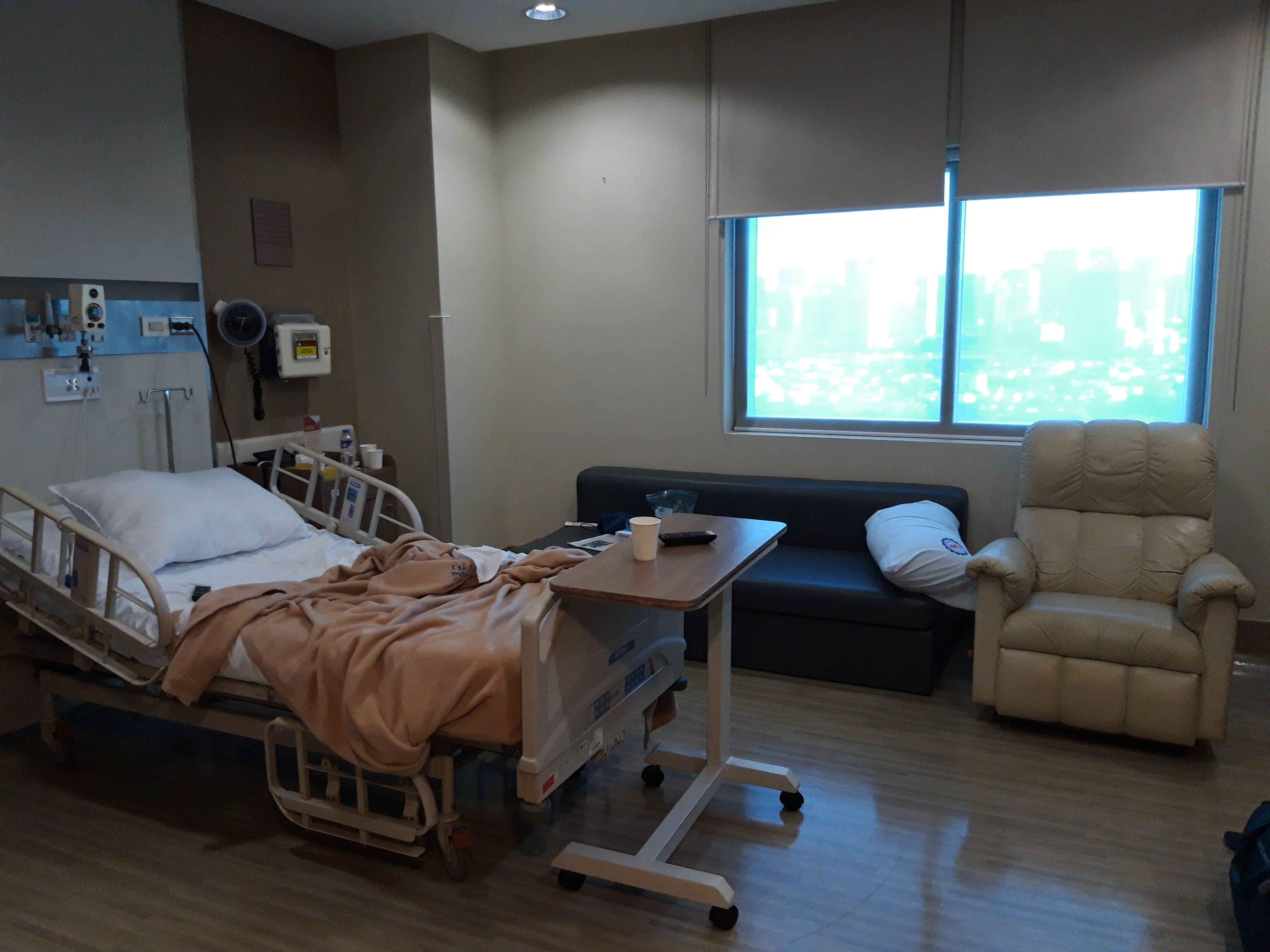
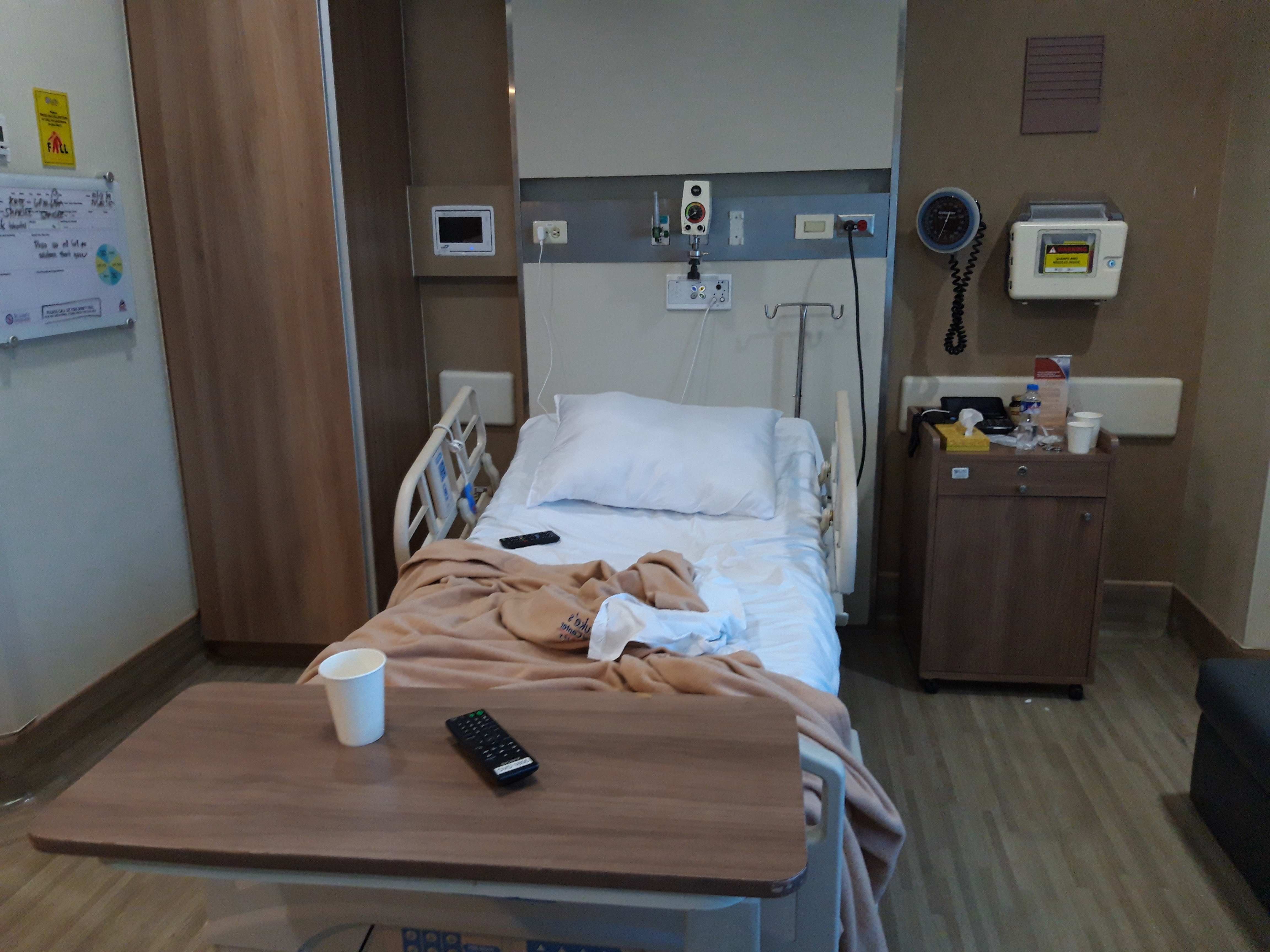
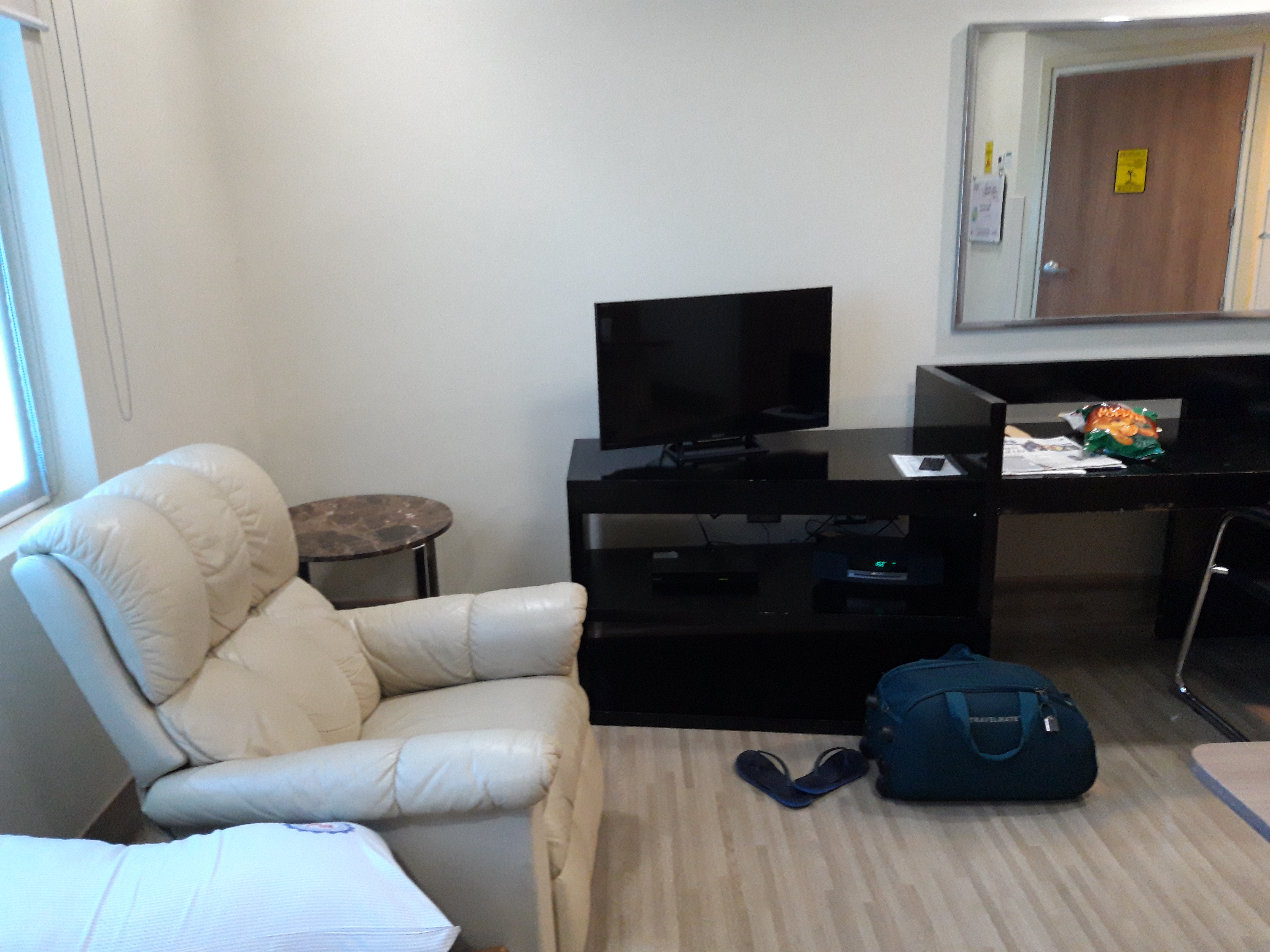
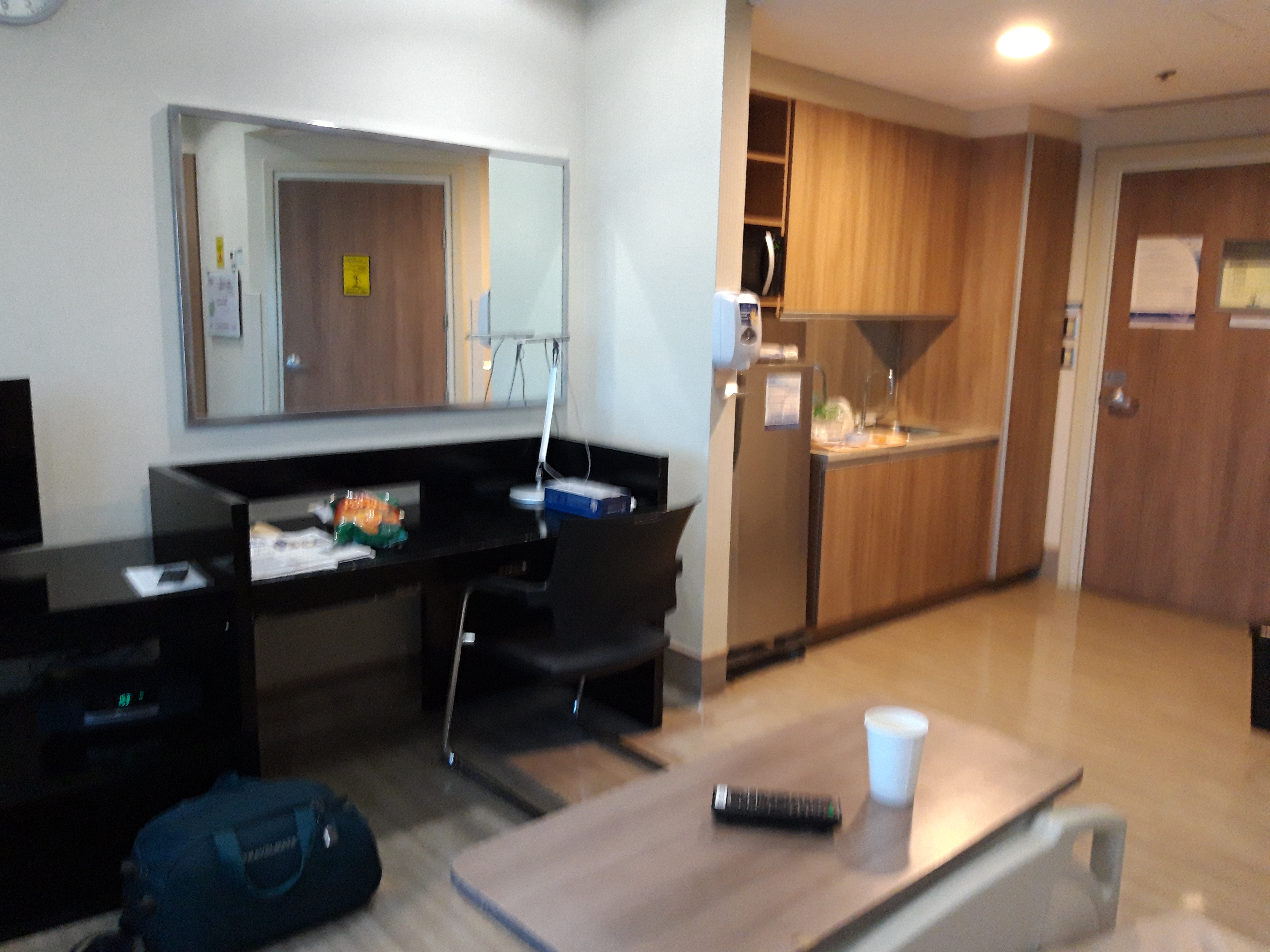
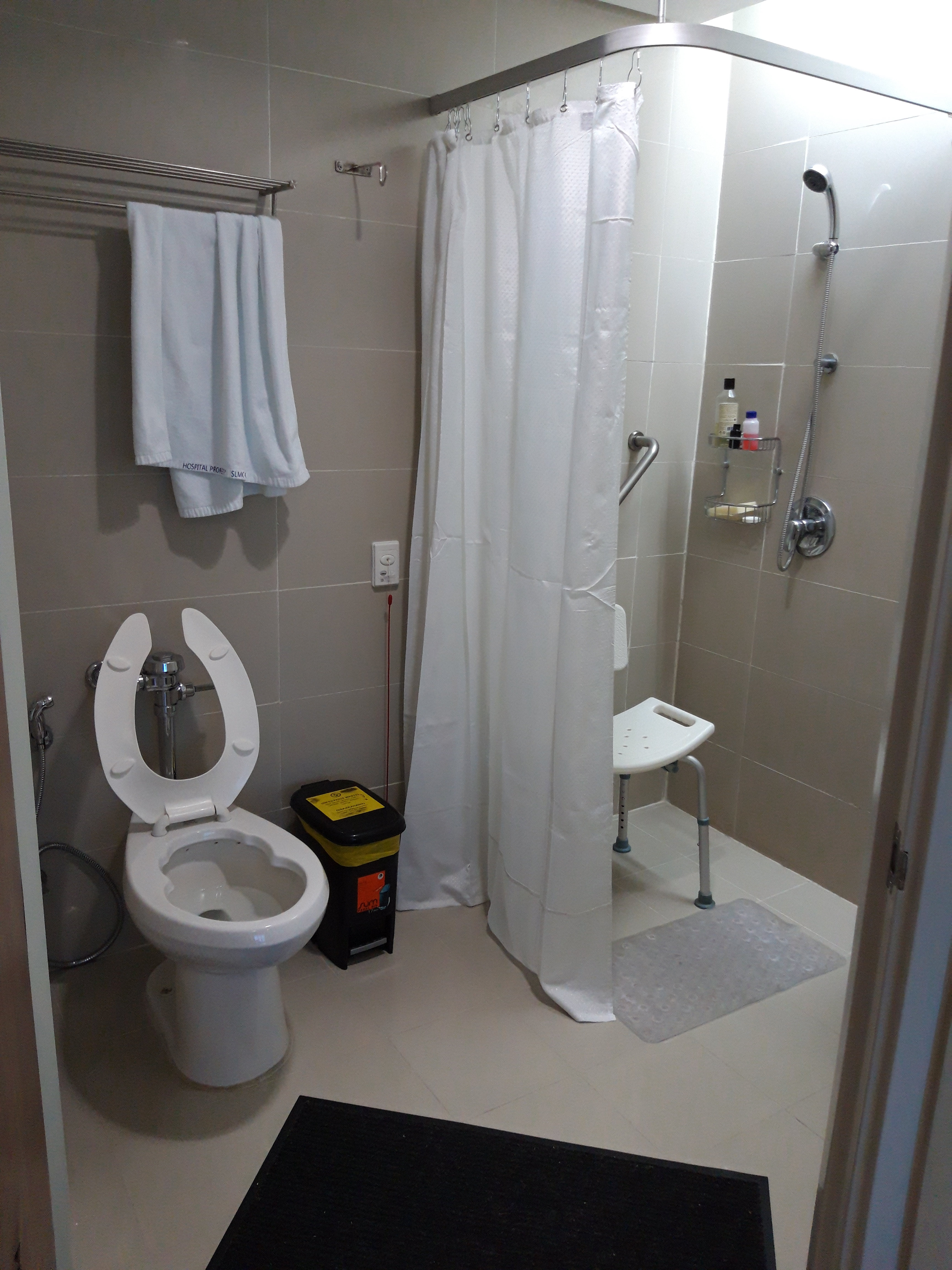
Executive Private Room (St. Luke’s Medical Center-Global City)

I read somewhere that the cost of this particular type of surgery would be about half a million pesos (give or take) where 200 grand is for the hospital bills and the rest for doctor fees. Apparently, this does not include the outpatient costs (ie the battery of tests plus the MRI and X-ray pre-surgery, where those alone cost about 30 grand, and post surgery tests, medicines, physical therapy, and consultations) and if there are complications post surgery, then it could be higher. That’s a whole lot of money involved (I could already buy a new car with that) so good thing I have not one but two medical (HMO) insurance plans, one from the company I work with (Intellicare where the annual limit for a single illness is only up to 250 grand) and the other a personal insurance I took a couple of years back for greater coverage (which has higher limits but also very expensive premiums and this is where a large part of my annual bonus goes to, which I would consider as investment for my health). Since the latter has higher limits (especially the room limit where the former cannot even get me a semi-private accommodation, so if you want to have a private room and you only have Intellicare, then you should be ready to shell out some of your own funds). So we decided to make use of the latter for in-patient expenses (and any outpatient extensions of it) and use the former for other outpatient expenses.

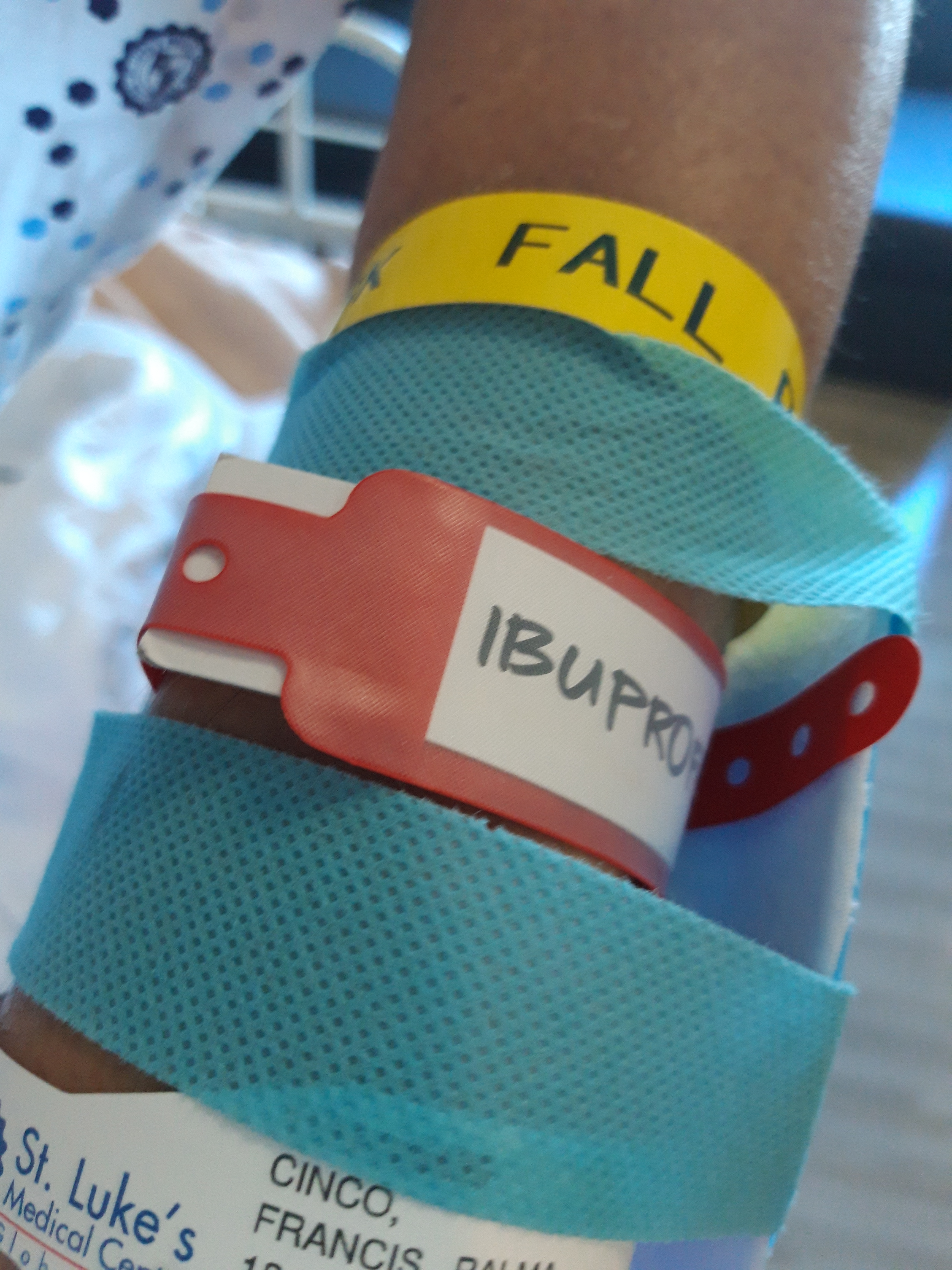
I was admitted the day before the surgery (scheduled 6AM the next day). Upon admission, you’ll be asked if you have any allergies or are allergic to any food and medicines. So I told them that aside from the fact that I have a history of asthma, I am also allergic to Ibuprofen, a non-steroidal anti-inflammatory drug or NSAID which was prescribed years ago by my dental surgeon to manage the pain from dental surgery (impacted tooth extraction). I told them that my whole face swelled where my eyes look like slits on an evenly bloated face that made me look like an alien. Aside from the name band (which they will attach on your left wrist if you’re right handed), they will also attach a red band with the list of meds that you are allergic to (in my case, the band has “Ibuprofen” written on it). They also attached a yellow band for “risk of fall” coz I told them I could be a klutz sometimes (lol). I got admitted early (around 2PM that day) so that the pulmonologist can still assess me on what type of anesthesia would be best for someone with a history of asthma. There are two types of anesthesia, one is general anesthesia (GA) where you will be put to sleep and your brain won’t be receptive to pain as well as no memory of what is on-going, but will put a lot of stress on your whole body (especially your lungs) that it may trigger asthma during surgery. The other one is regional anesthesia where you’ll be temporarily paralyzed from waist down. The latter will keep you awake, but a catheter will be attached to you to help you urinate post surgery until the anesthesia wears off (which could take days). I shudder at the thought of the catheter alone, so it was no brainer for me to choose GA, in spite of the risks. The risks are real, since I’ll be operated face down in prone position, so if for whatever reason that I will have difficulty breathing, they cannot just flip me over with the incision at my back. So choosing GA means that they will insert a tube in my mouth while I’m under just to ensure that the risks are mitigated and the pulmonologist will monitor my condition throughout the surgery. So I have the orthopedic surgeon, anesthesiologist, and pulmonologist on board for the surgery, not to mention the bedside nurse and other surgeons and nurses that will get invited to the soiree.

There should be no food or water intake at least 8 hours before the surgery. That means my last intake should be at 10PM. The nurses will also attach the IV (intravenous) before then, so a few minutes past 9PM, I decided to take the Esonex bath (it’s the bath that they require you to take before surgery to keep the bacteria on the body in check and lessen the risk of infection). I brought in with me my Amiki shampoo (a honey based shampoo which I got from New Zealand in one of my trips and I only use it if it will take more than 24 hours til my next shampoo such as while I’m travelling long haul coz it keeps my hair easy to manage and stay fresh) and my A La Maison body wash which I use as my facial wash. I thought I wanted to go into surgery feeling clean and fresh. Since I have the bands on my left wrist covered in plastic (so that it won’t get soiled and ruined while in the shower), it was a bit hard to shower with only one hand. Feeling refreshed from the bath, I was met by the nurse in my room with pre-surgery meds on hand at around 10 past 10. I asked her what are those and who prescribed the same, so she told me one is for the nerve pain (pregabalin, which I am already taking), two 500mg of paracetamol for the pain, one tablet of Ketesse, and another tablet of Omepron and all were from the orders of the anesthesiologist based on the standard pre-surgery meds that are given to patients of my orthopedic surgeon undergoing the same type of surgery (which is a loose term given that not all patients are alike). The last two meds I wasn’t familiar with, so I asked the nurse if I could keep the packaging that came with it so that I could google it. I have formed this habit of checking out any meds that I’m not familiar with (ie what it is for, side effects, drug interactions, etc.) from my experience with my Mom who was in and out of the hospital last year, as well as my Dad who’s taking at least half a dozen of daily drug maintenance. It also helps that I have my own cocktail of herbal/organic supplements that I had made thorough ‘research’ before taking them, so checking out pharmaceuticals (which I haven’t had any in the last few years after I have shifted to herbal, organic, nutriceuticals even when I’m sick) comes like second skin to me. So I checked out Ketesse, which looks like another pain killer, and Omepron, which reduces the acid in the stomach (to prevent any from going up while I am face down in prone position during the surgery). What I was a bit concerned about was the two large doses of paracetamol along with Ketesse where the latter should not be taken with another pain killer (based on my readings) as it may potentially have adverse effect. But I trusted my doctors, so I shove that concern aside as well as any worries from the impending surgery. I was feeling clean and fresh from the bath and trying to think only of happy thoughts before getting a good night sleep a few hours before the surgery.

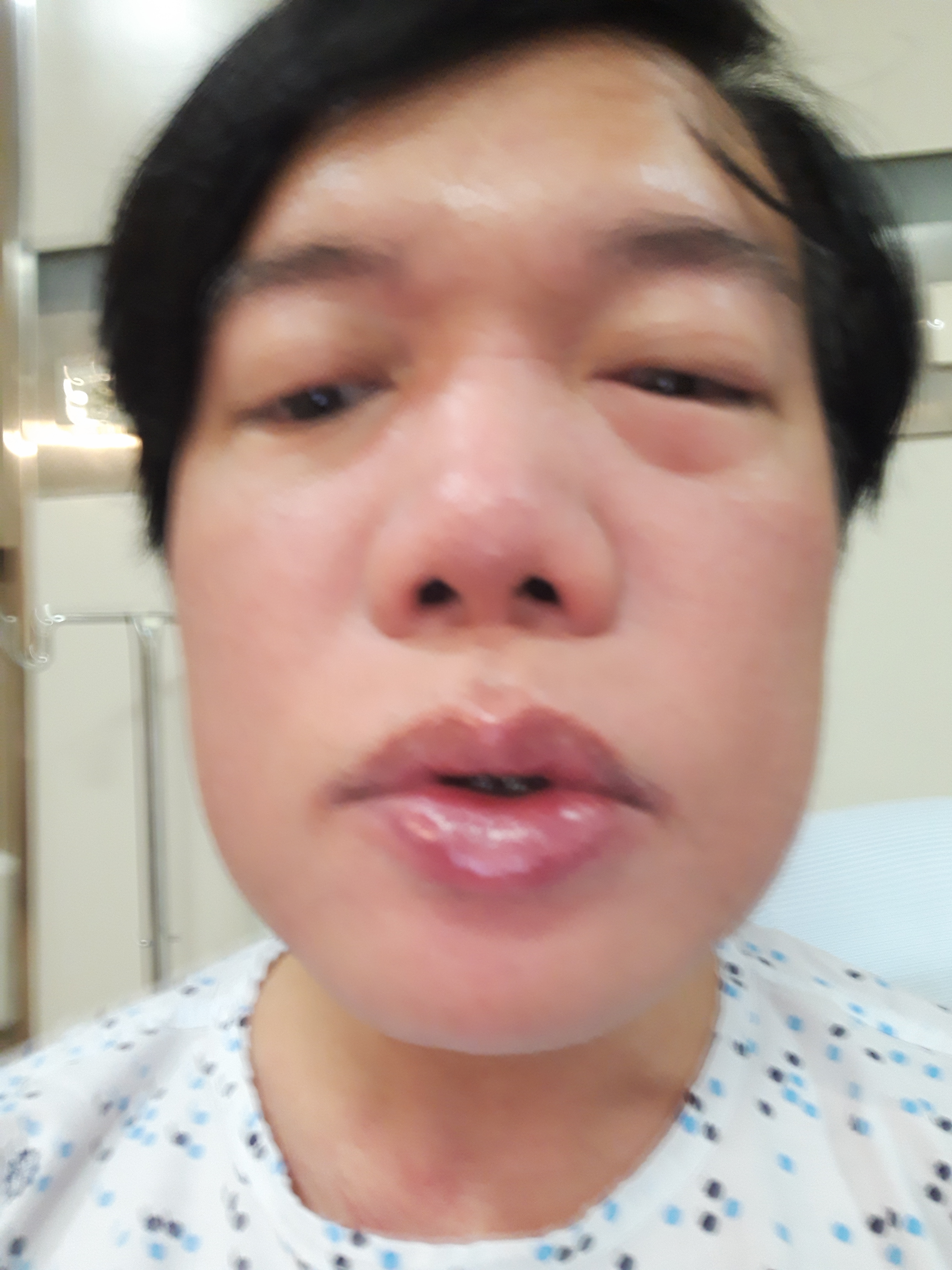
Severe allergic reaction a few hours before the surgery (St. Luke’s Medical Center-Global City)

But alas, it wasn’t a sweet dream. Not even a good night sleep (since I could hardly sleep). I started to feel odd and I know right away there was something wrong. My lips started to swell and then I noticed that there were reddish patches on my face that were starting to swell, mostly under my eyes and partly on the sides of my nose. This was around midnight. So I buzzed the nurse’s station right away, knowing fully well what I was going thru. When the bedside nurse came, I told her that I think I’m having an allergic reaction, not sure from what but I initially suspected the high doses of paracetamol. So I asked her to bring me an antihistamine and she asked me which one in particular. I told her the last time I had the same reaction, I only took Claritin, and the allergy eventually subsided. So she left to see what she can get. While she’s gone, the mucus started to build up like a big incubus, congesting my sinus. I blew my nose every now and then, and started to have that feeling of being sick. My throat started to constrict where I had a hard time swallowing my saliva and the swelling of the face was getting worse. My eyes were watery, my neck and chest have hives. The worst part was when I could hardly breathe. It was a nightmare. I started to google the two meds again thinking that it can’t be the paracetamol that could have caused the allergic reaction and that I may have missed something. Then my attention was caught by the generic name of one of the meds: Dexketoprofen. Eureka! When the nurse came back (she was gone like forever) with the antihistamine (which I later found out to be Benadryl) and a resident in tow, I told them that I think my allergic reaction was triggered by Ketesse. I told them I don’t understand why they would prescribe me that drug. I didn’t like the answer of the resident (or the on duty anesthesiologist, not sure which one she was) and reminded her that there is a vast range of NSAIDs which name does not end with profen. If I’m allergic to Ibuprofen, then I would likely be allergic to Dexketoprofen. So they administered Benadryl thru IV. Before the effect started to kick in, I was miserable for about a couple of hours. I didn’t only suffer from difficulty of breathing, I was also anxious and worried that because of my current condition, my orthopedic surgeon may call off the surgery and set it on a future date if my condition doesn’t improve in a couple of hours (I’m scheduled to be wheeled into the pre operation holding room around 4:30AM and it was already around 2 in the morning). I thought I don’t want to go thru this all over again. Finally, the Benadryl may have kicked in and made me fall into a nap, which was short-lived coz I was awaken by heavy sweating, feeling hot when the aircon was at a steady temperature. I thought there goes the clean and fresh feeling, there goes the Amiki shampooed hair. It wasn’t long when my sister dropped in (she only learned about what I went thru when she noticed that my face was still a bit swollen when she arrived and as a doctor, she was also worried whether the surgery would still be a go and even frowned on me for not calling her that night) and the staff came in to wheel me out and into the pre-operation holding room.

After answering the same set of questions for the nth time (“What’s your name, birthdate, and the procedure you’ll be undergoing?”) to different staff from the time I got admitted, I met the anesthesiologist who gave the order for the pre-surgery meds at the holding room. She apologized and admitted that when she got the nurse’s text message that night about the pre-surgery meds to be administered, she didn’t ask for my background. In her defense, the nurses should have also checked given that they have with them all the necessary information about me (not to mention those bands on my wrist). I was calm and collected and even had a chit chat with her (she was probably impressed with my conversational English and thought I was originally from the US) and was just ready to get the surgery done and over with. When I finally met my orthopedic surgeon, he apologized to me, not because of what I went thru earlier, but because I was made to sign the general consent twice, one which I submitted right after admission, and the other when I was already in the holding room where my annoyance was very transparent to the bedside nurse (when he asked me to sign that other general consent form) who may have relayed that annoyance to him. That’s when I realized he has no idea of what happened hours earlier (no staff has informed him of what transpired earlier). So I told him that the reason why I was irritated that early morning (right after I was wheeled in the holding room and before I met the anesthesiologist) was because I just had a severe allergic reaction to a drug that the hospital has administered, suffered the whole night, and didn’t get sleep at all. He was surprised to learn about that and apologized on behalf of the hospital and I was just glad that after getting me into the nebulizer and checking that I wasn’t allergic to the antibiotic that they plan to administer, he gave the go signal to wheel me in the operating room. That was the last time I could remember being conscious.

I woke up feeling sore but my mind was alert. I buzzed the bedside nurse and when she came, I asked where I was and what time was it. She told me I’m in the recovery/recuperating room and it’s 10:30AM, and I asked how’s my bp (blood pressure). She said 120 over 80. I then asked whether my twisted position in bed (both legs bended at the knees were lying flat on my left while my right shoulder was lying flat on my right with the bp instrument attached to my right arm) was ok given that I just went thru spinal surgery. She didn’t answer the question but instead asked me if I was in pain, and I said yes. She left and came back with the anesthesiologist on duty. The anesthesiologist asked me if other than Ibuprofen, what other meds am I allergic to. That’s when all that has happened the night before came rushing in, and out of my annoyance, I snapped at her by saying “Why don’t you freakin check my charts? Your hospital administered a drug that I was allergic to a few hours earlier and you’re asking me that question?” So she and the bedside nurse went to check my chart and left (probably to get paracetamol for the pain). While both were gone, there’s another patient moaning in pain right next to me (only separated by a curtain) and a village of staff were around him (not sure why they were all there when it didn’t look like an emergency or critical situation, except that he was just vocal about his pain) where one of them bumped my bed. I was not only in pain but already furious, past being annoyed. When the bedside nurse came back to check my bp (125 over 80, 15 minutes after the last reading), I asked her that I be moved back to my room. I thought the longer I stay in that so-called recovery/recuperating room, the more likely that my bp would shoot up. She left and after what feels like eternity, I buzzed her again and I asked what’s taking them so long and told me that they still have to administer the paracetamol. So I told her “Can’t that be administered in my room?” She left again. After waiting and enduring the moaning on the other bed, she came back with the yellow band and told me that they were ready to wheel me out and started to put the yellow band on my right wrist. Then I raised my left hand telling her that I already have it, and that’s when I started to cry.

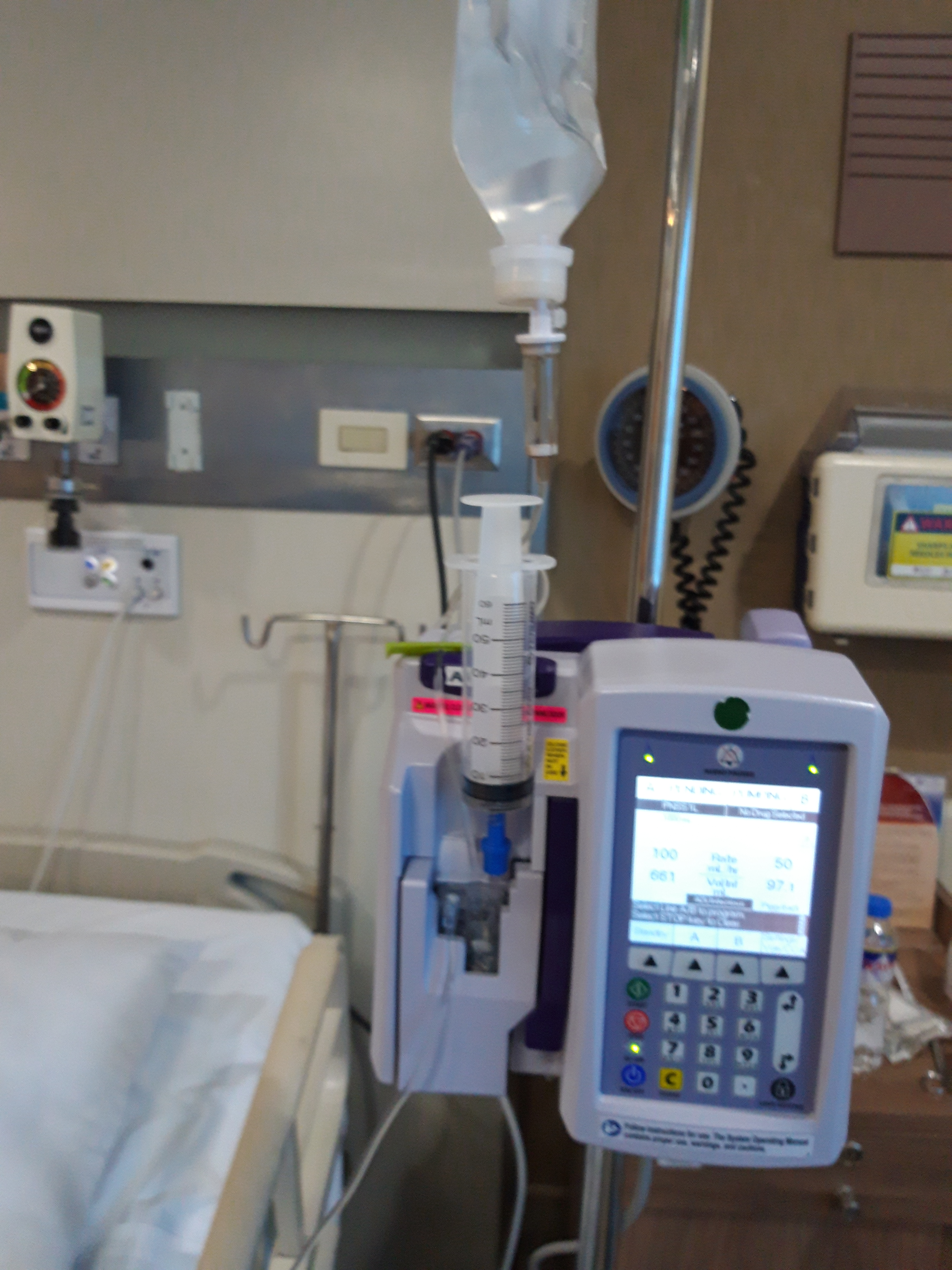
(Left) IV dextrose and antibiotic injection; (Right) the colored bands (St. Luke’s Medical Center-Global City)

I cried out of frustration (not out of pain). I cried because no one seems to even bother to check on the wrist bands. I cried because even with the red band on, I still suffered from severe allergic reaction which was what the band was supposed to prevent and consequently has to take additional meds (Benadryl and God knows what else did they pump into my system that night) that I don’t need if not for the hospital inflicted allergy a few hours before my surgery. I cried because I even protected the bands by taking a shower with only one hand, only to be ignored and neglected (I mean what’s the point of having the bands if no one cares to look?). I cried because no one seems to bother to check my charts, that staff seems to be lazy and just tend to rely everything on the patient. I cried because all my preparations hours before the surgery were wasted. I cried because I was miserable the night before when I should have been relaxed and calm before the surgery. I cried because I didn’t have sleep. I cried because no one in the recovery/recuperating room seems to care that I too was in pain, in spite of my stable condition and quiet demeanor. I cried because of questions that I have to answer right after waking up from GA. I cried because of the insensitivity and lack of inclusivity in that room. I cried because I just had too much.

But my travails didn’t end there. While I was being wheeled out of the recovery/recuperating room, there was a brief stop at a staff station. The staff put a tool/tackle box right next to the area of the surgery (it is not uncommon in Philippine hospitals to use the bed to transport not just the patient but the tools/supplies as well). I was still in that same twisted position since I woke up from GA where the area of surgery was exposed. She then asked me “What’s your name, birthdate, and procedure that was performed?” In a matter of seconds, the emotions that were running high (upset and crying) before that brief stop have now transitioned into anger and spite. I blasted her off by retorting “Before I answer your questions, what the hell is this tool box doing right next to my surgery? I could slap you right now!” (ok, I’m not a violent person, but in a fit of rage, I could have said that but what I probably meant was that I could slap the stupidity out of her). In panic mode, she hastily removed the box (which looks like a mechanic or handyman tool box) and signaled the bedside nurse to carry on, without even waiting for my answers. I thought she was courting disaster by placing the box next to my area of surgery and anything can happen while in transit between the 3rd (where the recovery/recuperating room is) and 16th floor (where my private room was). When I reached my room, I was so distraught that I started crying again when my sister called to check on me (her housekeeper who was watching over me and witnessed the whole incident at the staff station got the call and told her that I was crying and my sister was worried why I was so distressed coz she knows that I don’t or rarely cry). Hours later, I told the housekeeper “Fe, uwi na tayo bukas, na stre-stressed na ako dito” (“Fe, let’s leave tomorrow, I’m so stressed here”). That pretty much sums up my feelings toward the hospital and its staff.

In my desire to leave early, I started to stand up and walk just a few hours after the surgery (my surgery was done at around 8:30AM and I was already standing and walking around 2PM). My orthopedic surgeon even caught me eating while standing when he dropped by that afternoon. I was hungry and thirsty (not to mention emotionally drained and wrecked) that I can’t wait to have my bihon (a Filipino dry noodle dish which is one of my favorite comfort food) and Coke Zero. He asked me to lie down on my back so that he can do some physical tests, which I passed and signified that the surgery was a success. He told me the day after when he was about to give me my discharge clearance that I’m one of those who belong to the top 96% success rate. Though I am immuno-compromised (due to the GA) and vulnerable to risk of infection (and possible bleeding) from the surgery, he thought it would be better if I stay at home to heal and recover (and just call him if there is an emergency) rather than in a hospital where hospital acquired diseases/infections are pretty much common. I couldn’t agree more. I literally walked my way out of the hospital the day after my surgery (only wearing my sacro lumbar support without the need for a wheelchair). Am I not a real trooper or what (haha after being a cry baby)?

There are plenty of good stuff in this experience. Going into the surgery, I knew that I’ll be in good and able hands. My orthopedic surgeon pioneered this type of surgery in the country and he has been easy to work with. Plus the fact that he’s quite animated when he explains things to me, which is the same way I would explain things at work, so he resonated well with me. I was also well protected, when I made an investment on my health when I took that second insurance a while back that defrayed my medical expenses, which was one burden that I don’t have to worry about going into the surgery. Then there’s my sister, a doctor who I can bounce off ideas with from a medical perspective, that gave me comfort and confidence in every decision that I have made for this surgery. Of course, there were bad stuff too. The ordeal I went thru before and after the surgery could have been avoided if only the staff were more adept in their jobs. I am sharing this experience not with the intent to fire people (which I told my orthopedic surgeon when he informed me that an investigation of what happened was already underway on the day of my discharge), but to learn from it and immerse themselves in understanding what patient care truly means. I’m not a doctor or pharmacist or nurse but I’m pretty sure that Ibuprofen and Dexketoprofen belong to the same family of NSAIDs. A little sensitivity won’t hurt, like trying to minimize questions and getting answers from a patient who just woke up from GA and/or recovering and recuperating in a room that was designated for that purpose. I mean what’s with “What’s your name, birthdate, and procedure undertaken?” if the patient is still drowsy and groggy? I know it’s a standard question that a patient has to answer a hundred times during confinement (just like what a call center agent would ask from a scripted phone conversation when they accept food delivery orders, but hospital staff are not call center agents) but this is where appropriateness and common sense should come in. Imagine saying “Mi-cro Lum-bar Ner-ve Ro-ot De-com-pres-sion,” or just the thought of having to say that right after surgery when you are still in pain. That’s painful, right? Just like hotels, hospital staff are front desk staff, receptionists, concierge, or what we call frontliners who can be deal breakers from a hospitality perspective. Knowing when it is appropriate to ask these standard questions is essential. Coz no matter how good or topnotch your surgeons, doctors and specialists are, or how cutting edge and game changing your facilities and services are, but if you lack the basic values of care, understanding, and common sense (including sensitivity), then you cannot really take pride in marketing yourself as a top medical center in the country or one of the best in the region.

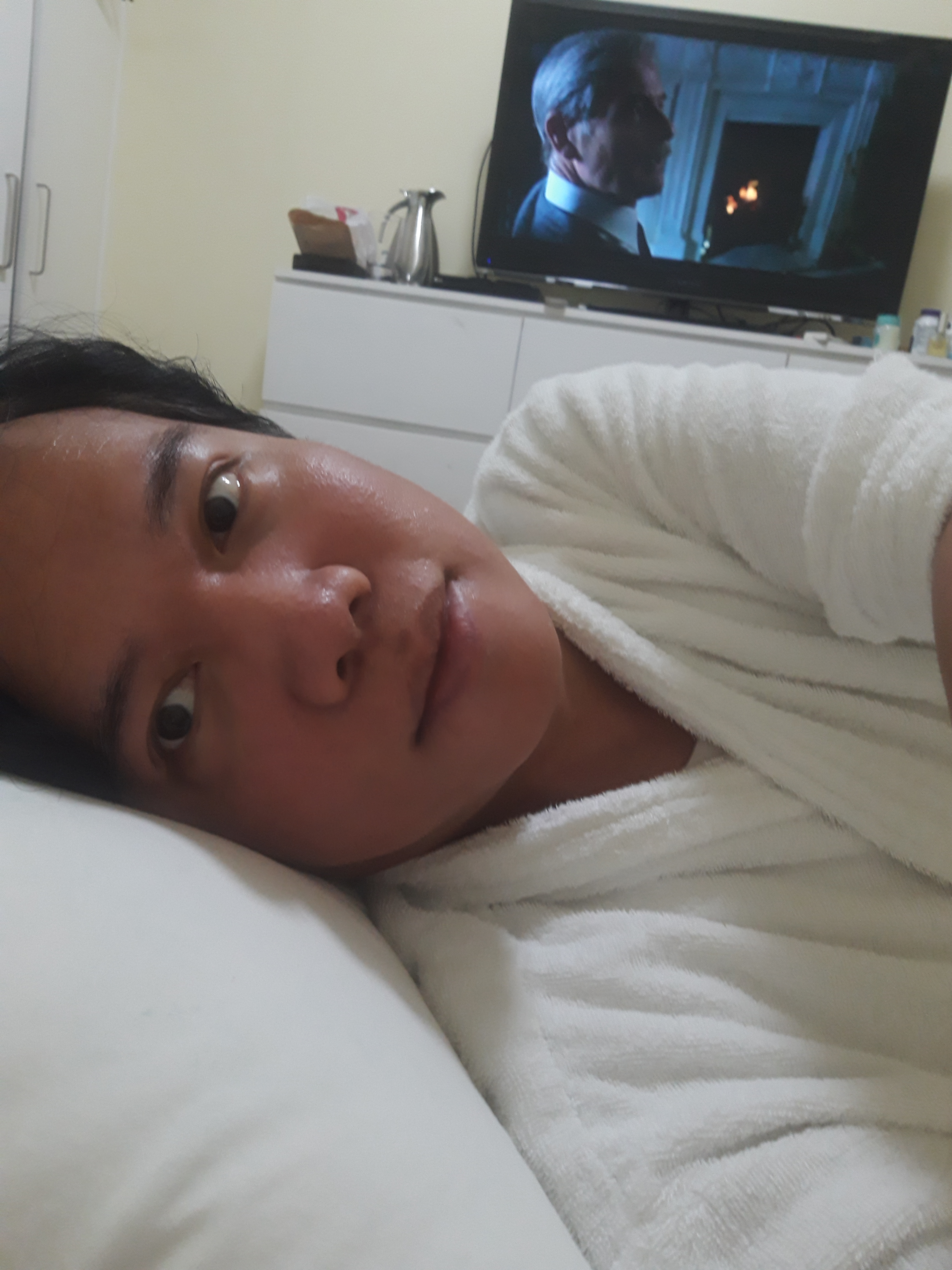
(Left) Waking up at my sister’s guest room (where I’m currently staying while recovering from the surgery); (Right) Netflix binging (#netflixbinge I’m currently hooked with “The Crown”)

Then the ugly part. This whole experience brought out the worst in me. I have a Kardashian moment (#kardashianmoment) and Godzilla demeanor at the same time (toxic combination) that I wasn’t really proud of. I never had that sense of entitlement coz I do understand how people work hard to get to where they are now (coz that’s me). But I’ve been to hell and back, so can you blame me for my actions (or more appropriately, words)? On hindsight, I could have been kinder and more understanding, which is also a learning experience for me. On the other hand, people who know me understand that I have low tolerance for stupidity (if you have read my article “Remembering Miriam Defensor Santiago,” then you’ll understand that it runs in the family). Like what I told my orthopedic surgeon, I can bear the pain of surgery but I can’t bear the pain of stupidity. I have high tolerance for pain but low tolerance for insensitivity, ineptness, inappropriateness, laziness, or simply lack of common sense. Too much of these leave you feeling a little….

…unhinged.

(Note: Thanks to Dr. Mario R. Ver, my orthopedic surgeon, who was a delight to work, collaborate, and partner with and whose Midas touch gave me freedom from sciatica. My gratitude as well to the Sisters of Carmelite for all the prayers.)