Dogs and Mental Health: Meet Cotton (Maltese) and Candy (Phantom Toy Poodle)

Health Buzz

Cotton (maltese) and Candy (phantom toy poodle) sleeping in the same position. Isn’t that adorable?

The year 2020 has been one of the most constrained where we have experienced (and continue to experience) how the COVID pandemic has seized our everyday lives. I have written a few articles on COVID (https://columbusbee.blog/2020/03/28/my-gut-feel-against-the-virus/ and https://columbusbee.blog/2020/04/22/the-day-the-world-stood-still/) as well as how it impacted our lives (https://columbusbee.blog/2020/07/25/life-is-a-beach-first-of-two-parts/ and https://columbusbee.blog/2020/09/07/life-is-a-beach-second-of-two-parts/) but I haven’t really touched on how the same has affected our mental health. There is no denying that the restricted freedom, fear of contracting the disease, anxiety of what the future holds, paranoia that every single person you meet outside may be a potential carrier, and depressing news splash on our faces every waking hour (I dread reading the papers nowadays, anticipating what new inequities and abuses are committed during these trying times) are just some of the stuff that messes up our heads. Not to mention those who worry where to get their next meal, when they can find work again or get their business up and running, and how they can get basic services such as medical attention given the roundabouts that they have to go thru to meet these necessities only add up to the mental toll. Depression is real, each and every one of us is vulnerable.
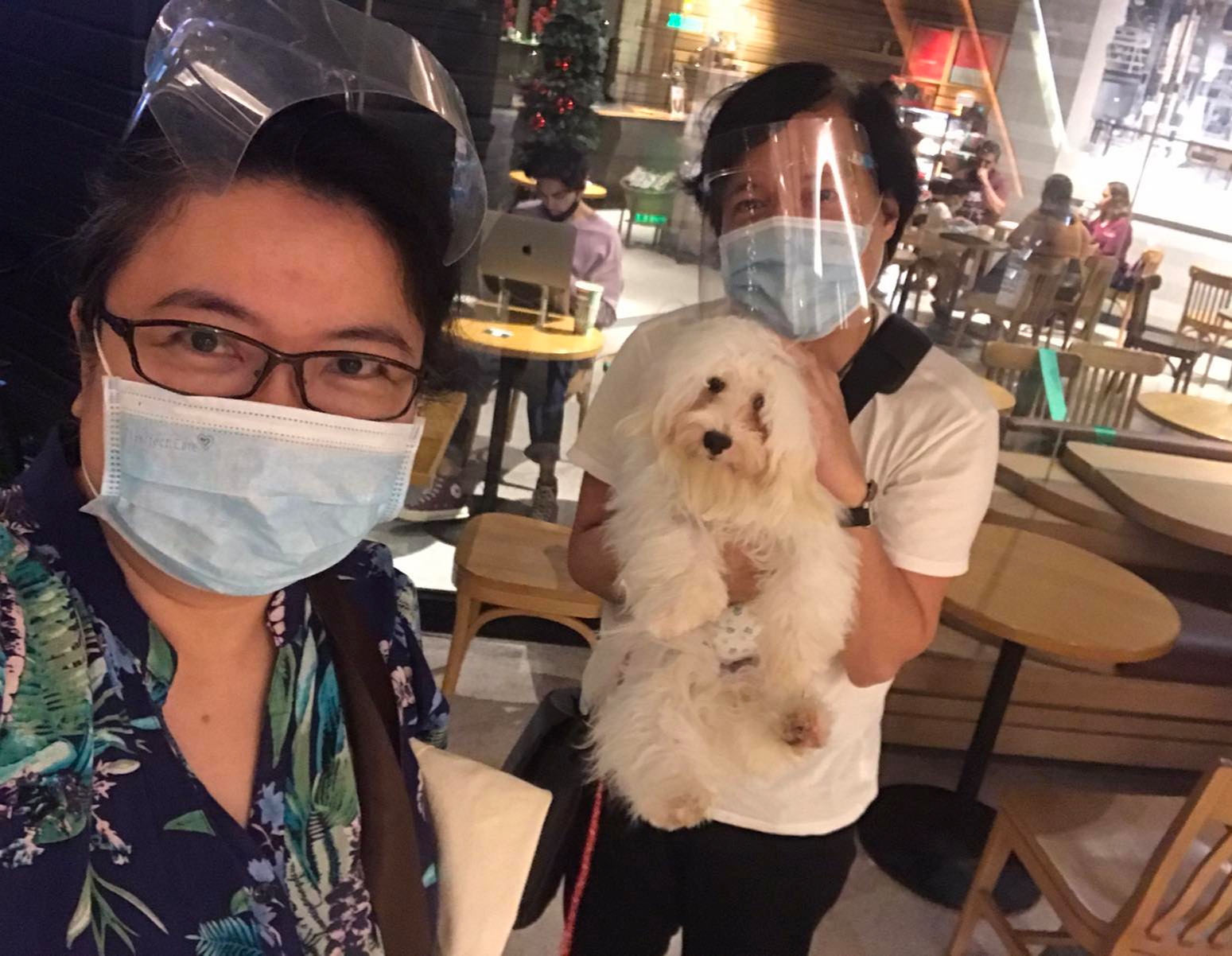
Cotton and I meeting a friend at Starbucks

We use only about 10% of our brains and depression and anxiety occupying so much space do not make a healthy, balanced mind. It’s madness, right? How much more if one is already suffering from a fragile head? We may have our own coping mechanism, but what about those who do not know how to cope at all? Shrinks are expensive, and the concept of going to the shrink in a third world country is non-existent, the mere idea can be met with contempt. I remember that when Miriam’s (https://columbusbee.blog/2019/09/21/remembering-miriam-defensor-santiago/) meeting with a shrink in the US was dug up and used by her political opponents against her during the 1992 Philippine presidential election by unfairly branding her as “Brenda” (brain damaged) that partly costs her the presidency, such ignorance would be offensive by today’s standards (but gives me comfort and hope that a quarter of a century later, this somewhat parochial and bigoted third world civilization has evolved and started to embrace the worldly view that taking care of one’s mental health is nothing different than looking after one’s physical health, that it is ok not to be ok). Shaming people for seeking help should never be tolerated, much more use against them for shameless gains.

Candy and I waiting for our turn at the vet clinic. Isn’t she pretty?

My global manager once asked me how I was coping with the lockdown, knowing fully well that I love to travel. I told him that all my flights, both local and international, have been cancelled. As I’ve mentioned in one of my articles (https://columbusbee.blog/2020/02/23/italy-how-thou-i-love-thee-let-me-count-the-ways-part-1-of-2/), my feng shui for 2020 forecasted that my spirit essence is weak (which actually was true, where there were points in time last year where I doubted myself and my capabilities) and lots of travels were encouraged to lift up my spirits. I was due for a European tour last May, partly to do some soul searching and enriching by returning to Assisi on a supposed brief spiritual retreat. That didn’t happen, same with some local travels that were also booked. I then realized that I didn’t really answer his question, where all I can muster was to say “same old, same old.” This is now my opportunity to share how I am coping with the pandemic (hope he reads this) and how I’m taking care of my mental health.


Cotton and Candy when they were still a few weeks old

I just got my Fortune and Feng Shui book for 2021 and it says that both my life force and spirit essence would be very weak. From a mental health perspective, that does not sound very good. But same as last year, I cope with by writing thru this blog. It helps me unload my thoughts, views, and perspective, which I personally believe frees up space in my brain in the same manner as how we unburden ourselves emotionally thru sharing our problems with family and friends. Not only that it helps make space for something positive, but also the psychological effect when good comments flow in, such as the one below that was posted in the blog today. Telling someone that he has a gift is a gift itself, like a ray of light in an otherwise dark and gloomy skies. Imagine how that appreciation affects me mentally.
I learned from an early age that having dogs bring a different kind of happiness. Happiness is a state of mind, and what more gives us happiness than unconditional love. Dogs do that. They give us unconditional love and so much joy (particularly during puppy stage) that they won’t be called man’s best friend for nothing. That’s why it pains us when they passed on, which in my case, took me about a couple of years before I got my furbabies in 2020 since the last one, and more than a decade past before I got the last one. Knowing that the prospect of travel in 2020 is bleak, I decided to get myself a loyal companion to lift up my spirits and went for a maltese. His name is Cotton.


Cotton in his pen, yawning. Isn’t he a handsome pup?

Having been a quarantine furbaby, Cotton hasn’t developed a sociable personality. Though he considers my apartment as his kingdom where he reigns supreme, outside, he’s very shy, nervous, and timid. When I brought him to my sister’s place to play with his cousins (my sis has a maltese and a mini poodle), he just stayed in one corner, head down, and unmoving, even when his cousins were trying to play with him. When I first brought him to the groomers, the attendant told me that he just lied flat on his tummy while being bathed, like in a submissive position, afraid to stand up. When I brought him to meet a friend, he just lied on the floor the whole time that me and my friend were having our Starbucks drinks. I’m afraid he’s going to be a social pariah.

Cousins Finn (maltese) and Teddy (mini poodle)

Then I realized that Cotton may be supporting my mental health but I’m not doing anything for his. That’s when I decided to get his companion and went for a toy poodle. Her name is Candy. On the way home when I got her, she connected right away. She was sweet and licked my arm while lying on my lap. Unlike Cotton though, the first few days at home were hard and difficult for me coz she has been excreting liquid poop (yes, as in watery discharge) that I have to clean up the mess first thing when I wake up in the morning and when I get back from work in the evening. Cleaning up does not only mean wiping the floor and disinfecting, but also washing the paws. Worried that she has been suffering from diarrhea for days since I got her (I initially thought that she was just stressed out from her new environment as well as it might be due to a change in dog food), I decided to bring her to the vet to have her checked and tested and that’s when I learned that she contracted coronavirus.
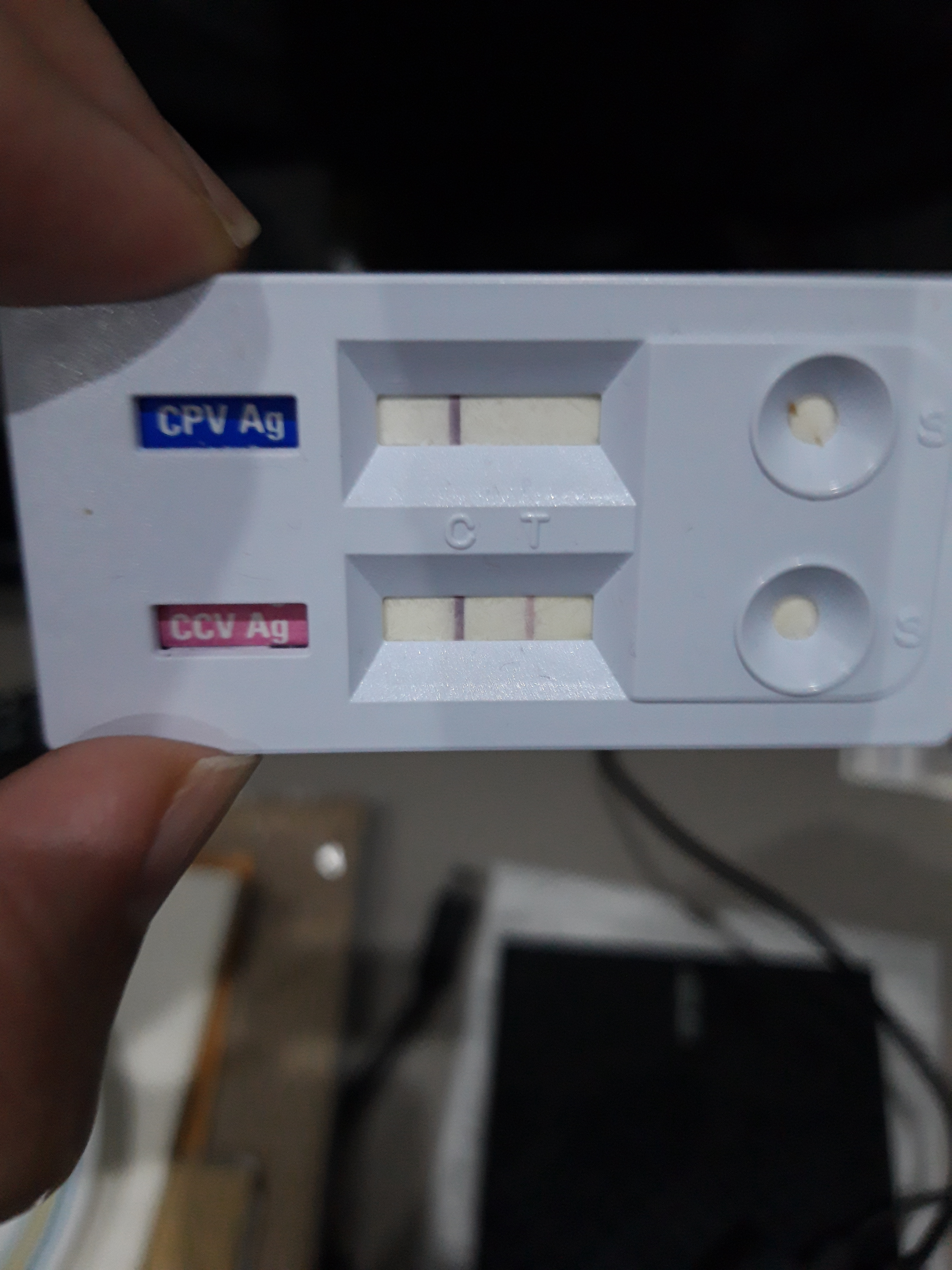
Twin test results of Candy. Top bar is for parvovirus (single line means negative) and bottom bar is for coronavirus (double means positive).

You might think, “Oh no, COVID!,” and that I may also have contracted it too. Nope, it’s not COVID, and no, I don’t have it. Coronavirus in dogs (canine coronavirus is the more appropriate name) is different than what we humans have. Whilst the virus looks similar (with spikes that look like those in a crown, hence the term corona), the strain only infects dogs where the digestive system becomes compromised (unlike in humans where it’s the respiratory system that gets affected). It’s not contagious to humans but can get passed on to other dogs (which I suspect she got when she was staying with the seller awaiting delivery where there were other puppies as well from different breeders for rehoming). Good thing Cotton did not contract it, given that both have shared a pen for a few days. During that first visit to the clinic, the vet said that the virus is self-limiting, meaning that it will just clear on its own in a few days or weeks since just like any viral infection, there is no cure (only prevention thru vaccines). So she prescribed some dog food made specially for digestive care as well as probiotics (yes, dogs need probiotics too). But her condition worsened, where not only her diarrhea has not stopped, but also vomited her food, became lethargic, and lost her appetite (she has a huge appetite earlier, even when she already has the virus). So I decided to confine her in the animal hospital where fluids and minerals can be administered thru IV (intravenous) to keep her constantly hydrated, with occasional forced feeding (as she refused to eat) to get some food to her stomach, and to manage the symptoms thru antibiotics (antibiotics do not kill viruses, it only manages the symptoms such as diarrhea).


(Left) First few days of Candy on hospital confinement; (right) last few days in the hospital where she has regained some of her strength and good spirits

Ten days of confinement later, she was discharged and I brought her home. Poor Candy, she spent her 10th-11th week (since birth) being sick and 11th-12th week on hospital confinement. I was just glad and relieved not only that she tested negative for parvovirus (that’s the most deadly infection among dogs, my last one a couple years back died of parvo) but her coronavirus has cleared. Her poop also started to form. I never thought I would be so happy to see solid poop. She has regained her appetite and she was back in her playful mood. Cotton was also glad she was back.

Candy on the vet table for her shots

You might be wondering, with all these stuff that I have to go thru, worrying about my dogs ability to socialize or when they get sick or the day-to-day handling of their needs while also going to the office to work, how would that help me with my mental health? Isn’t that something more to concern about that one is better off without? True that it requires a lot, both physically and financially (you need to have a budget for the upkeep), but what they do for me mentally and emotionally is very much rewarding. I don’t see caring for my furbabies as a mental burden. I see it as a way to fill my thoughts and emotions with something more than stuff that makes up a depression. I would rather fill that space in my brain with more of these types of worries and concerns, than let it sink deeper into black hole or oblivion as a consequence of the lockdown and/or the stress that comes from work. Caring is loving (and holds true conversely), and what more puts us in a blissful state than love? Knowing that you can still find or give love during these dark times? The unconditional love that these furbabies give back is just gravy.

Resting after some rough play

So as we usher the new year, think about your own mental health, how to achieve that balanced mind. A healthy mind and body, as well as soul, make whole, complete self. If you think and feel incomplete (regardless whether you’re single, married, “it’s complicated” but still find yourself thinking that there’s still something missing in your life), then maybe God created dogs to fill the void. You can then say to your furbabies “you complete me.” They will still love you back even if they have no idea what you’re talking about.


The Day The World Stood Still

Health, Movie, and Positivity Buzz

New York, the current epicenter of COVID-19 pandemic in the Americas

A few days ago, the movie “The Day The Earth Stood Still” was shown on HBO. It’s probably the nth time I’ve seen it, not so much because I’m a sci-fi fan, but I truly like the message of the movie. Its reruns during these times have made the messaging more relevant, given that we are faced with a similar crisis. In this 2008 film, headlined by Keannu Reeves (popularly known for movies like Matrix trilogy and the more recent John Wick franchise) and Jennifer Connelly (wife of actor Paul Bettany a.k.a Vision and seen recently in Alita: Battle Angel), an alien adapts a human body (Reeves) with the sole intent to decide on whether mankind is worth saving or need to be annihilated (for all its crimes against both nature and humanity). Along with him came a weapon of mass destruction and spheres that will serve as shelter where animals can take refuge while the earth is being ravaged by locust-like alien creatures until no terrestrial being is left standing. Sounds biblical (Noah’s Ark) and its reference to it only shows how fiction imitates life. So scientists were gathered, among which is Connelly’s character, where she ended up helping Reeves escape when authorities tried to contain him. The crisis escalated when authorities tried to employ military solution on an otherwise scientific (and to some degree philosophical) issue. With this current COVID-19 crisis, it’s sort of life imitating fiction.

One of my favorite cities in the world. To New Yorkers, my heart goes out to all of you. Hang in there. This too shall pass.

So why am I talking about this movie during this time? While running from authorities, Reeves alien character started to understand human behavior. Towards the end of the movie, he learned that there is another side to us. While we can be destructive, we are also capable of change. While we can be selfish and always think of our own self-preservation, we can also love unconditionally and possess empathy, concepts that may be vague to aliens as these are not meant to be understood but to be felt. The message of the film is that in spite of our shortcomings, we can still change for the better. That in spite of human frailty, our emotional and sociological make up set us apart from the rest of the animal kingdom. This is very pertinent and relevant as we are dealing with a health crisis right now. You can look at the alien as the coronavirus trying to annihilate us all, unless we learn how to properly and appropriately deal with it (in the same way that Connelly’s character dealt with Reeves’) and the changes we have to make to survive the crisis.

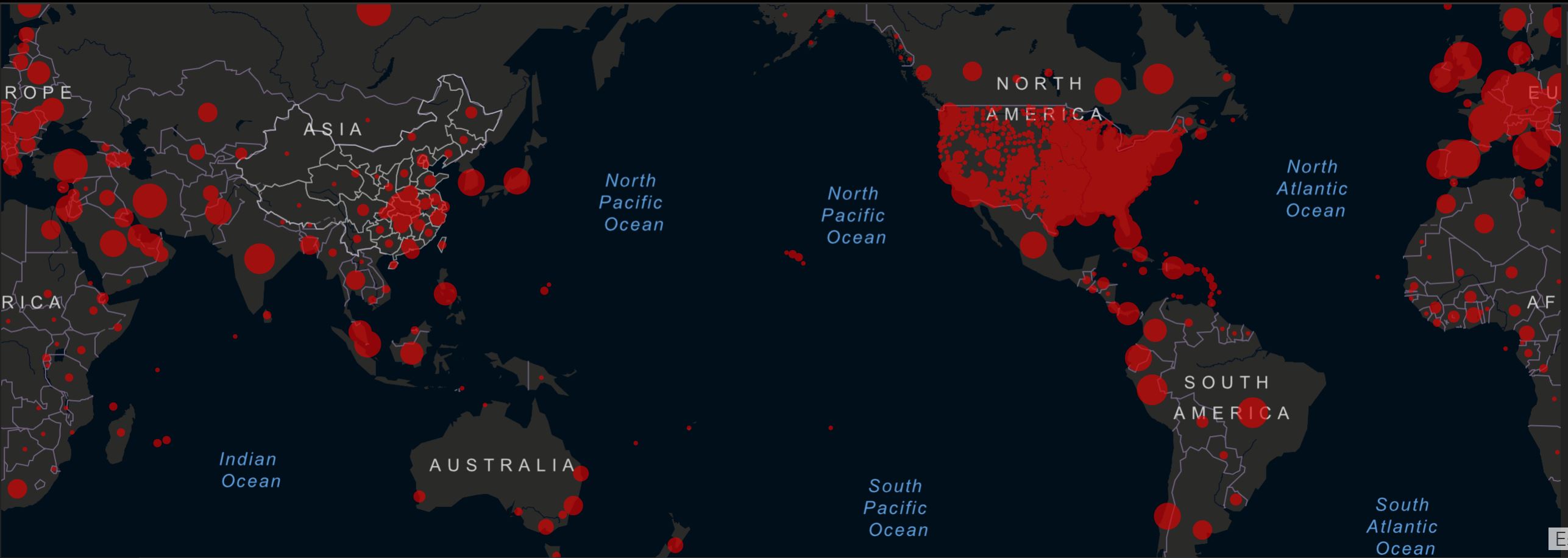
Global COVID-19 pandemic as of April 22 (Johns Hopkins University)

Knowing how to deal with the crisis and the changes that we have to do will only be meaningful if we acknowledge how this crisis started. I came across the World Health Organization (WHO) timeline in its website (https://www.who.int/news-room/detail/08-04-2020-who-timeline—covid-19) which was last updated on April 12 and also stumbled upon a link that shows a more detailed timeline that fills the gaps in WHO’s account of events. This link directed me to an article published by Hudson Institute in its website (https://www.hudson.org/research/15920-coronavirus-timeline) that was last updated on April 15. Wary of its credibility since it is the first time I’ve heard of this organization, I tried to check its reliability and was able to find a fact check site that rated articles published by this non-profit, conservative right biased U.S. think tank to be highly factual (https://mediabiasfactcheck.com/hudson-institute/). So below are the extracts from both WHO and Hudson Institute timelines (you can check out the sites for the full timelines) that I tried to piece together (verbatim) to get some sense out of what actually transpired these past few months.

Nov. 17: A 55-year-old resident from Hubei province contracts COVID-19, according to data seen by the South China Morning Post, possibly the first coronavirus case. (Hudson) 

Dec. 1: The first coronavirus case now recognized by Chinese authorities is recorded in a Wuhan hospital. The patient was initially suspected to have been infected by an animal (likely a bat) in the Huanan Seafood Market, a narrative now in dispute as researchers propound alternative origins, including that lax security procedures in the Wuhan Institute of Virology led to its escape. (Hudson)

Dec. 8: The first suspected human-to-human transmission is recorded by Wuhan doctors. A patient is observed to have the virus but denies ever visiting the seafood market. (Hudson)

Dec. 25: Wuhan doctors suspect disease transmission from patients to medical staff, further evidence of human-to-human transmission and the first instance of a threat to healthcare workers. Wuhan hospitals have experienced a steady rise in infections since the first cases. (Hudson)

Dec. 27: A Guangzhou-based genomics company sequences most of the virus, showing an “alarming similarity to…SARS.” Samples of the virus are distributed to at least six other genomics companies for testing. (Hudson)

Dec. 31: Taiwanese public health officials warn the World Health Organization (WHO) that the virus is spreading between humans. The WHO never publicizes the warning. (Hudson)

Dec. 31: The same day, the Wuhan Municipal Health Commission declares that it has no evidence of human-to-human transmission and informs the WHO of the outbreak. (Hudon). Per WHO, China reported a cluster of cases of pneumonia in Wuhan, Hubei Province. A novel coronavirus was eventually identified. (WHO)

Jan. 1: The Wuhan Public Security Bureau summons eight people to its headquarters, including Dr. Li Wenliang, who initially warned the public about the virus, accusing them of spreading “hoaxes.” Dr. Li signs a statement confessing to his “misdemeanor.” The fate of the other seven is unknown. (Hudson)

Jan. 1: An official at the Hubei Provincial Health Commission orders a genomics company to cease “testing samples from Wuhan and to destroy all existing samples.” The company’s labs had sequenced the virus’s genetic code in December with results suggesting a highly infectious virus similar to SARS. (Hudson)

Jan. 1: WHO had set up the IMST (Incident Management Support Team) across the three levels of the organization: headquarters, regional headquarters and country level, putting the organization on an emergency footing for dealing with the outbreak. (WHO)

Jan. 3: China’s National Health Commission (NHC) orders institutions “not to publish any information related to the unknown disease” and orders labs to “transfer any samples they had to designated testing institutions or to destroy them.” The order did not specify any testing institutions. (Hudson)

Jan. 3: U.S. Centers for Disease Control (CDC) Director Robert Redfield receives reports on the novel coronavirus from Chinese colleagues. The chief of staff to U.S. Health and Human Services Secretary Alex Azar informs the National Security Council. (Hudson)

Jan. 4: WHO reported on social media that there was a cluster of pneumonia cases – with no deaths – in Wuhan, Hubei province. (WHO)

Jan. 5: WHO published its first Disease Outbreak News on the new virus. This is a flagship technical publication to the scientific and public health community as well as global media. It contained a risk assessment and advice, and reported on what China had told the organization about the status of patients and the public health response on the cluster of pneumonia cases in Wuhan. (WHO)

Jan. 5: Six days after its China Country office was “informed of cases of pneumonia with unknown etiology” in Wuhan, the WHO “advises against the application of any travel or trade restrictions on China based on the information available on this event.” (Hudson)

Jan. 9: Chinese authorities announce publicly that a novel coronavirus was behind the recent viral pneumonia outbreak. (Hudson)

Jan. 9: Xinhua News Agency first reports on the outbreak. (Hudson)

Jan. 10: WHO issued a comprehensive package of technical guidance online with advice to all countries on how to detect, test and manage potential cases, based on what was known about the virus at the time. This guidance was shared with WHO’s regional emergency directors to share with WHO representatives in countries. 

Based on experience with SARS and MERS and known modes of transmission of respiratory viruses, infection and prevention control guidance were published to protect health workers recommending droplet and contact precautions when caring for patients, and airborne precautions for aerosol generating procedures conducted by health workers. (WHO)

Jan. 11: China reports its first known death due to the virus. (Hudson)

Jan. 12: Chinese authorities share the virus’s genome with the rest of the world. (Hudson)

Jan. 13: The first case outside China is reported Thailand. (Hudson)

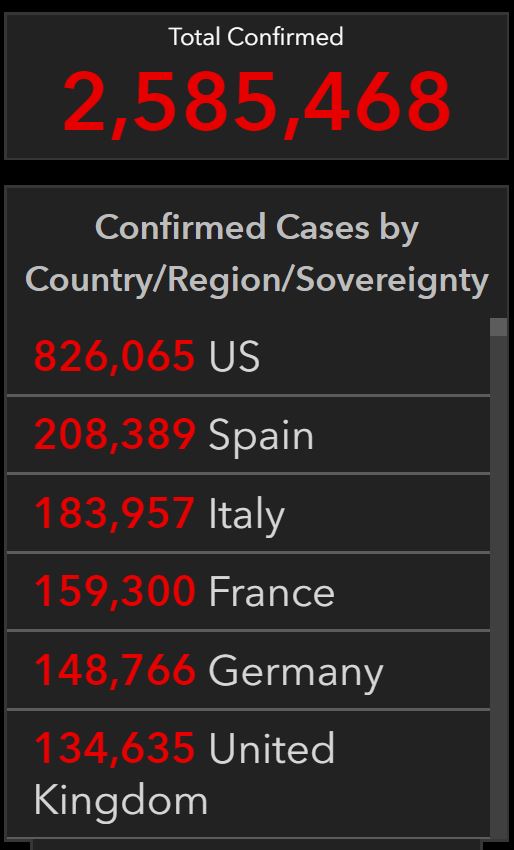
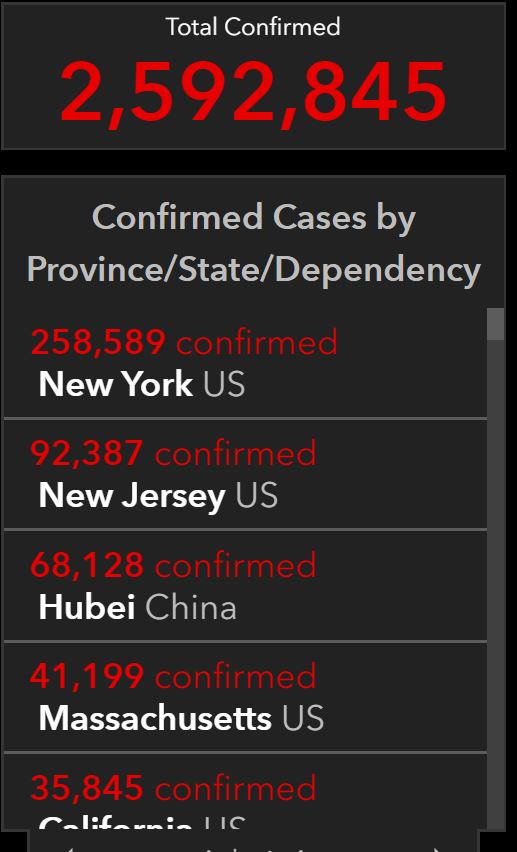
Global COVID-19 confirmed cases by country and by city as of April 22 (Johns Hopkins University)

Jan. 14: Nearly six weeks after Wuhan doctors raise the possibility of human-to-human transmission, the WHO issues a statement stressing that Chinese authorities recorded no cases of human-to-human transmission. (Hudson)

Jan. 14: WHO’s technical lead for the response noted in a press briefing there may have been limited human-to-human transmission of the coronavirus (in the 41 confirmed cases), mainly through family members, and that there was a risk of a possible wider outbreak. The lead also said that human-to-human transmission would not be surprising given our experience with SARS, MERS and other respiratory pathogens. (WHO)

Jan. 14: Hubei Provincial officials hold a teleconference with Ma Xiaowei, the head of China’s National Health Commission, who details the threat posed by the new virus. A memo from the teleconference raises the possibility of human-to-human transmission. (Hudson)

Jan. 15: Japan records its first case of coronavirus. (Hudson)

Jan. 15: China’s Center for Disease Control and Prevention in Beijing initiates internally its highest-level emergency response, which includes directions to hospitals to take protective precautions and to begin tracking cases. The directions are marked “not to be publicly disclosed.” (Hudson)

Jan. 18: Wuhan authorities allow nearly 40,000 to gather for the Lunar New Year celebration. (Hudson)

Jan. 20: Dr. Zhong Nanshan, a leading authority on respiratory health who came to attention for his role fighting SARS, confirms that the disease spreads from person-to-person. The head of China’s NHC investigatory team also confirms cases of human-to-human transmission in Guangdong province, indicating spread between provinces. (Hudson)

Jan. 20-21: WHO experts from its China and Western Pacific regional offices conducted a brief field visit to Wuhan. (WHO)

Jan. 21: The CDC confirms the first American case, a Washington resident who had returned from China six days earlier. (Hudson)

Jan. 22: WHO mission to China issued a statement saying that there was evidence of human-to-human transmission in Wuhan but more investigation was needed to understand the full extent of transmission. (WHO)

Jan. 22-23: The WHO Director- General convened an Emergency Committee (EC) under the International Health Regulations (IHR 2005) to assess whether the outbreak constituted a public health emergency of international concern. The independent members from around the world could not reach a consensus based on the evidence available at the time. They asked to be reconvened within 10 days after receiving more information. (WHO)

Jan. 23: Chinese authorities announce first steps for their lockdown of the city of Wuhan. Travel from Wuhan to other countries continues uninhibited until group restrictions are put in place on Jan. 27. (Hudson)

Jan. 24: France records Europe’s first and second cases. (Hudson)

Jan. 25: Australia and Canada record their first coronavirus cases. (Hudson)

Jan. 27: The Chinese government suspends group travel to foreign countries (individuals would still travel abroad unencumbered), three days after massive outbound traffic begins for the Lunar New Year. Over those days, travelers journeyed to Japan, South Korea, the United States, Italy, Spain, France, the United Kingdom, and South America. (Hudson)

Jan. 28: A senior WHO delegation led by the Director-General travelled to Beijing to meet China’s leadership, learn more about China’s response, and to offer any technical assistance. 

While in Beijing, Dr. Tedros agreed with Chinese government leaders that an international team of leading scientists would travel to China on a mission to better understand the context, the overall response, and exchange information and experience. (WHO)

Jan. 30: The WHO declares the coronavirus a global health emergency, while expressing confidence in “China’s capacity to control the outbreak.” The organization recommends against border closures, visa restrictions, and quarantining of healthy visitors from affected regions. (Hudson)

Jan. 30: Several provinces and cities extend the Lunar New Year holiday until at least February 13 to halt commerce and travel. (Hudson)

Feb. 1: Responding to the prior day’s announcement that the United States would suspend entry of foreign nationals who had visited China, Chinese officials criticize the move as “neither based in fact nor helpful” and “certainly not a gesture of goodwill.” (Hudson)

Feb. 2: The first coronavirus death outside China is reported: a 44-year-old man in the Philippines. (Hudson)

Feb. 3: WHO releases the international community’s Strategic Preparedness and Response Plan to help protect states with weaker health systems. (WHO)

Feb. 5: The Chinese embassy in Canberra criticizes Australia’s travel ban on entries from mainland China. (Hudson)

Feb. 7: Dr. Li Wenliang, considered by the Chinese public to be the foremost champion of spreading information about coronavirus, succumbs to the virus at the age of 33. His death leads to an outpouring of national anger over information suppression. (Hudson)

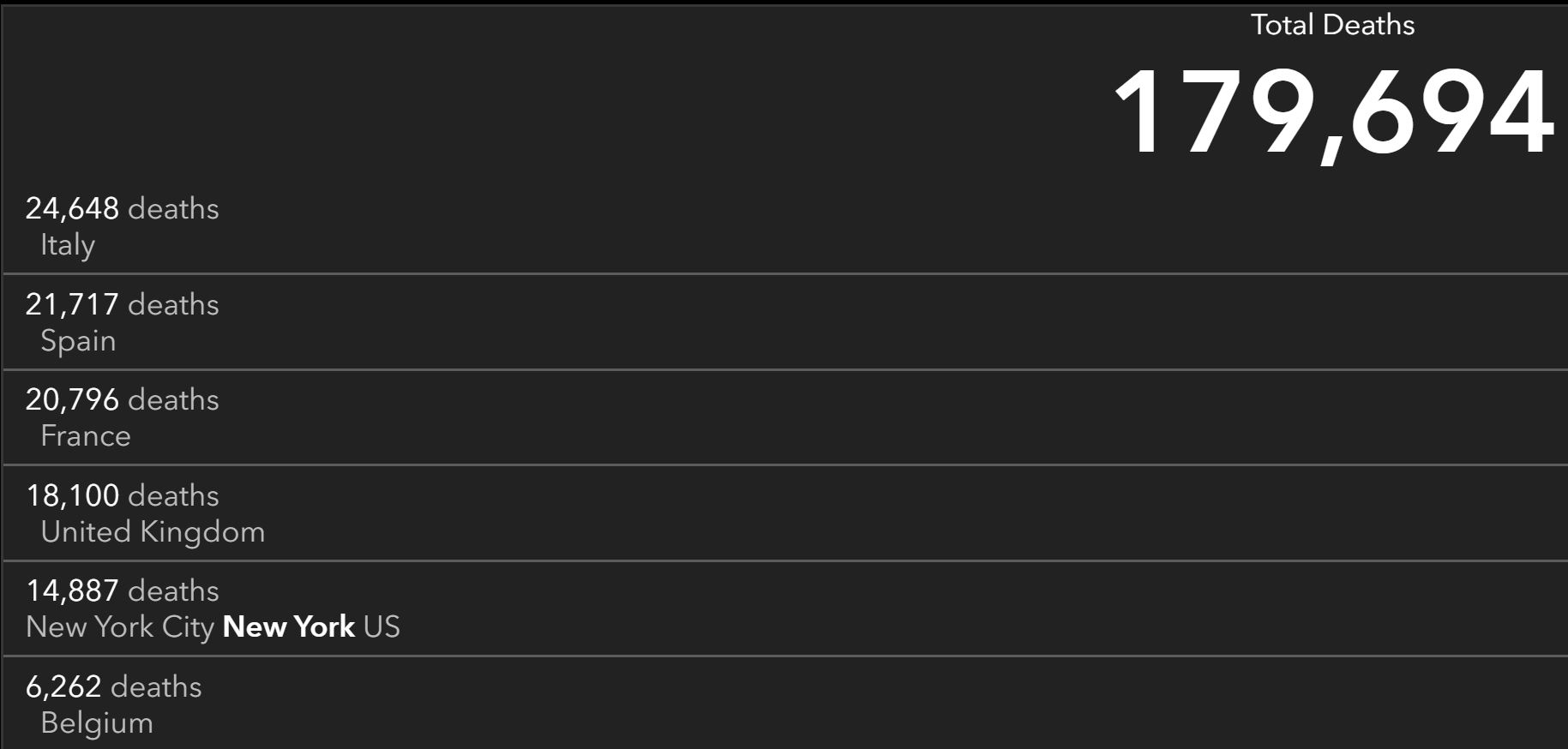
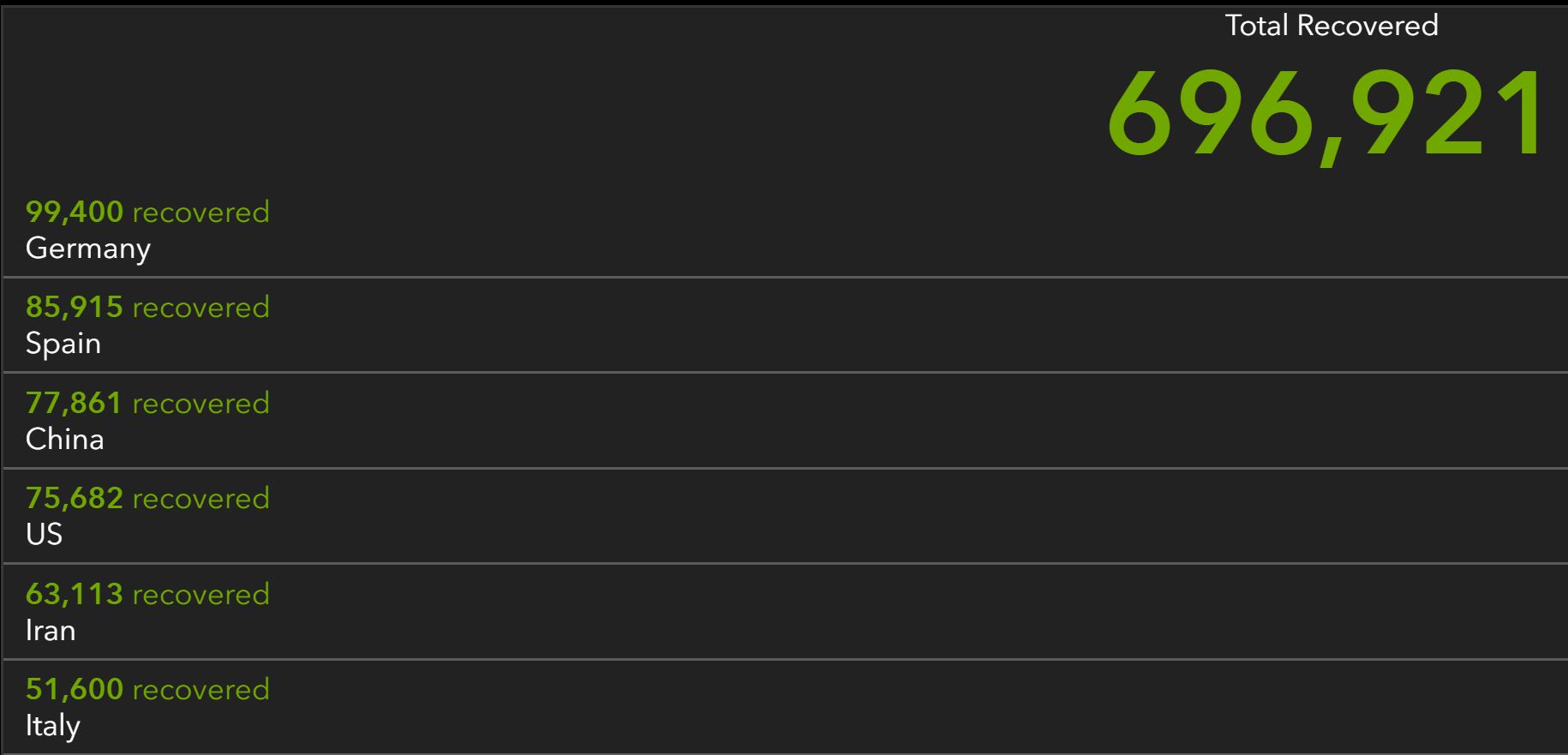
Global COVID-19 deaths and recovered as of April 22 (Johns Hopkins University)

Feb. 7: Shortly after Dr. Li’s death, the hashtag “#wewantfreedomofspeech” trends on Chinese social media platform, Weibo. The same day, along with other related topics, it is deleted by censors. (Hudson)

Feb. 11-12: WHO convened a Research and Innovation Forum on COVID-19, attended by more than 400 experts and funders from around the world, which included presentations by George Gao, Director General of China CDC, and Zunyou Wu, China CDC’s chief epidemiologist. (WHO)

Feb. 14: France reports the first coronavirus death in Europe: an 80-year-old Chinese tourist. (Hudson)

Feb. 16-24: The WHO-China Joint mission, which included experts from Canada, Germany, Japan, Nigeria, Republic of Korea, Russia, Singapore and the US (CDC, NIH) spent time in Beijing and also travelled to Wuhan and two other cities. They spoke with health officials, scientists and health workers in health facilities (maintaining physical distancing). (WHO)

Feb. 19: China expels three Wall Street Journal reporters in response to an op-ed headline. (Hudson)

Feb. 21: Iran reports its first coronavirus cases from an unknown source. (Hudson)

Feb. 23: Italy first reports a major surge in coronavirus cases; Codogno, near Milan, becomes the first Italian town to lock itself down. (Hudson)

Feb. 26: A São Paolo man, recently returned from a trip to Italy, becomes the first coronavirus case in Latin America, according to Brazilian health officials. (Hudson)

Feb. 28: Nigeria confirms the first coronavirus case in Sub-Saharan Africa, a businessman traveling from Milan to Lagos. (Hudson)

Feb. 29: The United States reports its first coronavirus death, a patient near Seattle. (Hudson)

Mar. 11: Deeply concerned both by the alarming levels of spread and severity, and by the alarming levels of inaction, WHO made the assessment that COVID-19 can be characterized as a pandemic. (WHO)

Mar. 12: China’s Foreign Ministry spokesman Zhao Lijian insinuates in a tweet that COVID-19 originated in America and was spread to China by the United States military. (Hudson)

Mar. 14: Friends of Chinese businessman Ren Zhiqiang report that he has disappeared. Ren had authored an essay blasting the CCP for its slow response to the outbreak, blaming its speech restrictions for exacerbating the crisis. (Hudson)

Mar. 16: WHO and partners launch the Solidarity Trial, an international clinical trial that aims to generate robust data from around the world to find the most effective treatments for COVID-19. (Hudson)

Mar. 18: China revokes press credentials from Wall Street Journal, New York Times, and Washington Post reporters. (Hudson)

Mar. 21: Chinese state media outlets circulate reports that “an unexplained strain of pneumonia” may have originated in Italy late in 2019. (Hudson)

Mar. 23: The Hubei Provincial government lifts restrictions on Hubei Province, with the exception of Wuhan. (Hudson)

Mar. 26: Spanish microbiologists report that tests sent to Spain by the CCP detected positive COVID-19 cases only 30% of the time. (Hudson)

Mar. 26: Researchers from University Hospital Ostrava in the Czech Republic report that 80% of the coronavirus antibody test kits received from the Chinese government were defective, likely because antibody tests cannot detect the illness in its early stages. (Hudson)

Mar. 29: The Dutch Health Ministry recalls over 600,000 faulty medical masks received from the Chinese government. (Hudson)

Mar. 31: The Chinese Health Commission admits it has been omitting asymptomatic cases of coronavirus to date and will begin including asymptomatic carriers in its daily counts. (Hudson)

Apr. 14: The Washington Post reports that, in 2018, U.S. Embassy officials sent official warnings to Washington after visiting the Wuhan Institute of Virology. One cable concerned the Institute’s research on bat coronaviruses and warned that their potential transmission “represented a risk of a new SARS-like pandemic.” (Hudson)

Apr. 15: Sources report that the growing consensus among U.S. officials is that the virus originated in a unit studying bat coronaviruses at the Wuhan Institute of Virology, which is central to China’s effort to become the global leader in identifying and combating viral outbreaks. (Hudson)

Photo courtesy of Mike Massie

Just like in the movie, the fear of the unknown pervaded the atmosphere, where man’s destructive nature has manifested. Why was the information on the virus and its potential transmission contained from the rest of the world in the early days of contagion? It was not until Jan 14 when WHO technical lead acknowledged that there may be limited transmission. That was more than a month since Chinese doctors first suspected of human-to-human transmission on Dec 8. Those five (5) weeks were crucial, where time is a function of viral transmission and that the spread would definitely have multiplier effect. Why were 40,000 people in Wuhan allowed to gather for the Lunar New Year celebration, six (6) weeks after the first suspected transmission? It reminds me of Philadelphia’s Liberty Loan Parade of September 1918 (featured in National Geographic channel), where more than a week into the Spanish flu virus spread among 600 sailors, the state didn’t cancel the parade and went on with it on September 28 that attracted some 200,000 people (story is also on CNN.com). Philadelphia ended up with more than 12,000 deaths and about 47,000 reported cases in six weeks. A century and a year later, seems like history repeated itself.

Still, the alien (in this case the virus) lives with us. Why did WHO recommended against border closure or travel ban more than two (2) weeks after its technical lead announced that there may be ‘limited transmission’ (a term that, in the context of a flu-like illness, is borderline oxymoron)? How did WHO utilize the information it received from Taiwan on Dec 31 about the potential human-to-human transmission? What did governments of countries with weak health systems do after WHO released the Strategic Preparedness and Response Plan on Feb 3?

There are lots of questions which would likely be left unanswered. One bright spot though was Dr. Li Wenliang. Just like Connelly’s character, Dr. Li tried to understand the alien (in this case the virus), defied and went against the foreign secretary (played by Academy award winner Kathy Bates) and the military (in this case the Chinese authorities) and changed the outcome by facing the crisis with courage, conviction, sense of humanity, and a heart. Like Connelly’s character, Dr. Li became a hero to the world. Unlike Connelly’s character who lives in the hands of the alien, Dr. Li died in the hands of the virus.

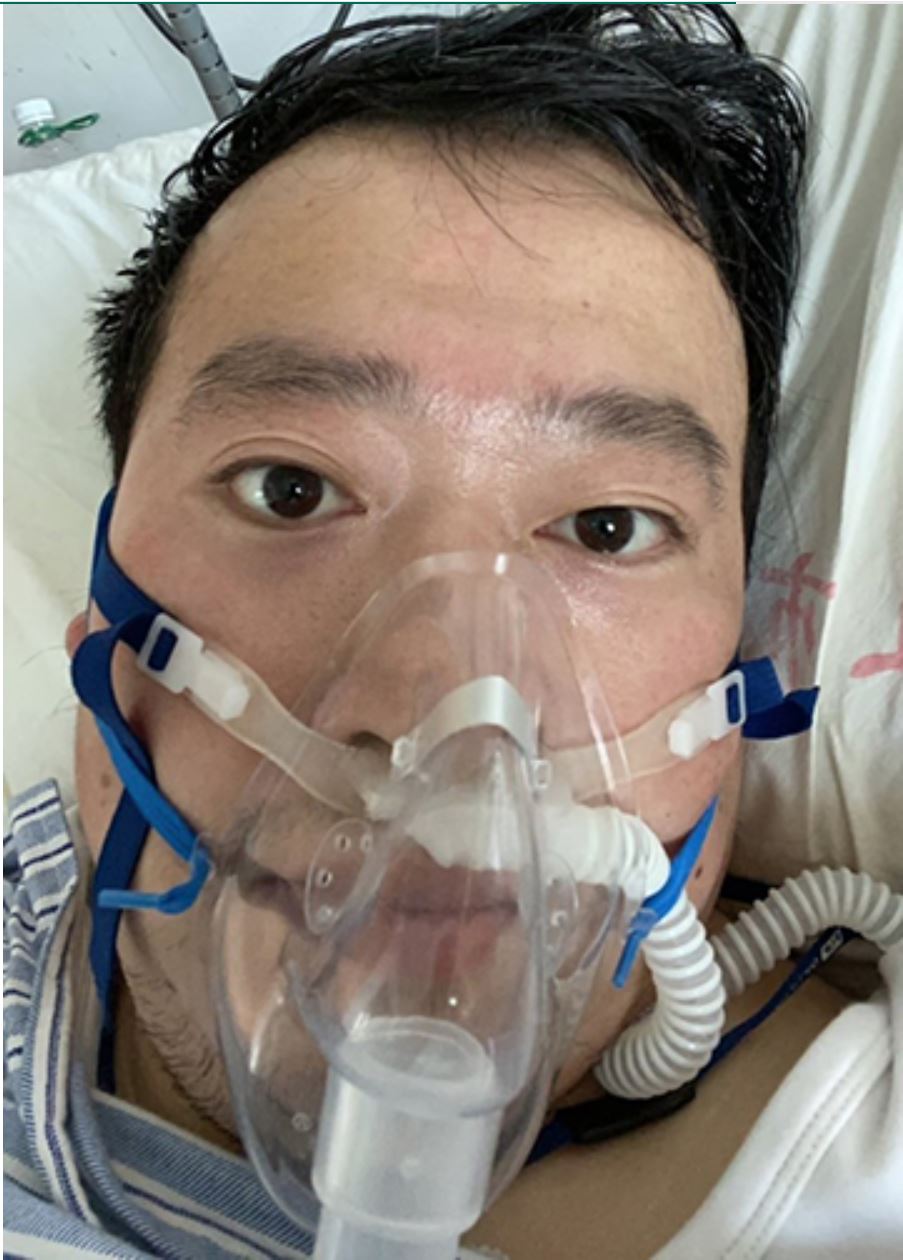
(Left) Jennifer Connelly, plays the fictional heroine in the movie who saved the world from total annihilation; (right) Dr. Li Wenliang, the real life hero and whistleblower who succumbed to the same virus he tried to protect the world from. Our prayers are with you and your family.

There are lessons to be learned by just simply going through these series of events. Like anything else, information is key. I can find solutions to a problem if I have all the pertinent and relevant information that I need. Censorship may be a norm under authoritarian regimes, but during these health crises, nothing can be achieved if vital information is suppressed or withheld. Time is of the essence, where the sooner we acknowledge the problem and share essential information, the better the likelihood of a positive outcome. We can set aside ideological differences for the sake of international cooperation. Politics has no space in crisis like this, much more disinformation, especially when lives are at stake. We can prove that in spite of our destructive nature, there is still that other side to us, where we can still care for and look after each other. A watershed opportunity for us to change.

I’m looking forward to the day that the world would stand still and reflect on what we have done (sin of commission) and haven’t done (sin of omission). That day when we accept our mistakes and missteps, that we are our own worst enemy (and not the virus). That day when we start to believe that we can potentially become the virus of future past. Not until we own up to and be held accountable for our sins and frailties that we can truly move on and heal as one.