Life is a Beach (Second of Two Parts)

Travel and Positivity Buzz
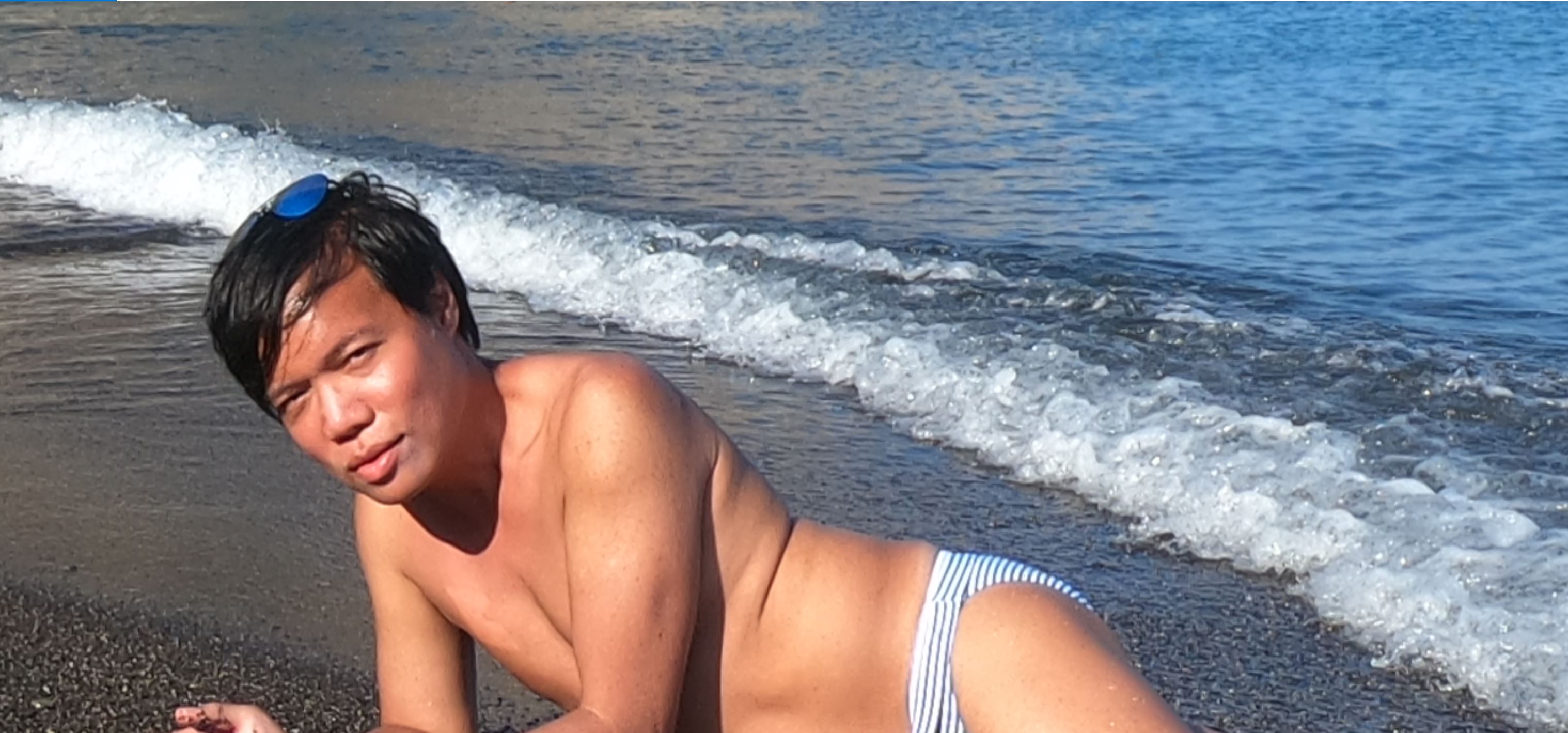
Cool, clear, blue Aegean Sea

There’s a proverbial phrase “when life gives you lemons, make lemonade” which embraces positivity and optimism amidst trying times. What can be truer than this than the situation we are all in right now where it feels like our lives have been taken over by the COVID virus, which is nothing more than the common cold virus except that it’s deadlier. I thought this can only happen in the movies, but looks like life is stranger than fiction. Like in the movies, the contagion has resulted to lockdowns where travel and mobility are restricted. Face mask and shield have become so common like underwear that you cannot be caught dead without wearing one. Given that the best way to handle this health crisis is to treat anyone as potential carrier, no matter how hideous and uncomfortable these protective gears are, we just simply have to appreciate these as something we cannot leave our homes without.

Count your blessings

So how do we make lemonade out of this pandemic? There are people who see opportunities out of a crisis (both good and bad ones) and there are those who simply accept the ‘new normal’ (I’m starting to get annoyed with this phrase). For me, it’s the time to count my blessings, to reflect on life with its ups and downs, and how I could see myself as a survivor. Sounds cliche and corny for most, but if you haven’t appreciated those things that you would normally take for granted (such as freedom to move around), then maybe the lockdown can facilitate such realization of how being free is precious yet vulnerable.
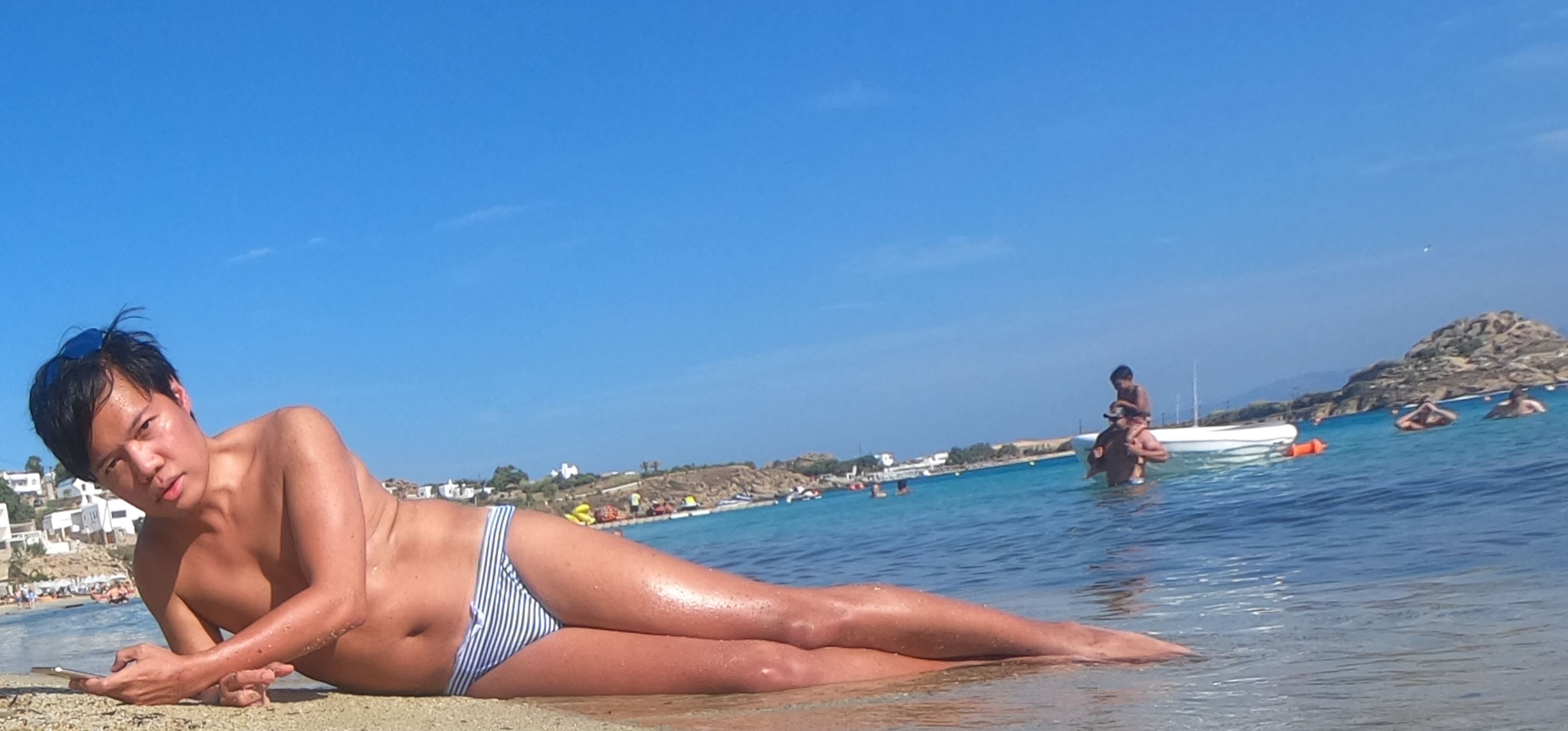
My happy place

This is also the time to go back to your happy place. For me, beaches have always been my happy place. Or any body of water for that matter. I’ve always been attracted to bodies of water. Maybe because my feng shui says that I am a water element, so that would probably explain why I would find myself in that blissful state of peace and serenity when I’m near a body of water. Like lemonade, it feels refreshing, that’s why even if summer went by without being able to go to the beach, just the mere thought of it would already alleviate whatever stress this lockdown has brought on our mental and emotional well-being.

Reliving the ghost of summer past

So to keep our sanity and emotional stability in check, let us continue our virtual trip to the different beaches around the world. In the first part of this article, we were able to cover the 3 A’s (Asia, America, and Africa). In this second part, let’s fly to Europe, Middle East, and Oceania, and explore the beaches that I have been to in more than 20 years of travels.

Europe
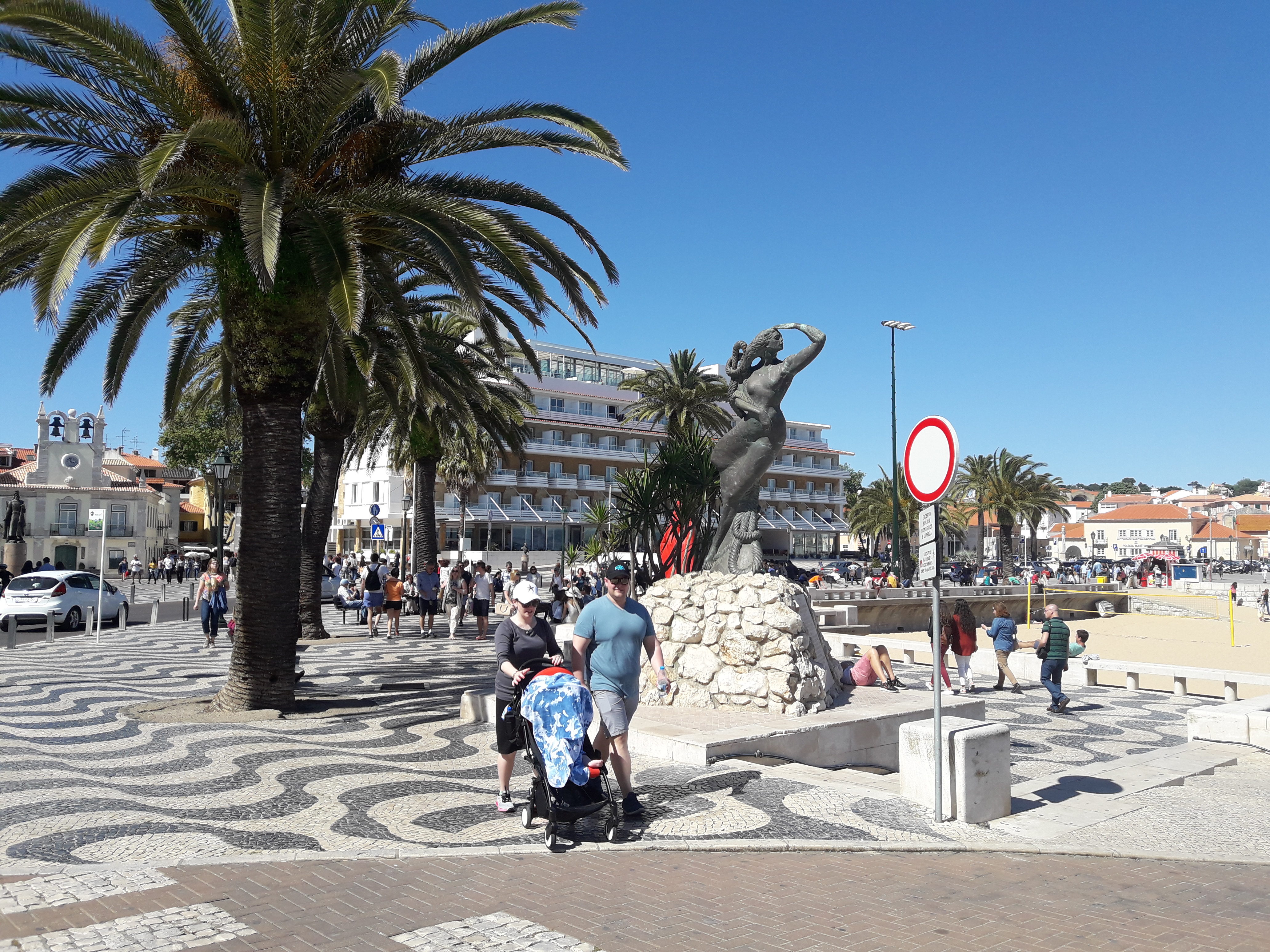
Praia da Ribeira (Cascais, Portugal)

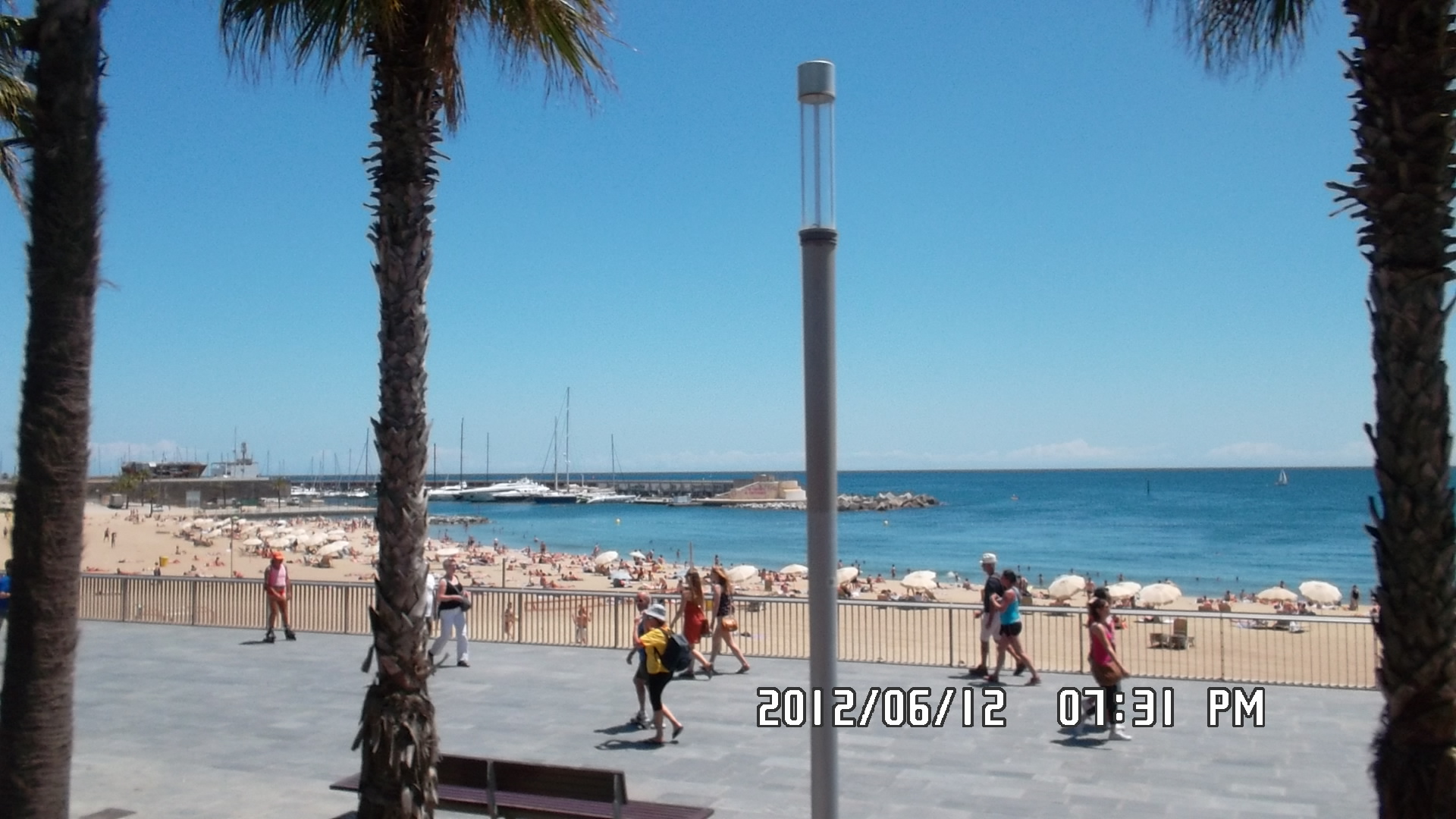
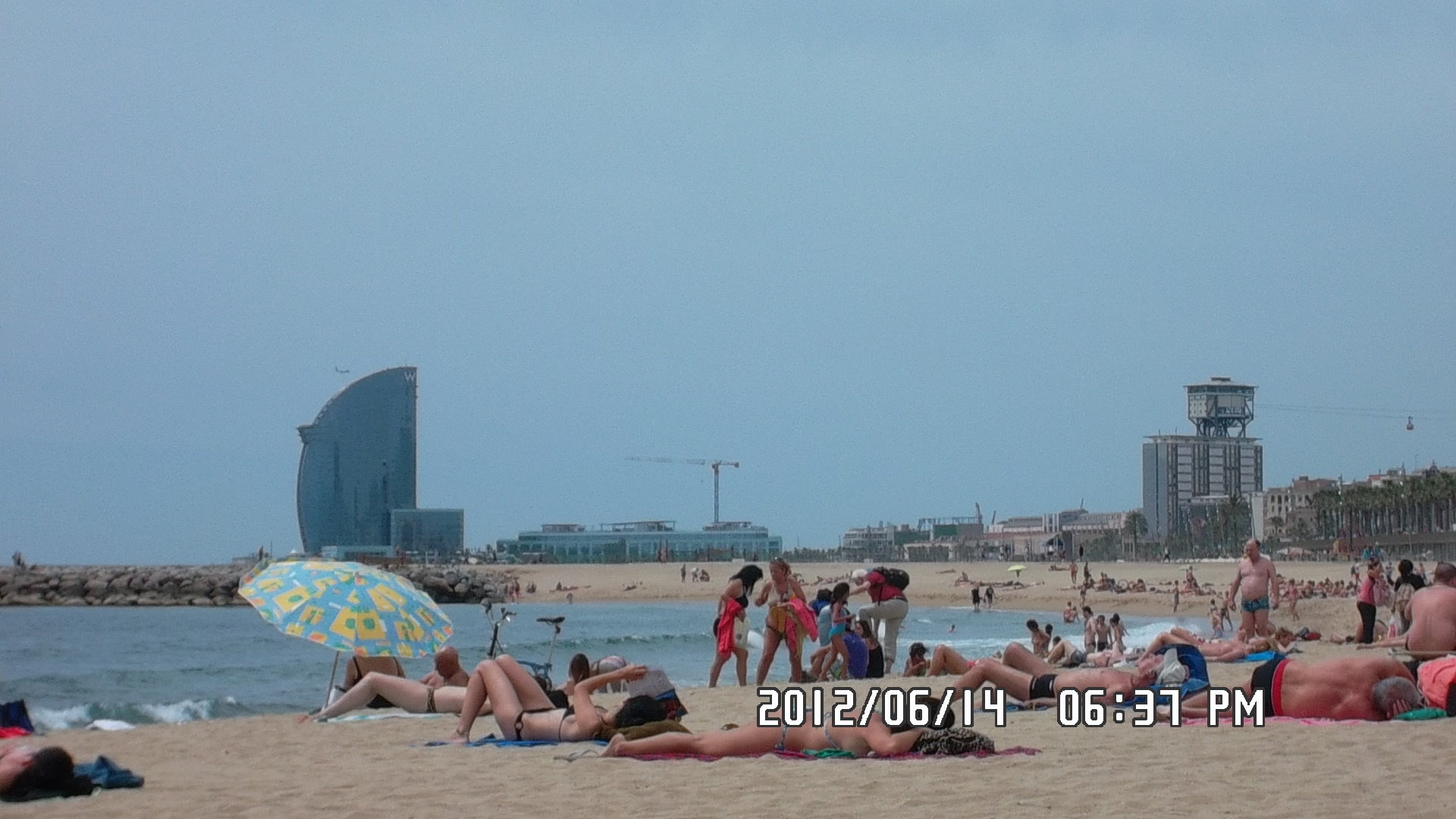
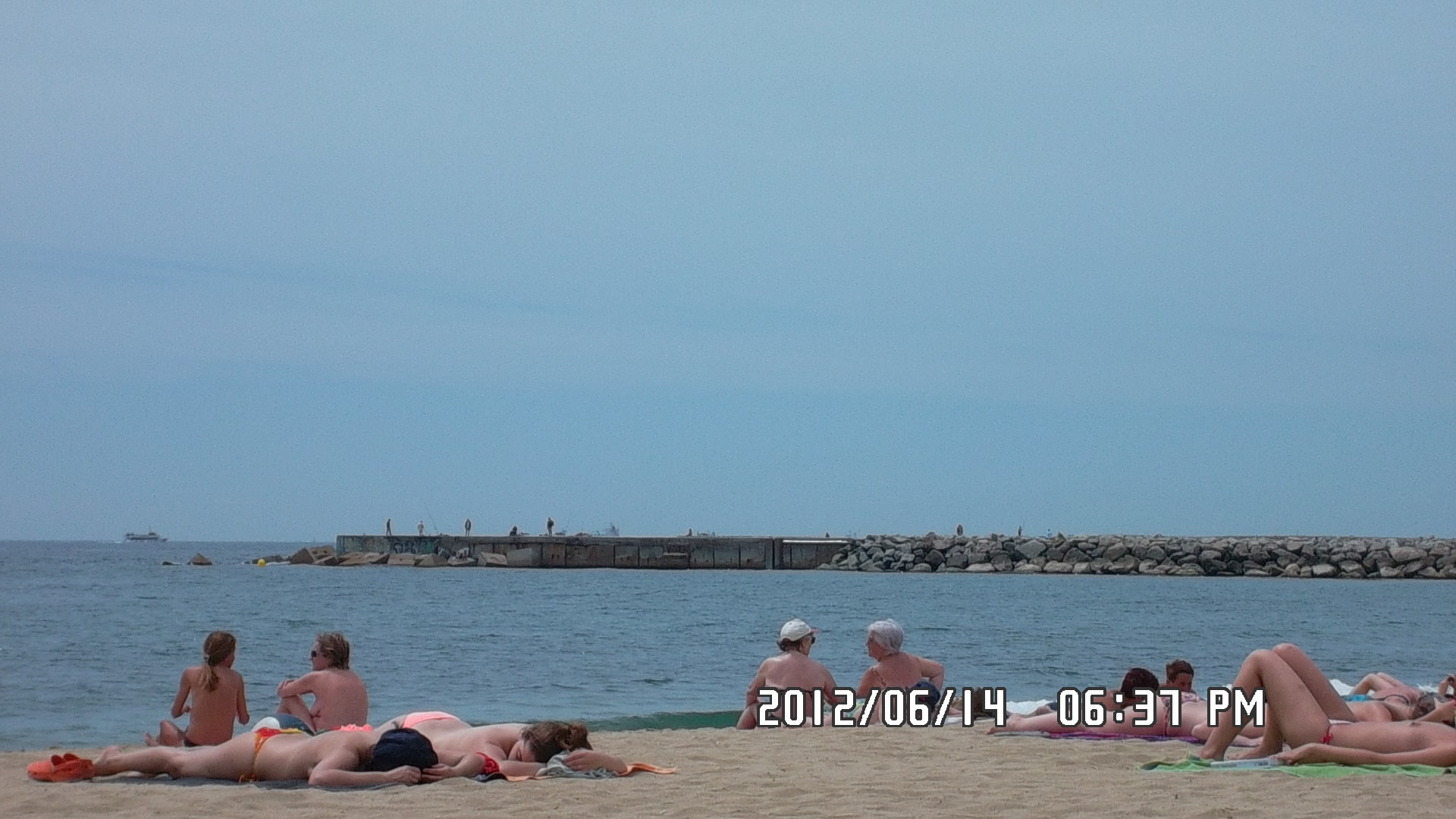
Europe has always been a fave destination of mine. Aside from its rich history, art treasures, bustling culture, and century old architecture, some places have nice beaches. One such place is Barcelona (Spain). The home of Gaudi, this city is a mix of the old and the new. Modern skyscrapers blending in with the works of Gaudi makes this a very livable city. Not to mention beautiful people. To top it all, it has a beach called Barceloneta on its coastline that is easy reach by car, bicycle, public transportation or even by foot if you happen to be staying in one of the hotels that are lining up the whole stretch of the beach (in my case, I stayed at Pullman Barcelona Skipper which is about 200 meters from the beach). Just like any beach in a city, it gets packed on summers. You don’t need to go far or drive a couple of hours just to get to one. No wonder I fell in love with this city the first time I’ve experienced it. This is one of my top five cities in the world that I would love to live in if given the chance.
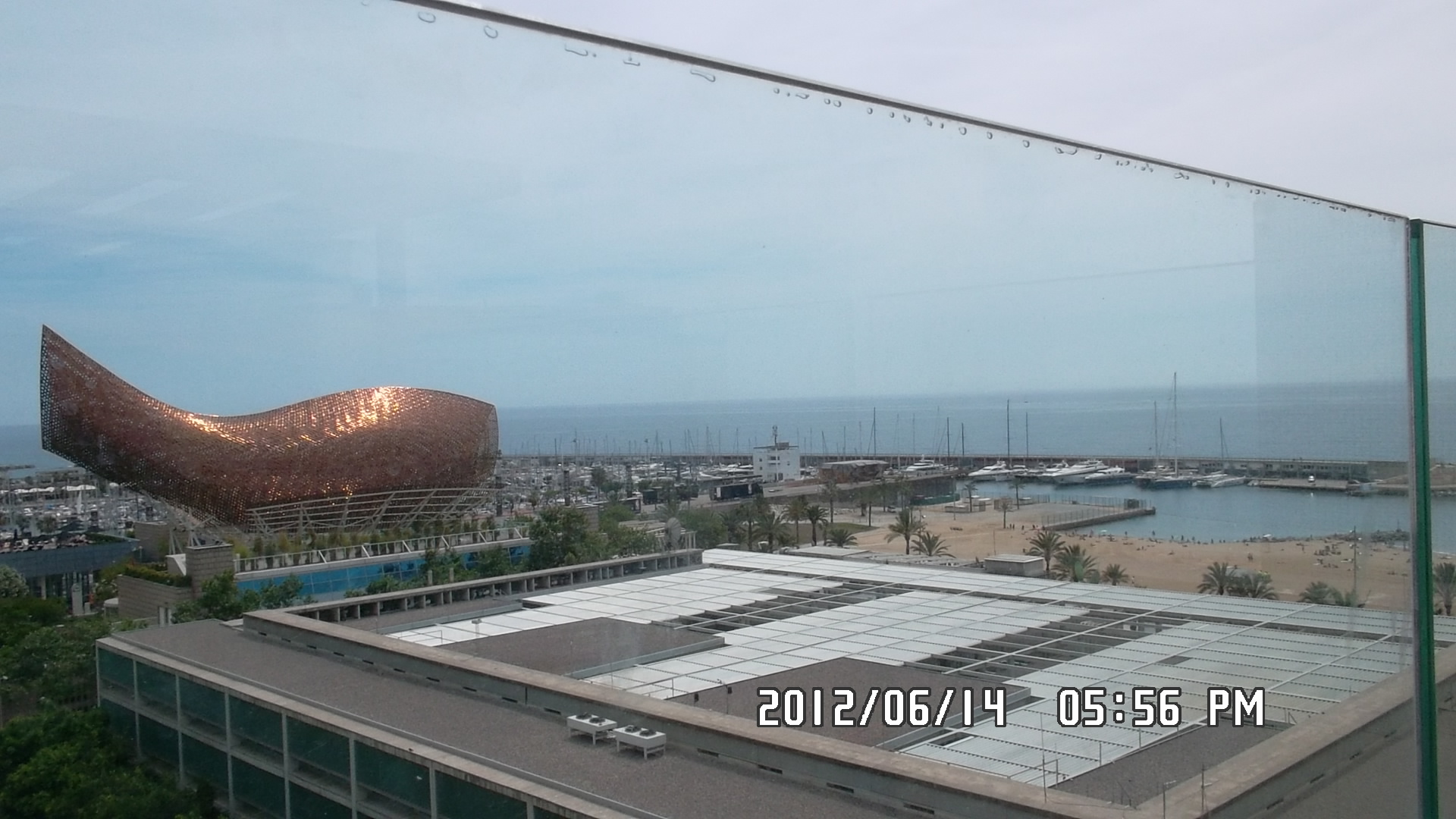
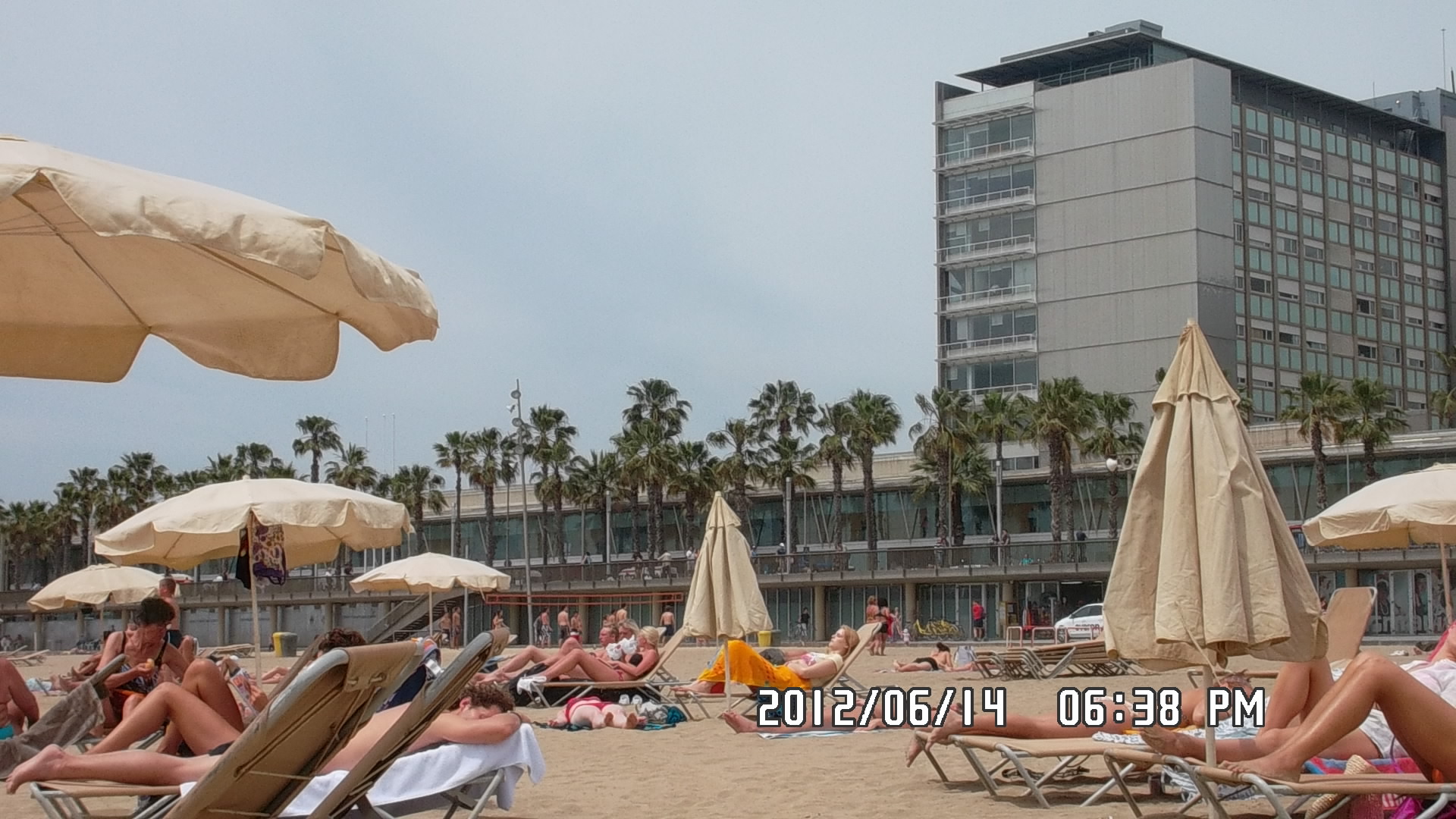
(Top left) Hotel rooftop view of the iconic fish art, the marina, and Barceloneta beach; (top right and bottom) Barceloneta beach, promenade, and topless sunbathers (Barcelona, Spain)

Another such place where the old and the new mesh well is Malta. It is the home of the oldest standing structure in the world (called Gigantia, much older than the pyramids of Egypt) in one of the two main islands called Gozo. Valletta, its capital city, is like an open museum with new architecture blending in. The city has pockets of beaches as well, which provide the locals enough space to enjoy the sun, the sand, and the sea. The city is very scenic and the people are nice. Another great place to live in.

View of the city, marina, and beach from my hotel room balcony (Valletta, Malta)

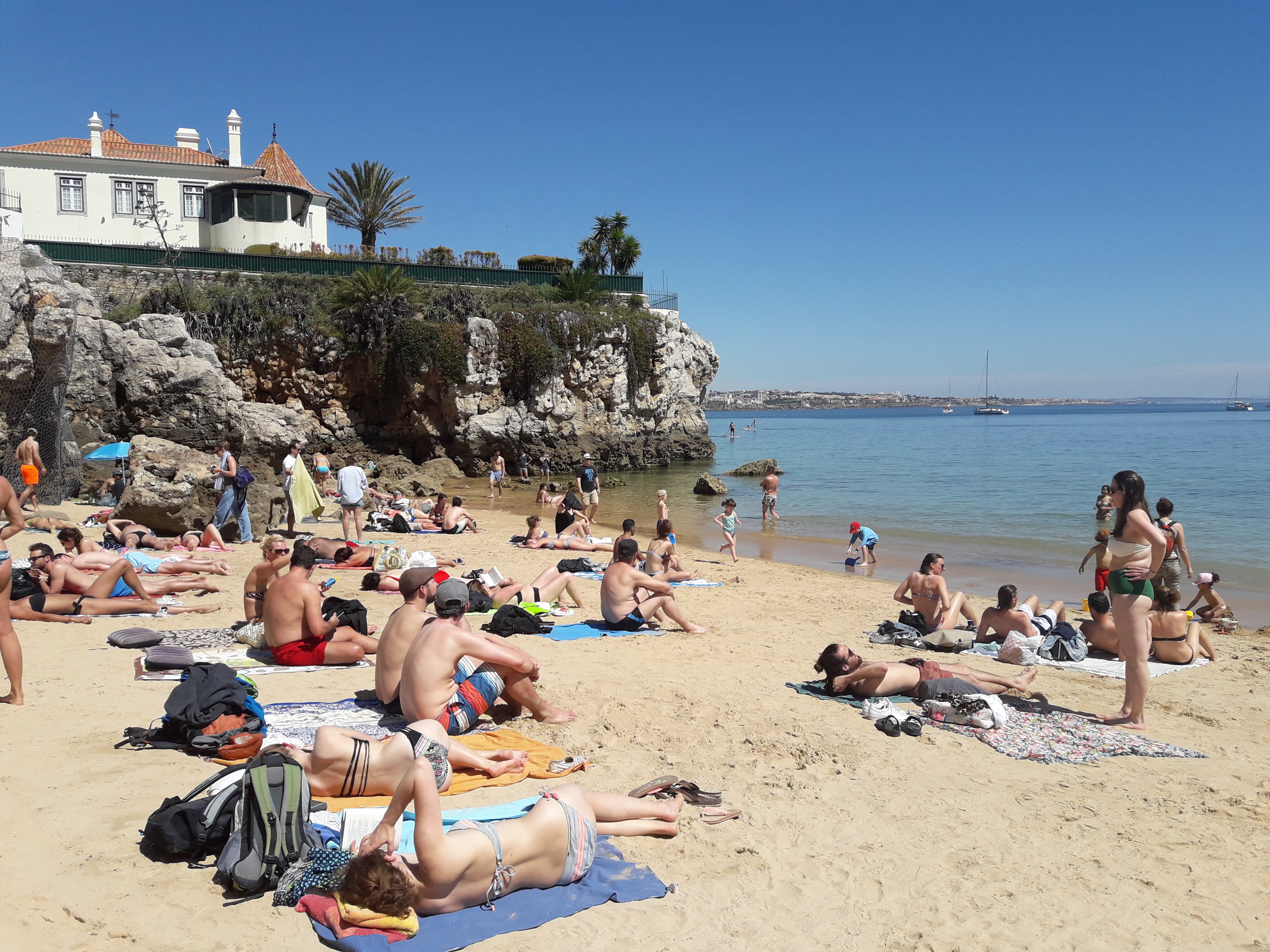
Europe also boasts of beautiful resort towns and islands full of fine beaches along its coastlines. The resort town of Cascais (Portugal) is one such resort town that has a few beaches to choose from. There’s the Praia da Ribeira, a wide stretch of beach that sits along the busy promenade where locals and tourists alike who find the water too cold for swimming (which is common in European beaches even during summers, unlike its Asian counterparts) can sit and enjoy the cool breeze, the sun, and the sights. There’s Praia da Rainha, a secluded beach which you can access thru rows of restos on a cliff, which gives you the option of having a table and order your fave drinks while basking under the sun and enjoying the bird’s eye view of the beach and seascape. You can go down to the beach and take a dip into the cold waters or just do your sunbathing on the fine sands to get that nice tan.

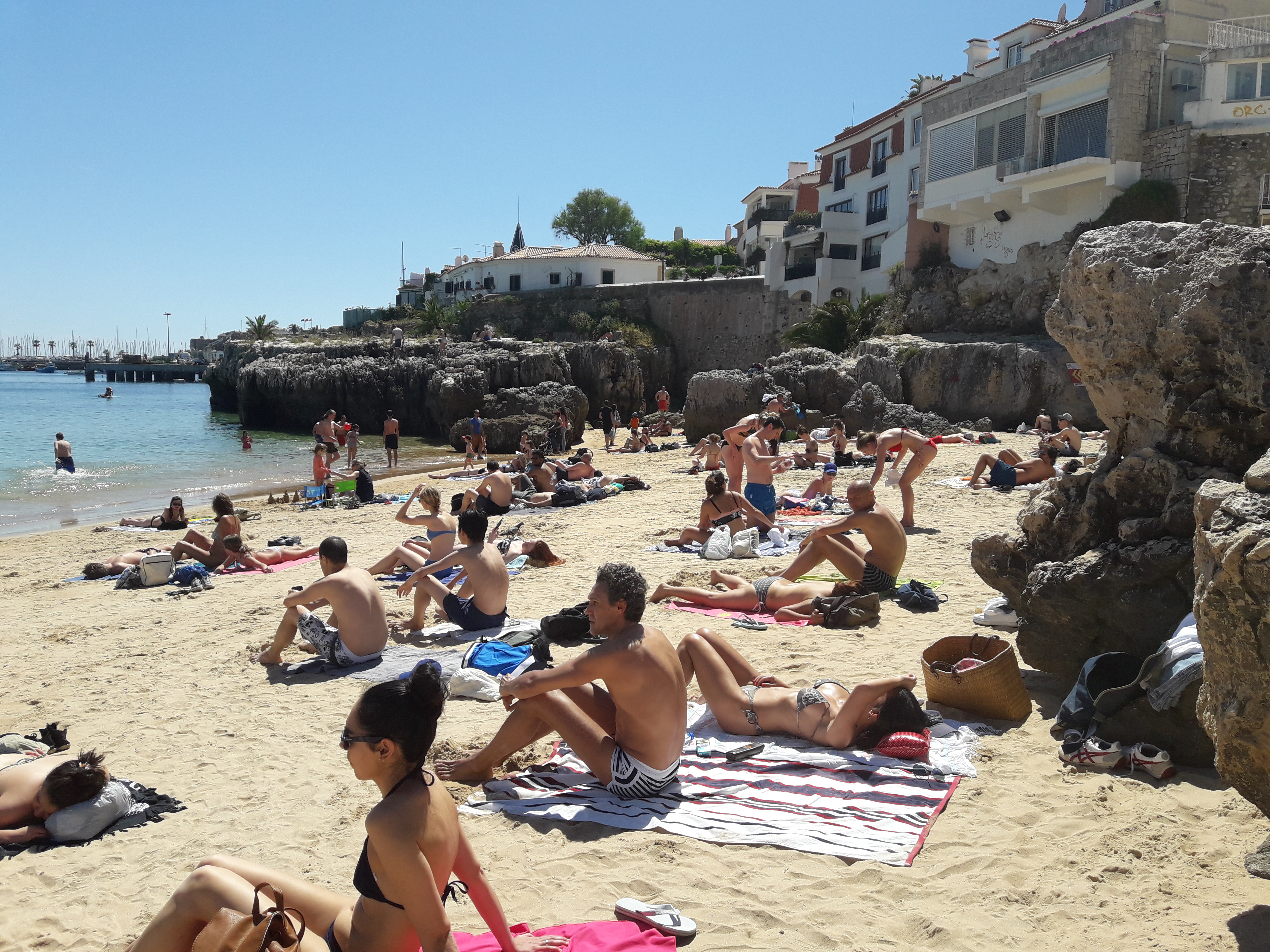
Praia da Rainha (Cascais, Portugal)

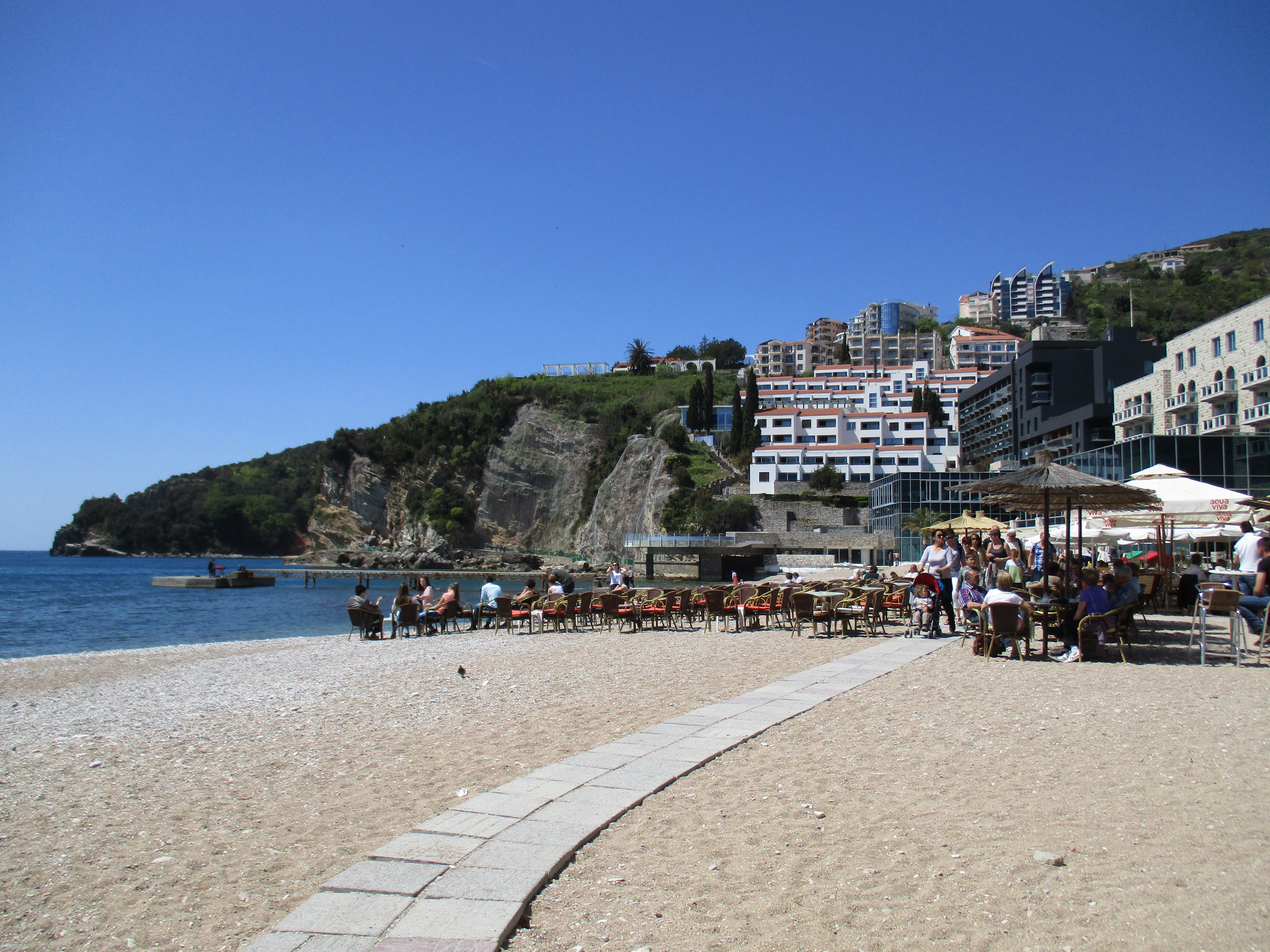
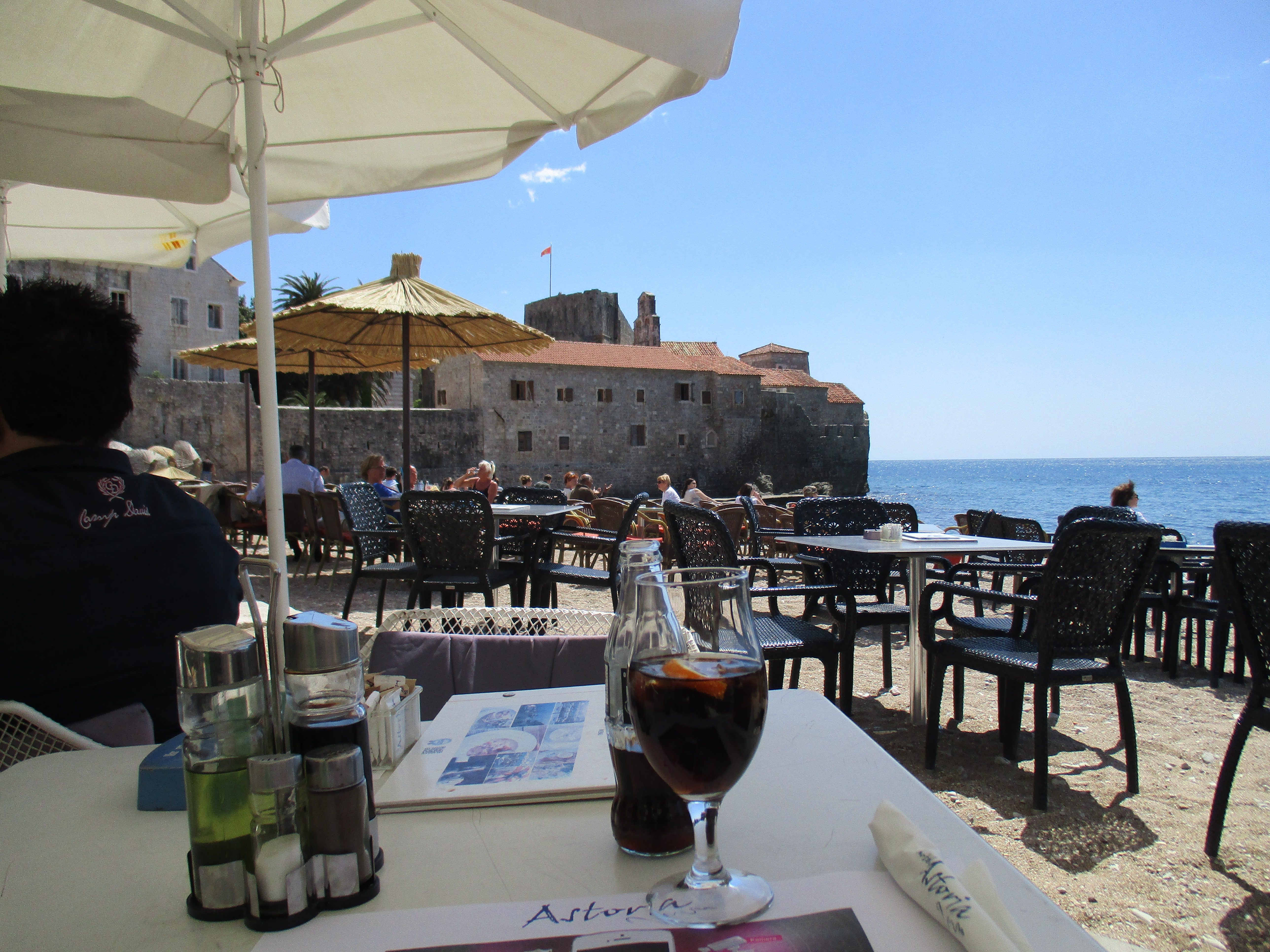
Aside from Spain, Malta, and Portugal, Italy and Montenegro also have nice resort towns with fine beaches. I wrote about the resort towns of Positano and Amalfi in Italy in my previous article (https://columbusbee.blog/2020/03/15/italy-how-thou-i-love-thee-let-me-count-the-ways-part-2-of-2/) as well as the island of Capri. Montenegro has the resort town Budva, which, just like any other resort towns in Europe, is deliciously beautiful with its old charm mixing well with modern marina and pebbly beaches. You can have lunch by the beach if the water is too cold and can sit through all day people watching as well as appreciating the scenery.
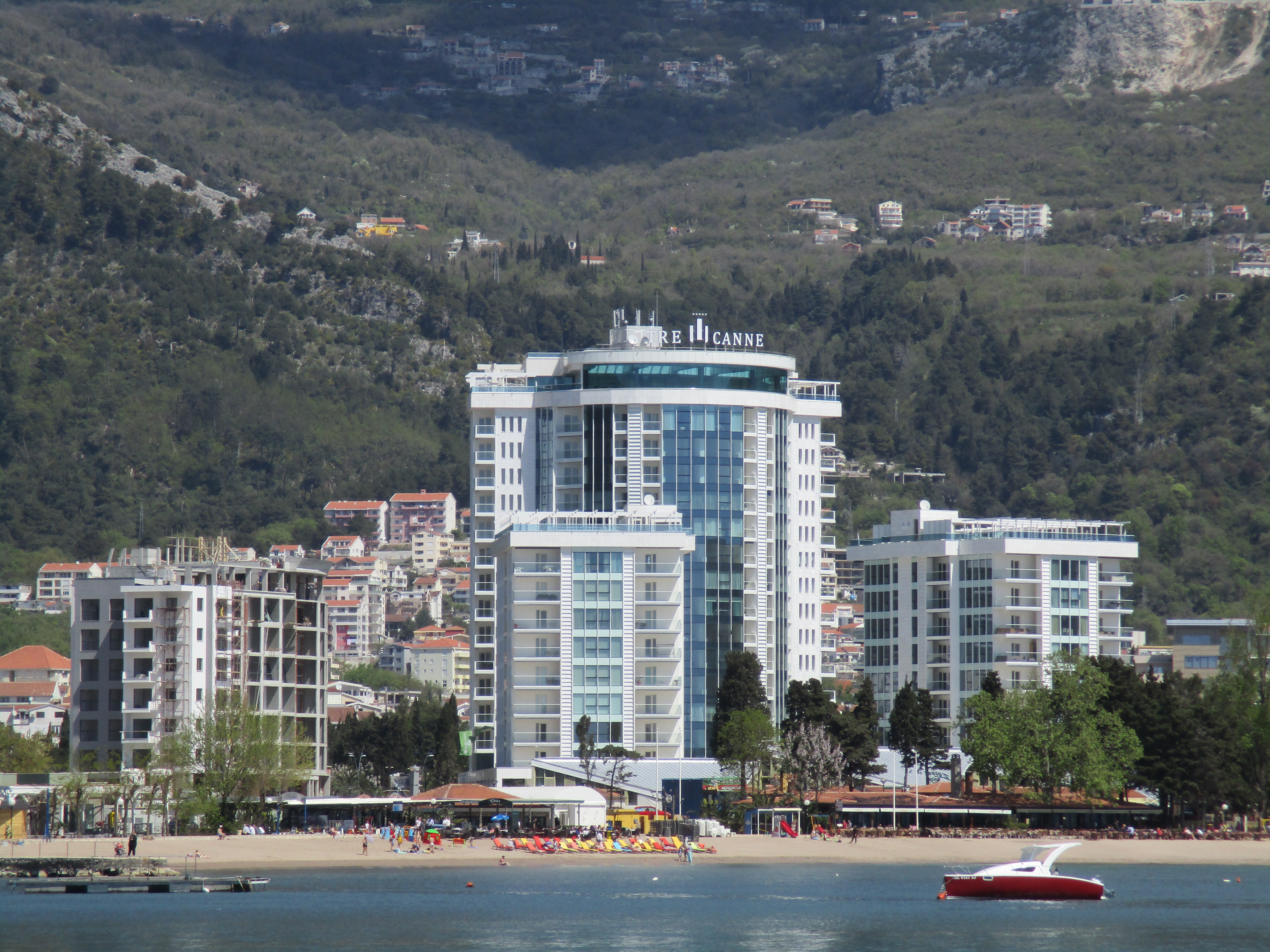
(Top) Beaches of Budva (Montenegro); (bottom) lunch by the beach

Then of course you have the popular isles of Greece. Two of which are Mykonos and Santorini, which I wrote about in my earlier article (https://columbusbee.blog/2019/07/21/greece-of-myths-mediterranean-food-and-beaches-part-2-of-2/). You can do beach hopping in any of these isles, as both have pockets of beaches along its coastline. Just be on a lookout for tourist traps, particularly in Mykonos. You need to be extra cautious in this place. You don’t want to get “robbed” (just like what happened to me as shared in my article) that can potentially ruin an otherwise enjoyable holiday. Tourist traps aside, the beaches tick all the boxes: fair share of sunshine all throughout summers, clear blue or green waters, white to black sands or pebbles from volcanic matter, and cool, light to windy sea breeze (Mykonos at times can be very windy).
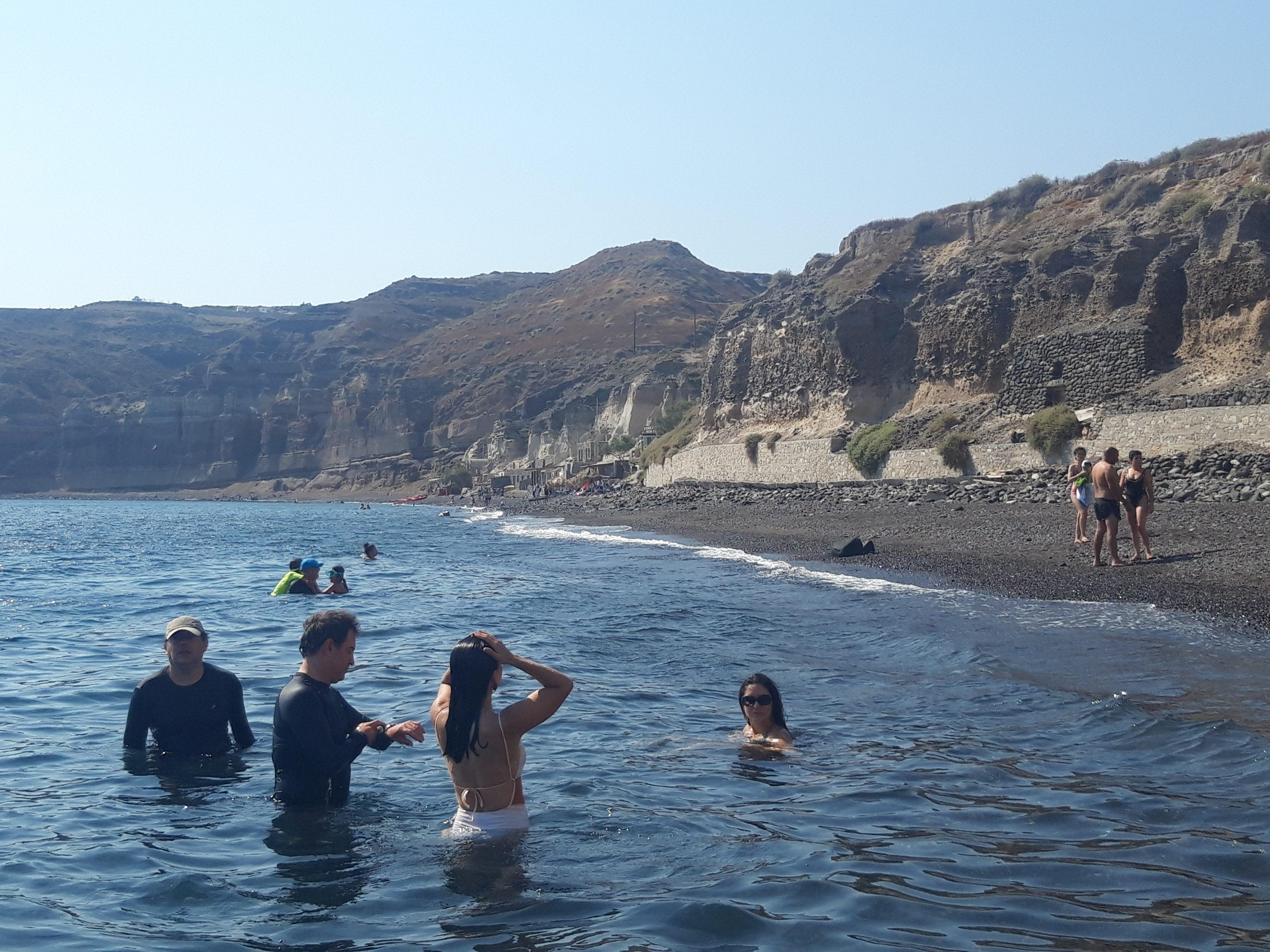
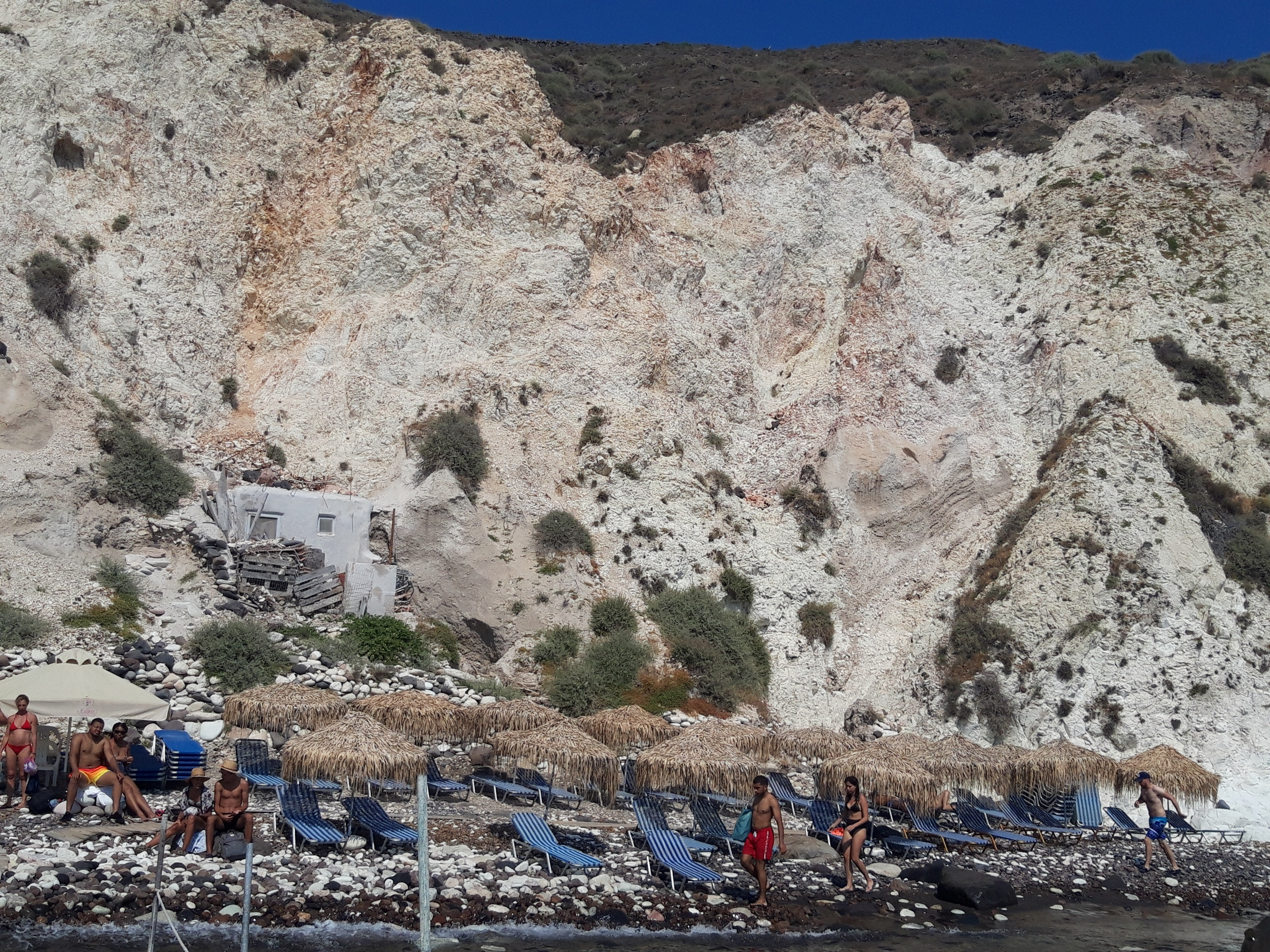
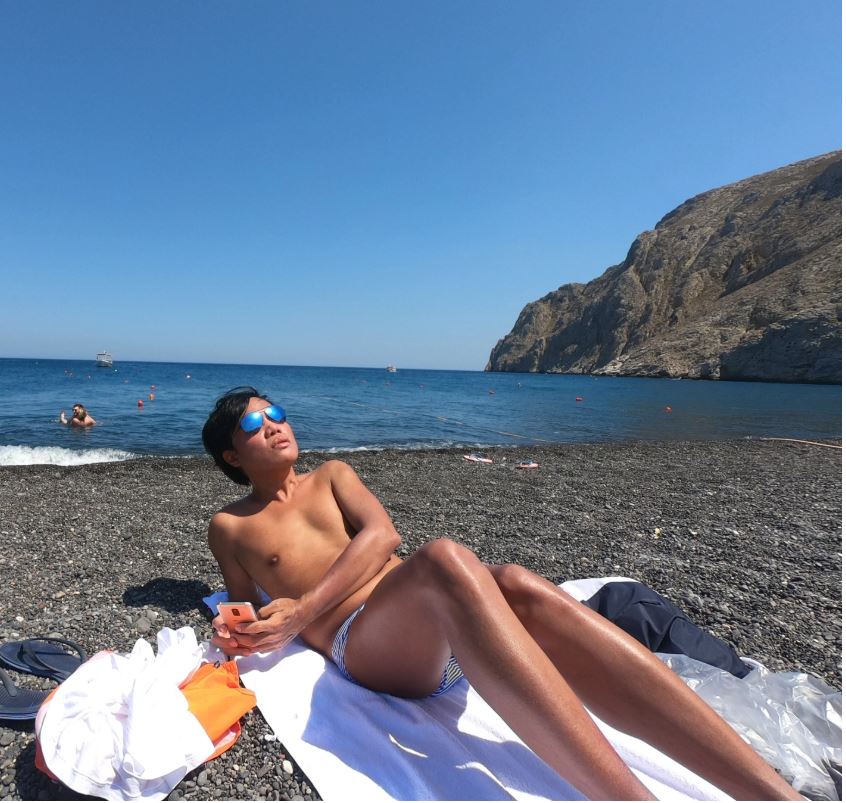
Beach hopping in Santorini (Greece) from left (clockwise): Black Beach, White Beach, Red Beach

What is common among these European beaches is that these rest along the shores of the Adriatic, Aegean, and Mediterranean seas. I don’t know what’s with these seas, but there is something mystical and magical every time I’m near these bodies of water. It’s like something’s calling me to be near it, to feel it, to soak in it. Aside from its crystal clear waters that are always enticing (as well as baffling, like how waters along some of these big cities and towns have been kept clean thru centuries), there is something special and dreamy about these seas, like unicorns. If I have to get mythical about it, I may be a descendant of Poseidon or his demigod son Triton. It seems like I’m forever under the spell of these seas, that’s why I always keep on coming back.
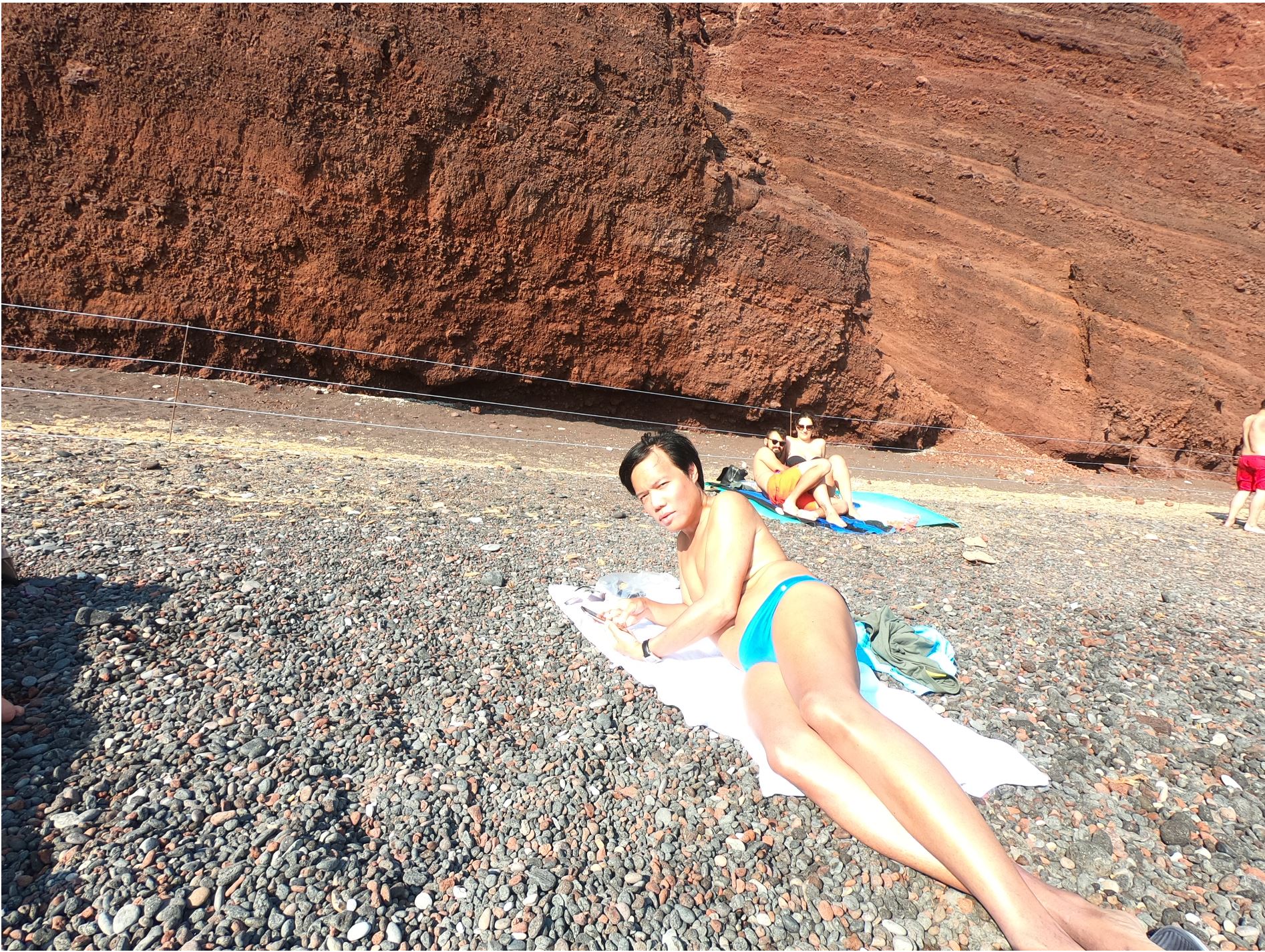
Chillin by the Red Beach

The magical spell seems to also make people less inhibited. It’s not uncommon in these beaches that people can do the full monty regardless of age and let it all hang out like it’s nobody’s business. What can be more freeing than that feeling of being one with nature (or in this case, being one with the sea)? I haven’t done that yet, but if I did, it would be the most courageous and liberating act that I could ever do in this lifetime (I could probably consider skinny dipping lol).

Middle East
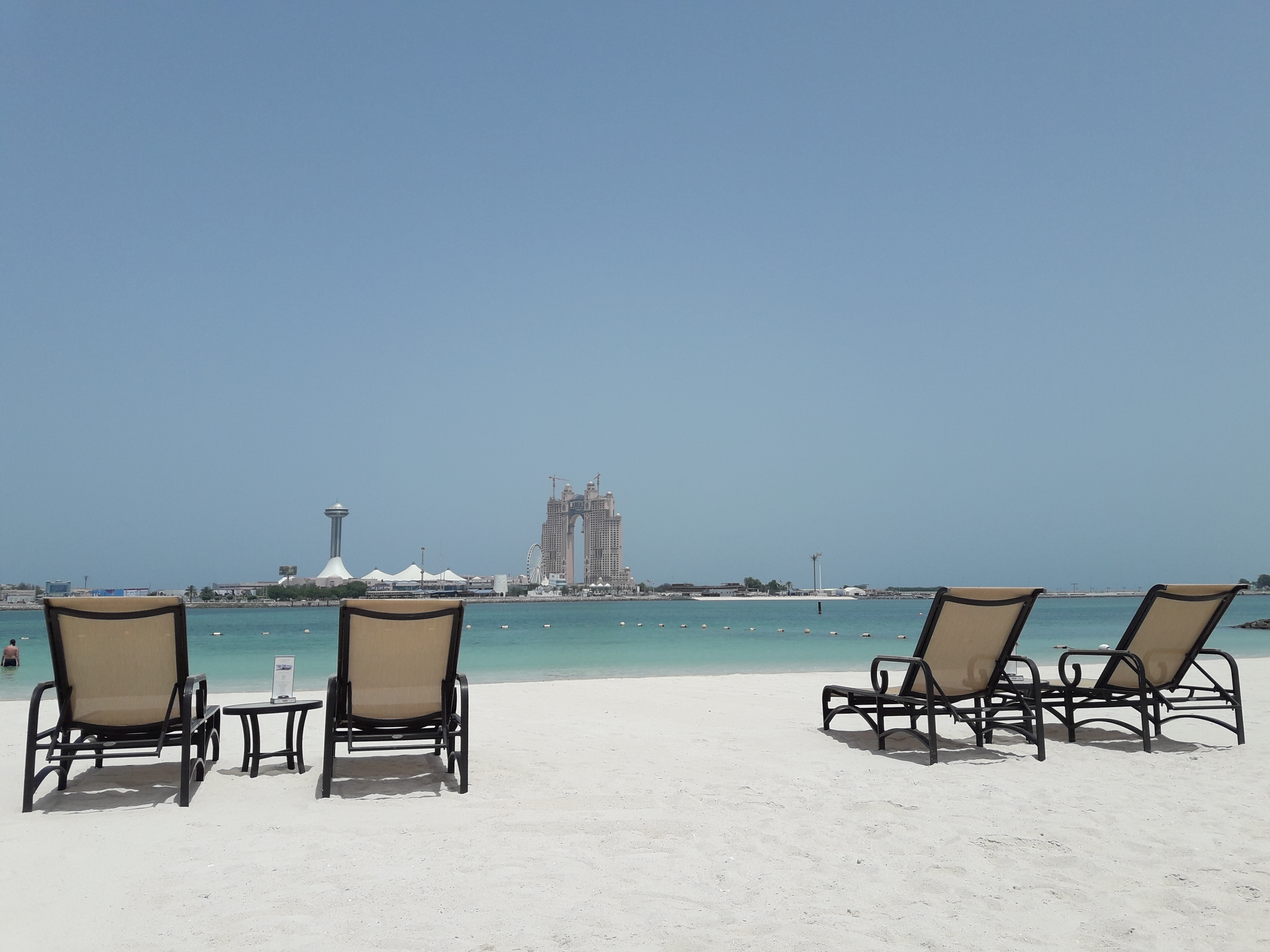
Nation Riviera Beach Club with the view of the Fairmont Marina (the one that looks like Atlantis The Palm) at Al Kasir Island and the Arabian Gulf (Abu Dhabi, United Arab Emirates)

The only time that I was in the Middle East (aside from layover in Muscat in one of my long haul flights) was when I availed of the stopover promo of Etihad Airways where I spent a few days in Abu Dhabi (the airline’s main hub). The business class promo comes with accommodations at The St. Regis Abu Dhabi which entitle guest access to the private Nation Riviera Beach Club. The beach can be easily reached from the hotel thru an air-conditioned underground tunnel underneath the Corniche.
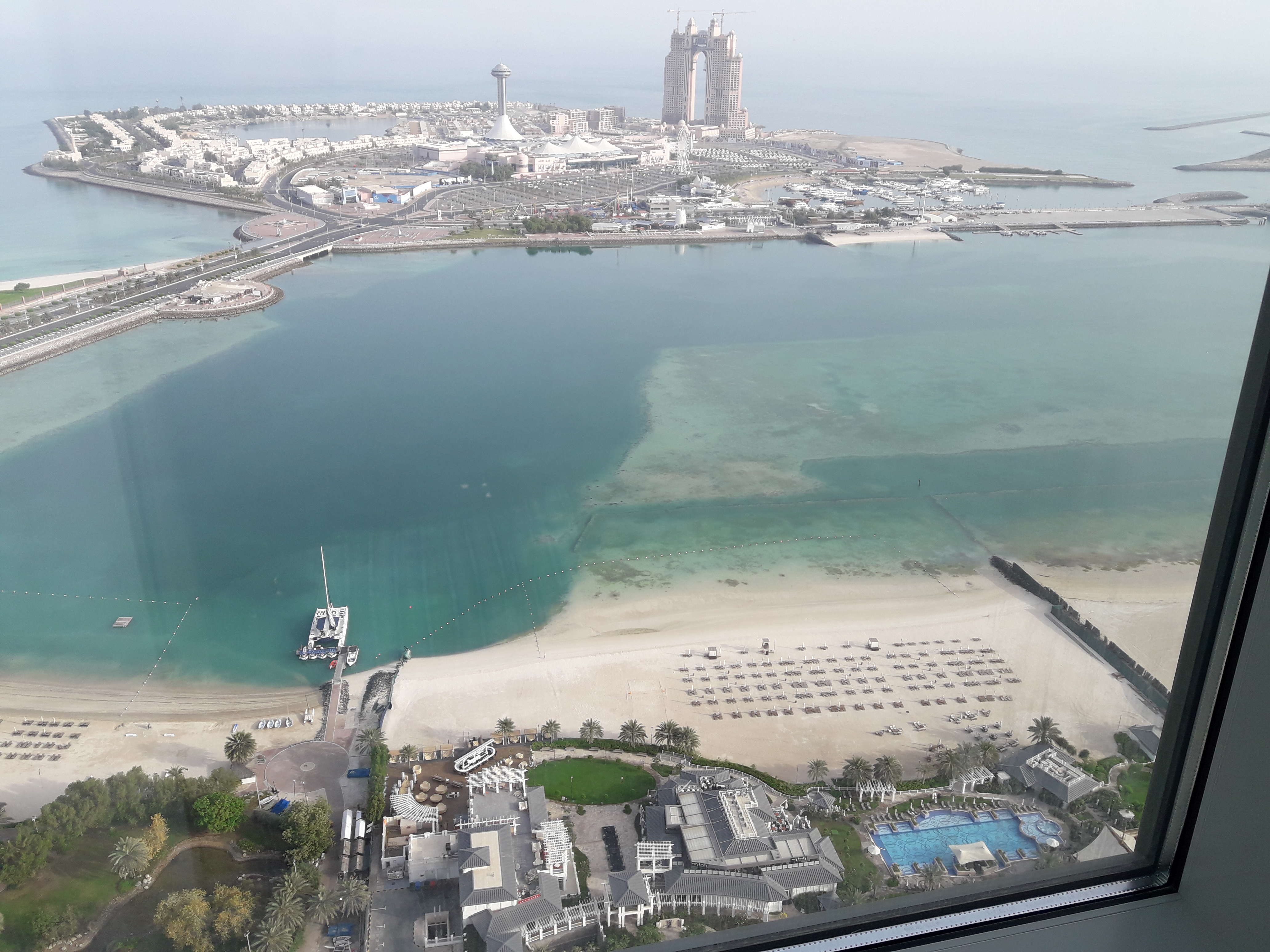
View of Arabian Gulf, Al Kasir Island, and Nation Riviera Beach Club from my hotel room (The St. Regis Abu Dhabi)

The beach is large enough and provides a good view of the Fairmont Marina Abu Dhabi (which is the emirate’s version of Dubai’s Atlantis The Palm) in Al Kasir Island. Coupled with turquoise waters of the Arabian Gulf and the pristine sands give this beach that chill vibe aside from the exclusivity and luxury attached to these private beach clubs.
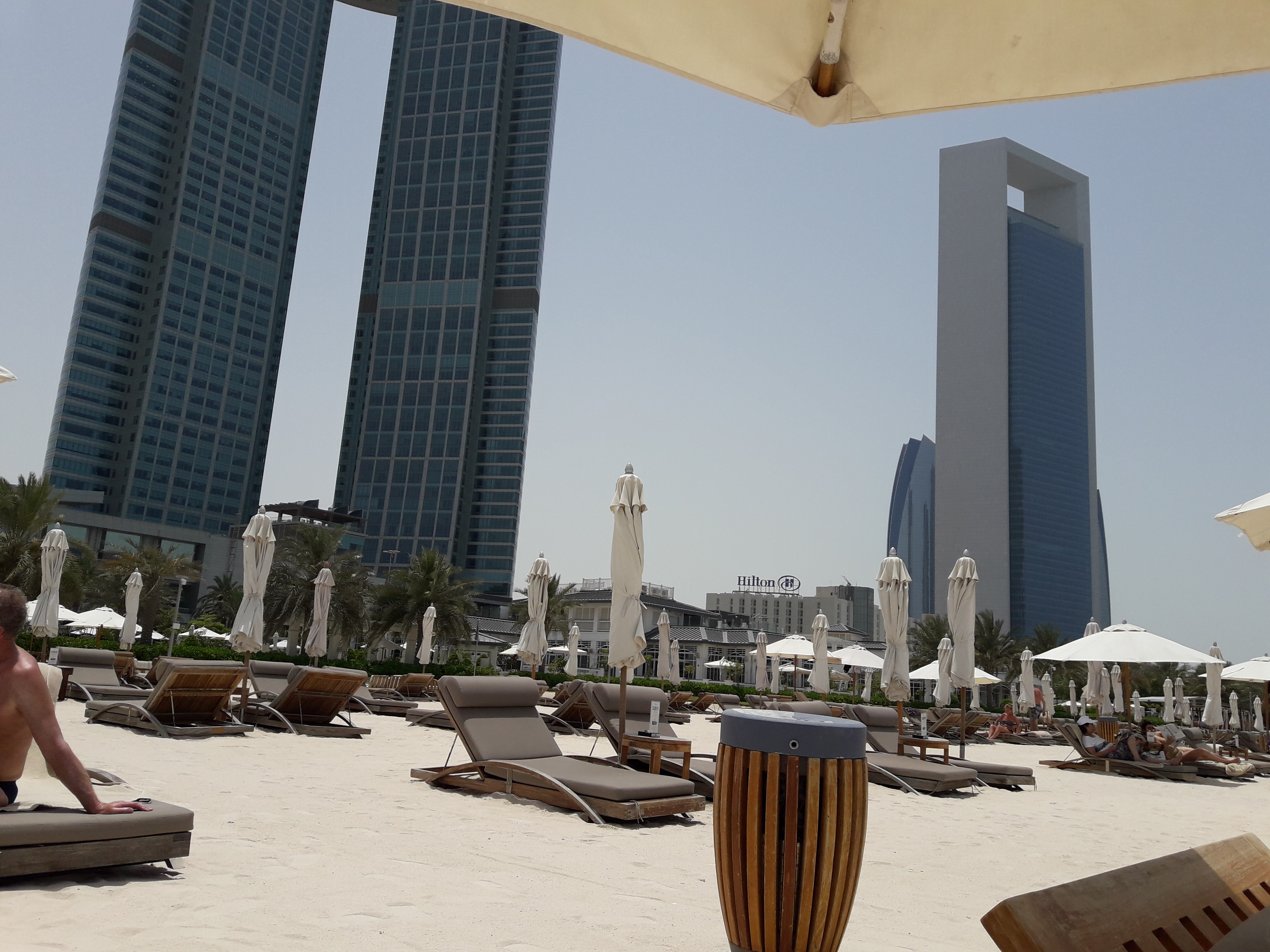
(Left) View of The St. Regis Abu Dhabi; (right) enjoying my fave drink while chillin in one of the beach loungers

Since it was the stopover before my flight back to Manila, it was the perfect break from all the flying and walking while on holiday. What better way to rest those tired feet (from walking) and back (from flying intra-Europe) than to lie on one of the beach loungers and sip my fave drink while enjoying the sun, the cool sea breeze, and the nice view.

Oceania

Pinky Beach (Rottnest Island, Australia)

Hopping to the other side of the globe, this region is known not only for its beaches but also for all bodies of water. Starting off with New Zealand, this country is not really known for its beaches but for its fjords, lakes, rivers, and extreme water adventures. But it still has decent beaches on the shores of its cities such as those in Auckland, Devonport, and Wellington and in the coasts of its islands such as Waiheke. The waters and sands in these beaches may not be as pristine as those in Asia and Europe, but these are still good spots to relax especially during summers (take note that summer in this region is between December to March so a good alternative for those living in winter regions or in my case, a good travel option to get out of Manila during December to escape the holiday madness and horrendous traffic).
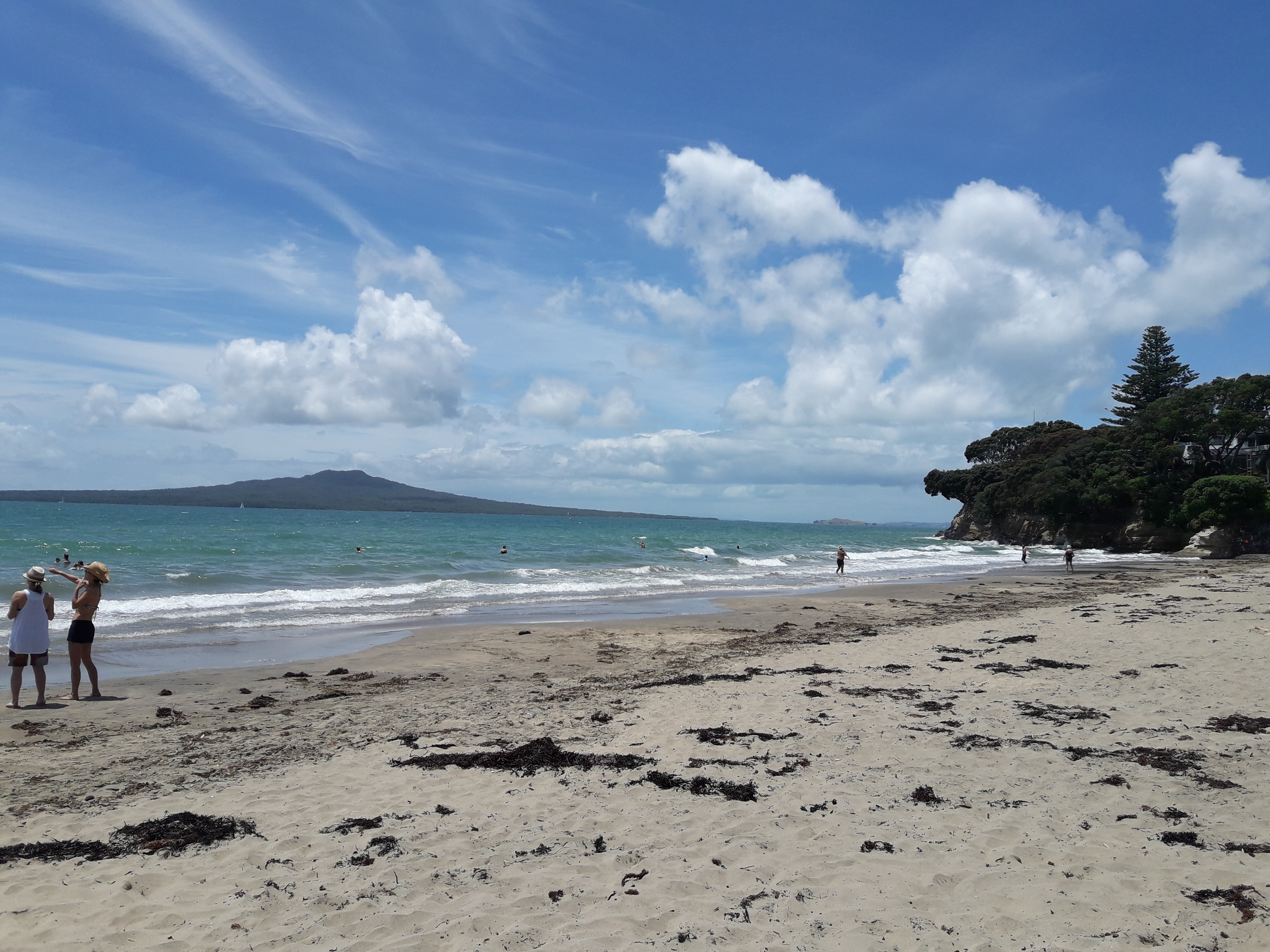
Mission Bay Beach (Auckland, New Zealand)

Wellington, in particular, has pockets of beaches along its coastline where aside from an enjoyable walk along the long stretch of its promenade, the beaches are bustling with life where Kiwis (locals) that are not sunbathing on the sands are enjoying meals in restos lining up the promenade or having either cold drinks or ice cream from kiosks around the area. I remember going to these different beach spots from my hotel on foot. It was a long walk (about 30 minutes walk one way on my pace, which can be longer if you walk slower), but it didn’t feel like one cause I enjoy the stroll and the sights where not only you pass by shops, bars, restos, museums, a marina and activity center on the way to the beach, but also get a glimpse of Kiwi city life. I enjoyed each trip to the beach, not to mention the calories burnt from walking to keep that slender beach body in check (from all the good food during these holidays).
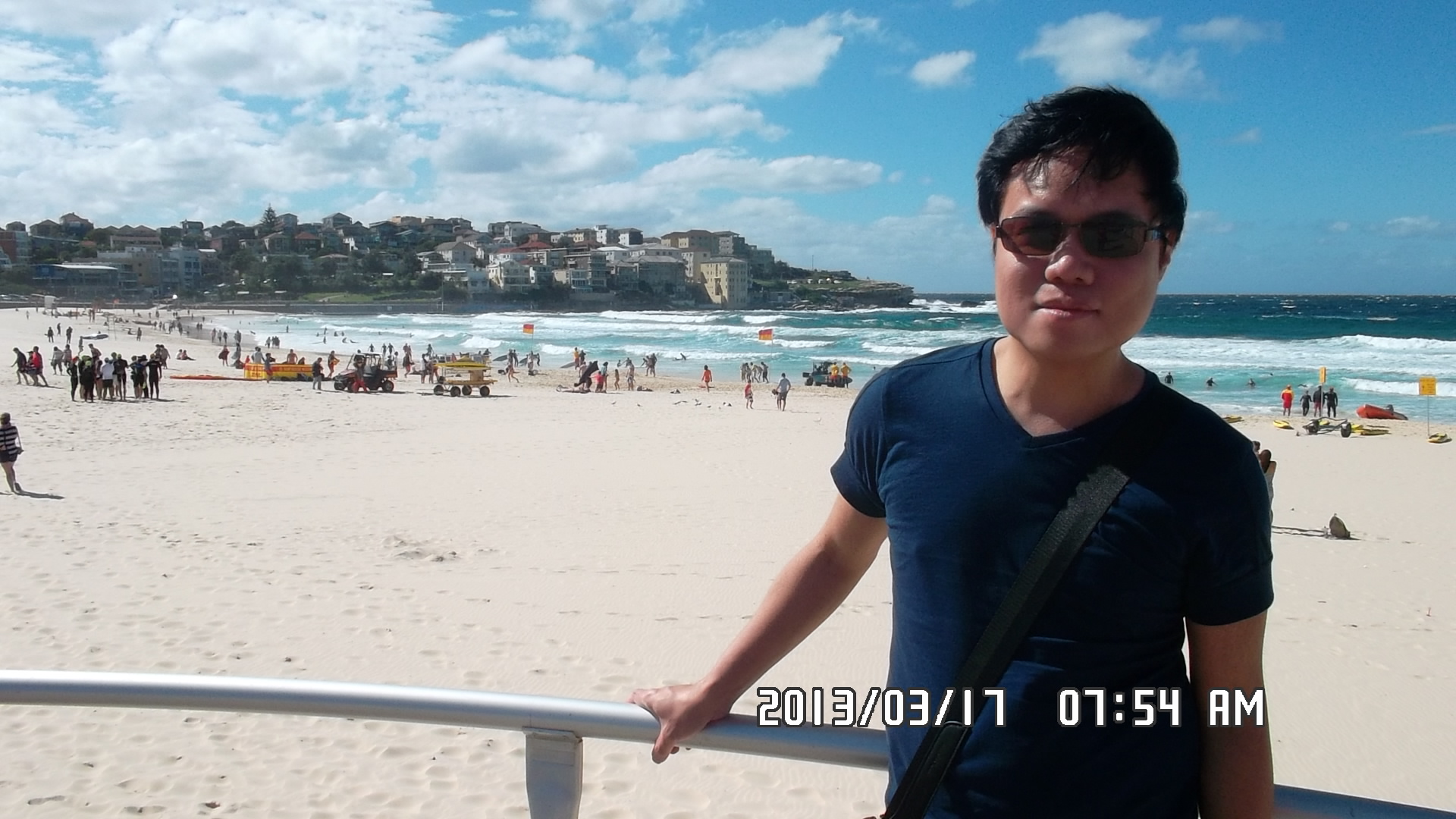
Bondi Beach (Sydney, Australia)

Australia, on the other hand, is a beach country. Every major city across the continent has its own beach, either natural or man-made. I’ve been to this continent a few times, which only speaks of how much I liked this place. Sydney, which is one of my top five cities in the world (along with Barcelona that I mentioned earlier), boasts of several beaches close to the city center, which makes this a very livable city (I would live there if given the chance). A few minutes by car or by public transportation is the popular Bondi Beach. A vast beach with strong currents and fine sands, this is the beach for both surfers and sunbathers alike. A few minutes by ferry from Sydney harbour is Manly Beach. This place exudes resort town vibe, where shops, ice cream and yogurt parlors abound. The beach and the commercial area are teeming with life, which only affirms that Aussies love their beaches. Not far by foot from Manly Beach is Shelly Beach. While Manly has fine sands, Shelly is a pebbly beach. While Manly has strong waves like those in Bondi, Shelly has calm waters as the beach is located in a cove that is sheltered from strong winds. No wonder Shelly Beach is the more suitable beach wedding scene than any other Sydney beaches.
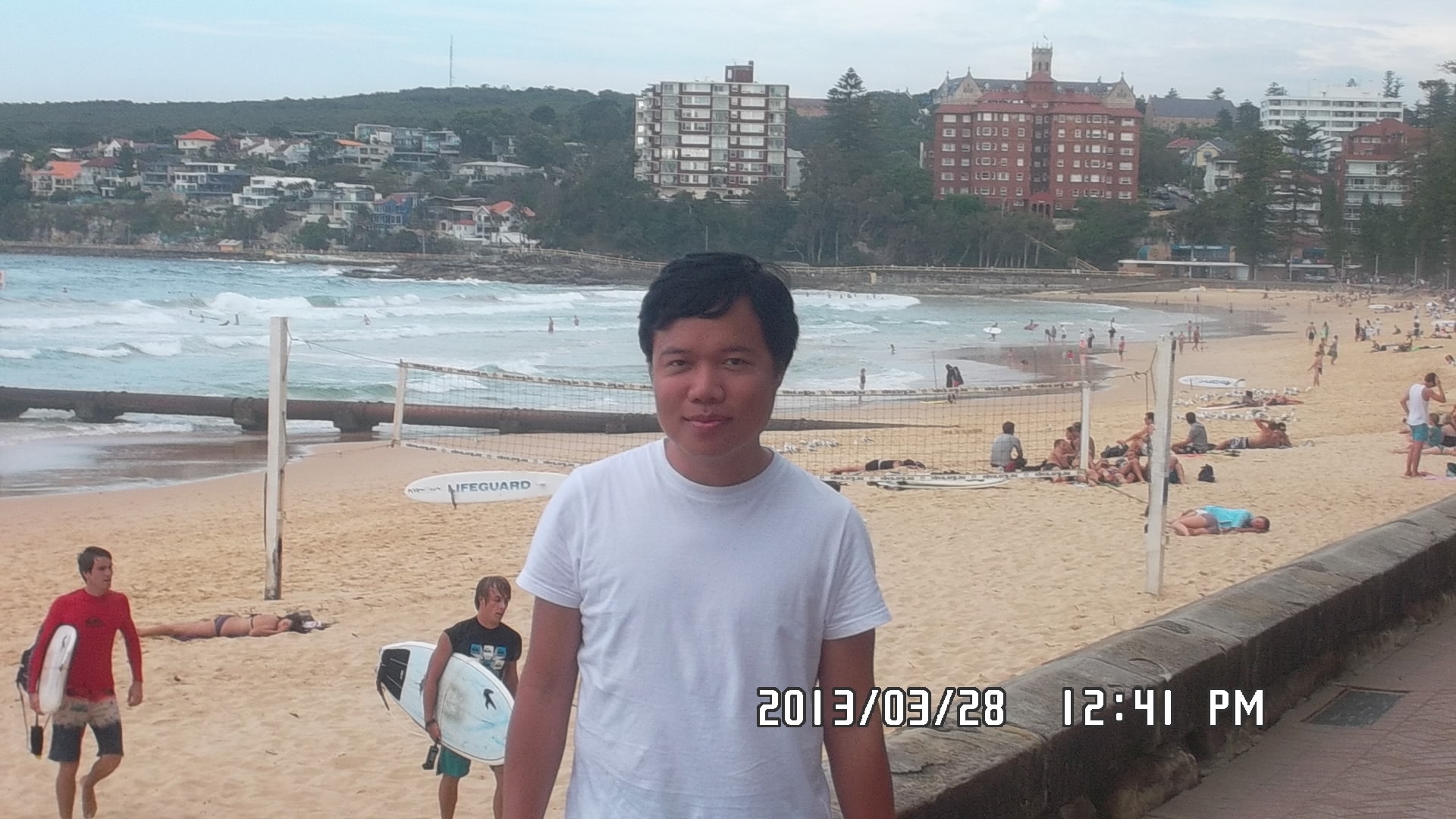
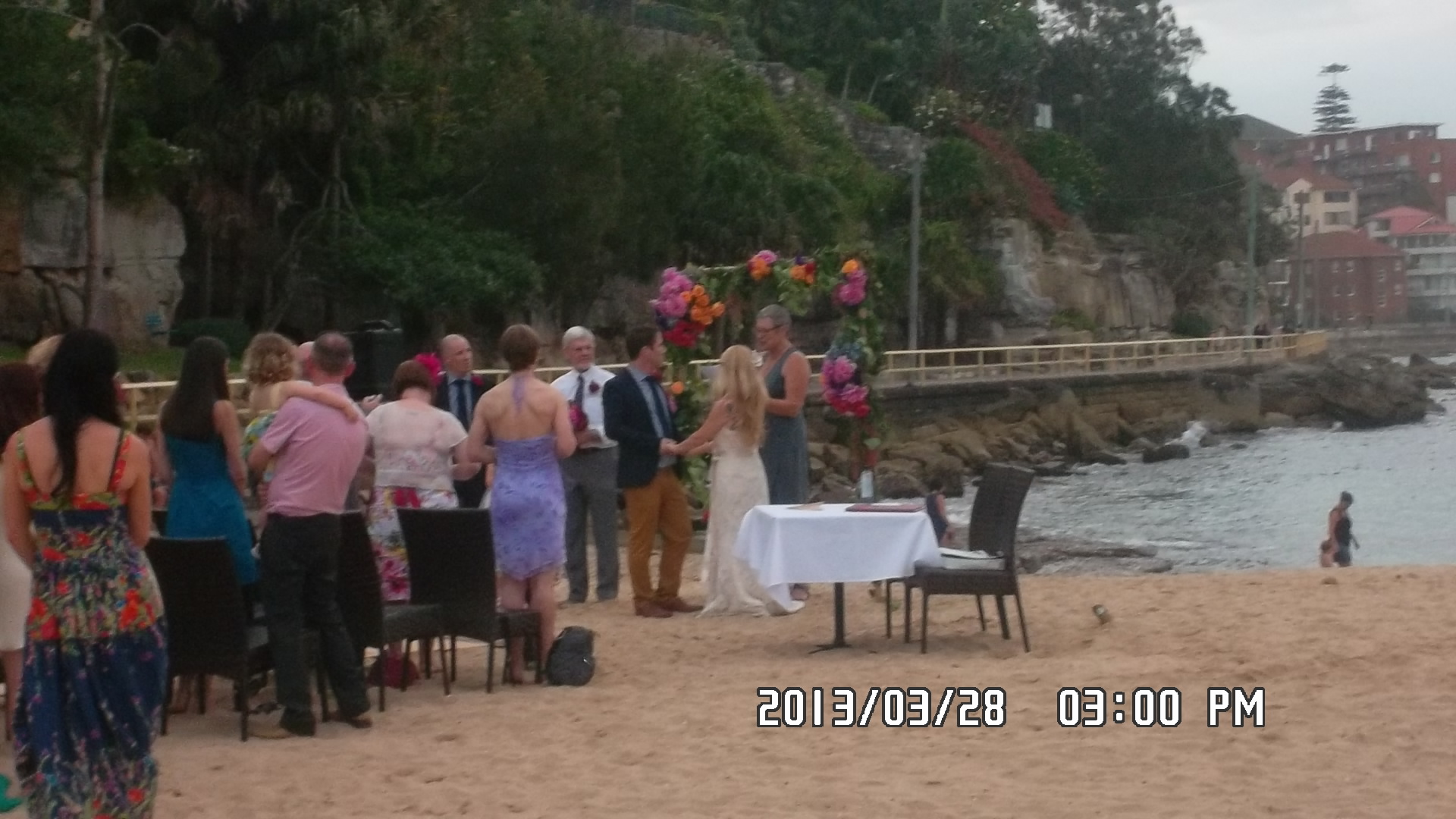
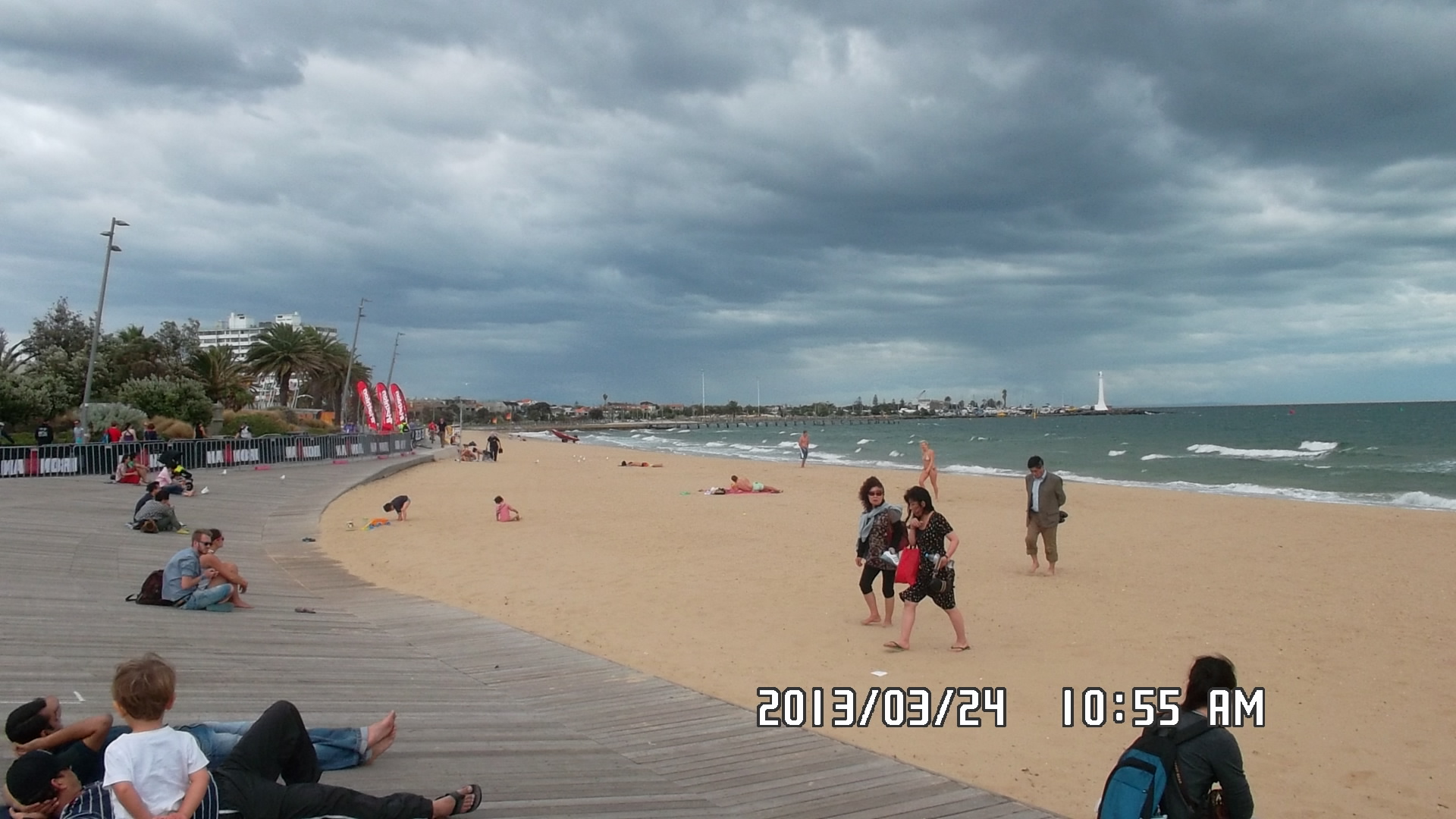
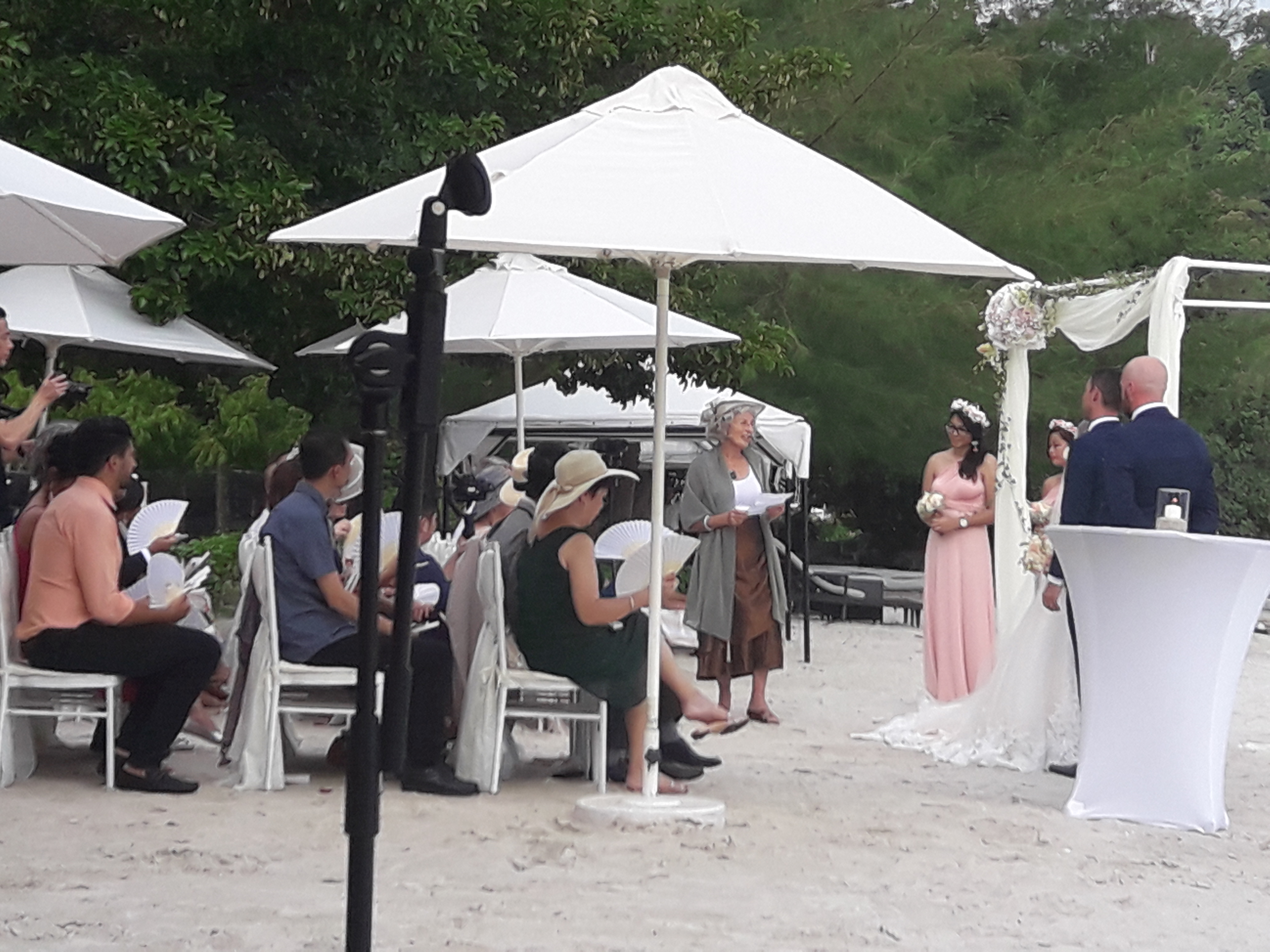
(Top left) Manly Beach; (top right) beach wedding at Shelly Beach (Sydney, Australia). (Bottom) St. Kilda Beach (Melbourne, Australia)

Another Australian city that demonstrates how Aussies mix their eclectic city living with beach culture is Melbourne. Aside from the fact that Melbourne is the cultural hub of the continent (and the most European among all the major cities in Australia), it has some of the spectacular beaches in the region. Not far from the city is St. Kilda, a resort town with a fine beach, promenade, and amusement park. There’s also a weekend market by the beach promenade that sells all kinds of stuff, from organic to art to basic necessities. Of course, Melbourne’s crown jewel is the Great Ocean Road, its coastline similar to Amalfi Coast where pockets of beaches with amazing views of the rock formations abound. A trip to Melbourne won’t be complete without seeing this postcard perfect coastline. This is where Australia’s own version of the 12 Apostles are, which comprised of several rock formations that used to be a dozen when counted but less of that nowadays.
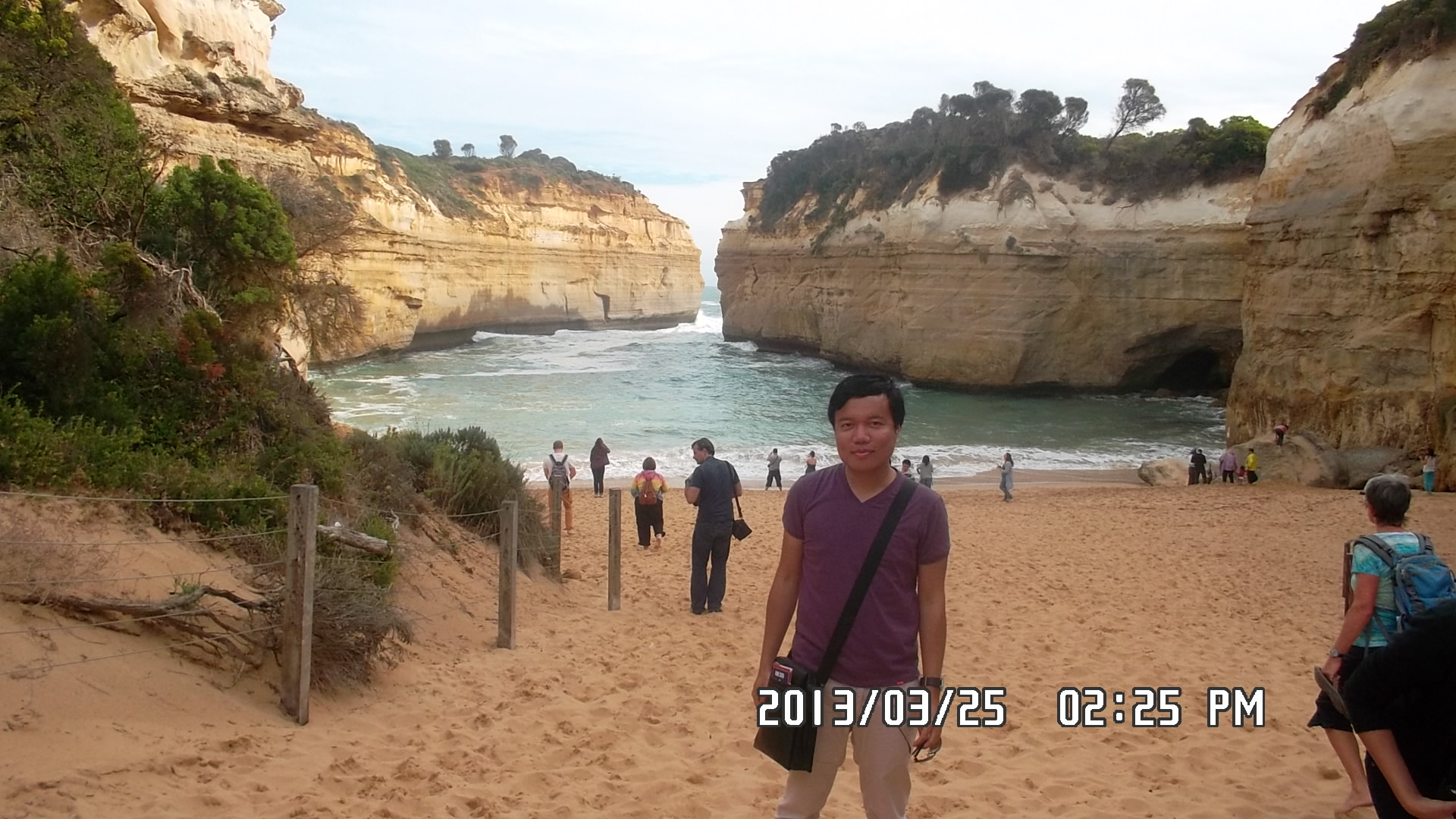
One of the pockets of beaches along the Great Ocean Road (Melbourne, Australia)

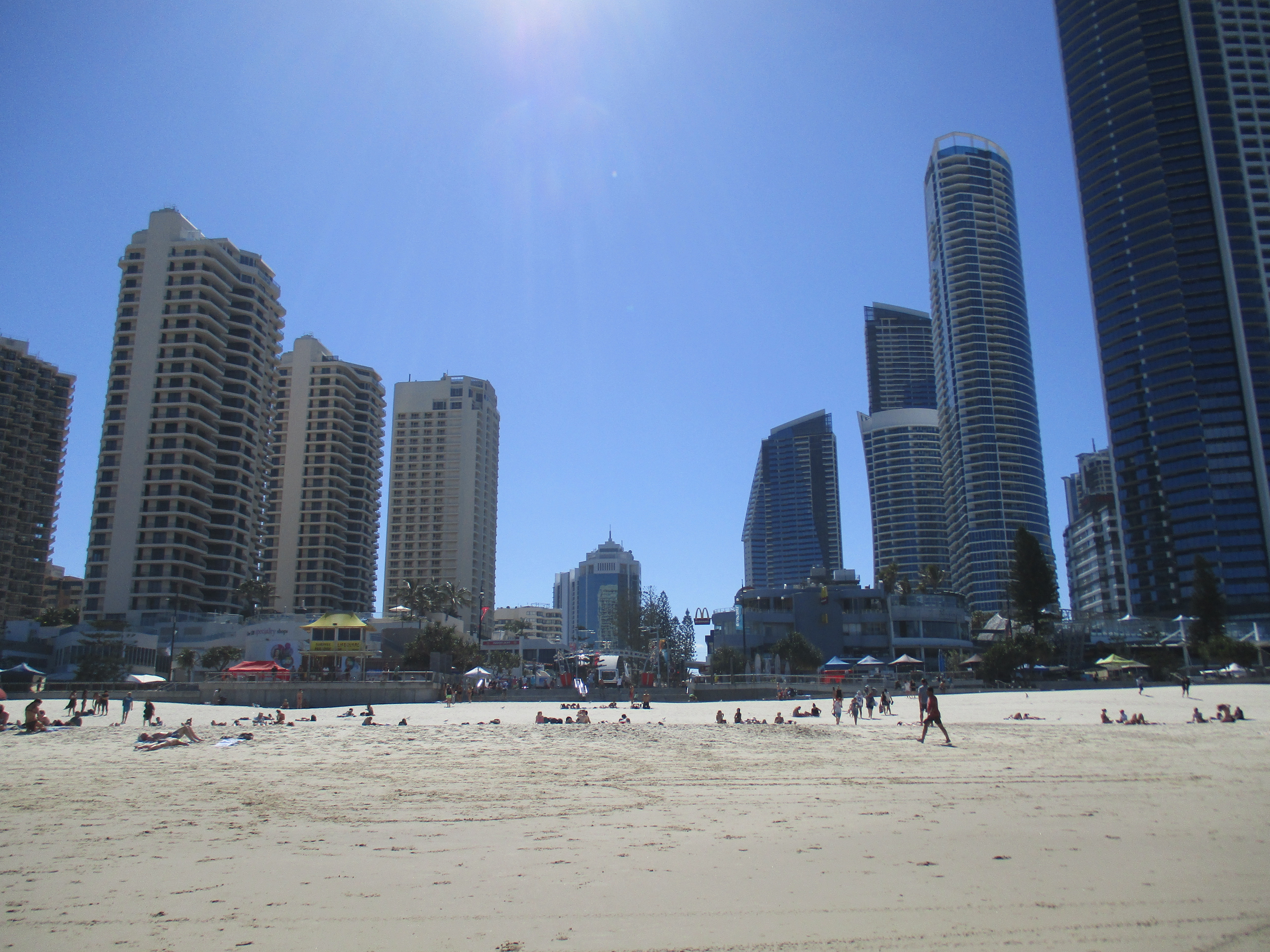
But the beach capital of the country (and the region) is neither of these two cities. Gold Coast is where beach buddies, surfers, and sun worshipers go for the waters, the wave, or just for the sun. When I said in the first part of this article that Guam reminds me of Gold Coast, that’s because of the long stretch of beach lined up with international hotel brands and apartments. I haven’t been to Miami, but I’m pretty sure this is how Miami would look like. Not only a shore full of skyscrapers, but also full of sculpted and tanned bodies.

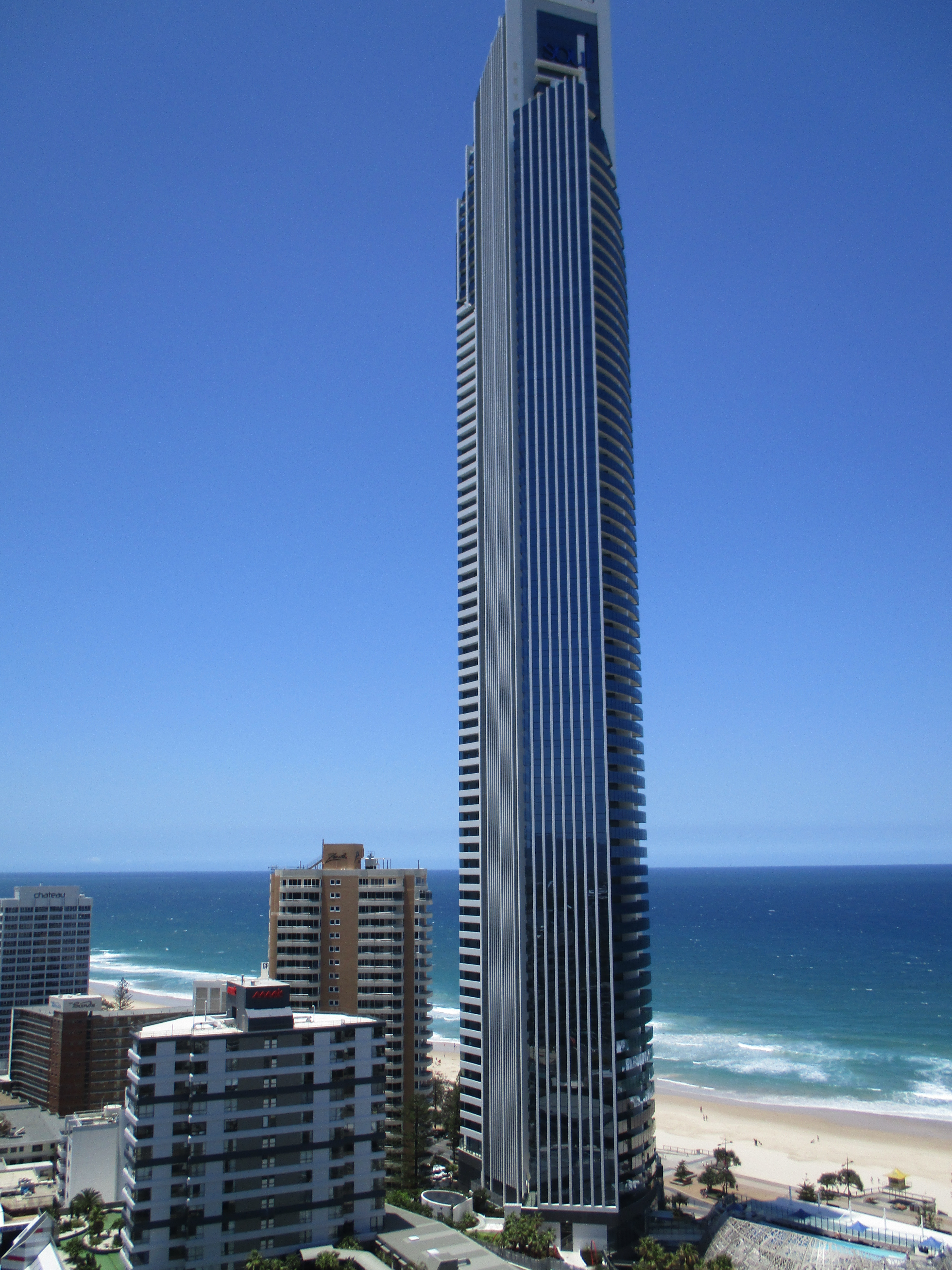
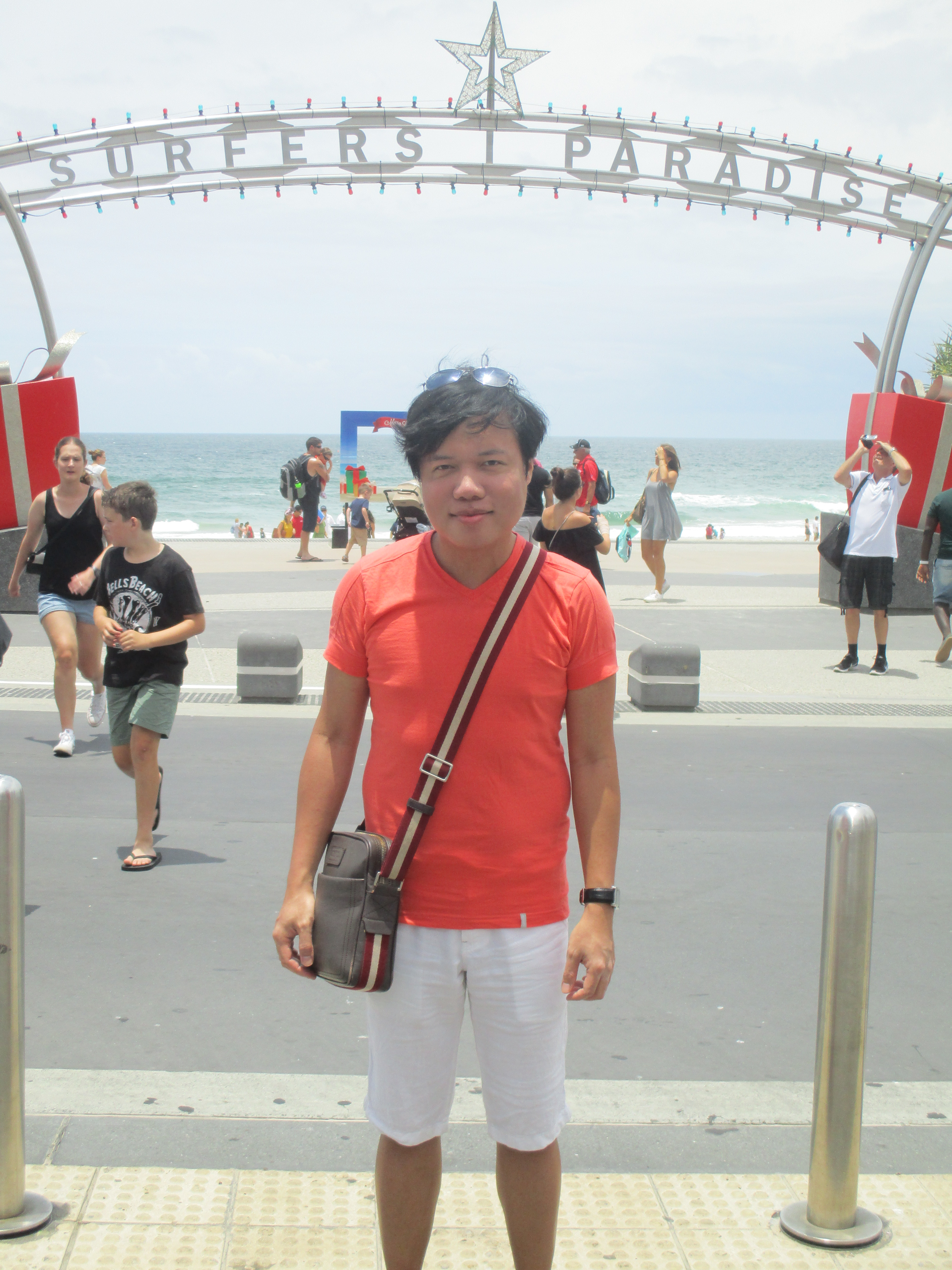
(Clockwise from top left) View of the Surfers Paradise Beach from my hotel room balcony; view of the skyscrapers from the beach; at the main entrance to the beach (Gold Coast, Australia)

Surfers Paradise is the main beach and this looks like the melting pot of summer holidaymakers. It also helps that it has that resort town vibe that makes it more attractive to vacationers all over the world. There’s always entertainment in Cavill Avenue (the heart of Surfers Paradise, which is Aussies’ definition of a mall) amidst the backdrop of shops, bars, and restos. What more can you ask for in a place that has the sun, the waters, the waves, the sands, the shopping, and the entertainment, not to mention beautiful people from all over.

(Top) Glenelg Beach, Adelaide, Australia; (bottom) man-made beach in the heart of Brisbane, Australia

As mentioned earlier, every city in this country seems to have its own beach. Adelaide has Glenelg beach, which looks like the sister of St. Kilda beach, but still maintains its unique old town charm. Brisbane has a man-made beach in the middle of the city, which is a first for me (though this is not the first man-made beach I’ve been to, where Plantation Bay in Mactan Island, Cebu, Philippines has both fresh and salt water beaches). Perth does not have a beach in the city, but off its coast is Rottnest Island, an unspoilt, raw, and natural island blessed with some of the most beautiful beaches I’ve been to. Stunning would be an understatement to describe Pinky Beach. Reaching the beach from the center of the island reminds me of that same feeling I had the first time I’ve seen Boracay Island White Beach in the 90’s (at the time when it wasn’t the party island that it is today). The sun seems to be kissing the fine sands as it deflects the light (like it’s kissing back) while the seascape is mesmerizing. In the absence of any commercial establishments (except for a few restos and shops in the center of the island) and the cleanliness that has been imposed on the island. it has maintained its beautiful natural state over the years. Talk about sustainable tourism.
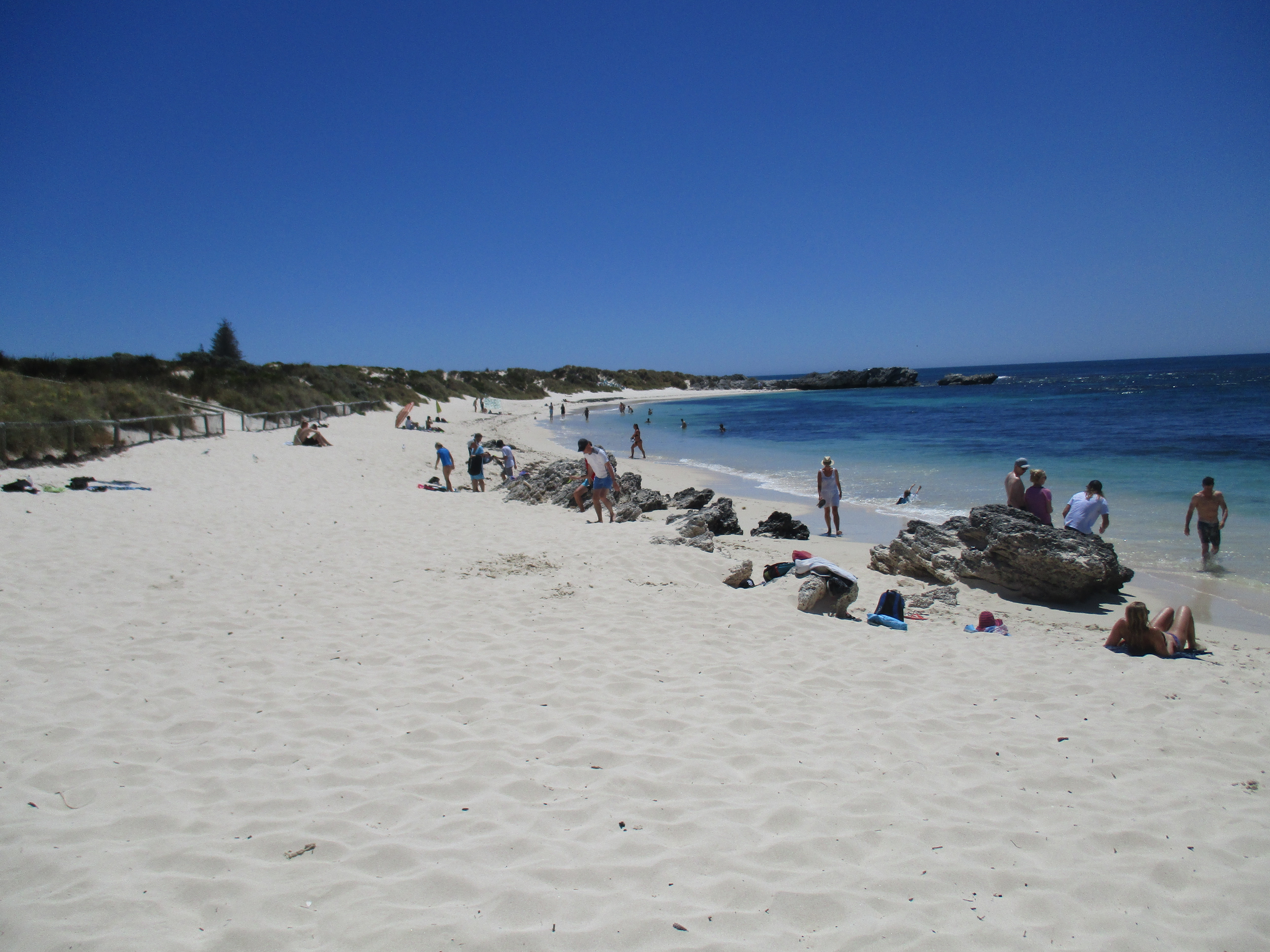
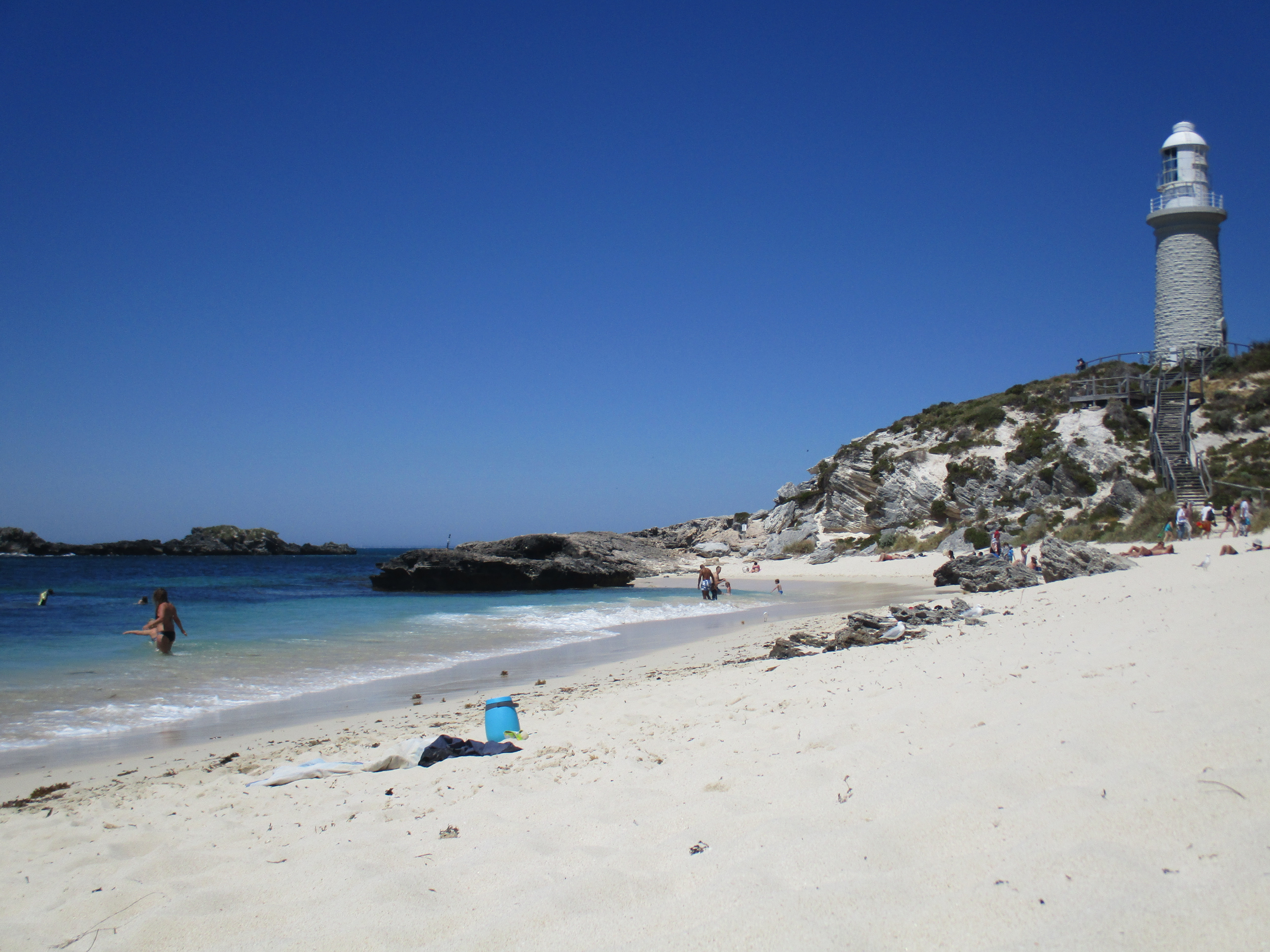
Rottnest Island, Australia

Ever wonder where the island got its name? Apparently an explorer in the 17th century discovered this island and thought the quokkas that are endemic to this island are rats. Since there were a lot of these gentle mammals at that time (and even up to this day), he probably thought the island is a nesting place for rats. Nowadays, people and quokkas have learned to co-exist, maintaining that balance as nature has intended it to be.
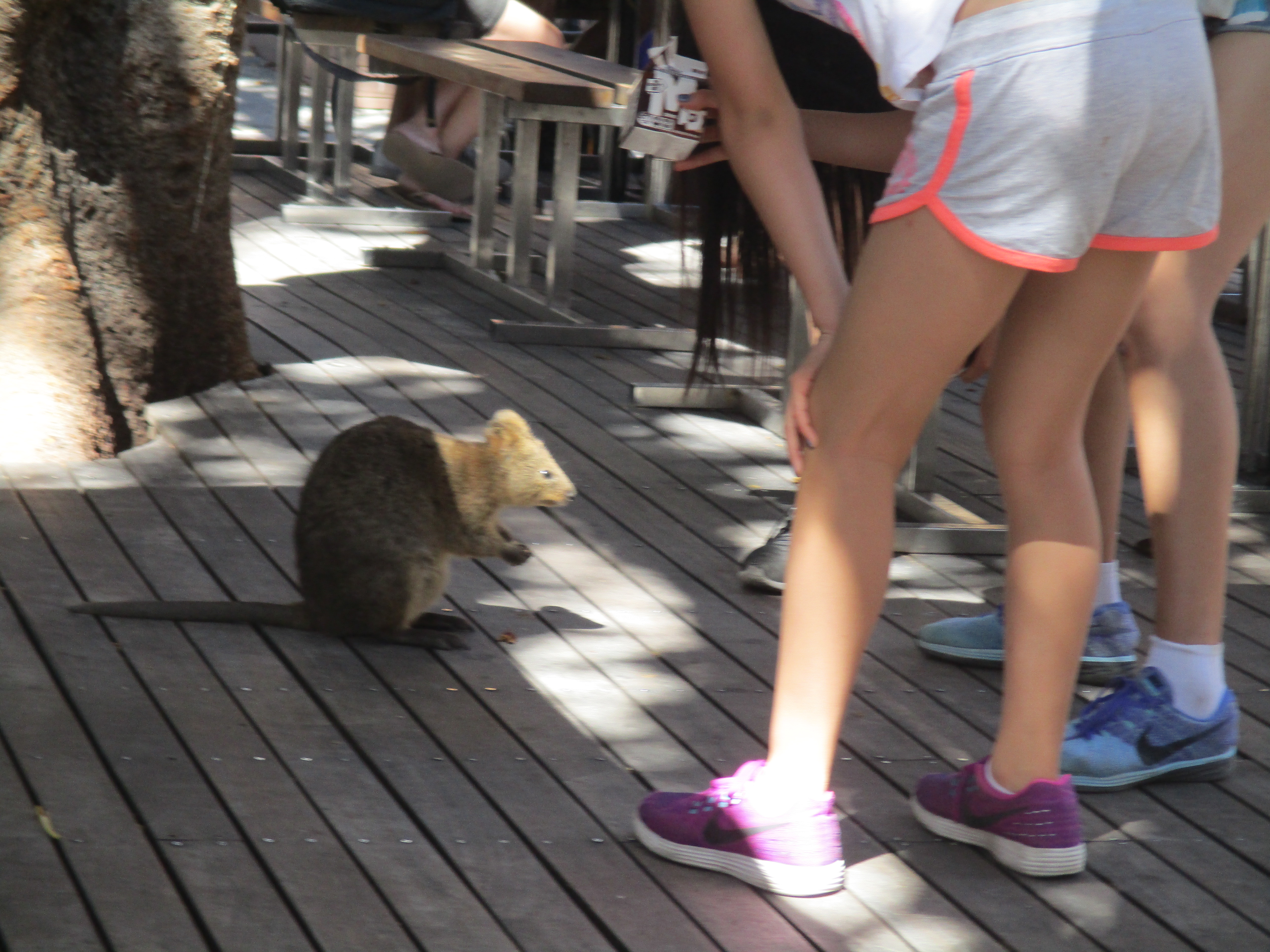
A quokka foraging for scraps (Rottnest Island, Australia)

So we have reached the end of the road for our virtual beach tour around the world. How did you find the trip, dear readers? Did you get some virtual tan while soaking into the joy and serenity that these beaches had to offer? While on quarantine, I hope this has brought sunshine in a phone or in a laptop, a temporary relief from the new reality that we live in right now. This part of our lifetime may not be the worst of experiences that we have gone thru, but if you are starting to feel like life is a bitch, think of all your blessings and come to the realization that life can also be a beach. This is coming from someone who has to go thru life with his own flaws (https://columbusbee.blog/2019/06/15/ihaveflaws/), personal tragedy, betrayal, pain, struggles, and lessons learned. But what’s life without these to live by and with? As the saying goes, what won’t kill you will only make you stronger.
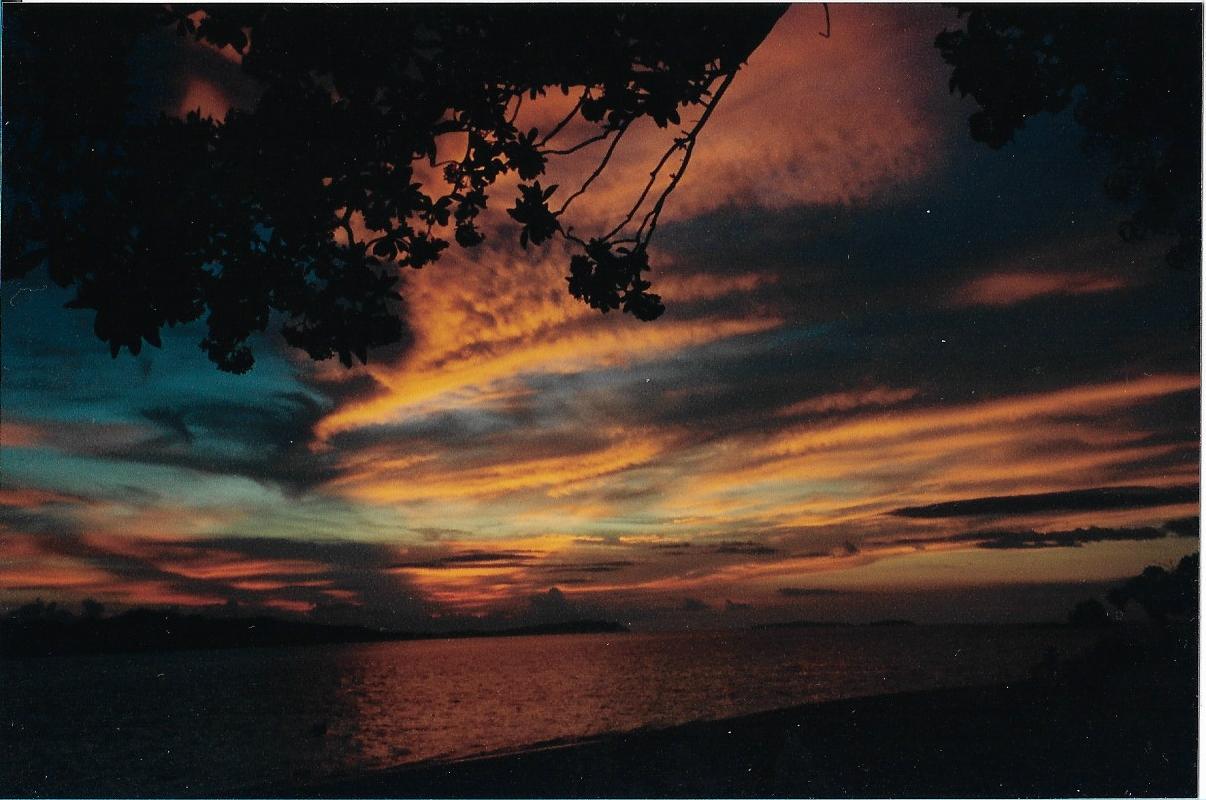
Sunsets signify the end of day that was and the start of new day that will be

So if life gives you lemons, chill and make plenty of cool, refreshing lemonade. Coz you only live once, and life’s too short to realize you haven’t really lived at all. Smile and start living.
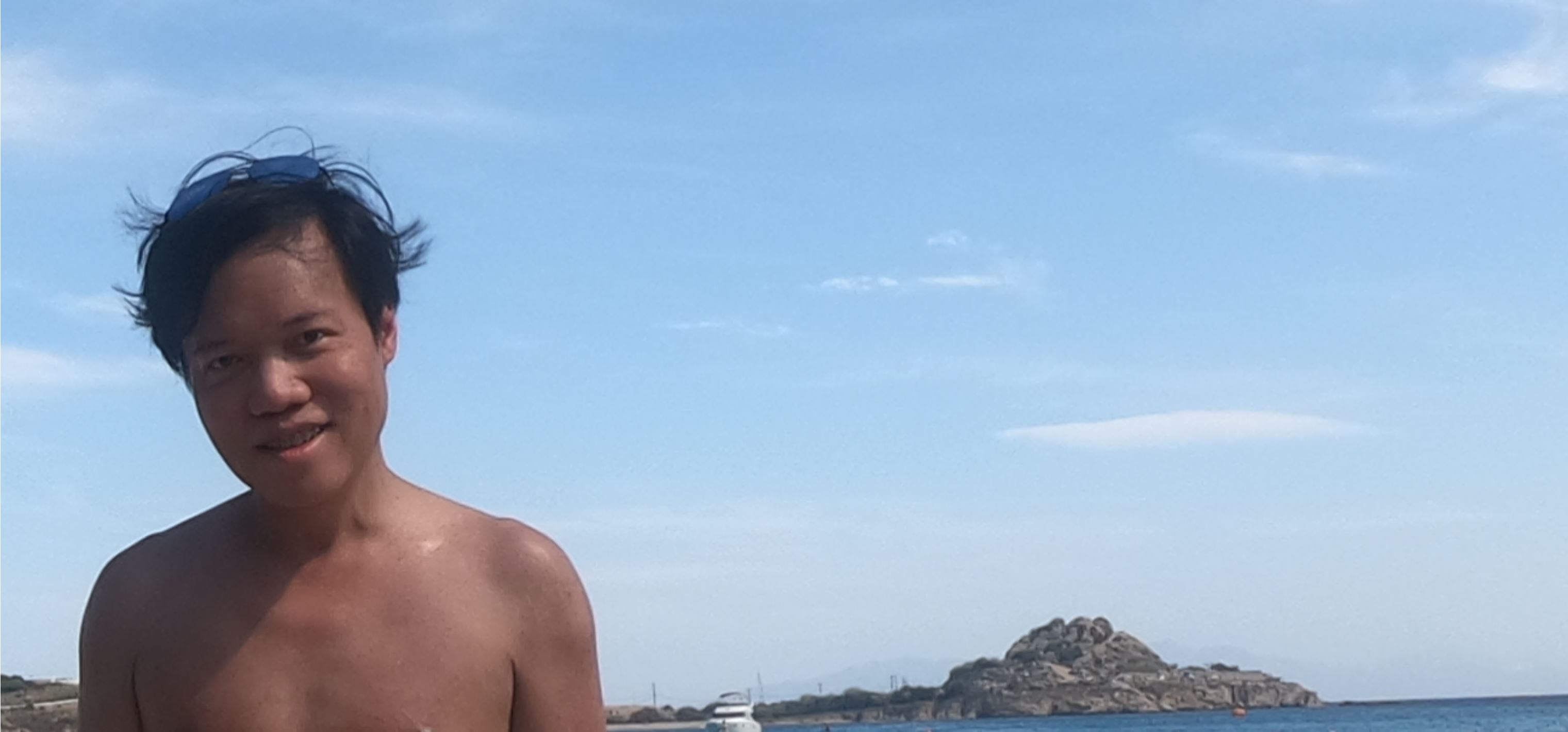
Living life like an island boy
The Day The World Stood Still

Health, Movie, and Positivity Buzz

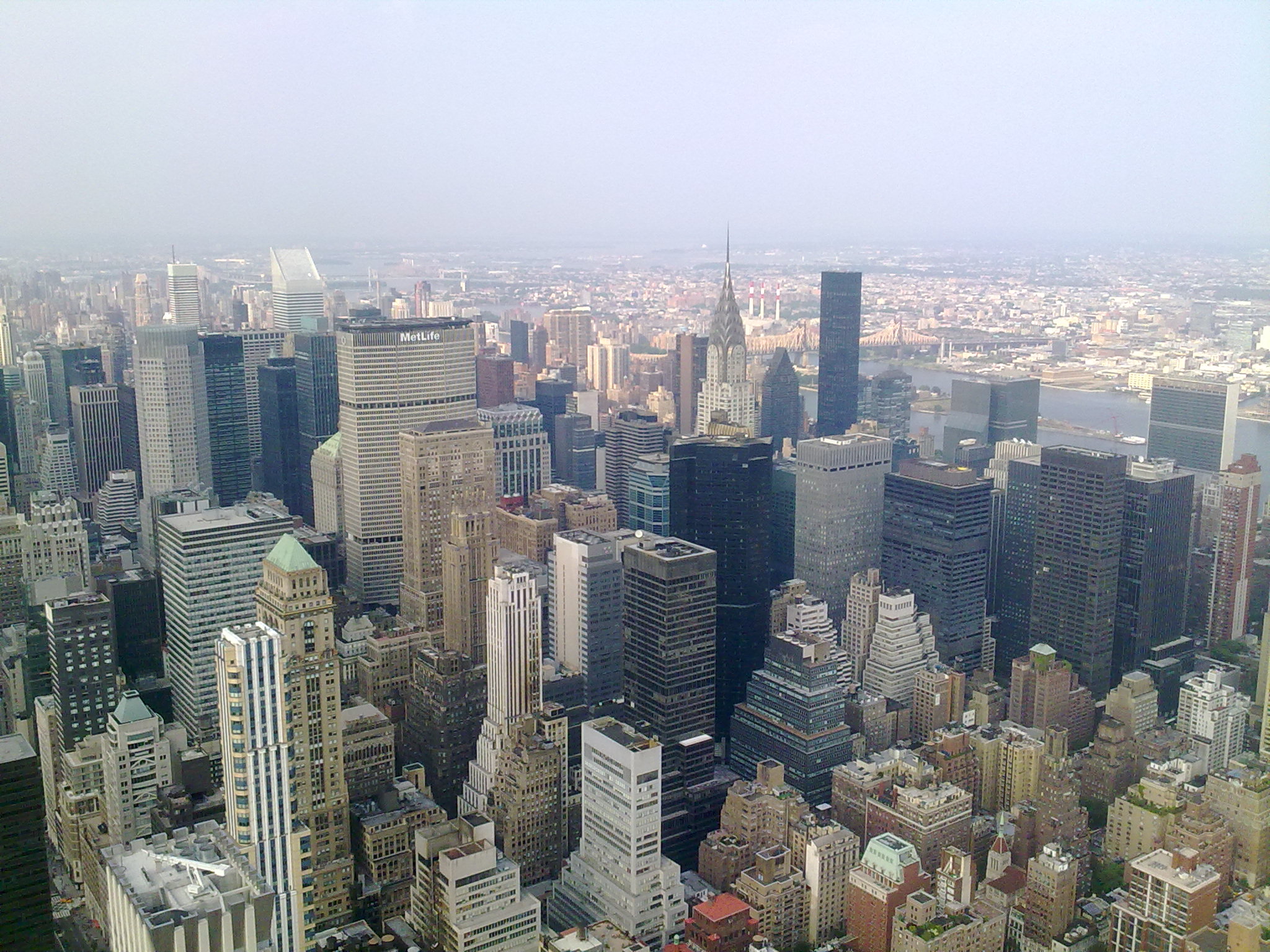
New York, the current epicenter of COVID-19 pandemic in the Americas

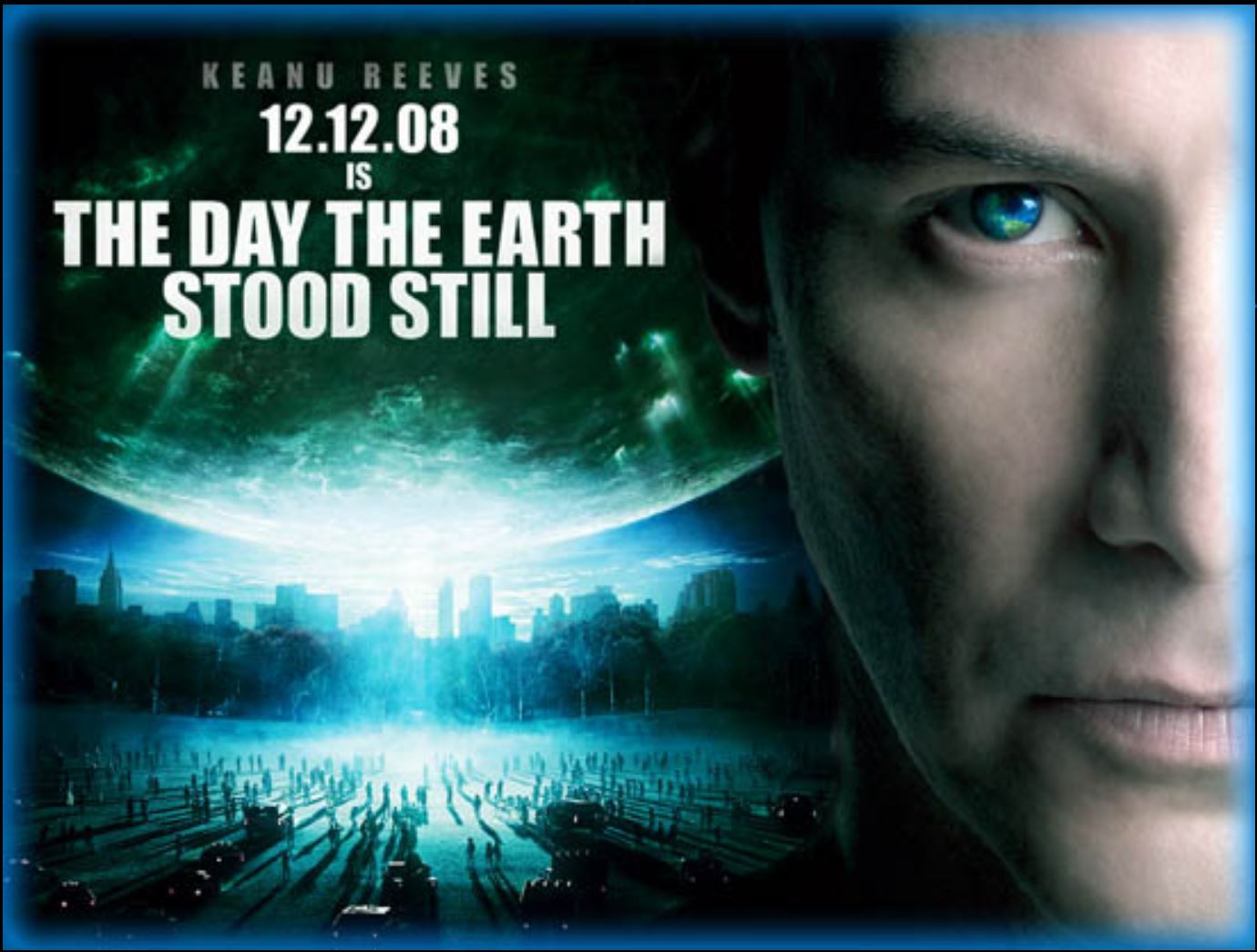
A few days ago, the movie “The Day The Earth Stood Still” was shown on HBO. It’s probably the nth time I’ve seen it, not so much because I’m a sci-fi fan, but I truly like the message of the movie. Its reruns during these times have made the messaging more relevant, given that we are faced with a similar crisis. In this 2008 film, headlined by Keannu Reeves (popularly known for movies like Matrix trilogy and the more recent John Wick franchise) and Jennifer Connelly (wife of actor Paul Bettany a.k.a Vision and seen recently in Alita: Battle Angel), an alien adapts a human body (Reeves) with the sole intent to decide on whether mankind is worth saving or need to be annihilated (for all its crimes against both nature and humanity). Along with him came a weapon of mass destruction and spheres that will serve as shelter where animals can take refuge while the earth is being ravaged by locust-like alien creatures until no terrestrial being is left standing. Sounds biblical (Noah’s Ark) and its reference to it only shows how fiction imitates life. So scientists were gathered, among which is Connelly’s character, where she ended up helping Reeves escape when authorities tried to contain him. The crisis escalated when authorities tried to employ military solution on an otherwise scientific (and to some degree philosophical) issue. With this current COVID-19 crisis, it’s sort of life imitating fiction.
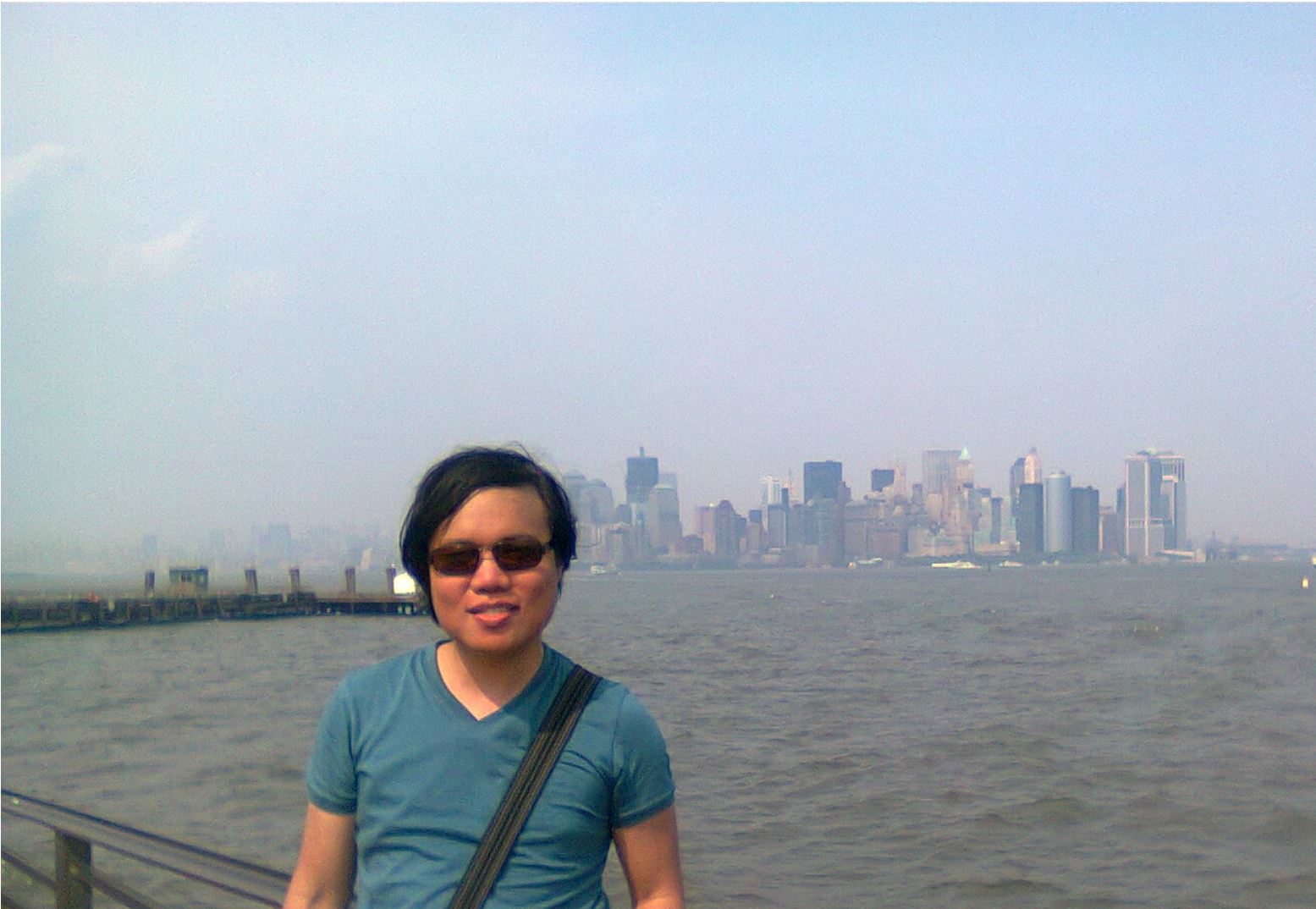
One of my favorite cities in the world. To New Yorkers, my heart goes out to all of you. Hang in there. This too shall pass.

So why am I talking about this movie during this time? While running from authorities, Reeves alien character started to understand human behavior. Towards the end of the movie, he learned that there is another side to us. While we can be destructive, we are also capable of change. While we can be selfish and always think of our own self-preservation, we can also love unconditionally and possess empathy, concepts that may be vague to aliens as these are not meant to be understood but to be felt. The message of the film is that in spite of our shortcomings, we can still change for the better. That in spite of human frailty, our emotional and sociological make up set us apart from the rest of the animal kingdom. This is very pertinent and relevant as we are dealing with a health crisis right now. You can look at the alien as the coronavirus trying to annihilate us all, unless we learn how to properly and appropriately deal with it (in the same way that Connelly’s character dealt with Reeves’) and the changes we have to make to survive the crisis.

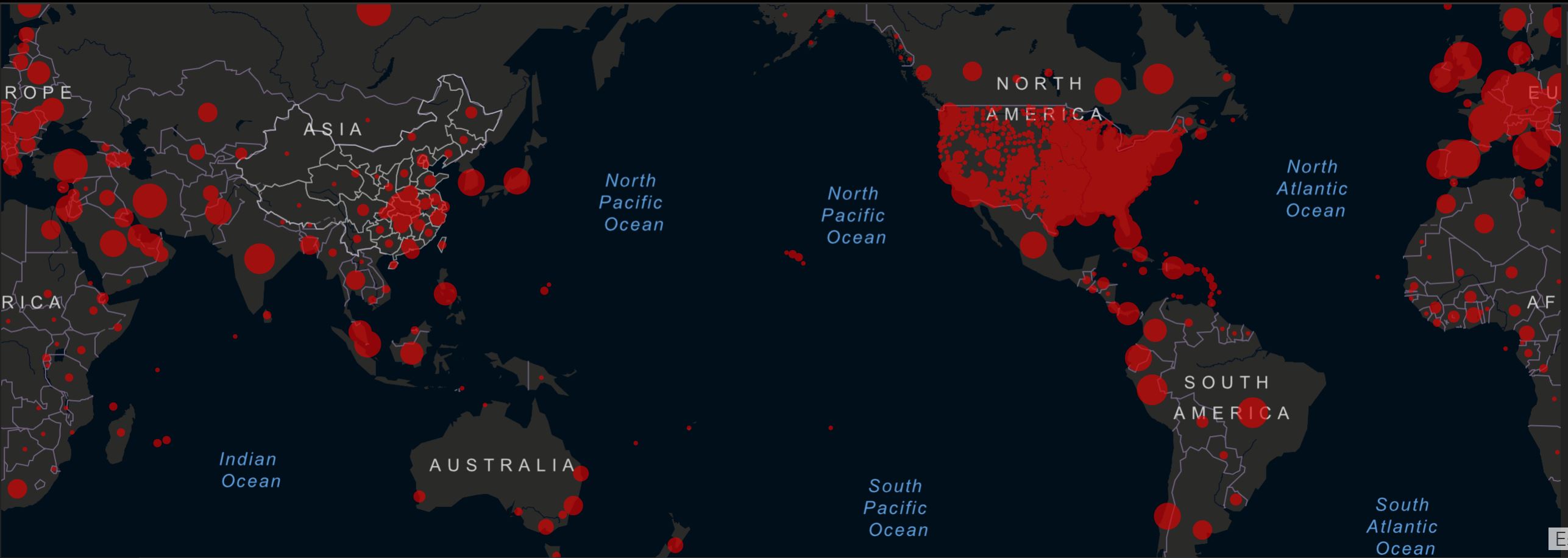
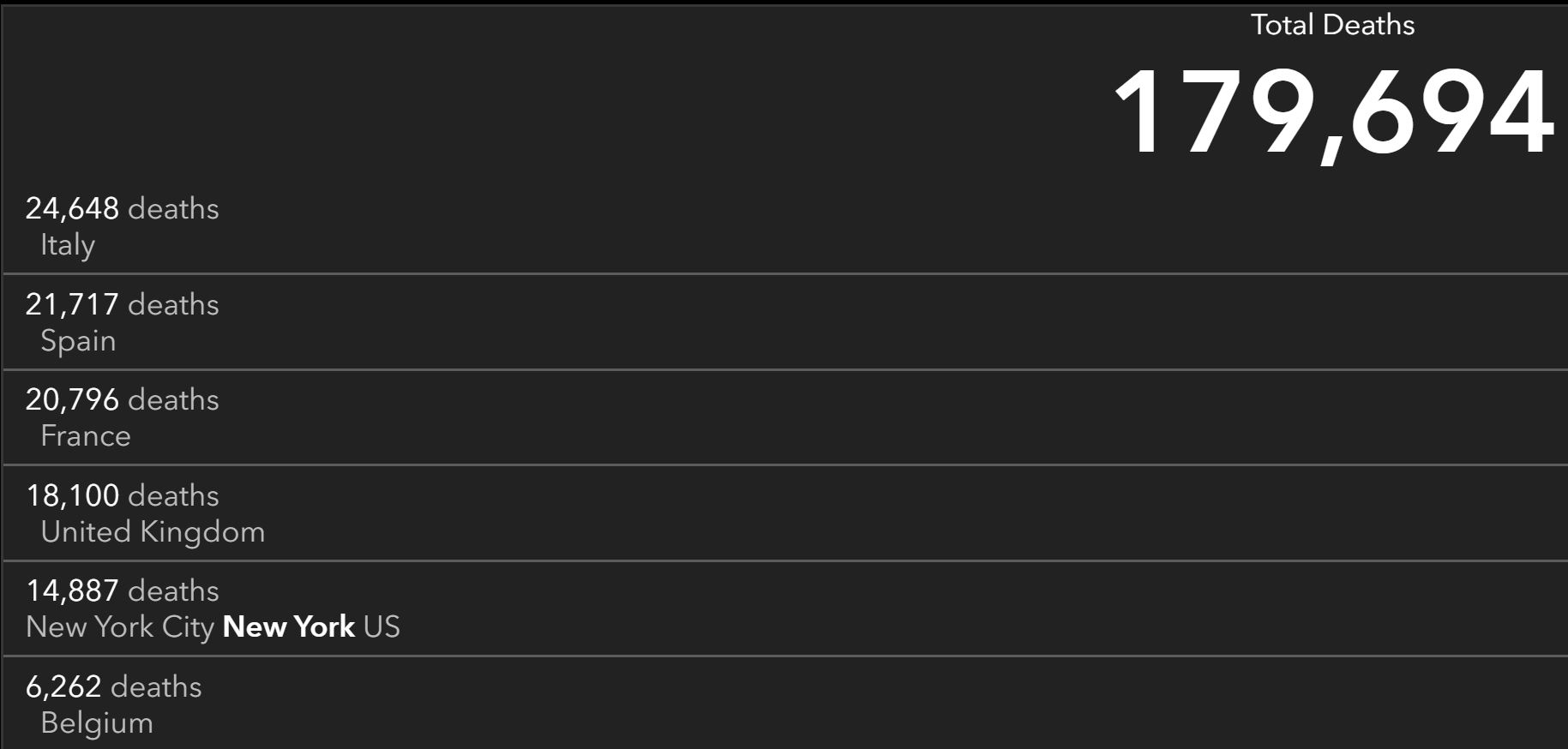
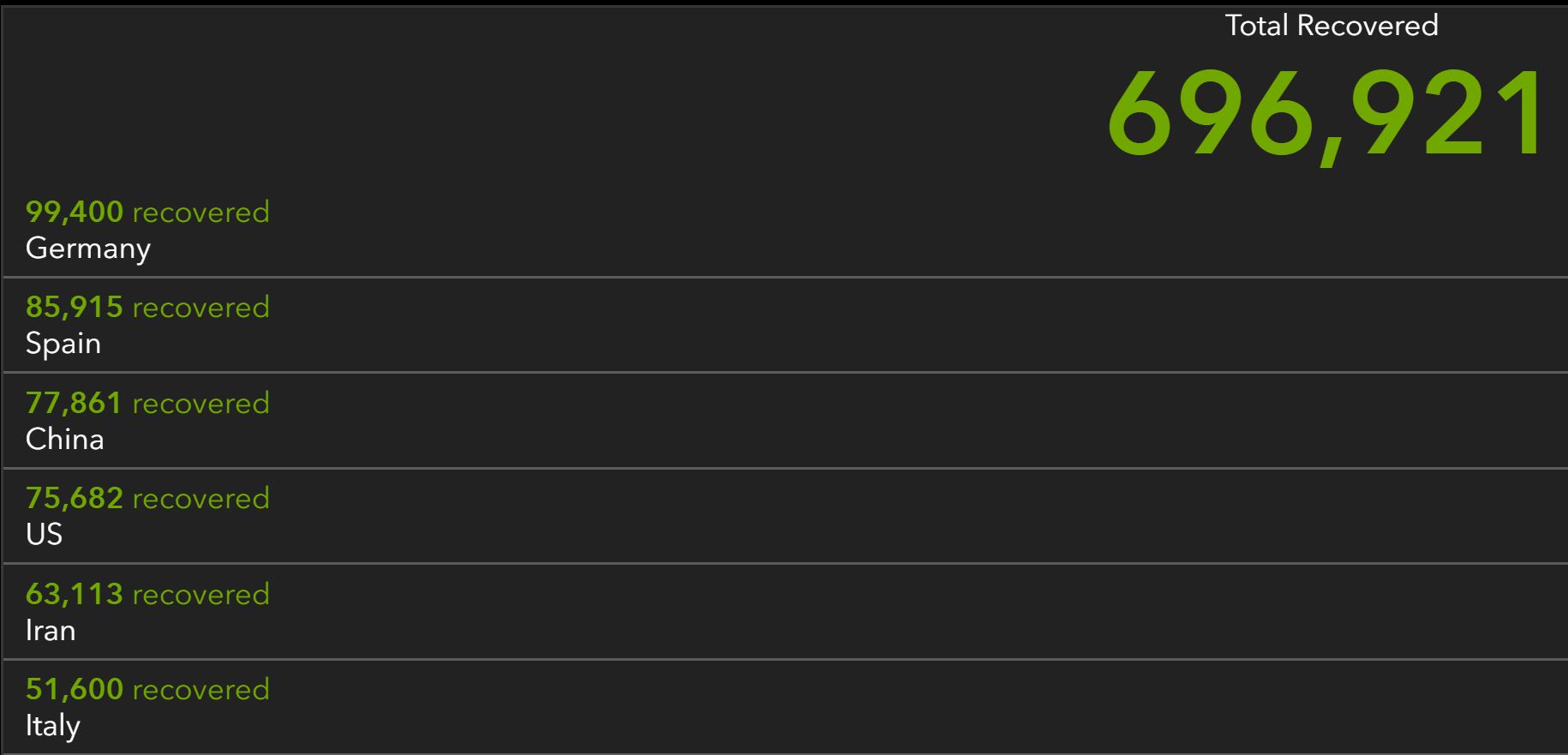
Global COVID-19 pandemic as of April 22 (Johns Hopkins University)

Knowing how to deal with the crisis and the changes that we have to do will only be meaningful if we acknowledge how this crisis started. I came across the World Health Organization (WHO) timeline in its website (https://www.who.int/news-room/detail/08-04-2020-who-timeline—covid-19) which was last updated on April 12 and also stumbled upon a link that shows a more detailed timeline that fills the gaps in WHO’s account of events. This link directed me to an article published by Hudson Institute in its website (https://www.hudson.org/research/15920-coronavirus-timeline) that was last updated on April 15. Wary of its credibility since it is the first time I’ve heard of this organization, I tried to check its reliability and was able to find a fact check site that rated articles published by this non-profit, conservative right biased U.S. think tank to be highly factual (https://mediabiasfactcheck.com/hudson-institute/). So below are the extracts from both WHO and Hudson Institute timelines (you can check out the sites for the full timelines) that I tried to piece together (verbatim) to get some sense out of what actually transpired these past few months.

Nov. 17: A 55-year-old resident from Hubei province contracts COVID-19, according to data seen by the South China Morning Post, possibly the first coronavirus case. (Hudson) 

Dec. 1: The first coronavirus case now recognized by Chinese authorities is recorded in a Wuhan hospital. The patient was initially suspected to have been infected by an animal (likely a bat) in the Huanan Seafood Market, a narrative now in dispute as researchers propound alternative origins, including that lax security procedures in the Wuhan Institute of Virology led to its escape. (Hudson)

Dec. 8: The first suspected human-to-human transmission is recorded by Wuhan doctors. A patient is observed to have the virus but denies ever visiting the seafood market. (Hudson)

Dec. 25: Wuhan doctors suspect disease transmission from patients to medical staff, further evidence of human-to-human transmission and the first instance of a threat to healthcare workers. Wuhan hospitals have experienced a steady rise in infections since the first cases. (Hudson)

Dec. 27: A Guangzhou-based genomics company sequences most of the virus, showing an “alarming similarity to…SARS.” Samples of the virus are distributed to at least six other genomics companies for testing. (Hudson)

Dec. 31: Taiwanese public health officials warn the World Health Organization (WHO) that the virus is spreading between humans. The WHO never publicizes the warning. (Hudson)

Dec. 31: The same day, the Wuhan Municipal Health Commission declares that it has no evidence of human-to-human transmission and informs the WHO of the outbreak. (Hudon). Per WHO, China reported a cluster of cases of pneumonia in Wuhan, Hubei Province. A novel coronavirus was eventually identified. (WHO)

Jan. 1: The Wuhan Public Security Bureau summons eight people to its headquarters, including Dr. Li Wenliang, who initially warned the public about the virus, accusing them of spreading “hoaxes.” Dr. Li signs a statement confessing to his “misdemeanor.” The fate of the other seven is unknown. (Hudson)

Jan. 1: An official at the Hubei Provincial Health Commission orders a genomics company to cease “testing samples from Wuhan and to destroy all existing samples.” The company’s labs had sequenced the virus’s genetic code in December with results suggesting a highly infectious virus similar to SARS. (Hudson)
Jan. 1: WHO had set up the IMST (Incident Management Support Team) across the three levels of the organization: headquarters, regional headquarters and country level, putting the organization on an emergency footing for dealing with the outbreak. (WHO)

Jan. 3: China’s National Health Commission (NHC) orders institutions “not to publish any information related to the unknown disease” and orders labs to “transfer any samples they had to designated testing institutions or to destroy them.” The order did not specify any testing institutions. (Hudson)

Jan. 3: U.S. Centers for Disease Control (CDC) Director Robert Redfield receives reports on the novel coronavirus from Chinese colleagues. The chief of staff to U.S. Health and Human Services Secretary Alex Azar informs the National Security Council. (Hudson)

Jan. 4: WHO reported on social media that there was a cluster of pneumonia cases – with no deaths – in Wuhan, Hubei province. (WHO)

Jan. 5: WHO published its first Disease Outbreak News on the new virus. This is a flagship technical publication to the scientific and public health community as well as global media. It contained a risk assessment and advice, and reported on what China had told the organization about the status of patients and the public health response on the cluster of pneumonia cases in Wuhan. (WHO)

Jan. 5: Six days after its China Country office was “informed of cases of pneumonia with unknown etiology” in Wuhan, the WHO “advises against the application of any travel or trade restrictions on China based on the information available on this event.” (Hudson)

Jan. 9: Chinese authorities announce publicly that a novel coronavirus was behind the recent viral pneumonia outbreak. (Hudson)

Jan. 9: Xinhua News Agency first reports on the outbreak. (Hudson)

Jan. 10: WHO issued a comprehensive package of technical guidance online with advice to all countries on how to detect, test and manage potential cases, based on what was known about the virus at the time. This guidance was shared with WHO’s regional emergency directors to share with WHO representatives in countries. 

Based on experience with SARS and MERS and known modes of transmission of respiratory viruses, infection and prevention control guidance were published to protect health workers recommending droplet and contact precautions when caring for patients, and airborne precautions for aerosol generating procedures conducted by health workers. (WHO)

Jan. 11: China reports its first known death due to the virus. (Hudson)

Jan. 12: Chinese authorities share the virus’s genome with the rest of the world. (Hudson)

Jan. 13: The first case outside China is reported Thailand. (Hudson)

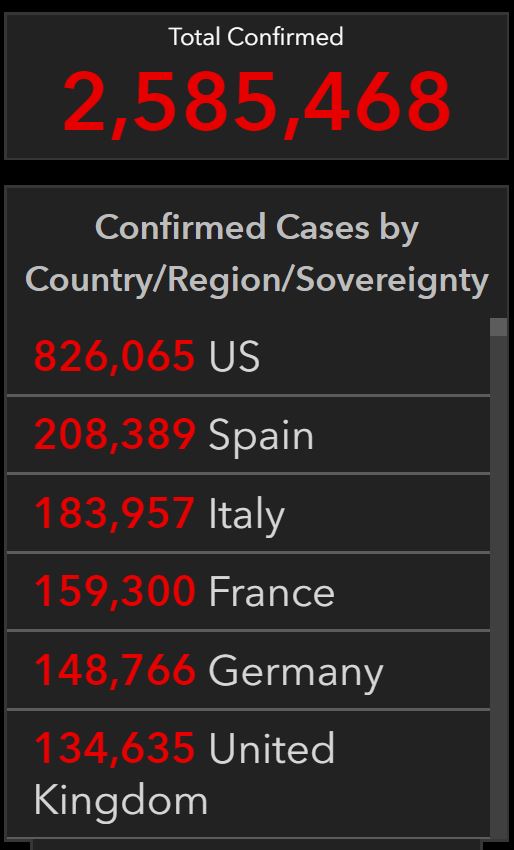
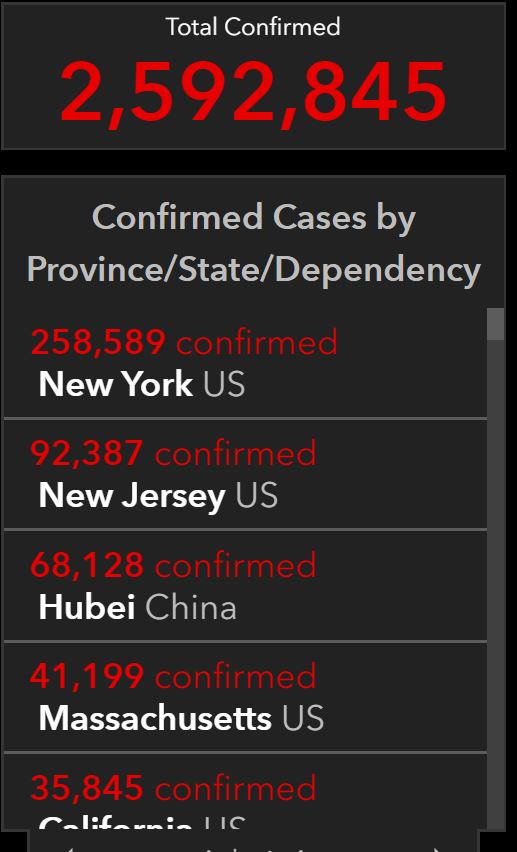
Global COVID-19 confirmed cases by country and by city as of April 22 (Johns Hopkins University)

Jan. 14: Nearly six weeks after Wuhan doctors raise the possibility of human-to-human transmission, the WHO issues a statement stressing that Chinese authorities recorded no cases of human-to-human transmission. (Hudson)

Jan. 14: WHO’s technical lead for the response noted in a press briefing there may have been limited human-to-human transmission of the coronavirus (in the 41 confirmed cases), mainly through family members, and that there was a risk of a possible wider outbreak. The lead also said that human-to-human transmission would not be surprising given our experience with SARS, MERS and other respiratory pathogens. (WHO)

Jan. 14: Hubei Provincial officials hold a teleconference with Ma Xiaowei, the head of China’s National Health Commission, who details the threat posed by the new virus. A memo from the teleconference raises the possibility of human-to-human transmission. (Hudson)

Jan. 15: Japan records its first case of coronavirus. (Hudson)

Jan. 15: China’s Center for Disease Control and Prevention in Beijing initiates internally its highest-level emergency response, which includes directions to hospitals to take protective precautions and to begin tracking cases. The directions are marked “not to be publicly disclosed.” (Hudson)

Jan. 18: Wuhan authorities allow nearly 40,000 to gather for the Lunar New Year celebration. (Hudson)

Jan. 20: Dr. Zhong Nanshan, a leading authority on respiratory health who came to attention for his role fighting SARS, confirms that the disease spreads from person-to-person. The head of China’s NHC investigatory team also confirms cases of human-to-human transmission in Guangdong province, indicating spread between provinces. (Hudson)

Jan. 20-21: WHO experts from its China and Western Pacific regional offices conducted a brief field visit to Wuhan. (WHO)

Jan. 21: The CDC confirms the first American case, a Washington resident who had returned from China six days earlier. (Hudson)

Jan. 22: WHO mission to China issued a statement saying that there was evidence of human-to-human transmission in Wuhan but more investigation was needed to understand the full extent of transmission. (WHO)

Jan. 22-23: The WHO Director- General convened an Emergency Committee (EC) under the International Health Regulations (IHR 2005) to assess whether the outbreak constituted a public health emergency of international concern. The independent members from around the world could not reach a consensus based on the evidence available at the time. They asked to be reconvened within 10 days after receiving more information. (WHO)

Jan. 23: Chinese authorities announce first steps for their lockdown of the city of Wuhan. Travel from Wuhan to other countries continues uninhibited until group restrictions are put in place on Jan. 27. (Hudson)

Jan. 24: France records Europe’s first and second cases. (Hudson)

Jan. 25: Australia and Canada record their first coronavirus cases. (Hudson)

Jan. 27: The Chinese government suspends group travel to foreign countries (individuals would still travel abroad unencumbered), three days after massive outbound traffic begins for the Lunar New Year. Over those days, travelers journeyed to Japan, South Korea, the United States, Italy, Spain, France, the United Kingdom, and South America. (Hudson)

Jan. 28: A senior WHO delegation led by the Director-General travelled to Beijing to meet China’s leadership, learn more about China’s response, and to offer any technical assistance. 

While in Beijing, Dr. Tedros agreed with Chinese government leaders that an international team of leading scientists would travel to China on a mission to better understand the context, the overall response, and exchange information and experience. (WHO)

Jan. 30: The WHO declares the coronavirus a global health emergency, while expressing confidence in “China’s capacity to control the outbreak.” The organization recommends against border closures, visa restrictions, and quarantining of healthy visitors from affected regions. (Hudson)

Jan. 30: Several provinces and cities extend the Lunar New Year holiday until at least February 13 to halt commerce and travel. (Hudson)

Feb. 1: Responding to the prior day’s announcement that the United States would suspend entry of foreign nationals who had visited China, Chinese officials criticize the move as “neither based in fact nor helpful” and “certainly not a gesture of goodwill.” (Hudson)

Feb. 2: The first coronavirus death outside China is reported: a 44-year-old man in the Philippines. (Hudson)

Feb. 3: WHO releases the international community’s Strategic Preparedness and Response Plan to help protect states with weaker health systems. (WHO)

Feb. 5: The Chinese embassy in Canberra criticizes Australia’s travel ban on entries from mainland China. (Hudson)

Feb. 7: Dr. Li Wenliang, considered by the Chinese public to be the foremost champion of spreading information about coronavirus, succumbs to the virus at the age of 33. His death leads to an outpouring of national anger over information suppression. (Hudson)

Global COVID-19 deaths and recovered as of April 22 (Johns Hopkins University)

Feb. 7: Shortly after Dr. Li’s death, the hashtag “#wewantfreedomofspeech” trends on Chinese social media platform, Weibo. The same day, along with other related topics, it is deleted by censors. (Hudson)

Feb. 11-12: WHO convened a Research and Innovation Forum on COVID-19, attended by more than 400 experts and funders from around the world, which included presentations by George Gao, Director General of China CDC, and Zunyou Wu, China CDC’s chief epidemiologist. (WHO)

Feb. 14: France reports the first coronavirus death in Europe: an 80-year-old Chinese tourist. (Hudson)

Feb. 16-24: The WHO-China Joint mission, which included experts from Canada, Germany, Japan, Nigeria, Republic of Korea, Russia, Singapore and the US (CDC, NIH) spent time in Beijing and also travelled to Wuhan and two other cities. They spoke with health officials, scientists and health workers in health facilities (maintaining physical distancing). (WHO)

Feb. 19: China expels three Wall Street Journal reporters in response to an op-ed headline. (Hudson)

Feb. 21: Iran reports its first coronavirus cases from an unknown source. (Hudson)

Feb. 23: Italy first reports a major surge in coronavirus cases; Codogno, near Milan, becomes the first Italian town to lock itself down. (Hudson)

Feb. 26: A São Paolo man, recently returned from a trip to Italy, becomes the first coronavirus case in Latin America, according to Brazilian health officials. (Hudson)

Feb. 28: Nigeria confirms the first coronavirus case in Sub-Saharan Africa, a businessman traveling from Milan to Lagos. (Hudson)

Feb. 29: The United States reports its first coronavirus death, a patient near Seattle. (Hudson)

Mar. 11: Deeply concerned both by the alarming levels of spread and severity, and by the alarming levels of inaction, WHO made the assessment that COVID-19 can be characterized as a pandemic. (WHO)

Mar. 12: China’s Foreign Ministry spokesman Zhao Lijian insinuates in a tweet that COVID-19 originated in America and was spread to China by the United States military. (Hudson)

Mar. 14: Friends of Chinese businessman Ren Zhiqiang report that he has disappeared. Ren had authored an essay blasting the CCP for its slow response to the outbreak, blaming its speech restrictions for exacerbating the crisis. (Hudson)

Mar. 16: WHO and partners launch the Solidarity Trial, an international clinical trial that aims to generate robust data from around the world to find the most effective treatments for COVID-19. (Hudson)

Mar. 18: China revokes press credentials from Wall Street Journal, New York Times, and Washington Post reporters. (Hudson)

Mar. 21: Chinese state media outlets circulate reports that “an unexplained strain of pneumonia” may have originated in Italy late in 2019. (Hudson)

Mar. 23: The Hubei Provincial government lifts restrictions on Hubei Province, with the exception of Wuhan. (Hudson)

Mar. 26: Spanish microbiologists report that tests sent to Spain by the CCP detected positive COVID-19 cases only 30% of the time. (Hudson)

Mar. 26: Researchers from University Hospital Ostrava in the Czech Republic report that 80% of the coronavirus antibody test kits received from the Chinese government were defective, likely because antibody tests cannot detect the illness in its early stages. (Hudson)

Mar. 29: The Dutch Health Ministry recalls over 600,000 faulty medical masks received from the Chinese government. (Hudson)

Mar. 31: The Chinese Health Commission admits it has been omitting asymptomatic cases of coronavirus to date and will begin including asymptomatic carriers in its daily counts. (Hudson)

Apr. 14: The Washington Post reports that, in 2018, U.S. Embassy officials sent official warnings to Washington after visiting the Wuhan Institute of Virology. One cable concerned the Institute’s research on bat coronaviruses and warned that their potential transmission “represented a risk of a new SARS-like pandemic.” (Hudson)

Apr. 15: Sources report that the growing consensus among U.S. officials is that the virus originated in a unit studying bat coronaviruses at the Wuhan Institute of Virology, which is central to China’s effort to become the global leader in identifying and combating viral outbreaks. (Hudson)

Photo courtesy of Mike Massie

Just like in the movie, the fear of the unknown pervaded the atmosphere, where man’s destructive nature has manifested. Why was the information on the virus and its potential transmission contained from the rest of the world in the early days of contagion? It was not until Jan 14 when WHO technical lead acknowledged that there may be limited transmission. That was more than a month since Chinese doctors first suspected of human-to-human transmission on Dec 8. Those five (5) weeks were crucial, where time is a function of viral transmission and that the spread would definitely have multiplier effect. Why were 40,000 people in Wuhan allowed to gather for the Lunar New Year celebration, six (6) weeks after the first suspected transmission? It reminds me of Philadelphia’s Liberty Loan Parade of September 1918 (featured in National Geographic channel), where more than a week into the Spanish flu virus spread among 600 sailors, the state didn’t cancel the parade and went on with it on September 28 that attracted some 200,000 people (story is also on CNN.com). Philadelphia ended up with more than 12,000 deaths and about 47,000 reported cases in six weeks. A century and a year later, seems like history repeated itself.

Still, the alien (in this case the virus) lives with us. Why did WHO recommended against border closure or travel ban more than two (2) weeks after its technical lead announced that there may be ‘limited transmission’ (a term that, in the context of a flu-like illness, is borderline oxymoron)? How did WHO utilize the information it received from Taiwan on Dec 31 about the potential human-to-human transmission? What did governments of countries with weak health systems do after WHO released the Strategic Preparedness and Response Plan on Feb 3?

There are lots of questions which would likely be left unanswered. One bright spot though was Dr. Li Wenliang. Just like Connelly’s character, Dr. Li tried to understand the alien (in this case the virus), defied and went against the foreign secretary (played by Academy award winner Kathy Bates) and the military (in this case the Chinese authorities) and changed the outcome by facing the crisis with courage, conviction, sense of humanity, and a heart. Like Connelly’s character, Dr. Li became a hero to the world. Unlike Connelly’s character who lives in the hands of the alien, Dr. Li died in the hands of the virus.

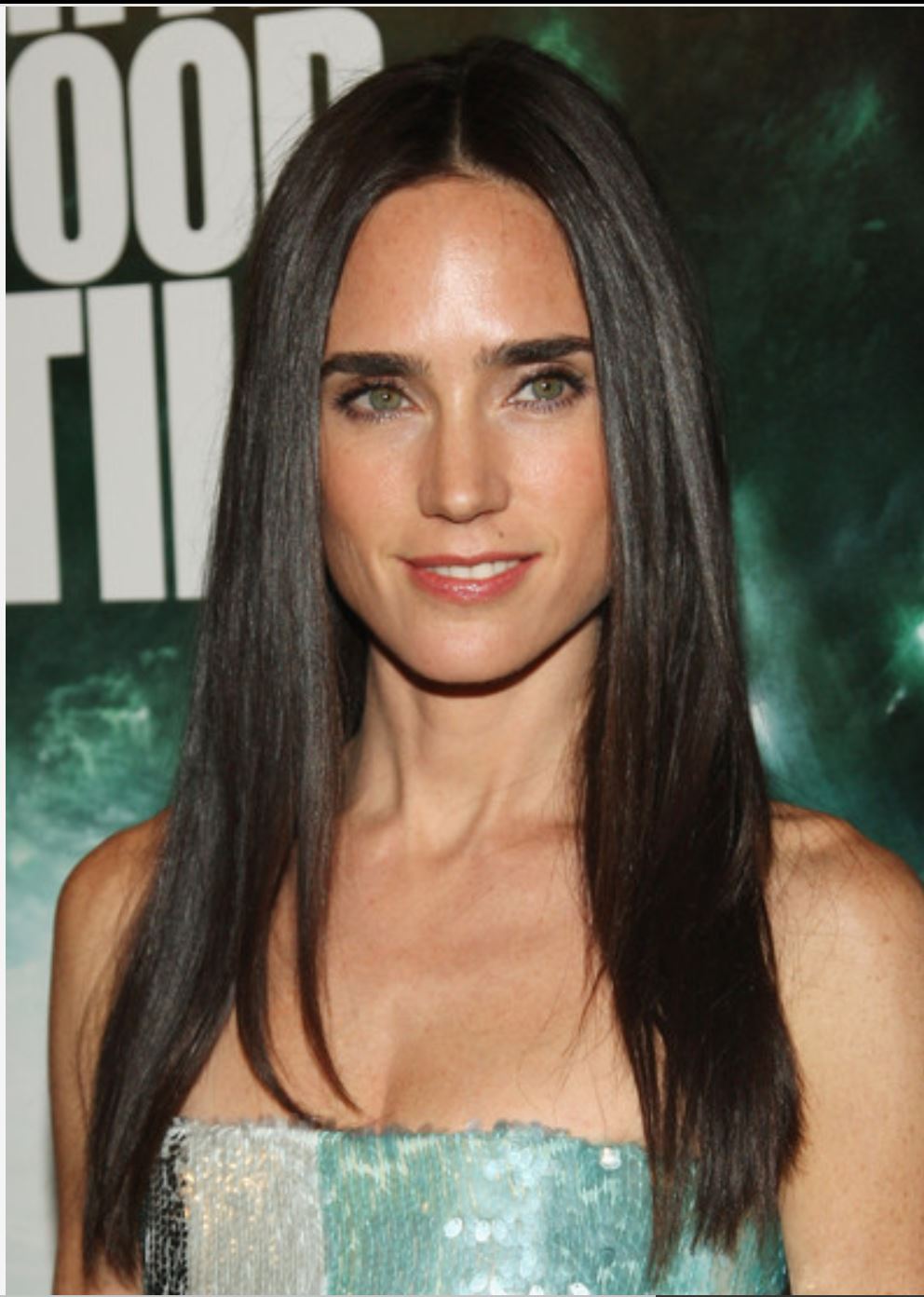
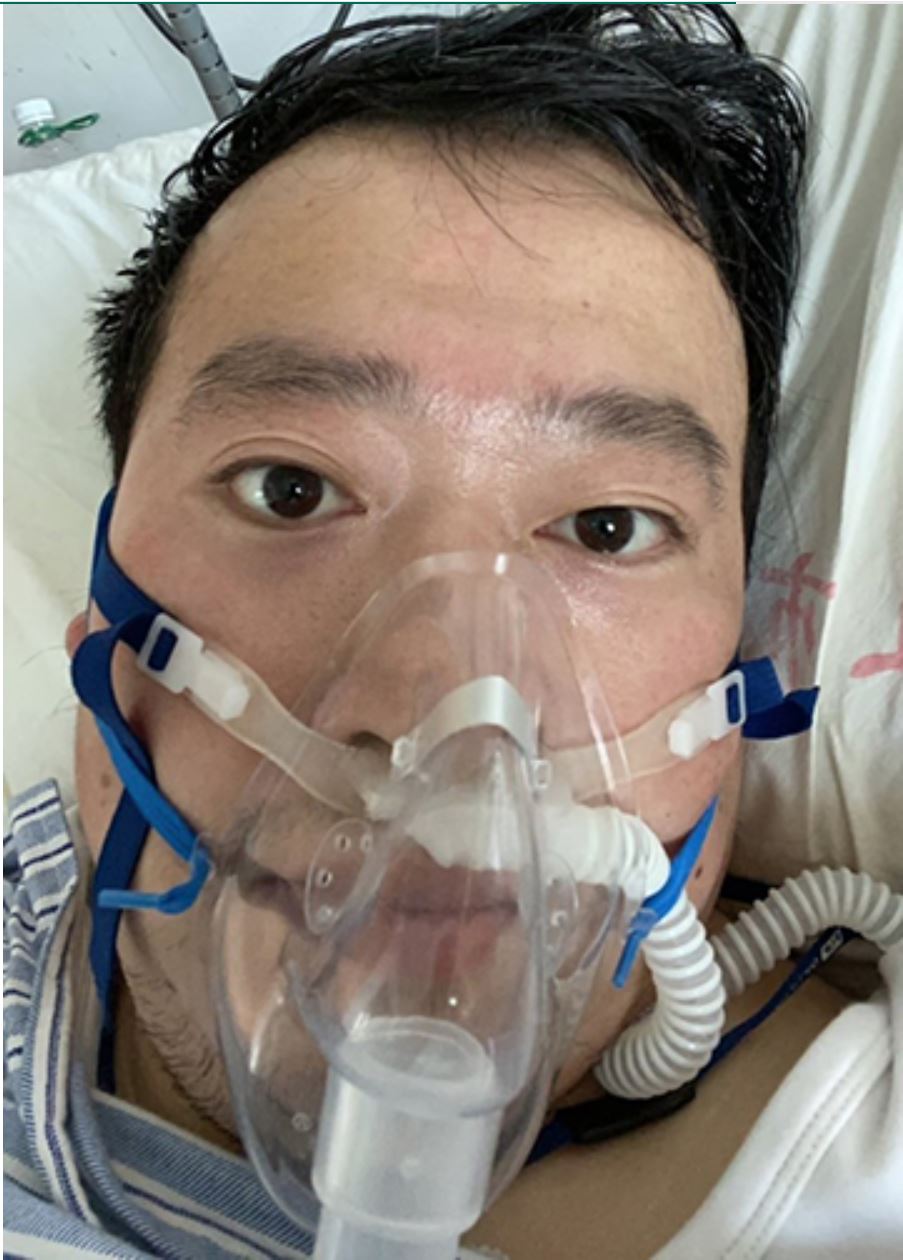
(Left) Jennifer Connelly, plays the fictional heroine in the movie who saved the world from total annihilation; (right) Dr. Li Wenliang, the real life hero and whistleblower who succumbed to the same virus he tried to protect the world from. Our prayers are with you and your family.

There are lessons to be learned by just simply going through these series of events. Like anything else, information is key. I can find solutions to a problem if I have all the pertinent and relevant information that I need. Censorship may be a norm under authoritarian regimes, but during these health crises, nothing can be achieved if vital information is suppressed or withheld. Time is of the essence, where the sooner we acknowledge the problem and share essential information, the better the likelihood of a positive outcome. We can set aside ideological differences for the sake of international cooperation. Politics has no space in crisis like this, much more disinformation, especially when lives are at stake. We can prove that in spite of our destructive nature, there is still that other side to us, where we can still care for and look after each other. A watershed opportunity for us to change.

I’m looking forward to the day that the world would stand still and reflect on what we have done (sin of commission) and haven’t done (sin of omission). That day when we accept our mistakes and missteps, that we are our own worst enemy (and not the virus). That day when we start to believe that we can potentially become the virus of future past. Not until we own up to and be held accountable for our sins and frailties that we can truly move on and heal as one.

My Gut Feel Against The Virus

Health and Positivity Buzz

(Disclaimer: The blogger is not a doctor, microbiologist, virologist, or homeopathic specialist. He is none of such kind. What you will read in this article comes from his own personal experience and common sense.)

Italy, the current epicenter of COVID-19 pandemic in Europe. My heart goes out to all of you.

During these past few days that I have been on self-quarantine (only goes out to buy food and groceries but always with a mask and alcohol spray on hand not only to protect myself but also to protect others), I’m besieged with both heartwarming and disappointing news. I was already set to write an article with working title “The Politics of Toilet Paper” which would be about how a health crisis (or any other crises for that matter) brings out the best and the worst in us. On second thought though, what good will that article bring during this time when COVID-19 cases are rising and lives taken? So such article may not be appropriate at this time that I have to rethink that one. In the meantime I have been wondering how I can help in my own little way through this blog.

What drove me into writing this article instead was the news of the death of the Dad of someone I know. He died before knowing that he tested positive of COVID-19. Because of quarantine protocols, his family wasn’t able to say goodbye as his remains have to be cremated right away. I know the feeling. I went thru a similar situation where I wasn’t able to say goodbye when a loved one passed on. Believe me, I went through all the phases: grief, sorrow, anger, denial, depression, and eventually acceptance. It is only through the latter that one can truly move on. It’s not easy, but at the end of the day you still have a life to live and you have to stay strong for those you still hold dear.

So what are my thoughts about this virus? It helped that I have a doctor for a sister who initially told me that like SARS earlier, the virus that causes COVID-19 also belongs to the same family of coronavirus. The primary mode of transmission is thru droplets, which demystify the earlier notion that it is airborne (in a way that tuberculosis is spread). So it is only transmitted when someone coughs or sneezes (this is where social distancing makes real sense) and not thru breathing the same air that an infected person also breathes. It is spread further when an infected person, thru his hands, get in contact with the droplets and body fluid such as when he covers his face when he coughs or sneezes and then touches anything from doors, elevator buttons, grocery items, etc. Anyone who touches the same and get his hands in contact with soft body tissues (membranes) like the eyes, nose, and mouth will potentially get infected, given that the virus can live in surfaces for sometime (no one really knows how long it can survive outside of its host, but apparently it can live longer on smooth surfaces compared to uneven ones like in clothing materials). This is where frequent hand washing or disinfecting (thru spraying alcohol) is essential, as well as cleaning all surfaces that are being touched or used (such as door handles, elevator buttons, eating utensils, even grocery items like those chips in foils where you touch the potentially infected packaging before eating the contents with your hands). On the other hand, the mask is a protective gear that you may need when in enclosed spaces such as elevators, cars, or when social distancing may subconsciously be forgotten (like queuing in a supermarket check out counter or drugstore). So my thoughts are that this is no different than how one catches a flu or a cold virus and how one fights and recovers from the same may also work for this virus.

Though COVID-19 virus may be more deadly than its cousins (though casualties from flu and cold virus infections worldwide are significant particularly during winter), there has been no cure but only prevention thru getting vaccinated. As of this writing, there is still no vaccine in sight for COVID-19 (unlike its cousins where you can now get vaccinated for certain flu virus strains) and having that vaccine available may take a while. So how do you fight a virus that is nothing more than a flu or cold virus strain but can wreck havoc on our internal organs? Methinks that the answer lies in the gut.

As some would say, the best offense is a good defense. Our bodies respond to any foreign matter or substances that breach our first line of defense (skin, mucus membrane, etc.). This is triggered by our immune system. Our immunity will fight off anything from microbes (bacteria and virus) to body organs (such as organ transplant). It is the same immunity that will help in our recovery and may even hold back future invasion (ie developing immunity to certain bacteria strains which infection you have recovered from previously). That’s why when we were kids, every time we get sick, we actually develop resistance and immunity. Unless one is immuno compromised (such as having weak immunity by taking immuno suppressant drugs for transplant recipients or suffering from a hyper active immune system resulting to autoimmune diseases), it is imperative that we need to keep a healthy immune system not only to hold the fort but to keep our defenses in check.

How do I keep my immunity in check? How do I support my immune system to fight viral infections? There are five (5) ways and all these are from my own personal experience. But before I share the same, there is one very important thing to note: you need to first understand your body. You need to know how to listen to your body. I know the stages that my body would go thru when I get sick. It would start with a sore throat, runny nose, sneezing, feeling feverish, darkening and thickening of phlegm or sputum (the last two would already confirm that I have an infection), coughing, asthma, lightening of phlegm or sputum, coughing to expel the sputum (the last two means that I’m on my way to recovery). I have observed before that my body does not respond well to synthetic medicines (pharmaceuticals). That’s why I hate getting sick. Coz aside from what my body goes thru when I get sick, the medicines I’m taking (at least before I ventured into alternative medicines) have different effects on me, depending on what medicine I’m taking. It may come in the form of drowsiness, shaking of hands, lethargy, and overall weakness. So it exacerbates what one would already consider a miserable situation. So understanding and listening to your body would tell you what works for you. This leads you to explore and discover the best health alternatives and options.

So after years of understanding and listening to my body, the first way of keeping my immunity in check is keeping my gut healthy. A strong and healthy immunity starts with a well balanced gut. It can be achieved by having a healthy biome in the gut. This is where probiotics come into play. For those who are not familiar with probiotics, these are good bacteria that reside in the gut and intestines. A healthy person would normally have a healthy balance of good and bad bacteria. When bad bacteria overruns the good ones, that’s when our immunity is compromised and weakens our defenses. Taking antibiotics when we get sick will kill the bad bacteria but will also kill the good ones. So I never had antibiotics in the last 20 years (except when I went thru my spinal surgery last year) because I have become a probiotic advocate. Right now, I’m taking different probiotic supplements and have tried different strains, such as those produced in Japan, New Zealand, and US. Probiotcs are also found in natural sources, such as yogurt, kimchi, and balsamic vinegar. If you decide to start on a probiotic regimen, choose the one with multi strains, coz there are nuances in the roles that these good bacteria play in our bodies.

The second way is preempting the progression of the infection. At the first sign of symptoms (in my case sore throat), I would already take my herbal and organic supplements. An effective way of suppressing the initial infection is by taking manuka honey. I discovered manuka honey in one of my trips to New Zealand and has proven to be very potent in fighting and helping recover from initial stage of the infection. By preempting its progression, you are effectively preventing a full blown infection. In my case, this means my body won’t have to go thru subsequent stages after the initial sore throat. This means I have averted a miserable situation.

New Zealand, where I have discovered some of the best herbal and organic supplements

The third way is supporting your immune system fight against the virus thru the use of enzymes and certain essential amino acids. I know that unlike amino acids, little is known about beneficial enzymes (or some would not even know what enzymes are), but based on my readings, I have discovered that there are enzymes that can actually help kill viruses and other microbes. Our bodies produce enzymes (such as digestive enzymes) but there are enzymes that are not found in our bodies that can actually assist in destroying viruses. Viruses (and other microbes), just like any other organism’s survival instinct, would produce what they call biofilm or ‘envelope’ to protect themselves. This biofilm is impenetrable for most pharmaceuticals and can actually mask the virus that our immune system may not be able to detect its presence. You can liken it to Harry Potter’s cloak of invisibility. So while it is already wrecking havoc on our internal organs, particularly our respiratory system, our immune system may have a hard time getting into the virus because of this biofilm. Aside from the biofilm, the virus also has a protein shell (capsid) that protects the nucleus (nucleic acid). To kill the virus is to get to its nucleus. So with this dual protection (biofilm and shell), our immune soldiers (T-cells) will have to fight harder. Compounding this is the ability of the virus to replicate itself. Think of it like the fight scene between Doctor Strange and Thanos in Avengers: Infinity War where in this case, the virus is the former (when he replicated himself) while the latter is your T-cells.

There are at least two enzymes that I’m taking and at least one essential amino acid when I feel that I’m about to get sick. These are serrapeptase and nattokinase for the enzymes and lysine for essential amino acid. Serrapeptase is an enzyme produced by bacteria of silkworm which the same uses to dissolve the cocoon when it becomes a moth. Nattokinase on the other hand, is derived from the Japanese fermented soybean called natto and produced by a particular type of bacteria during the fermentation process. Apparently, both enzymes can penetrate through the biofilm in the same way that it can dissolve the cocoon (in the case of serrapeptase). Once the biofilm is dissolved, the cloak of invisibility is removed. To breach the protein shell, some of the supplements I’m taking contain hydrolytic enzymes such as protease and cellulase. These enzymes break down proteins into amino acids thru hydrolysis. Since both biofilm and shell are made of proteins, this combination of enzymes that are not produced by our bodies will work together to break down the proteins, hence destroying the virus shield and exposing the nucleus This is when the other enzymes produced by our bodies can digest the nucleic acid, hence “killing” the virus. However, some of these enzyme supplements have side effects, such as thinning of blood. So if you are suffering from low blood pressure or taking any blood thinning drugs, you have to avoid taking these supplements. Lysine, on the other hand, is an essential amino acid that can apparently suppress viral replication. It’s called “essential” coz it’s one of amino acids that are not produced or found in the body.

The fourth way is to have inflammation in control. I came across this newspaper article yesterday (https://technology.inquirer.net/97774/covid-19-lung-patterns-show-few-clues-for-treating-pneumonia) which only further validates what I’ve known all along: the root cause of all illnesses is inflammation (at least from my experience). The infection (bacterial or viral) is the trigger but what will cause complications is the uncontrolled inflammation. Pneumonia, one of the known complications from COVID-19, occurs when the lung’s air sacs (those that are filled with oxygen from the air we breathe and permeates thru the blood vessels for it to run throughout our extremities) are inflamed. Inflammation occupies space, so the more inflamed the sacs are, the less oxygen is absorbed by the body. I know this coz my Mom had several bouts of pneumonia two years ago and her oxygen levels have to be constantly checked even until today (she also has a standby oxygen tank at home in case her oxygen level drops). Older people have lower lung capacity not just because of old age but also due to other underlying health conditions that they are suffering from. That’s why their oxygen levels need to be checked constantly particularly when they are exhibiting symptoms. As we all know, oxygen is essential for all our body organs to function (including our brains).

To keep inflammation from going haywire, I used to take non-steroidal anti-inflammatory drugs (NSAIDs) such as mefenamic acid. I have opted for non-steroids coz as a kid, I used to take corticosteroids for my asthma (another illness from inflammation) and I didn’t like the side effects on my body. However, NSAIDs also have side effects, like gastritis, so I have to look for herbal or organic alternatives that have anti-inflammatory properties. This is where I’ve discovered curcumin, oregano oil, and magnesium. Curcumin is the essential nutrient in turmeric known for its anti-inflammatory properties. Oregano oil is not only known as anti-inflammatory but also anti microbes. Magnesium is a mineral that is known to control inflammation. I don’t only take these supplements when I’m sick. I take these daily as preventive medicine. But I take it in moderation. As they say, a pound of cure is worth an ounce of prevention.

Lastly, I also ensure that my immunity doesn’t go out of control particularly when I’m sick. As per the newspaper article (which I’ve known already for a while), in certain conditions, our immune system can go crazy in its attempt to fight infection, to the point that it is also attacking the infected organs (similar behaviour as autoimmune diseases when the immune system goes out of control and attacks healthy cells). For this, I’m taking colostrum. Colostrum is the first form of milk derived from cows or any other mammals. It apparently has immuno properties that can keep a balance immunity therefore reducing the probability of the same getting out of control.

My journey to alternative medicines did not occur overnight. Nor has my doctors’ blessings. It took a lot of readings (and to some degree a leap of faith) and experimenting different herbal and organic supplements and discovering the ones that actually work for me. I can’t exactly say that it is effective (I don’t have any scientific or medical proof of any correlation between my health status and these herbal and organic supplements). Some would call it self-medication, but I would like to see it as holistic wellness. What I know is that I don’t have to take pharmaceuticals to get thru every flu or colds. What I know is that I passed my pre-surgery battery of tests last year (which I wrote about in my earlier article on MLNRD where I even mentioned that I have a heart rate of an athlete) in spite of my unhealthy eating habits and no exercise or sports. What I know is that any infectious bacteria that my body will catch will not develop resistance against antibiotics coz I’m not taking any. I must be doing something good.

So before you embark on your own discovery, you need to understand and listen to your body. Take time to do some readings (which you have plenty during this period of quarantine) and find what alternatives can be potentially applied for your specific condition. Coz it doesn’t follow that just because it works for me means that it would also work for you. You have to take into consideration your health condition before embracing alternative medicines.

To quote University of the Philippines Chancellor Fidel Nemenzo “the most effective response to public health emergencies is our ability as a community to look out for each other.” This is my way of looking out for the rest of the world. You can do the same by sharing your own experiences that may help pave the way to recovery. Now that you know what I have been taking these past few years, you can do your share by only buying what you need and not hoard health supplements. Doing otherwise means that you are depriving those who may need it the most, those who are in a life-and-death situation. Let’s shed the greediness during these challenging times. You don’t want to be the subject of my unwritten article “The Politics of Toilet Paper,” do you?

Be safe everyone and look after each other. Say a little prayer as well.

Italy: How Thou I Love Thee? (Let Me Count The Ways) – Part 2 of 2

Travel and Positivity Buzz

Amalfi Coast (Italy)

I mentioned in the first part of this article that I’ll be going on my 3rd trip to Italy in spring. Unfortunately, both Italy and the Philippines (as well as anywhere else in the world) are going thru health crisis from the spread of coronavirus (COVID-19). Just a couple of nights ago, Metro Manila (a cluster of cities that include the capital Manila and the central business district Makati where I live) has been declared under what they call “community quarantine” for 30 days to contain the spread of the infection. In other words, lock down. We cannot fly out of Metro Manila to any destination in the country. Though we are still allowed to fly out internationally, thing is, with the rising incidence of COVID-19 cases in the country, the Philippines is now one of the countries banned by Qatar from entering their territory. Since I’ll be flying Qatar Airways with layover in Doha, that means I have to wait and see how this crisis pans out.

Stunning landscapes (Amalfi Coast)

Italy is the current epicenter of the pandemic in Europe where some of the European countries have banned travel to and from the said country. This means that flying there would compromise the other legs of my scheduled Europe trip. I don’t want to spend my holidays on quarantine in another country (I’d rather stay at home then), so would likely forgo the trip to Italy this year. I suppose my wish on Trevi fountain (to return someday) will not happen this year, so I have to find other destinations where I could regain my good spirits. As shared earlier, my feng shui says that my spirit essence is weak this year, which explains why I’ve been feeling down at the start of the year. My feng shui also says that more travels will help uplift my spirit essence, but under this worldwide pandemic scenario, not sure really which place is safe to go (can’t travel domestic as well under this community quarantine). Maybe one of those eastern European countries like the underrated Slovenia or see again Croatia and Montenegro. At this point in time, I honestly don’t know. I even haven’t thought of what to do with my flight bookings.

Short stops for stunning views (Amalfi Coast)

So while pondering on where to go next, why don’t I take you thru the second time I went to Italy. This happened two years after my first trip. If I remember it right, at that time I was contemplating of going to Turkey, Israel, and Jordan. However, that was the time when the crisis then was terrorism particularly in that region, so I have to change my travel plans. It was my sister who broached the idea of Amalfi Coast. I haven’t heard of that place before, so when I checked it out online, I knew right away where I want to go.

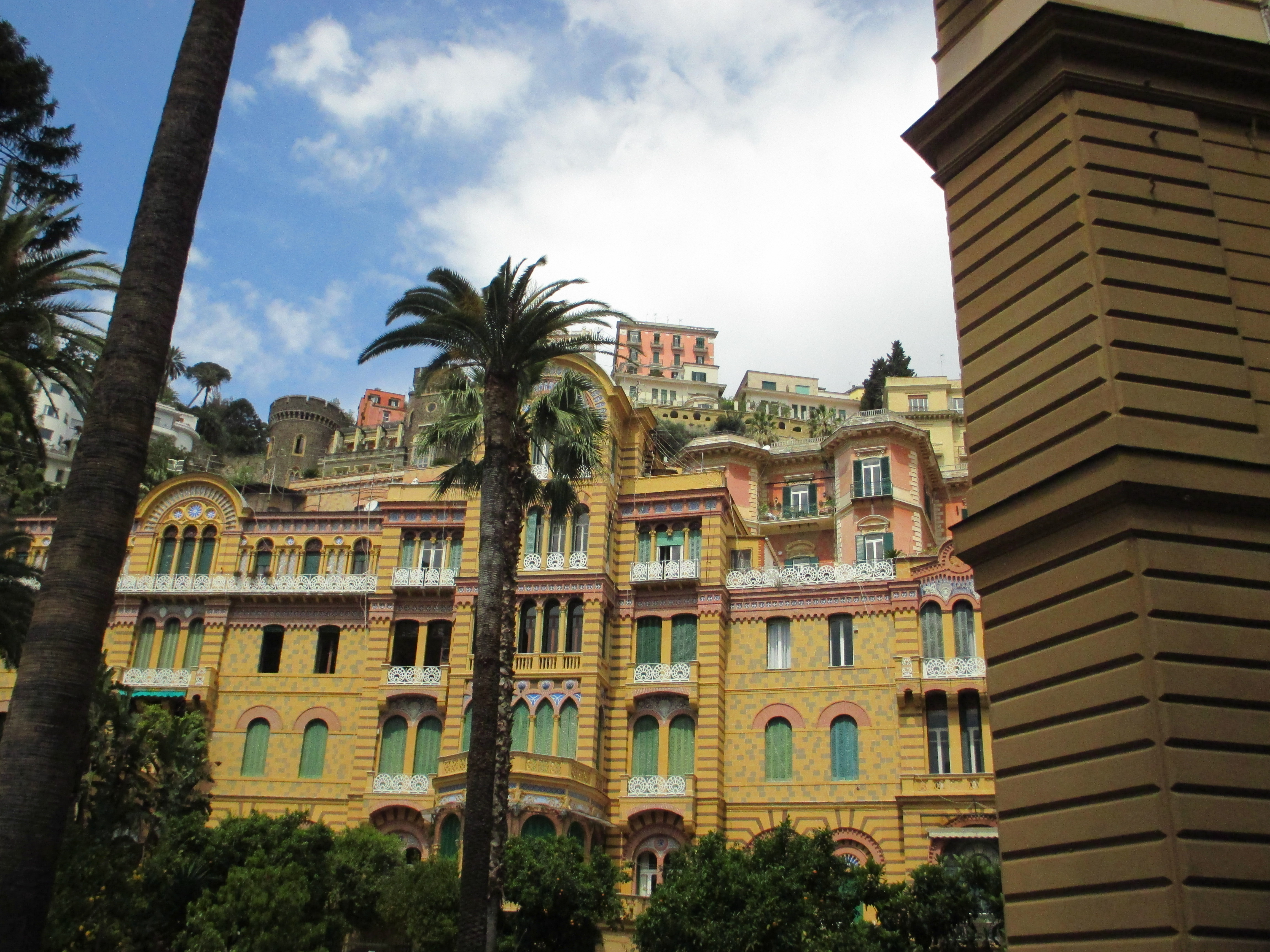
View from my hotel terrace (Naples)

So I booked a flight (via Frankfurt) with Malaysia Airlines. At that time, it wasn’t really a popular airline given the mystery around the disappearance of one of its airlines, but fact is, it has a very good safety track record prior to that incident. So I wasn’t that concerned about their safety record when they went on promo where I got a business class seat for $1,600 only (before taxes and surcharges) which is a good buy in a time when the prevailing rates for the same seat class are more than $3,000 for roundtrip fares from Manila. Since it’s one of the Southeast Asian carriers, I knew that topnotch hospitality service is expected which is common among airlines in the region (sorry to say but the best service that I have experienced among airlines that I’ve flown with regardless of seat class are those that are from the region like Singapore Airlines, Thai Airways, Malaysia Airlines, and even our very own Philippine Airlines). Regardless whether you are flying in a Boeing or Airbus, business or coach, it’s really the staff that counts, people who try to make a difference and in this case, Southeast Asians are arguably the best.

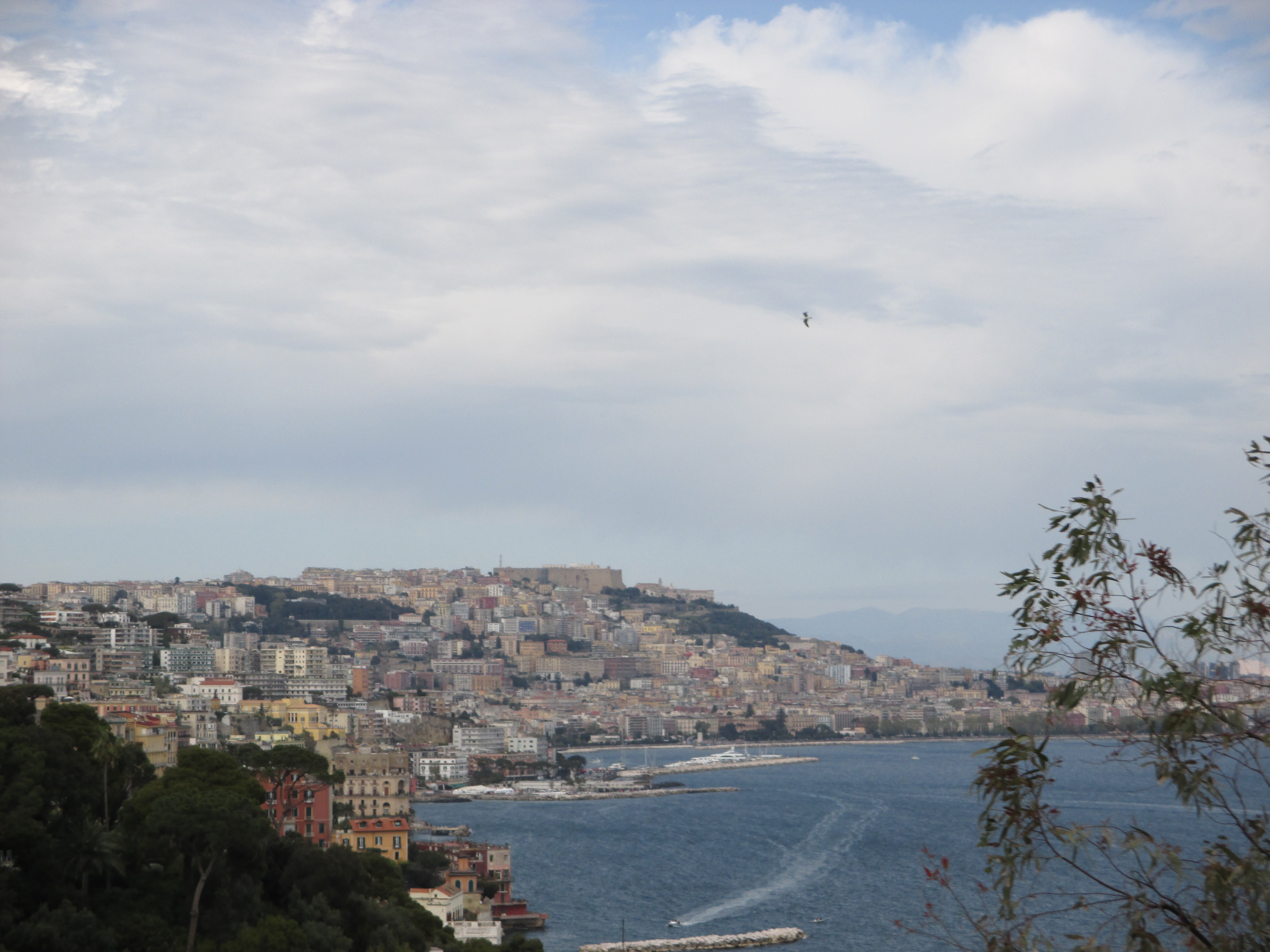
The City of Naples and Mount Vesuvius

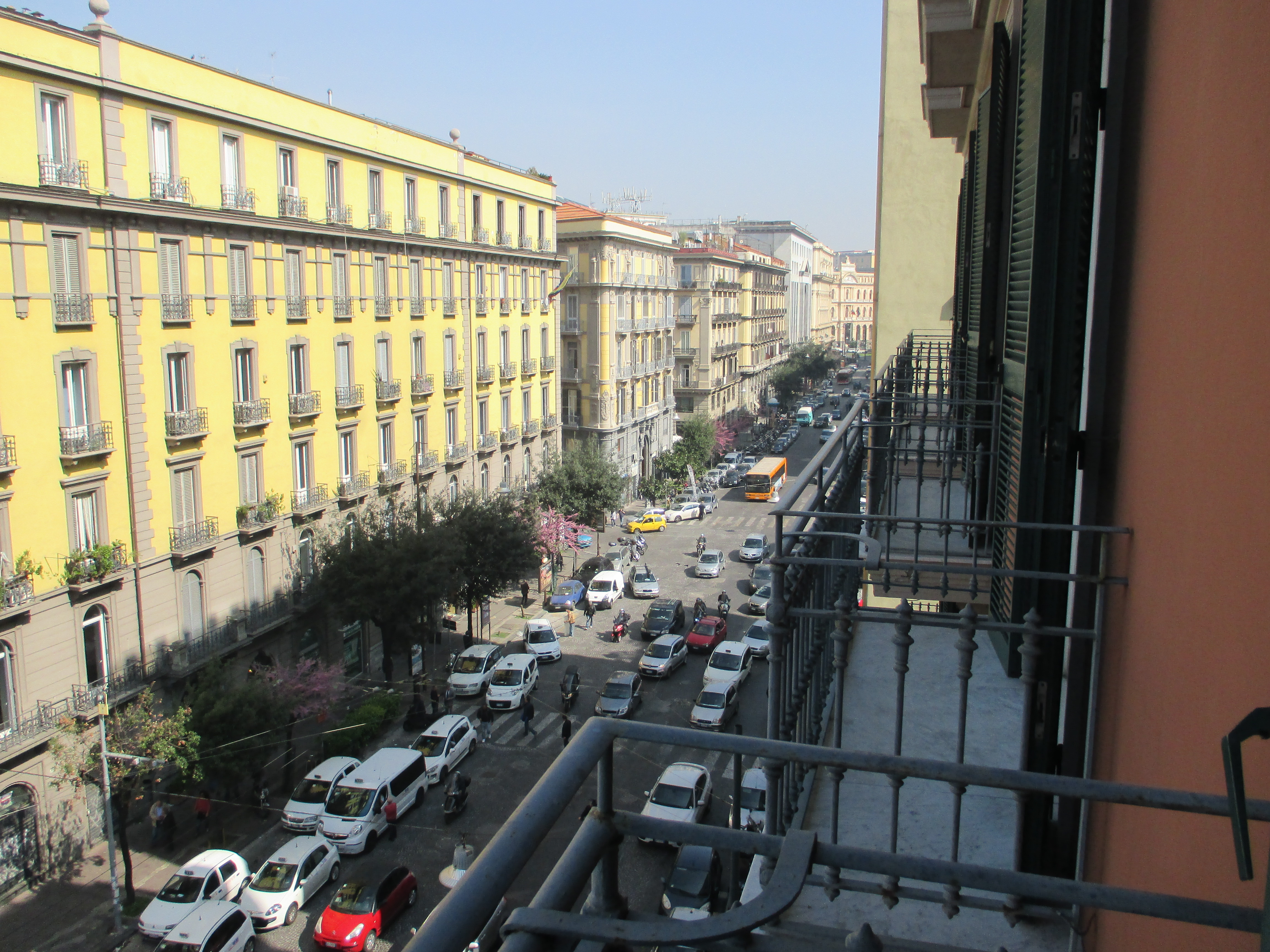
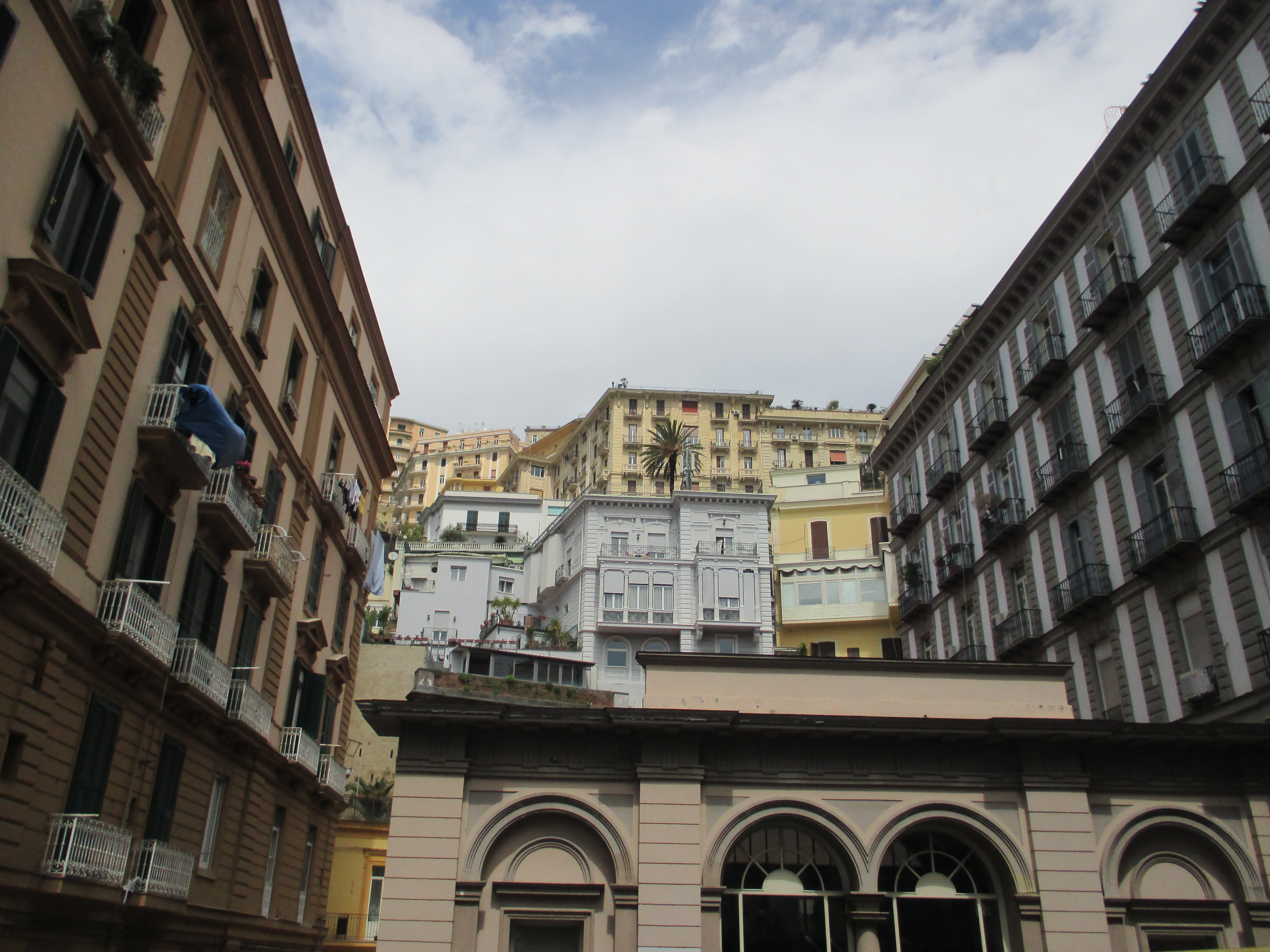
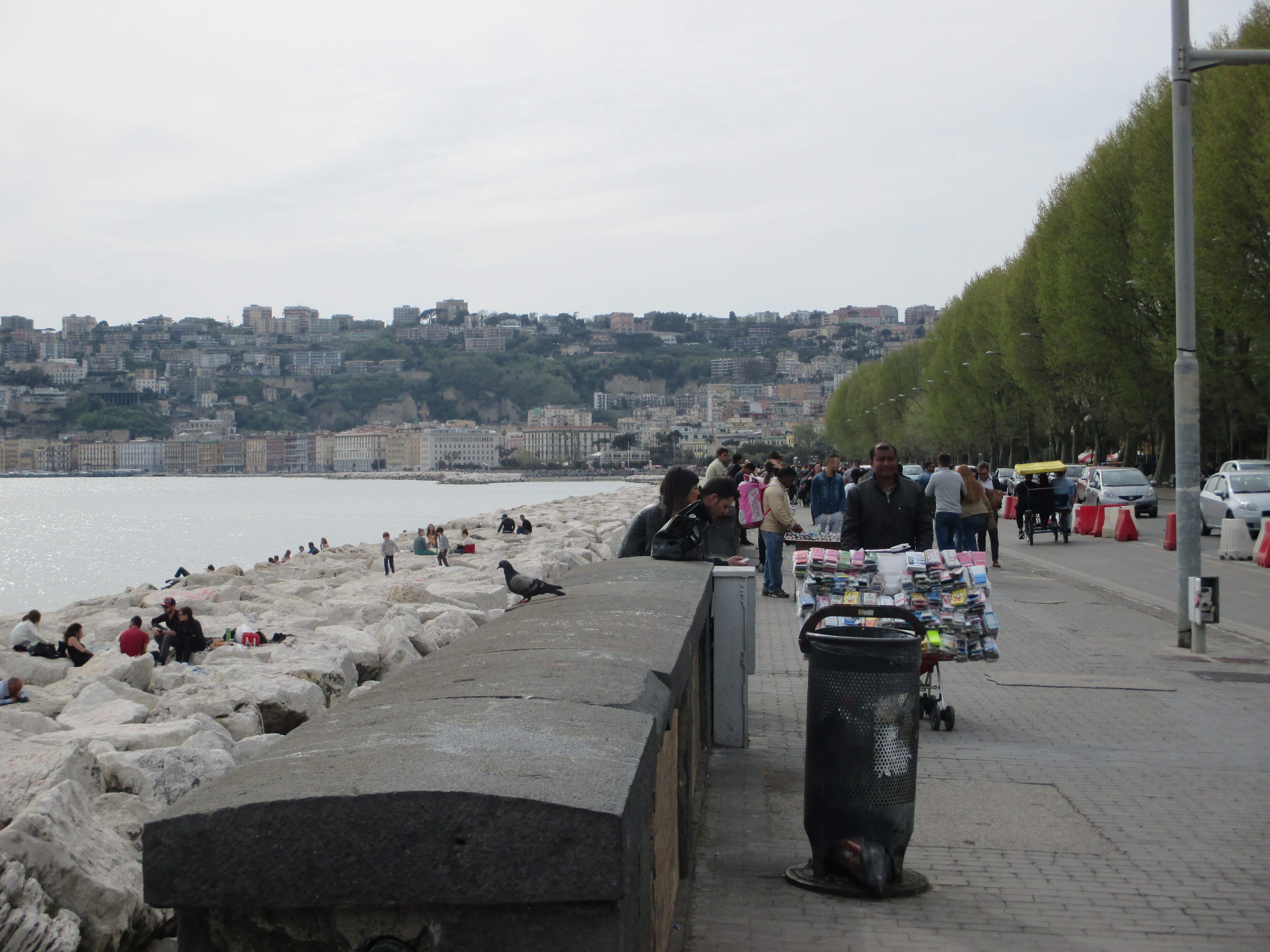
My first stop was Naples (you can pronounce it the way American English would pronounce it where the first syllable is pronounced as nay, since Italians or specifically Neapolitans are already getting used to it, but you can please your host city by just saying Napoli pronouncing the first syllable as nah). From the airport to the city, my first impression was the place is filthy. This became more apparent when I started walking around the city. What crossed my mind then was that Neapolitans have no concept of a waste/garbage can. There were litters everywhere! It seems that it’s cool to just drop your trash and just move on, expecting that someone will follow thru and clean it up for you. Not cool at all. I’m not a clean freak, but I still have the decency to respect my environment, and when I say environment, that includes people around me. Apparently, there’s a prevailing notion there that the farther you go south (of Italy), the dirtier it gets (Naples is on the southern part of the country).

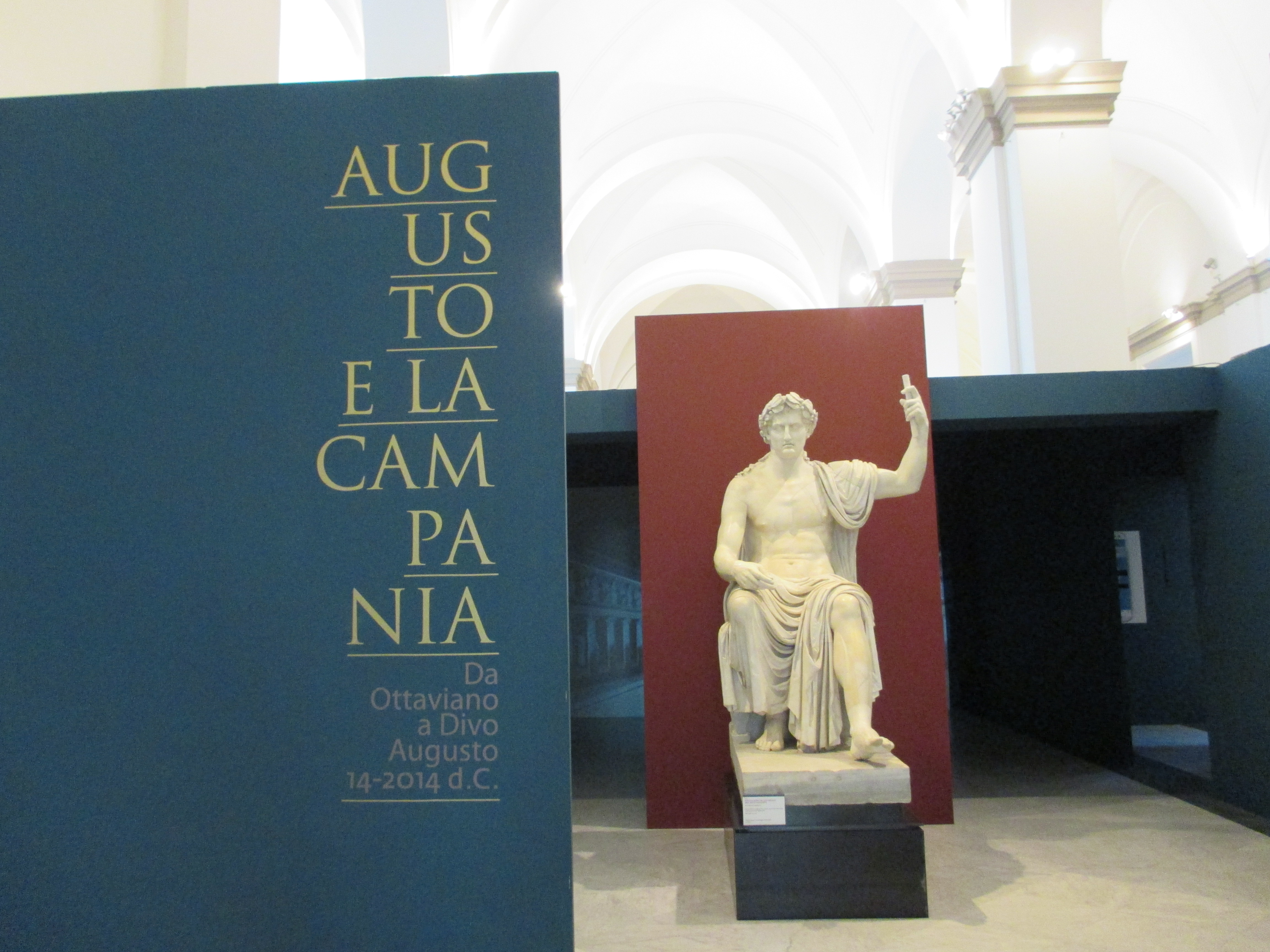
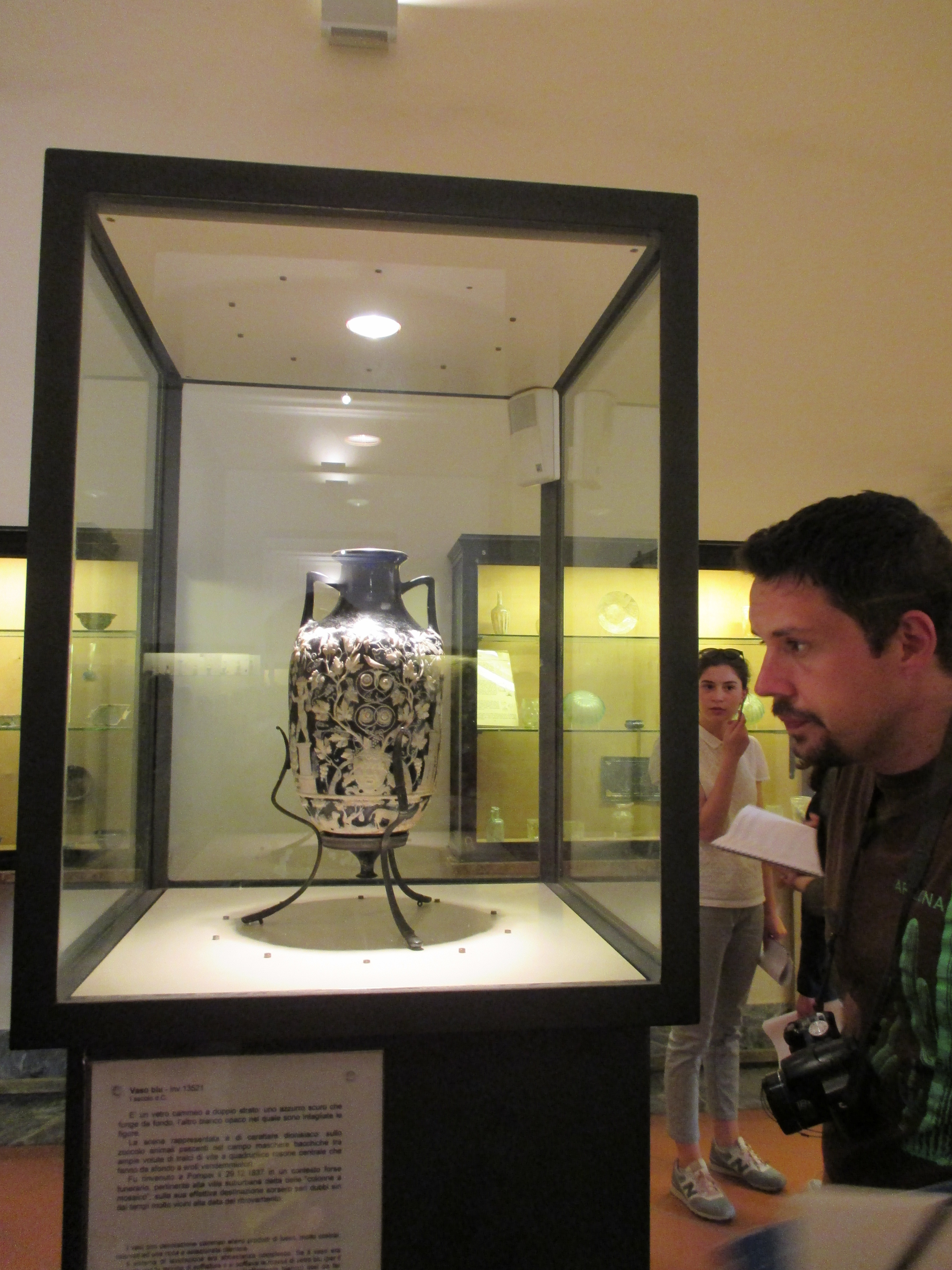
National Archaeological Museum (Naples)

One of the things that I love to do when visiting a place for the first time is to check out its museums. So I did just that in Naples where I went to its National Archaeological Museum. I can’t remember whether I enjoyed it the same way I would enjoy other museums in my past travels, or whether it has vast collections of artifacts. But just like any museum, my takeaways would always be that sense of history and ancestral way of life and the important gift that every visit to a museum would give which are lessons of humanity.

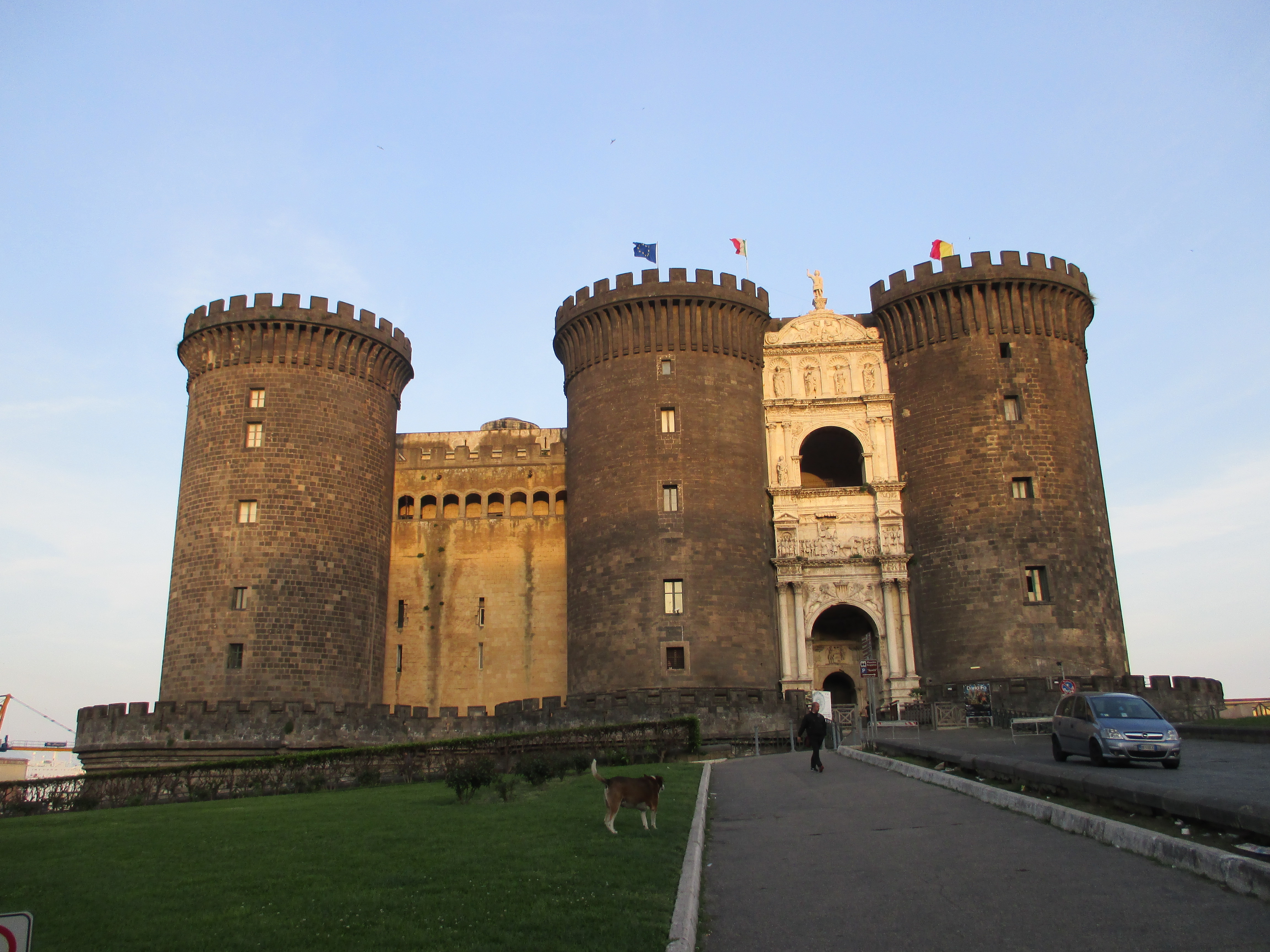
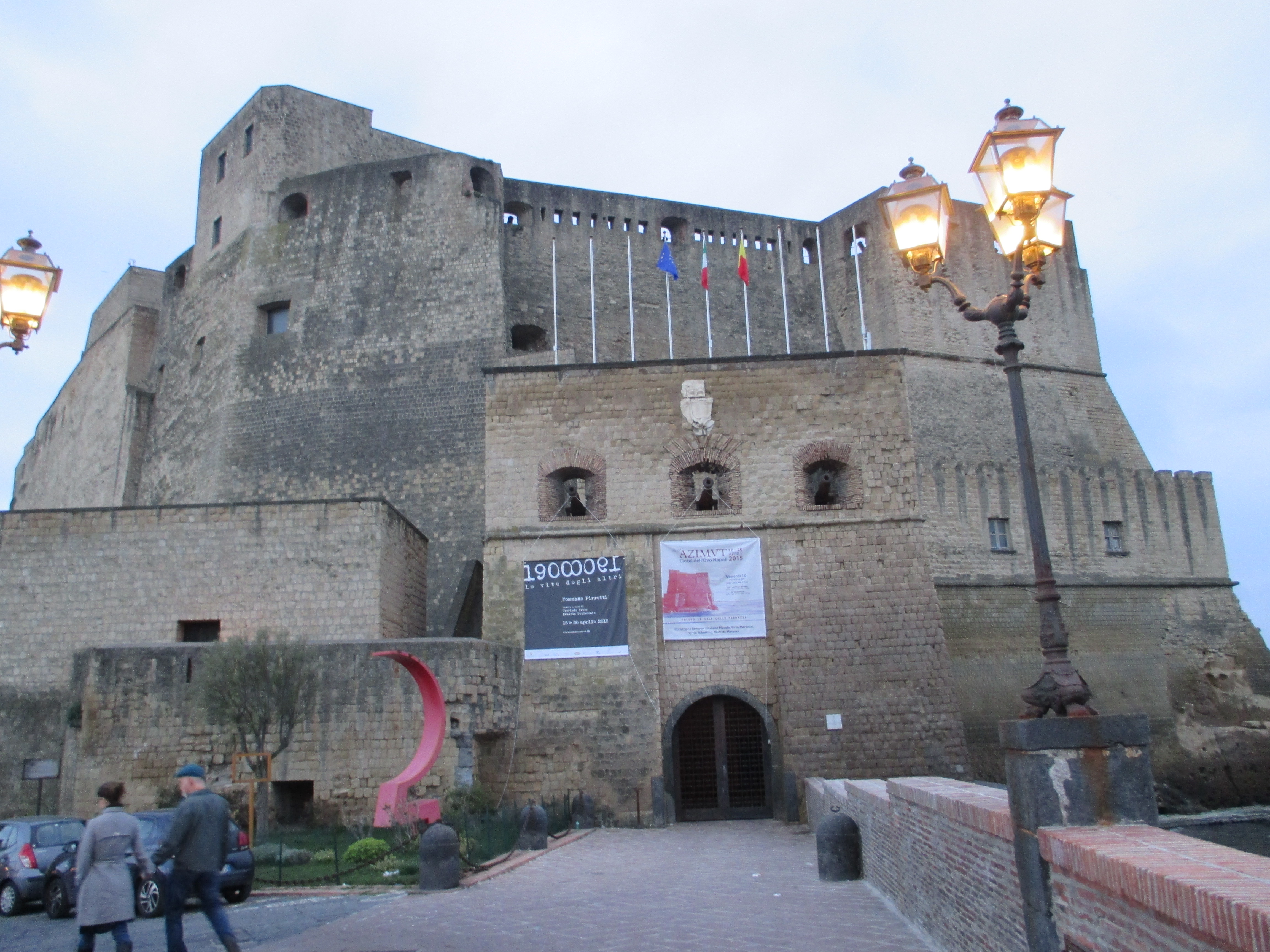
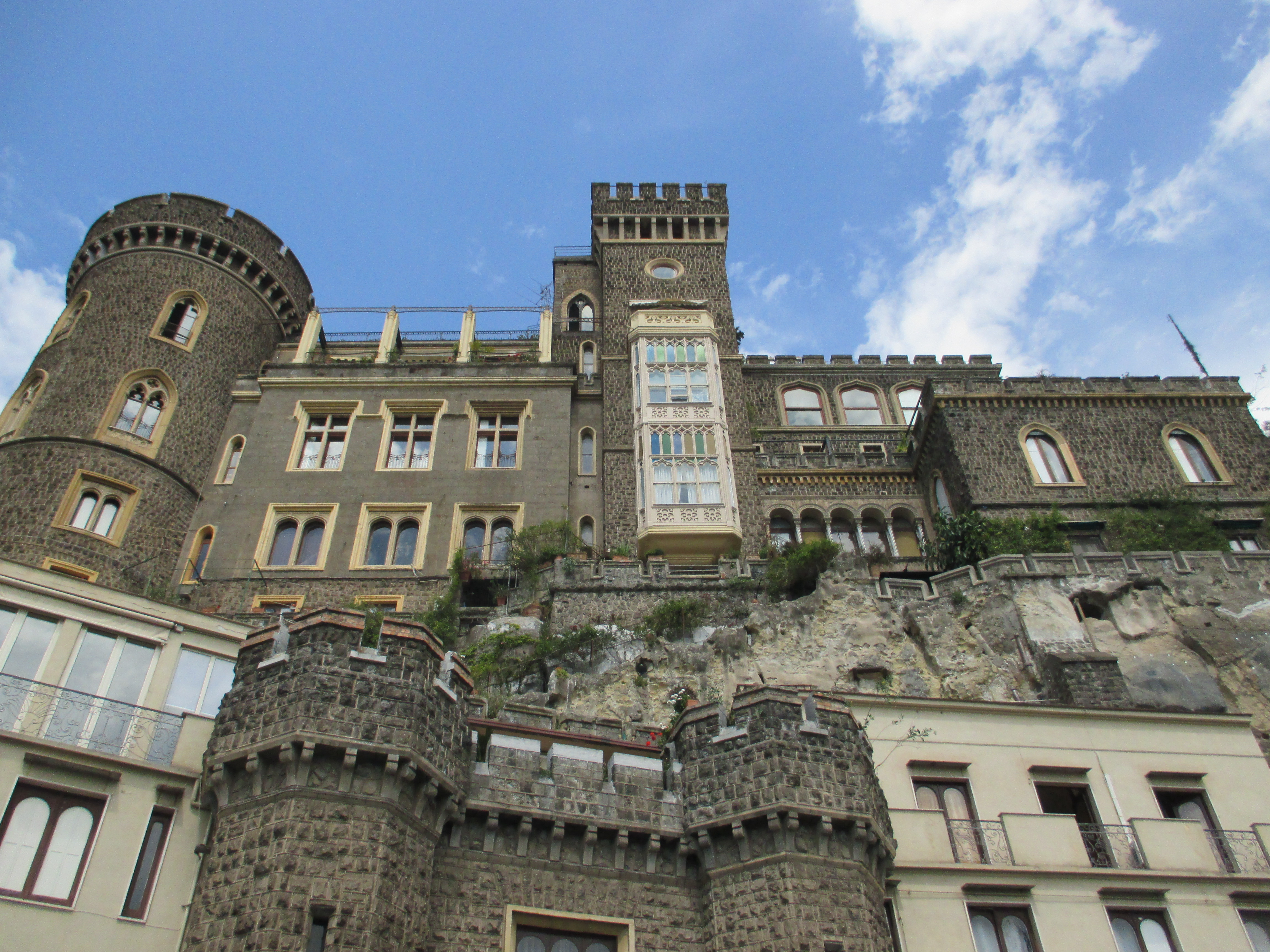
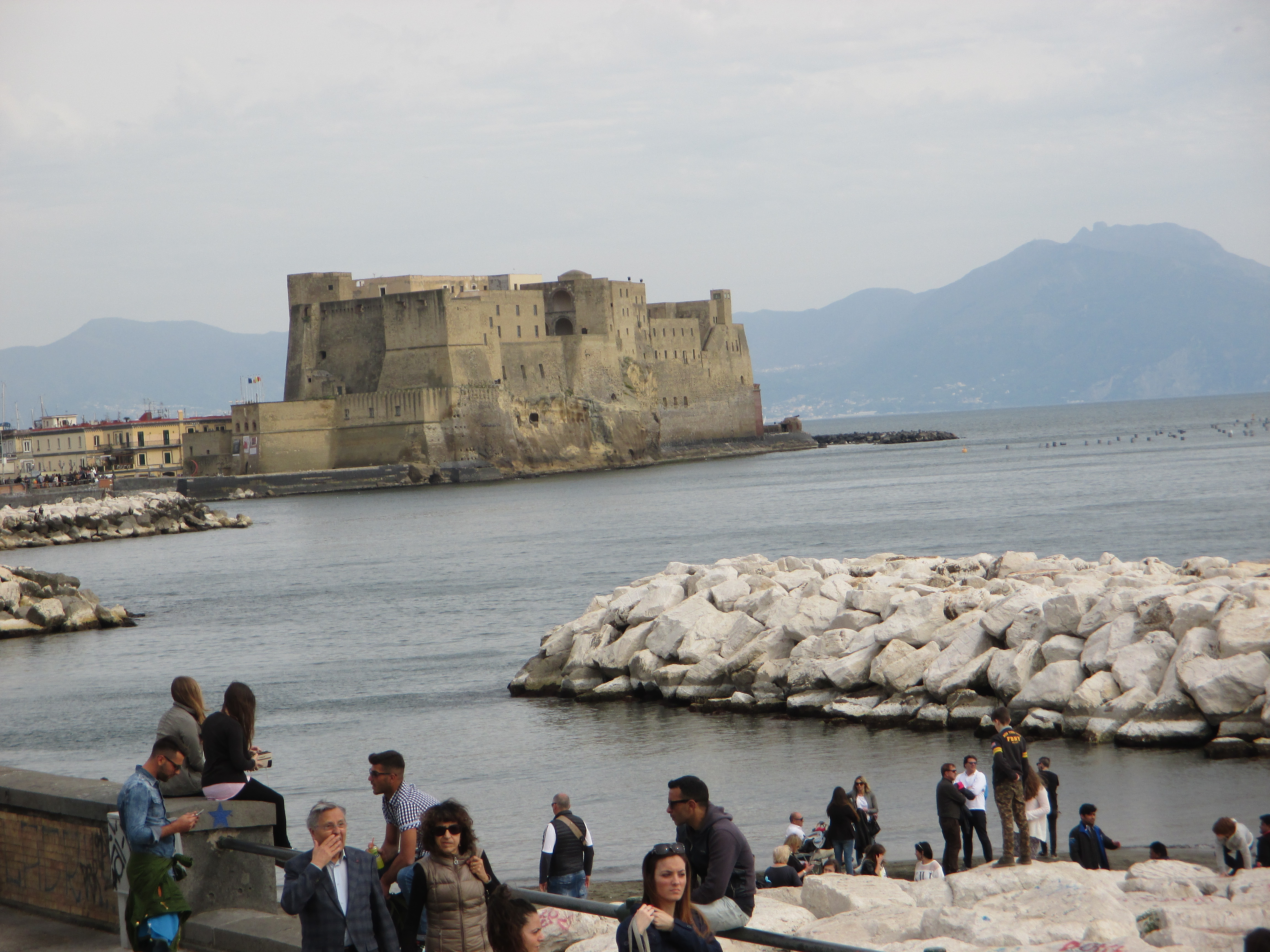
The castles of Naples: (left) Castel Nuovo (right) Castel Dell’Ovo

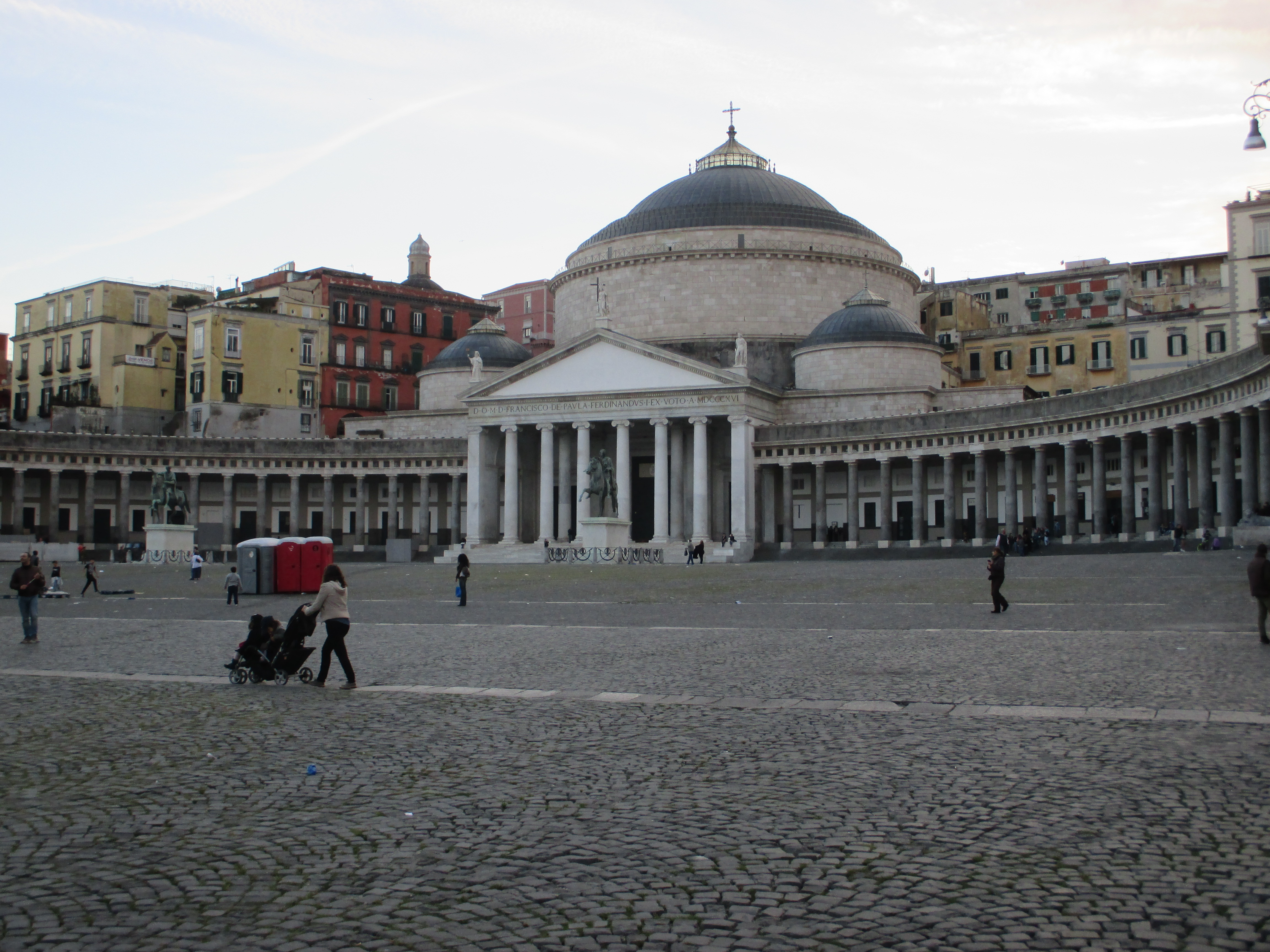
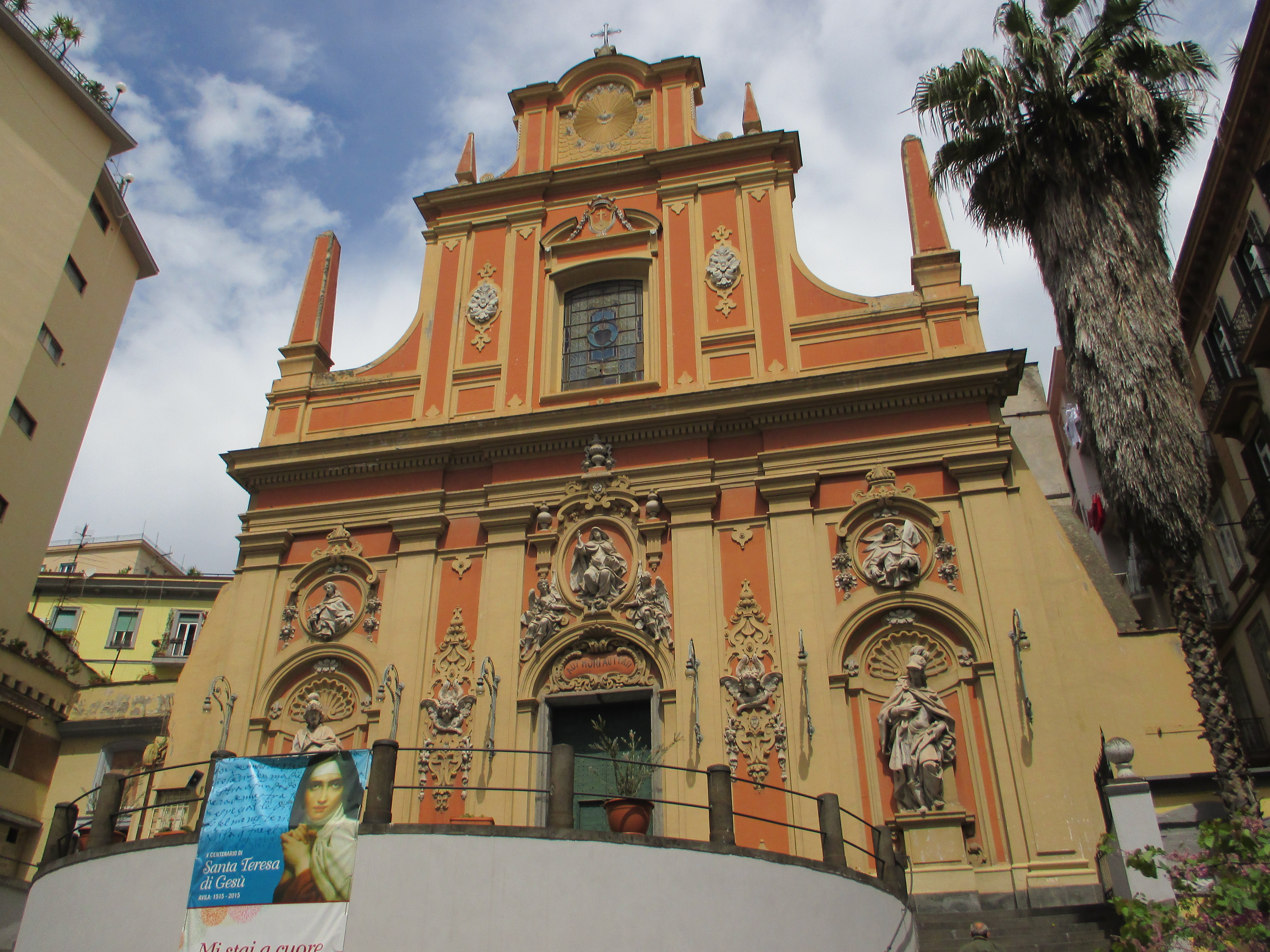
The city itself is like an open museum. There’s the Piazza del Plebiscito with its massive square where the church of St. Francis of Paola is on one side and the Royal Palace on the other. Around the city are numerous remnants of its past, from castles to churches, from old architectural heritage to various squares (piazza). To give this city a postcard perfect scenery, there’s Mount Vesuvius as backdrop to an already beautiful landscape and seascape, a fitting and dramatic addition to a place that’s very rich in history. I will give you a closer look to this majestic volcano later on when I take you thru Pompeii.

Piazza del Plebiscito (top left) and other city sights

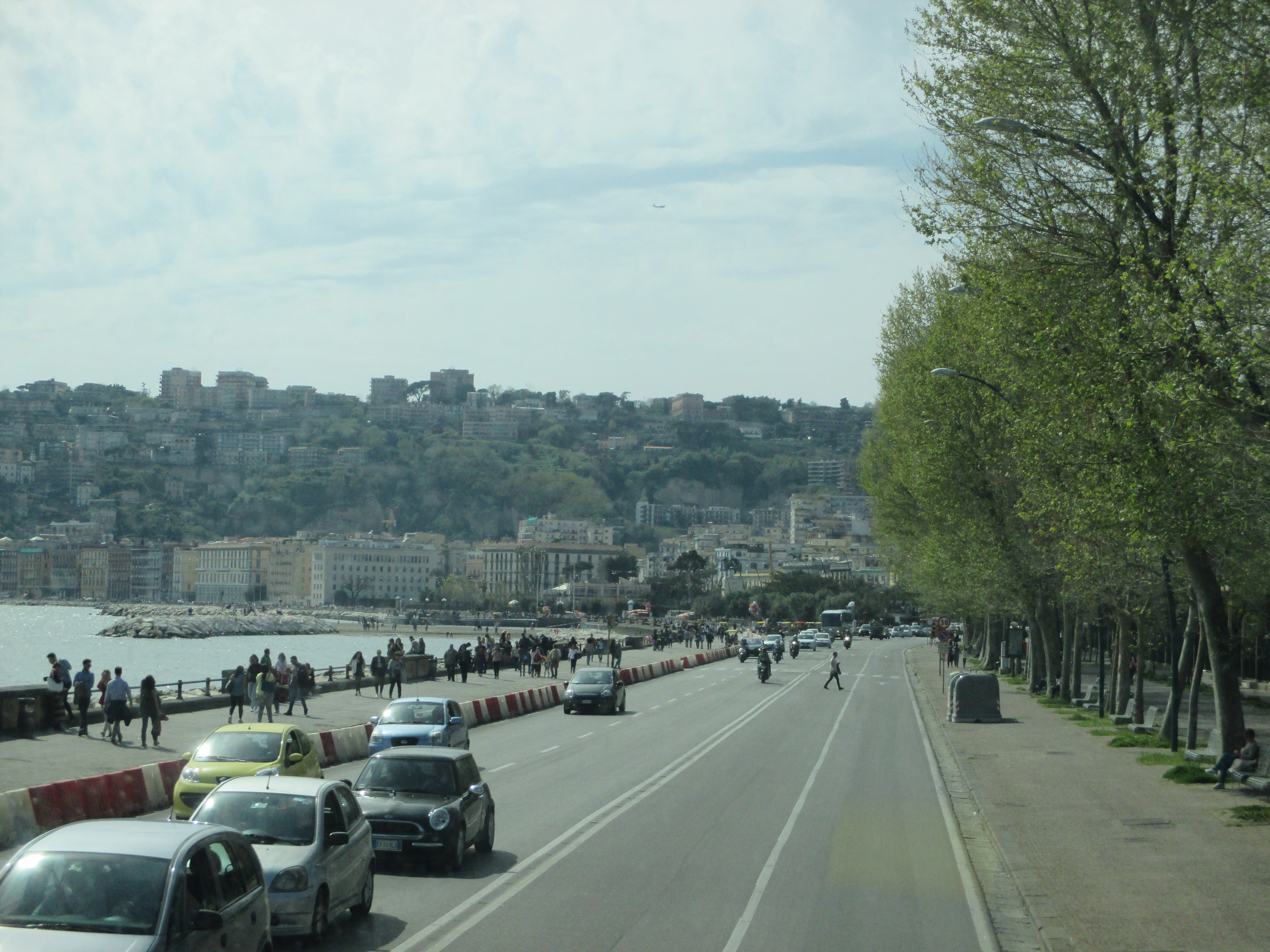
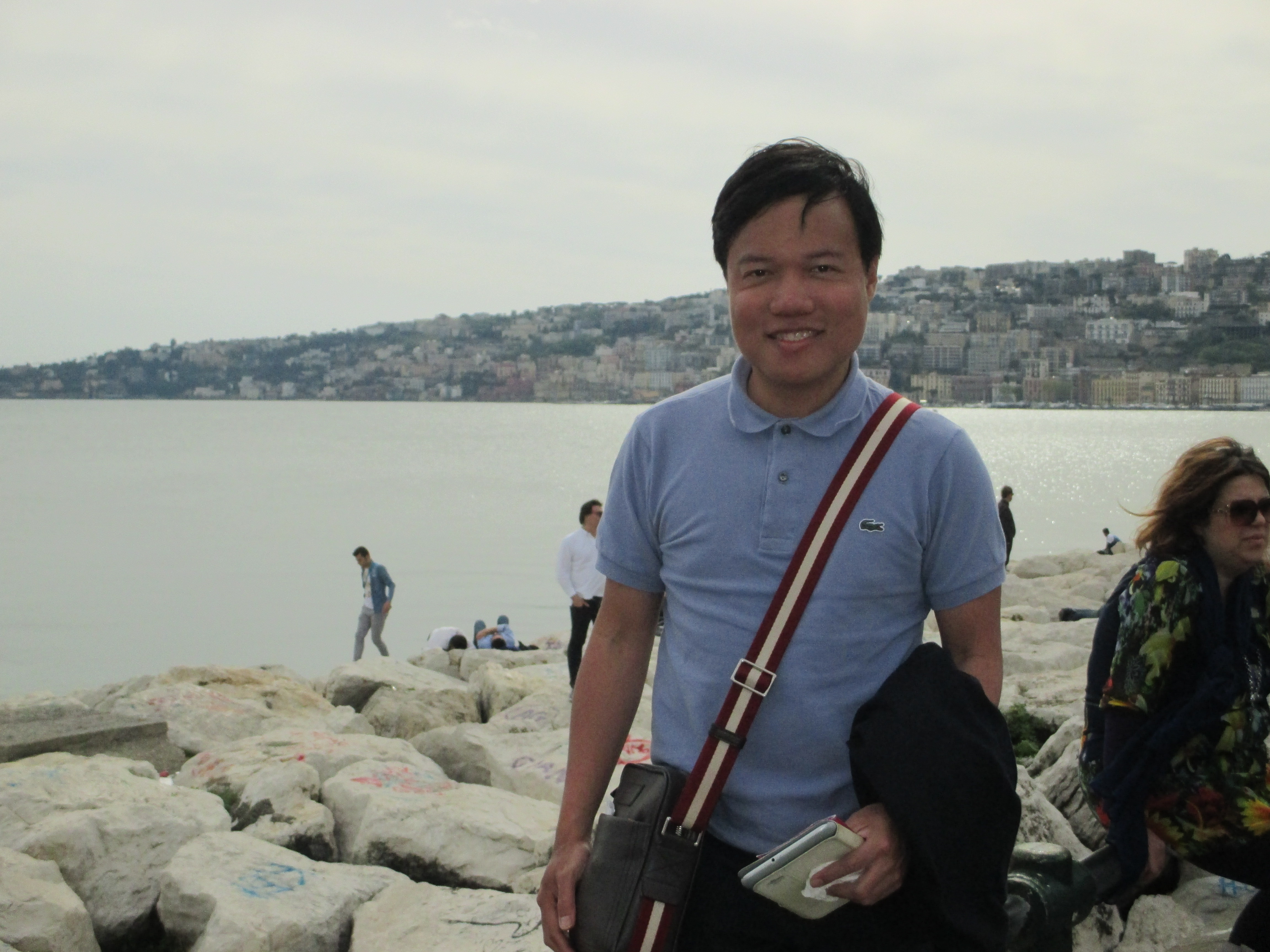
The city coastlines are a marvel to watch. I love the leisure walk on the long promenade along the coastline, enjoying the view of the sleeping volcano and the tranquility of the Mediterranean sea. I don’t know what magic or spell this body of water has on me, but every time I’m in a place within its reach (such as Barcelona, Malta, Dubrovnik, Budva, Mykonos, and Santorini), it always gives me that feeling of joy, awe, mystery, and serenity. Though it doesn’t surprise me knowing that my feng shui element is water, which may explain why I’m always drawn to it. It’s like my own unicorn. Stopping for some gelato during these walks is just icing on the cake. One thing I noticed is that the farther you go along the coastline away from the city, the cleaner it gets.

City coastline and promenade (Naples)

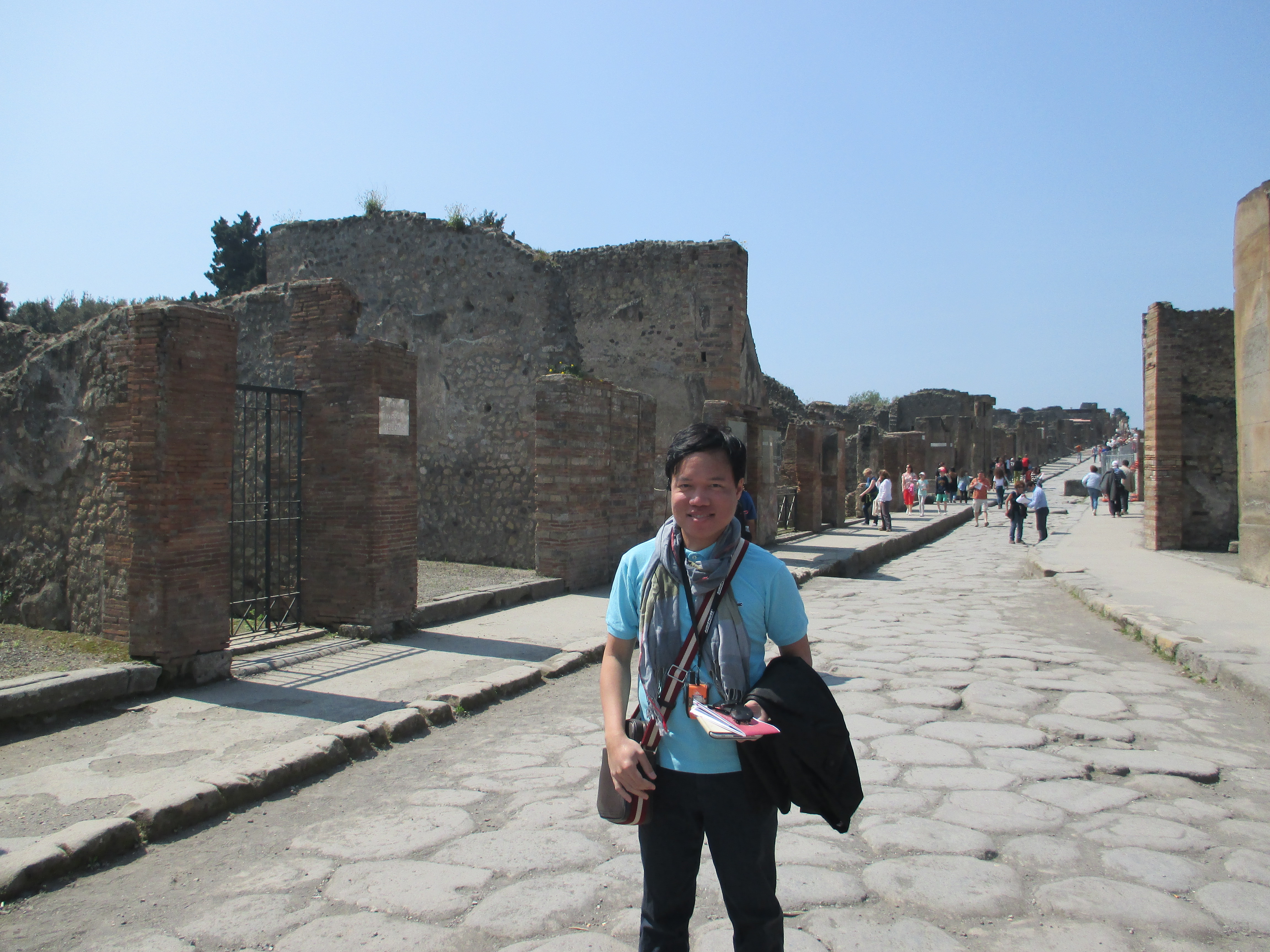
Next stop is Pompeii and Mount Vesuvius. Speaking of open museum, nothing would probably beat Pompeii. If you’ve skipped your history class, you’ve probably missed out on one of history’s events of monumental scale that teaches and leaves every generation a lesson. This is when the whole city of Pompeii was buried by lava and thick volcanic ashes and other debris instantly when Mount Vesuvius erupted. Known as an ancient sin city, it was preoccupied by human frailty that it has lost any sense of safety. Long before I read about Pompeii in history books, as a young kid, I’ve watched a biblical movie that showed what happened to this ancient Roman city and its people. Every now and then, it feels like history’s repeating itself. This health crisis that we are facing now particularly in my country is nothing different than Pompeii. We’ve been preoccupied by power (as they say, power corrupts) and greed that our leaders, decision makers, security and safety agents have essentially failed us. As a people though, there’s still hope. I think that’s the only difference between Pompeii then and our country now. People got buried then and didn’t get the chance to escape. We still have a chance to escape from this vicious cycle of power and greed. It’s not the virus that will change our ways. It’s the lesson we get in every adversity as a result of our own frailty. That is if we as people are willing to take heed the lessons of history.

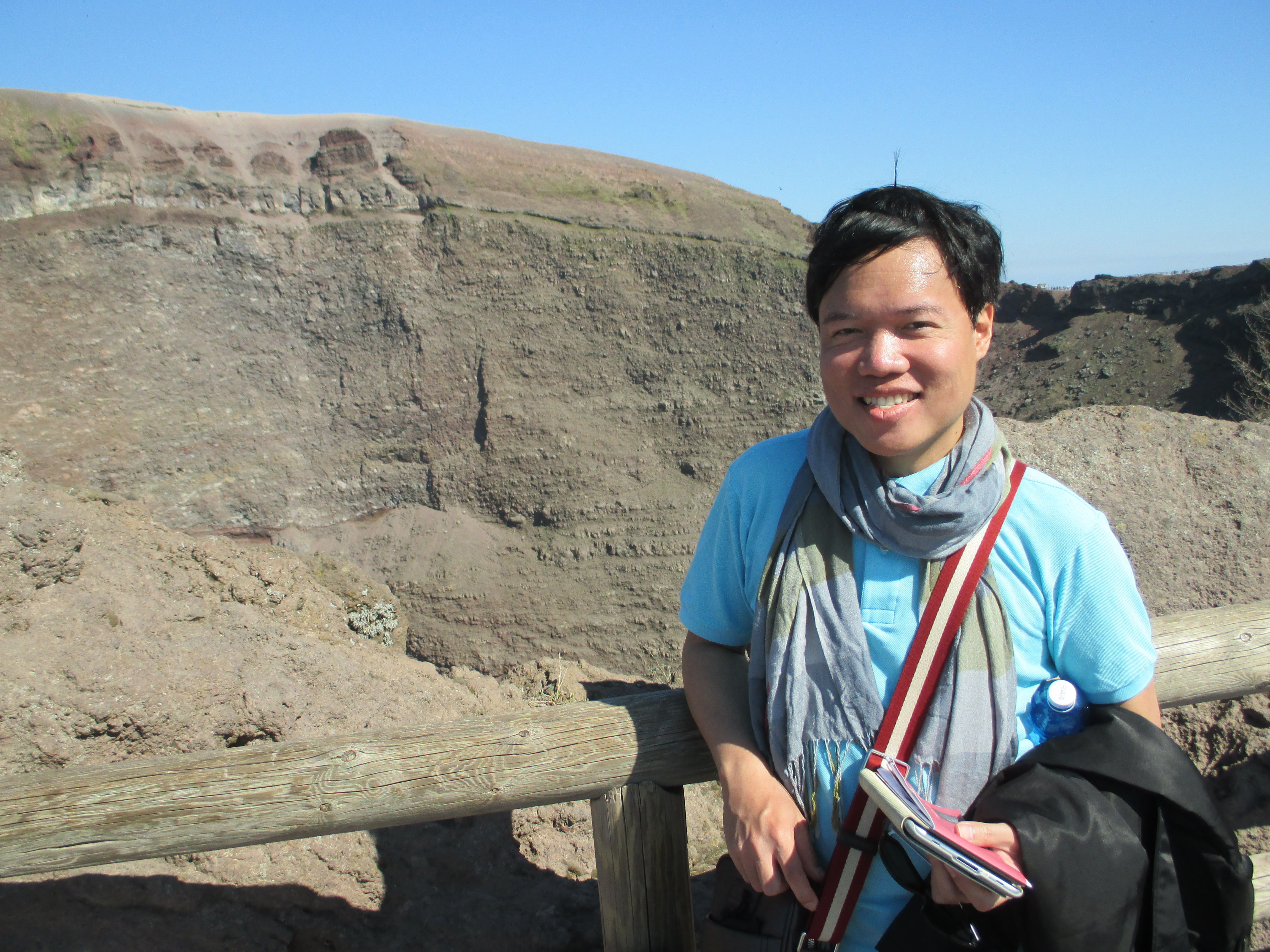
(Left) Ancient city of Pompeii (whole city escavated from thick volcanic debris; (right) on top of Mount Vesuvius crater

So to show how strong I was (mind, body, and spirit), I started climbing the sleeping volcano. Mounting the volcano thru its rocky trail can be tiresome, to the point that my whole body almost gave up. At that point, I was already muttering “what the hell was I thinking?” I still have other places to visit and it’s not worth being adventurous at this leg of the trip if I break my back (that was long before my spinal surgery, but was already suffering from slipped disk condition). Then I saw two elderly couple in canes climbing down on their way back to the slope. I thought if this lovely couple was able to make it to the top, then why can’t I? After my newfound inspiration and strength (mind and spirit, body is still weak), I decided to go all the way, knowing fully well that the trip back would be more perilous than the way up, with more chances of rolling down the slope with a single misstep.

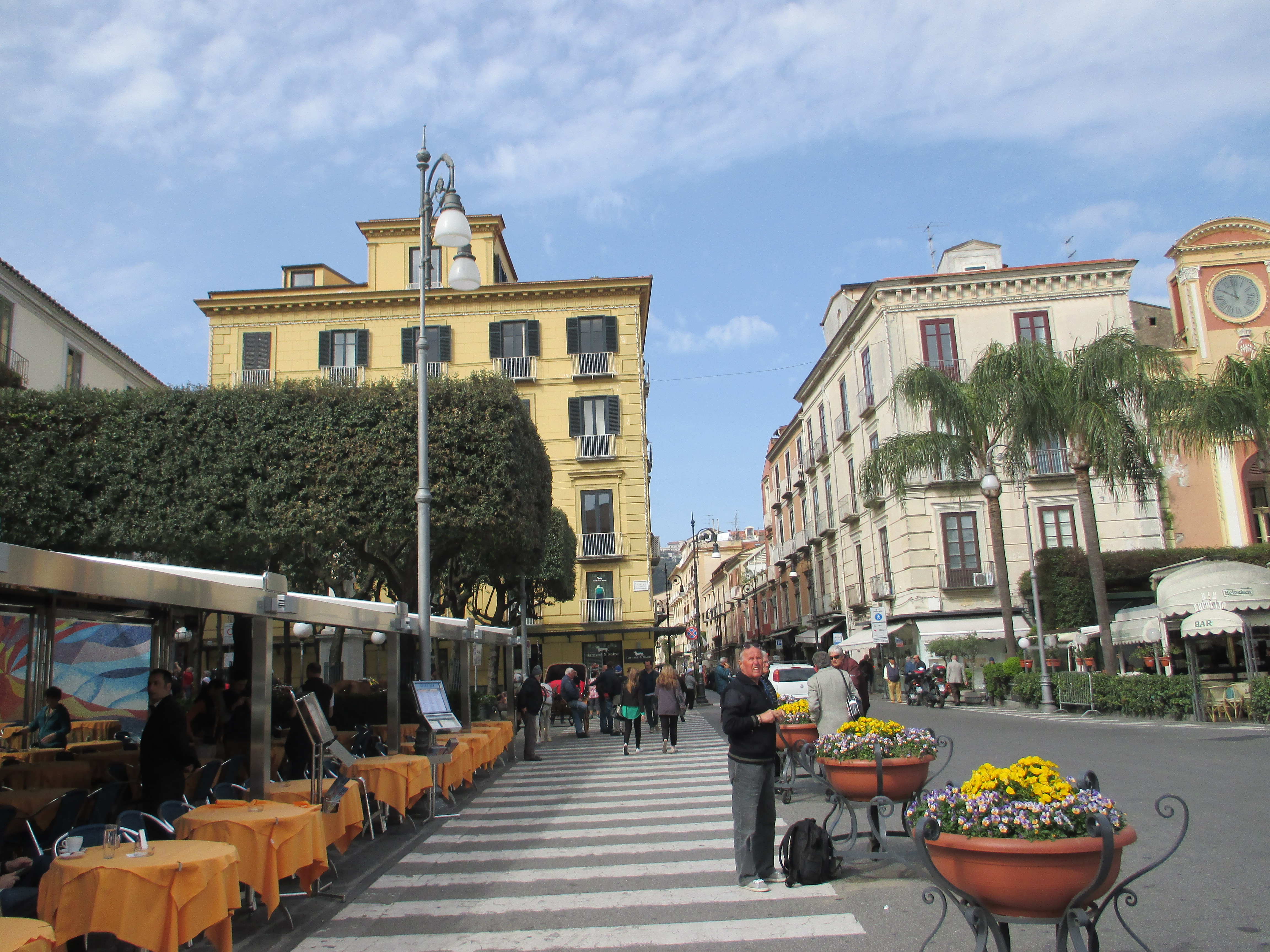
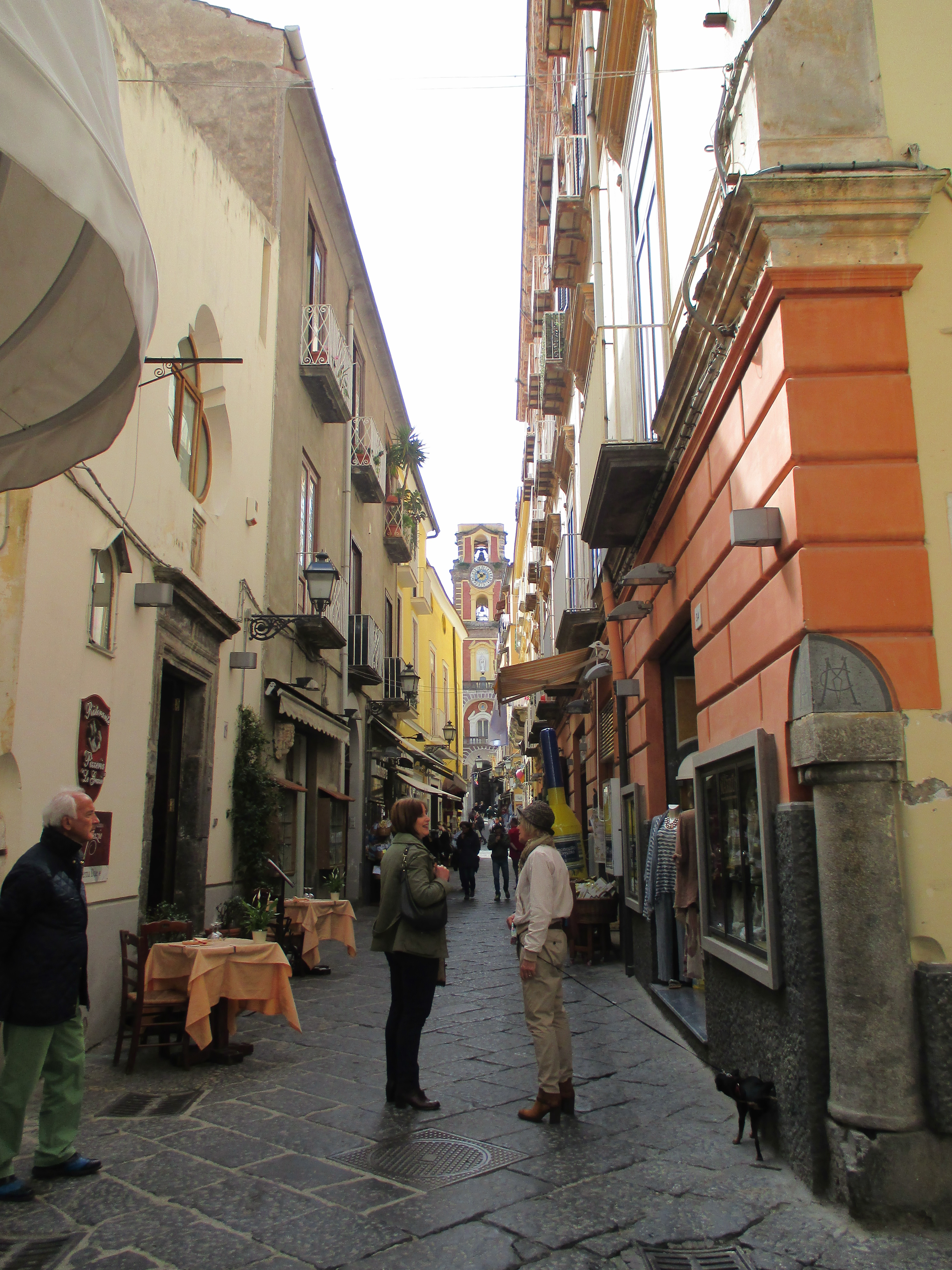
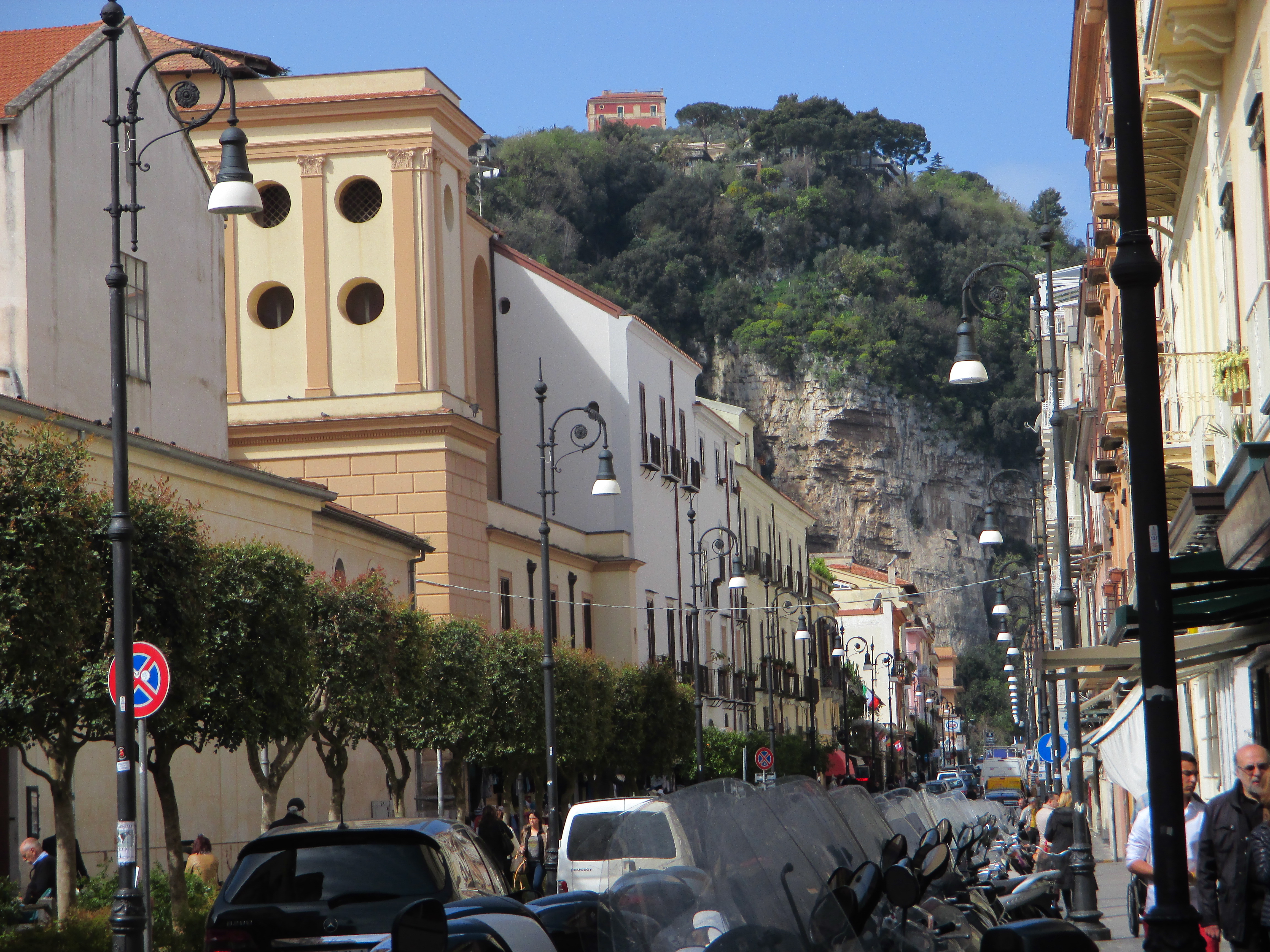
Sorrento (Italy)

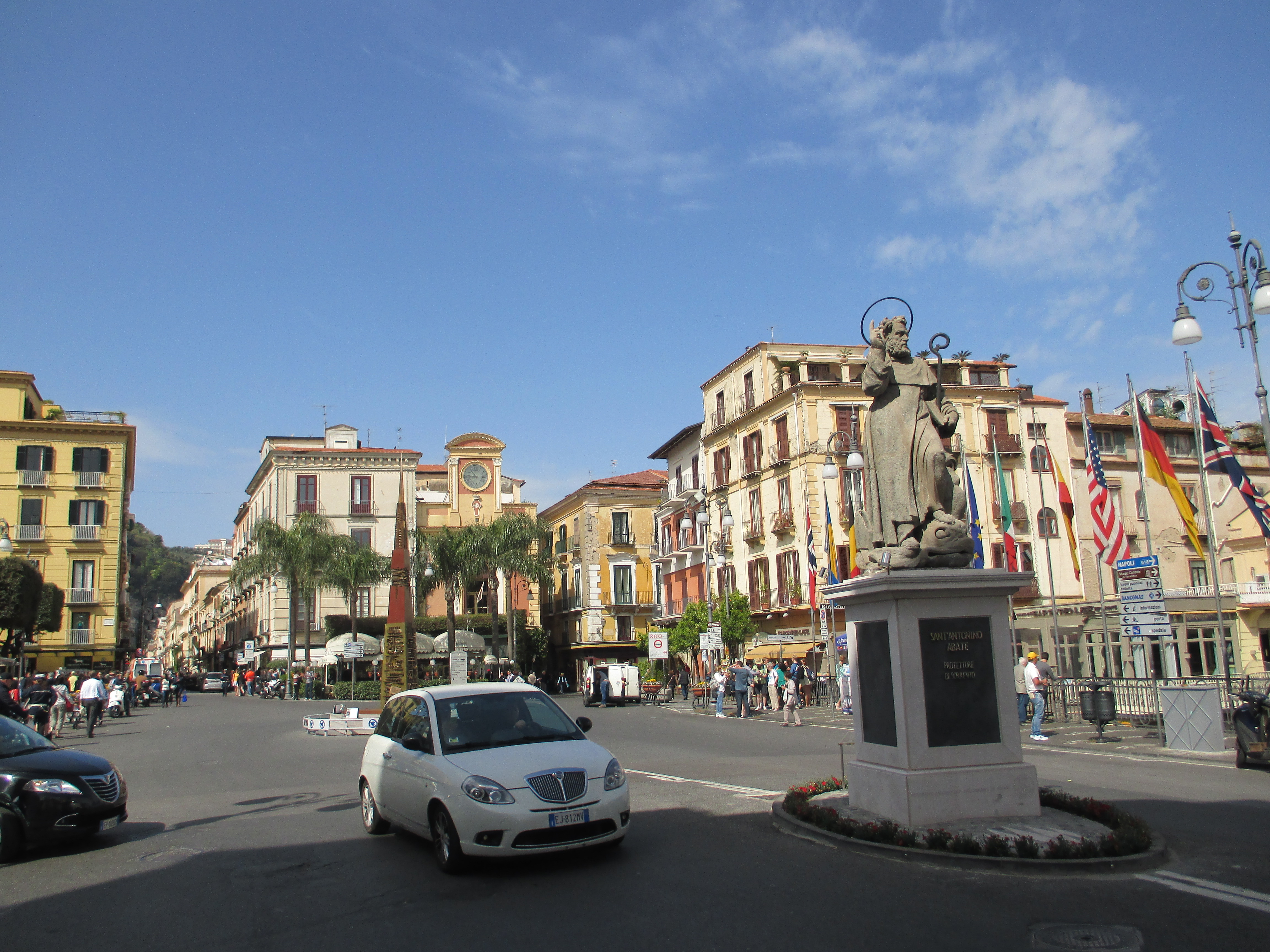
On to what I have been looking forward to all trip: Amalfi Coast. It’s one of the most beautiful coastlines in the world, where a series of quaint towns sit along it. First of the towns is Sorrento. It is popularly known as the home of limoncello, a native liqueur from Sorrento lemons. Every time I would dine in Italy, it would almost always come with a shot of limoncello at the end of each meal and now I know where it comes from. It has this strong acidic (like concentrated lemon juice) yet sweet taste that is soothing to the throat and kind of have a cleansing effect on the palate. Along the way, you can see lemon trees lining up the road. The town proper is scenic at the very least, where narrow avenues are lined up with colorful buildings.

Positano (Italy)

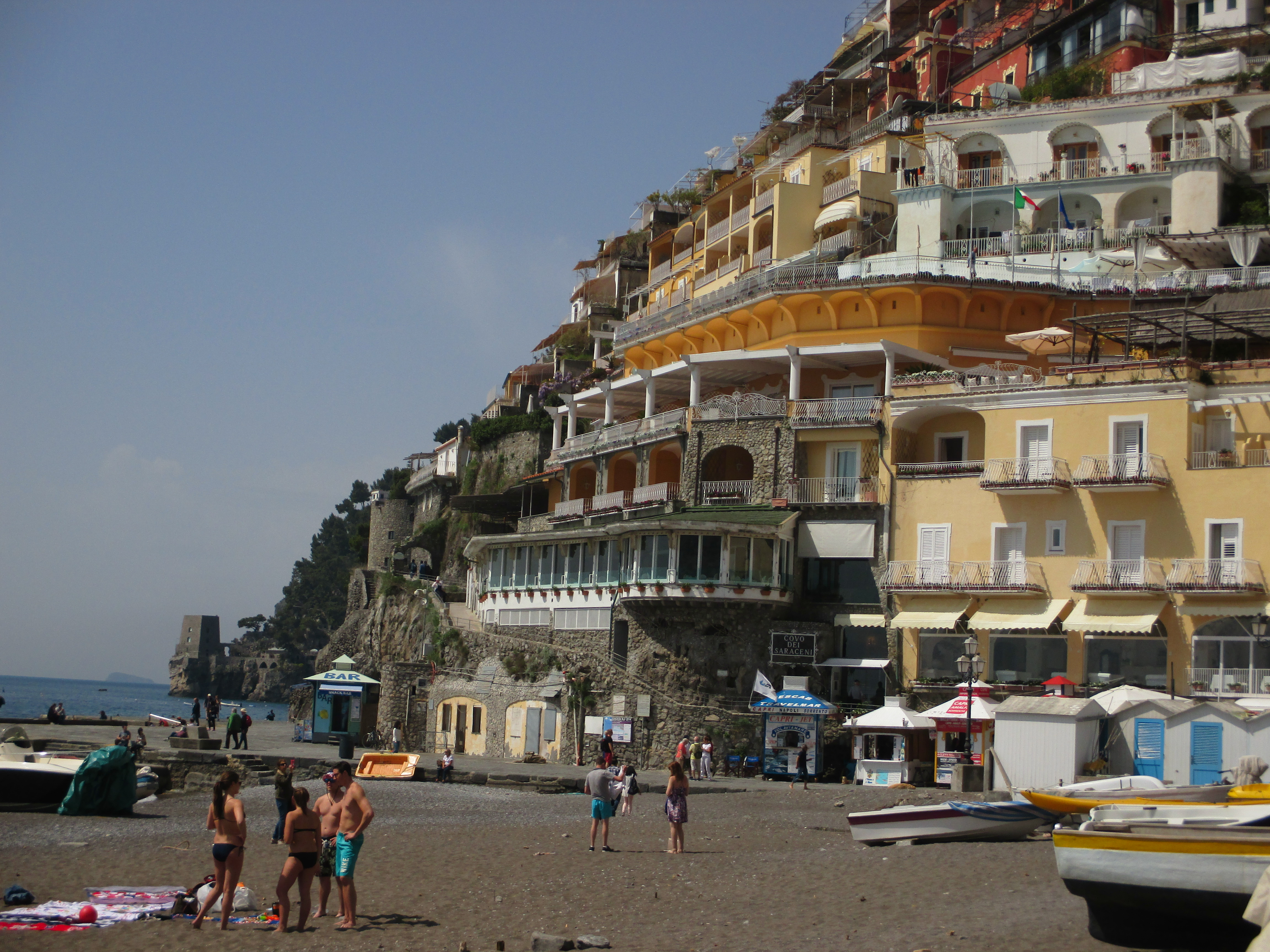
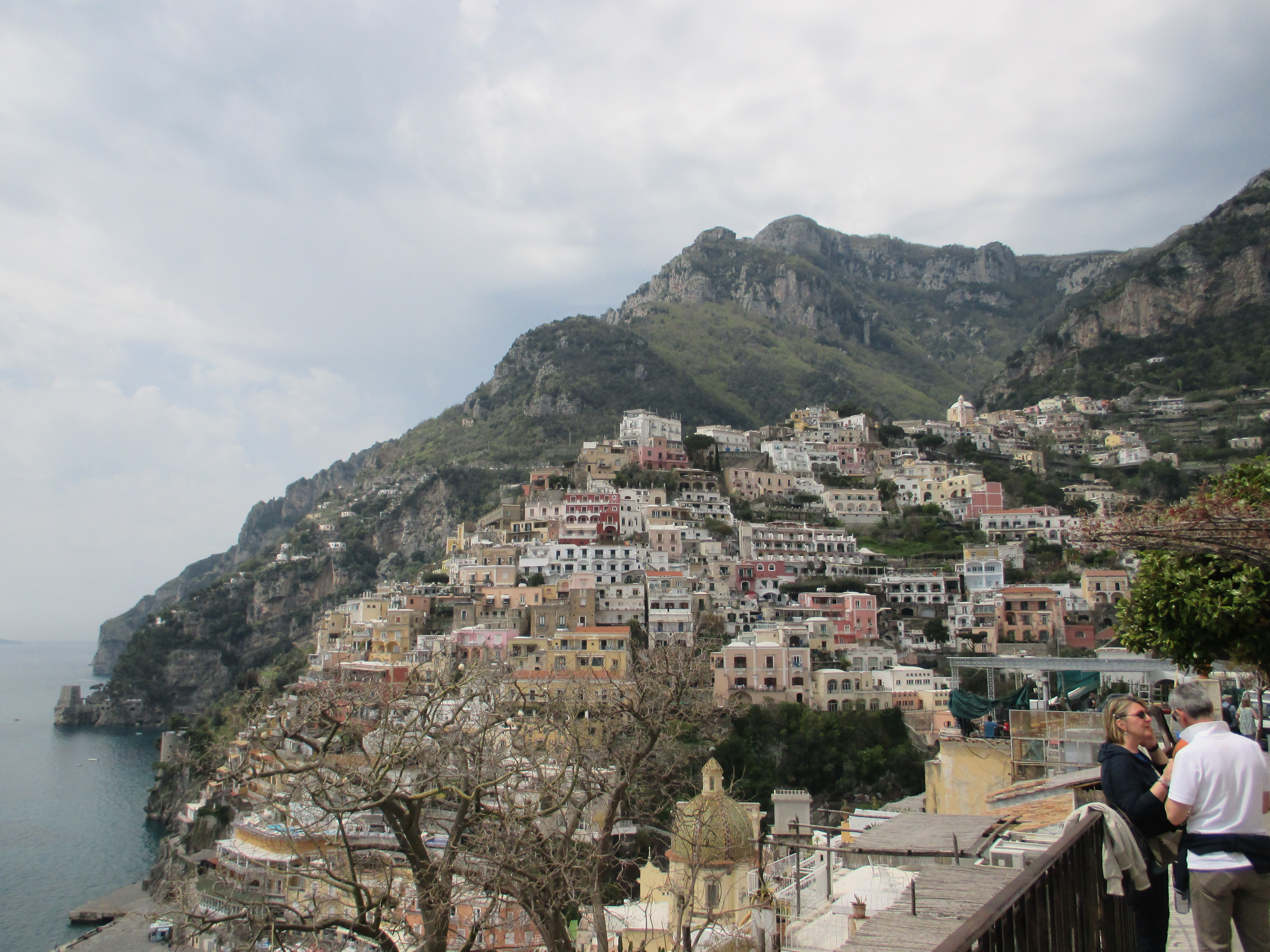
Next town is Positano. One of my favorite places in the world, this town is perched on a cliff (like Santorini), so it is hilly with steep and narrow alleyways lined up with shops that sell anything from clothes, arts and crafts to items made from lemons (perfumes, essential oils, liqueurs). It’s a very picturesque town, where colorful buildings adorn the cliff that meets the sea. There is a small beach, which adds an essential element to an already postcard perfect landscape and seascape. Its beauty is mesmerizing, that you’d be captivated enough you wouldn’t want to leave.

Amalfi (Italy)

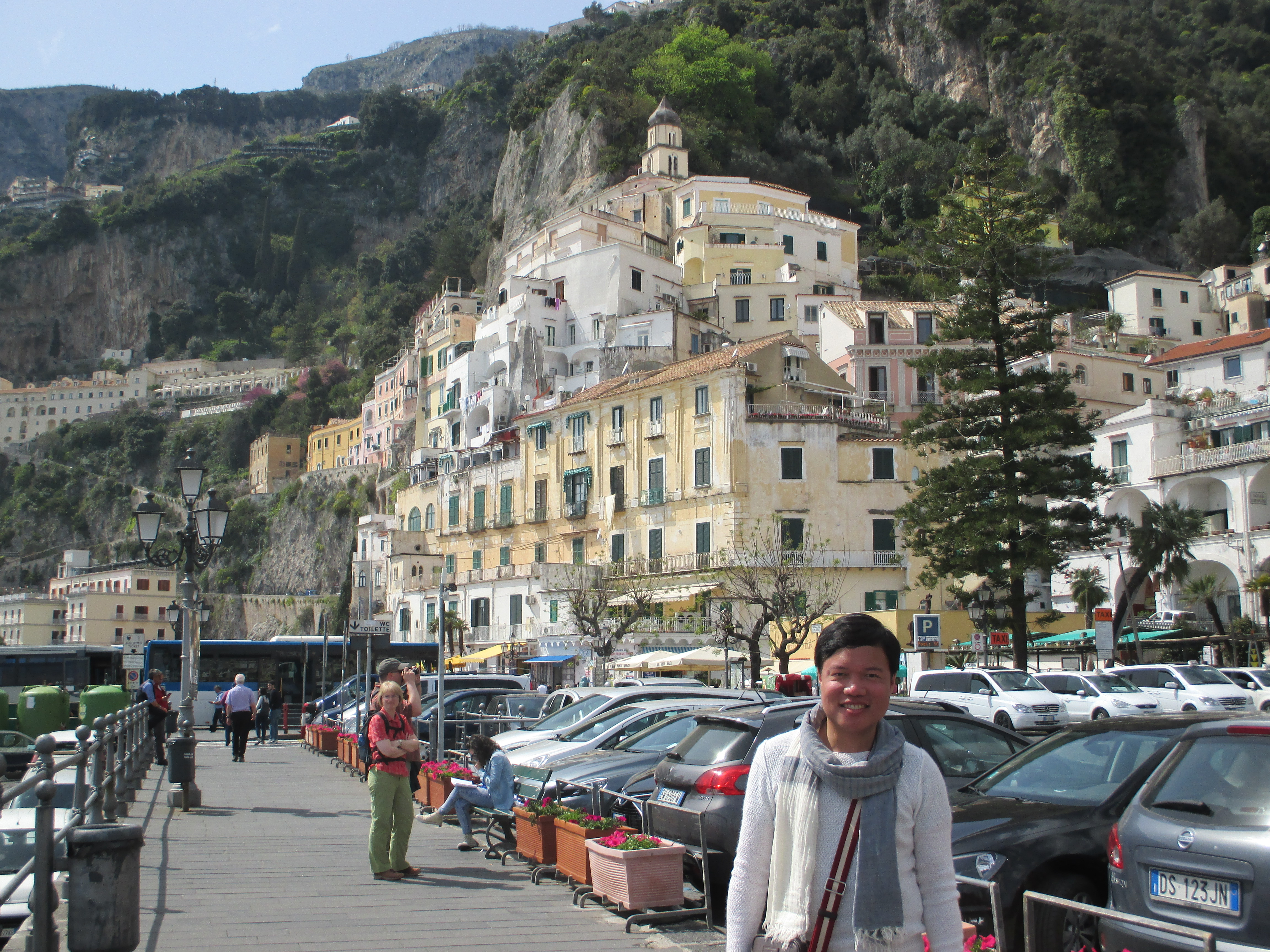
Then there’s the town of Amalfi (where the coastline is named after). It has a bigger beach than Positano, but doesn’t have the same wow factor. Don’t get me wrong, it has its own charm, where anyone who comes here would still be captivated by its resort-like vibe and the mountain backdrop filled with houses. Plenty of dining options to choose from, more than probably what Positano can offer.

Ravello (Italy)

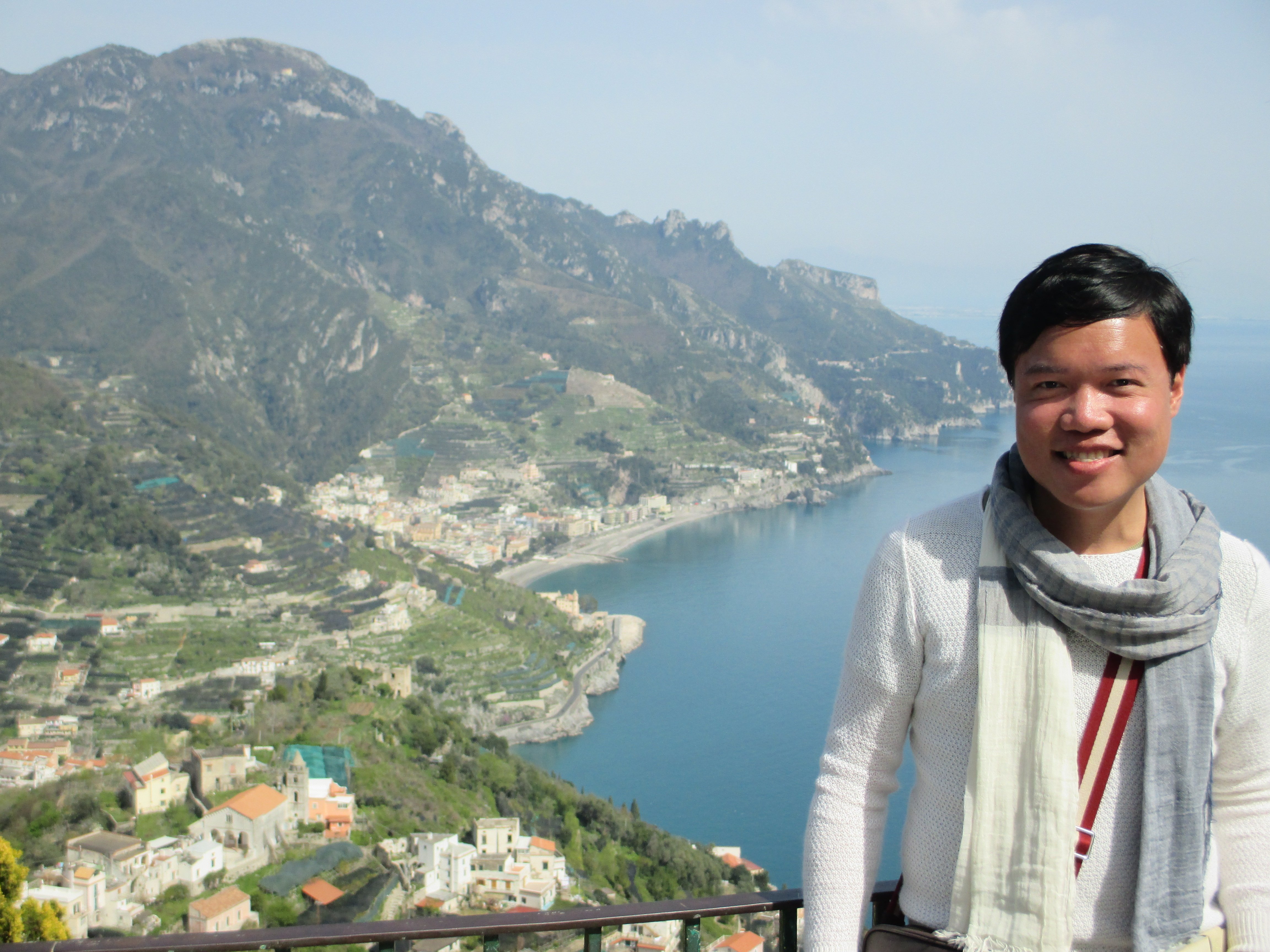
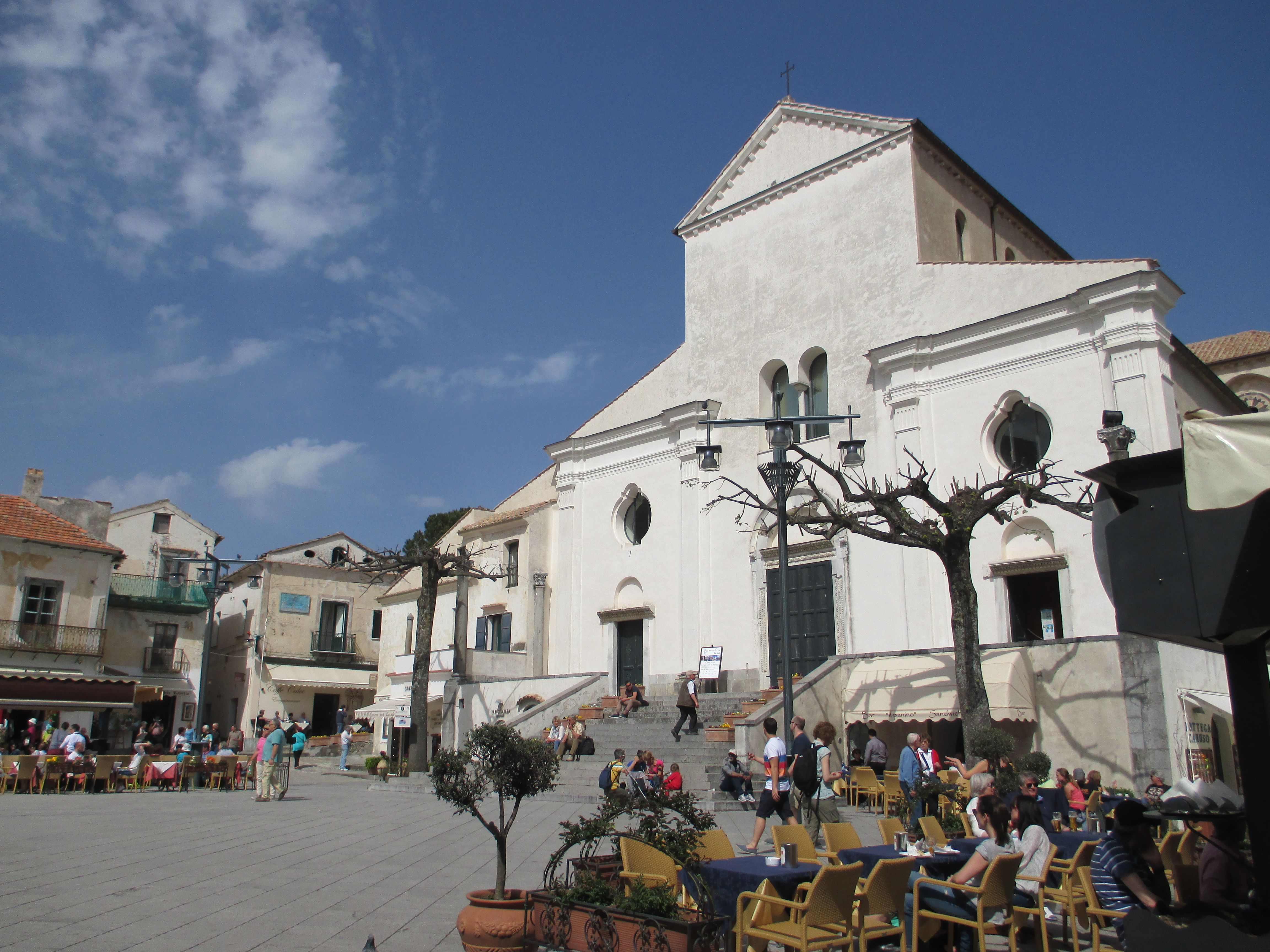
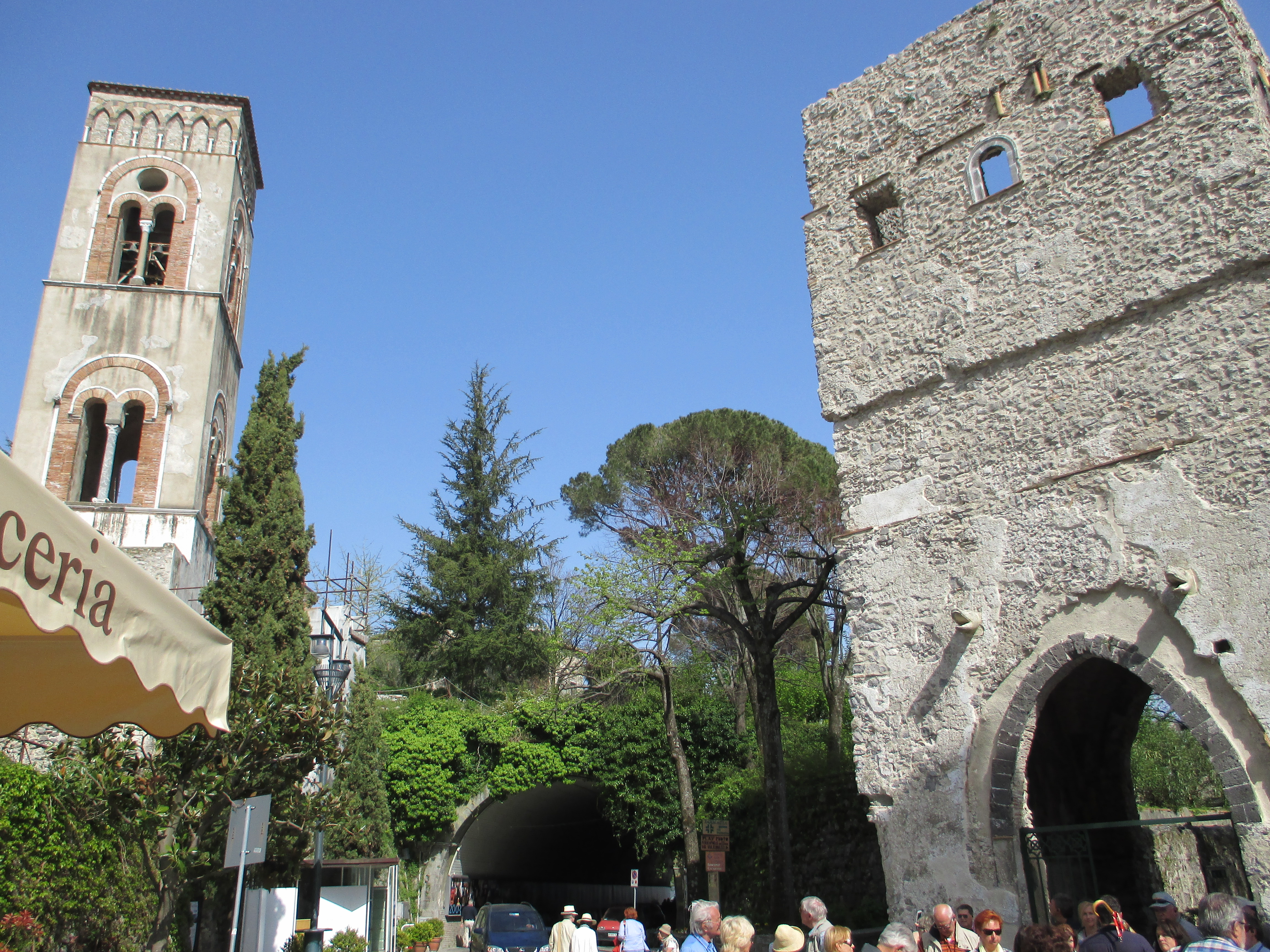
The last town is Ravello. It probably has the most rustic charm among the towns, where it has able to preserve a few remnants of its heritage. It’s the smallest among the four towns, yet endearing enough to make you linger a little bit longer than you would normally give places like this. Since it is on the farther end of the coastline, the calming sea views on one side and the mountainous terrain on the other side are some of its highlights.

Island of Capri (Italy)

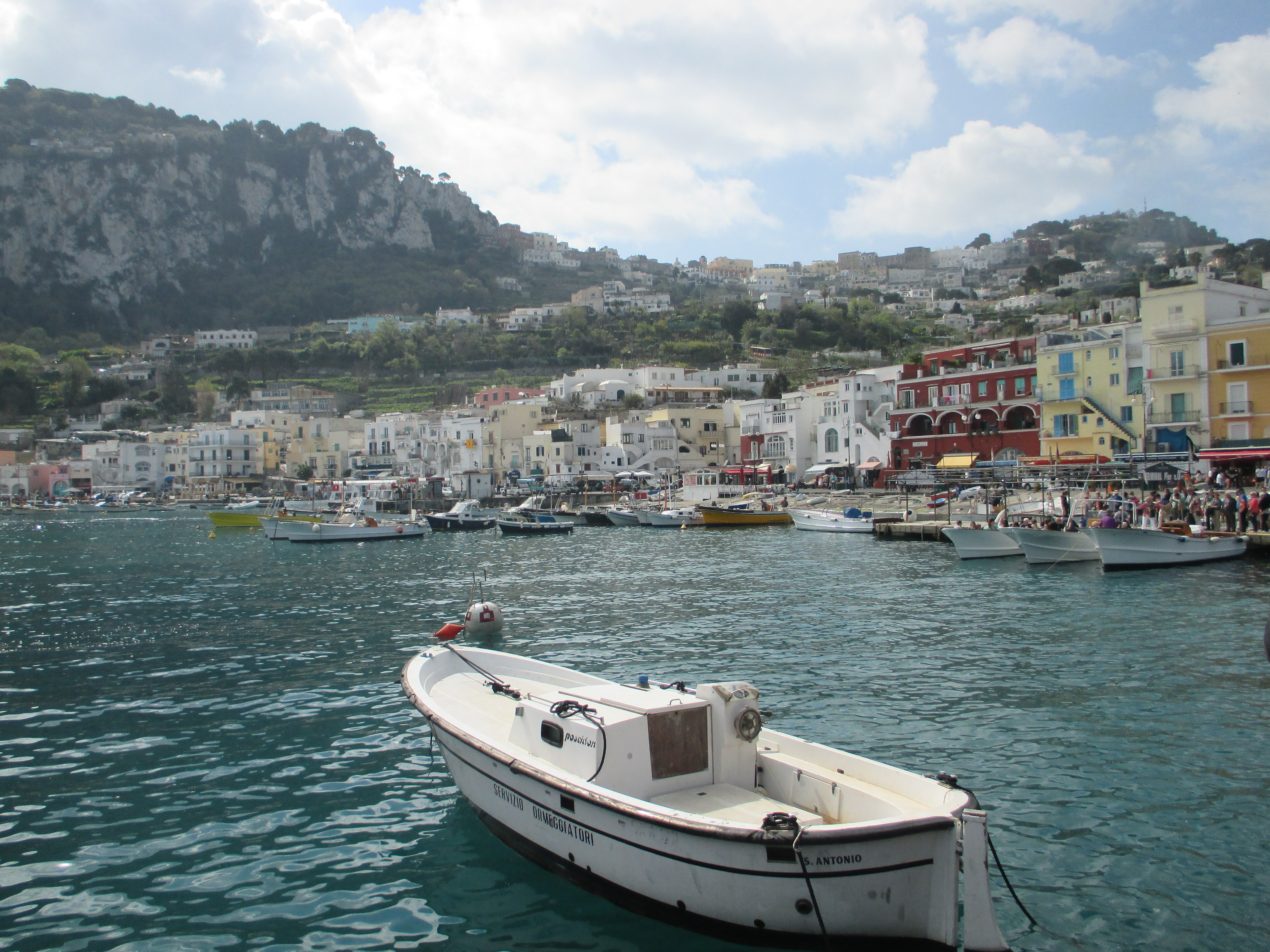
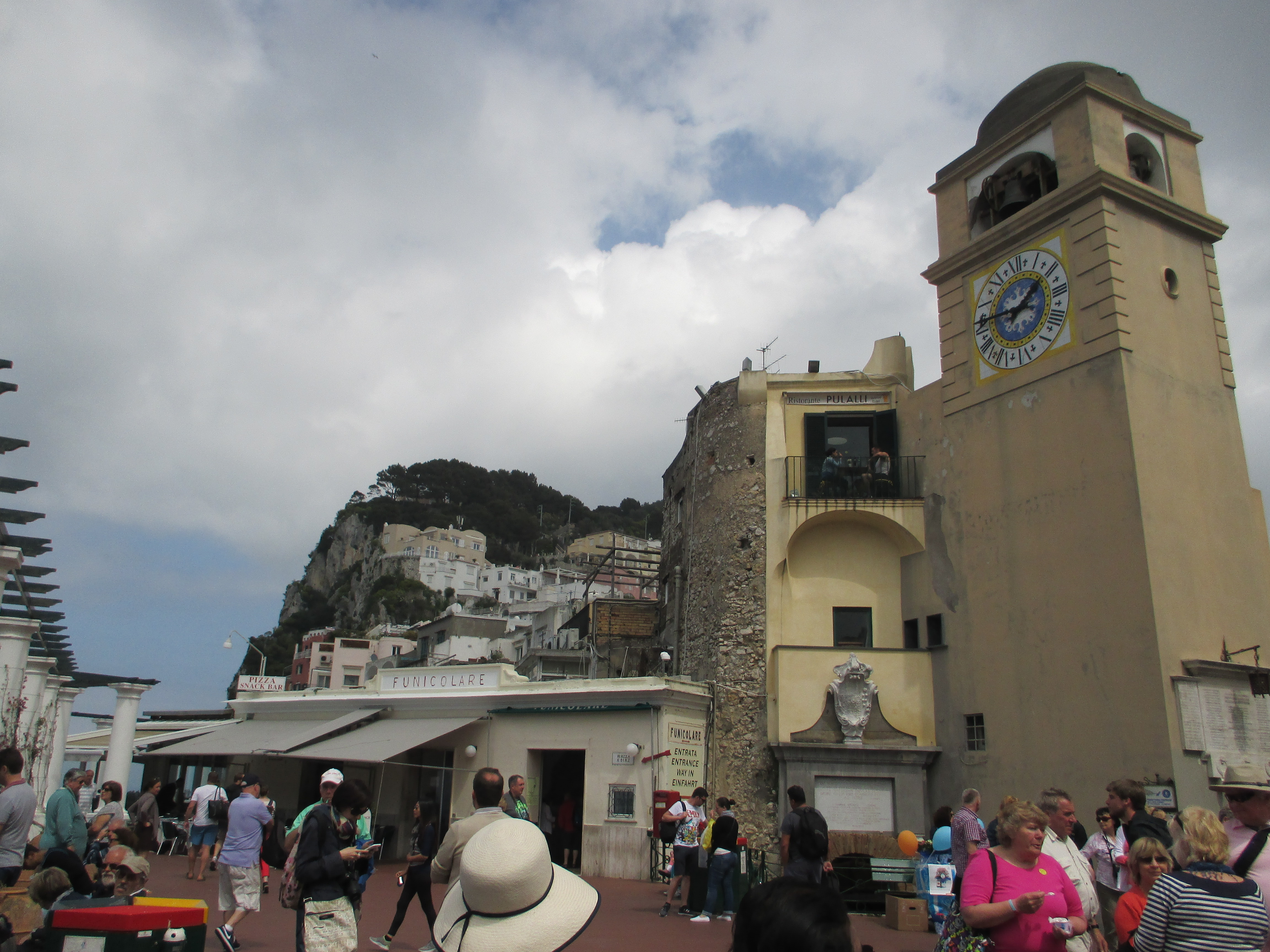
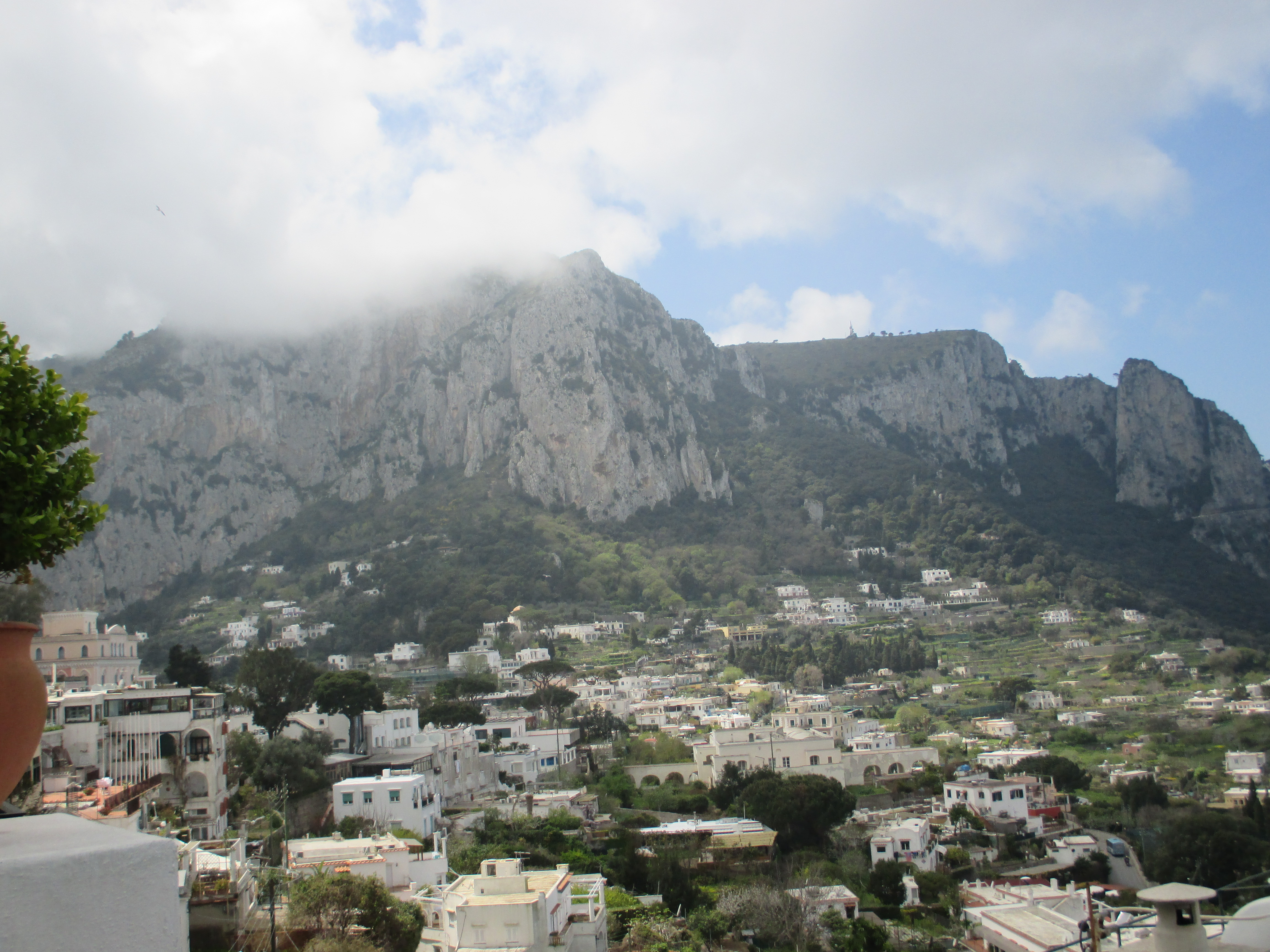
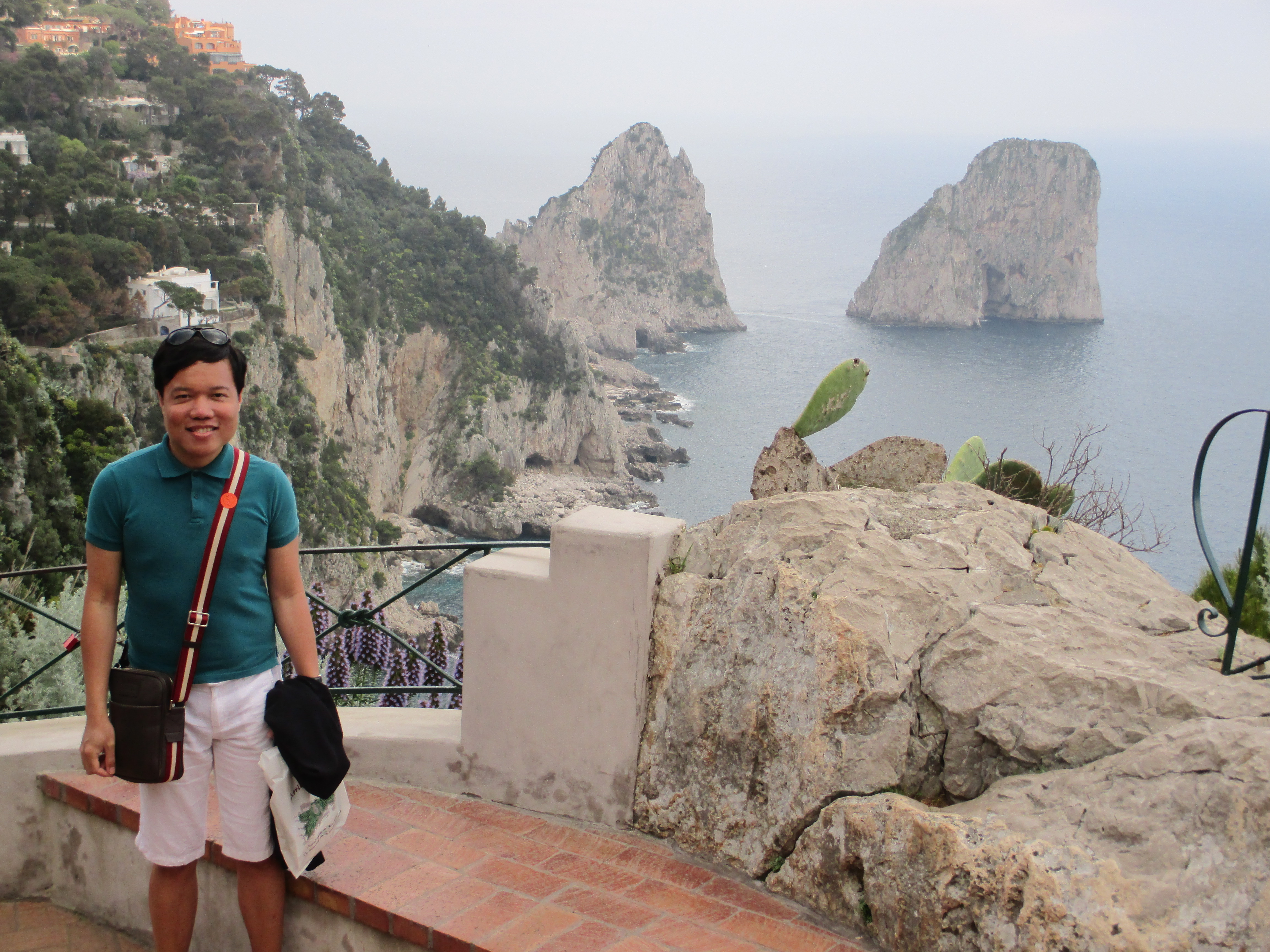
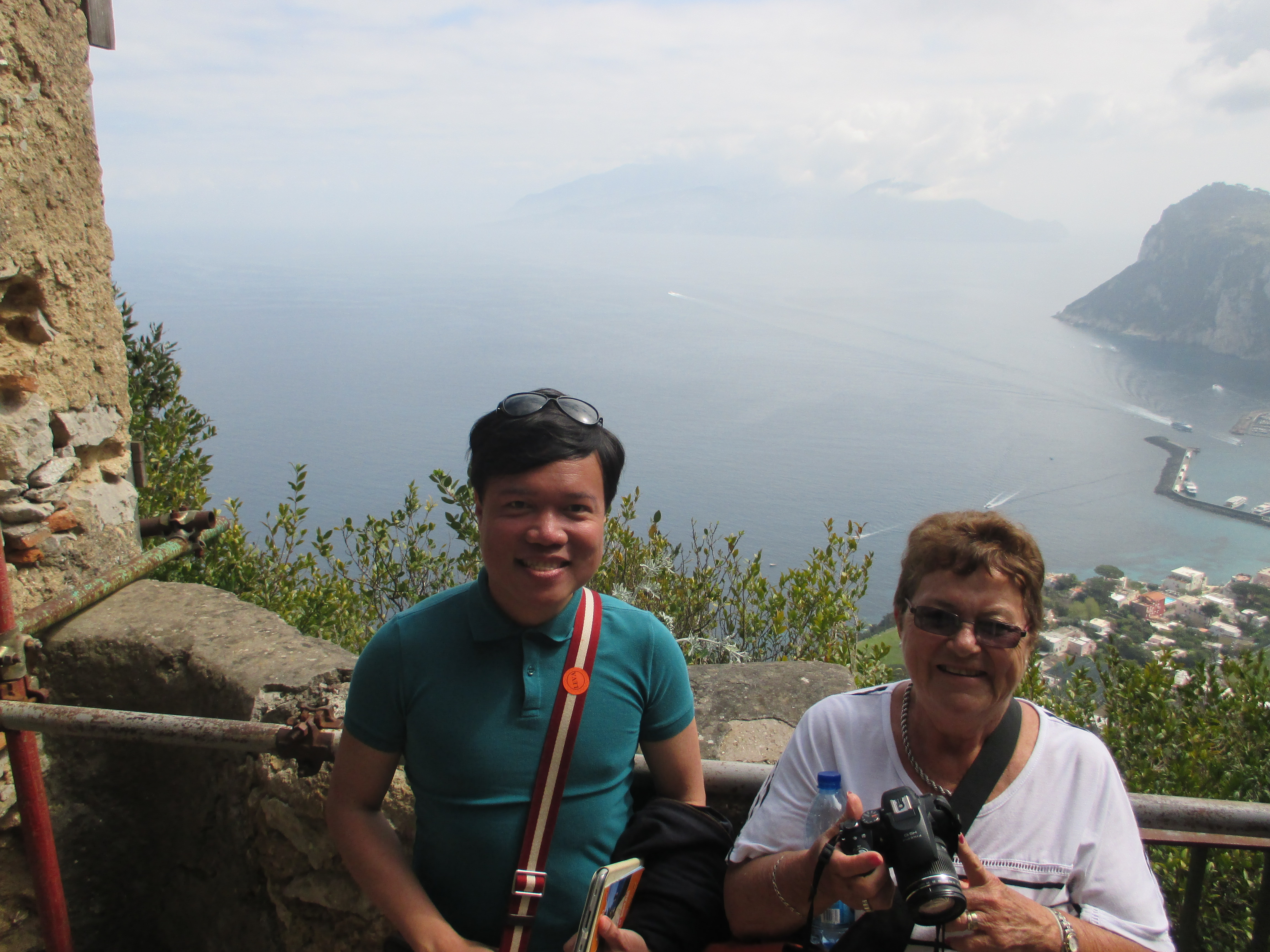
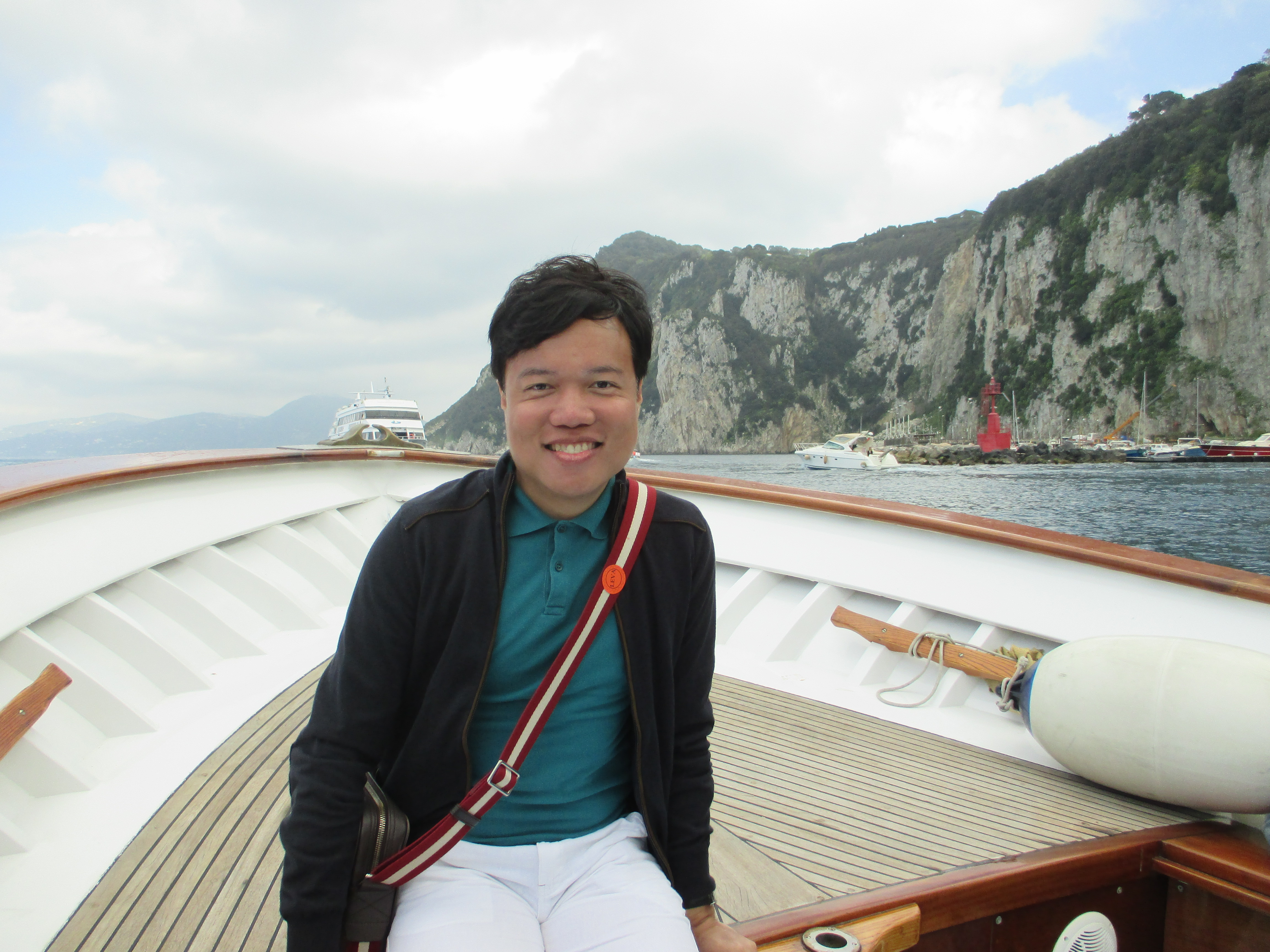
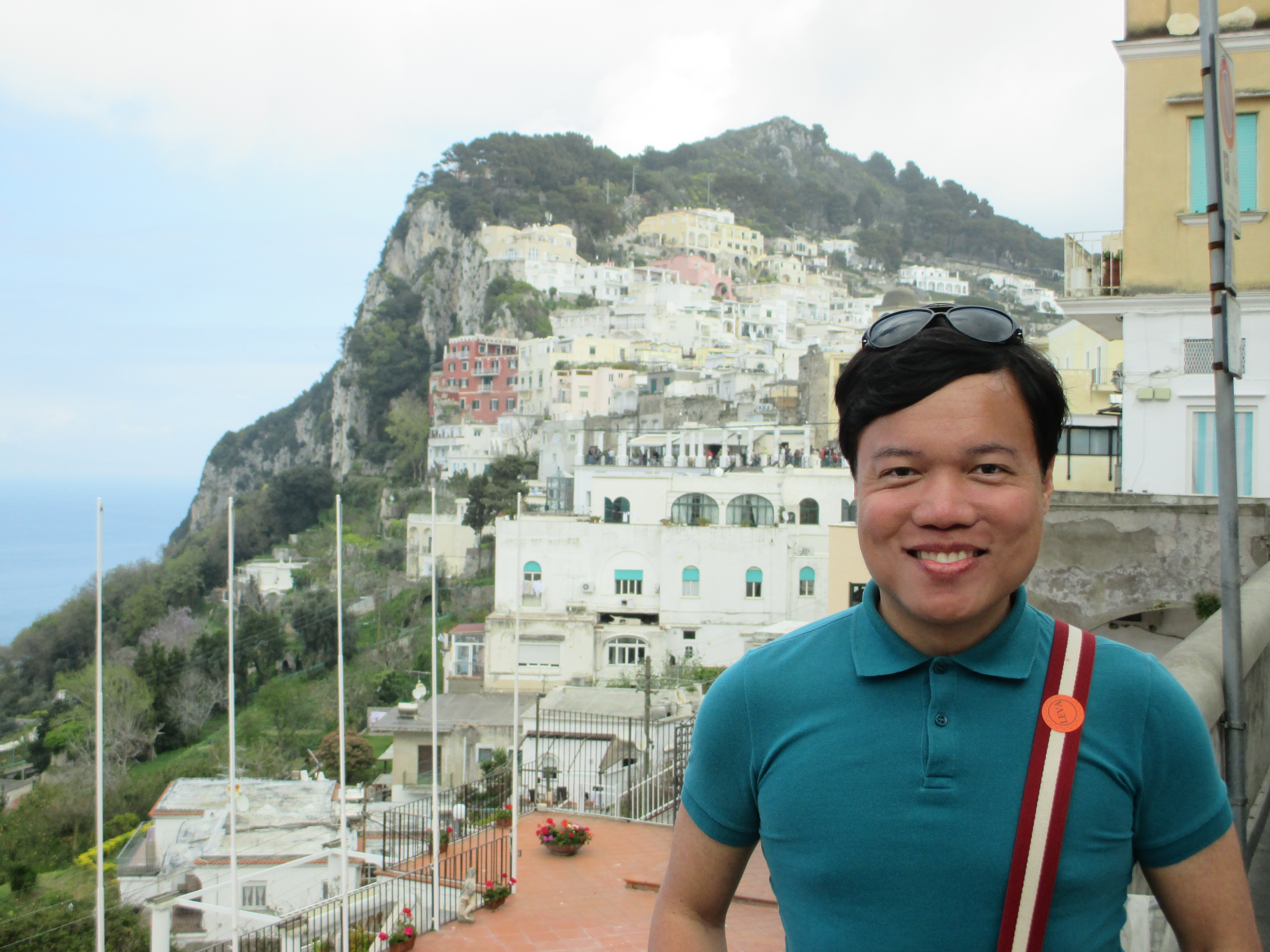
A trip to Naples won’t be complete without taking a side trip to the island of Capri. Known as the playground of the rich and famous, I know now why some of the world’s biggest celebrities are drawn to it. Though not blessed with nice beaches like those in Mykonos and Santorini, this island has a certain charm that kind of cast a spell on you. The whole time you’re there, you’re kind of spellbound, The island is divided into two towns, one called Anacapri on one side of the island and Capri on the other side. Anacapri is steeper, which makes it more difficult for walking. There’s a small cluster of shops and restos at the town proper. This is where I had lunch with a friend named Matthew who I met in the trip. A Korean-Canadian IT guy based in Canada who is off from work for two months to traverse the whole Mediterranean coastline starting from Barcelona to Marseille to Monaco to Amalfi Coast and onward to Venice. What an adventure! But what I was more amazed at was how he was able to take time off from work for two months! How I wish I can travel for two months as well. So now I have that same itinerary in my bucket list and hopefully can cross it out in the near future.

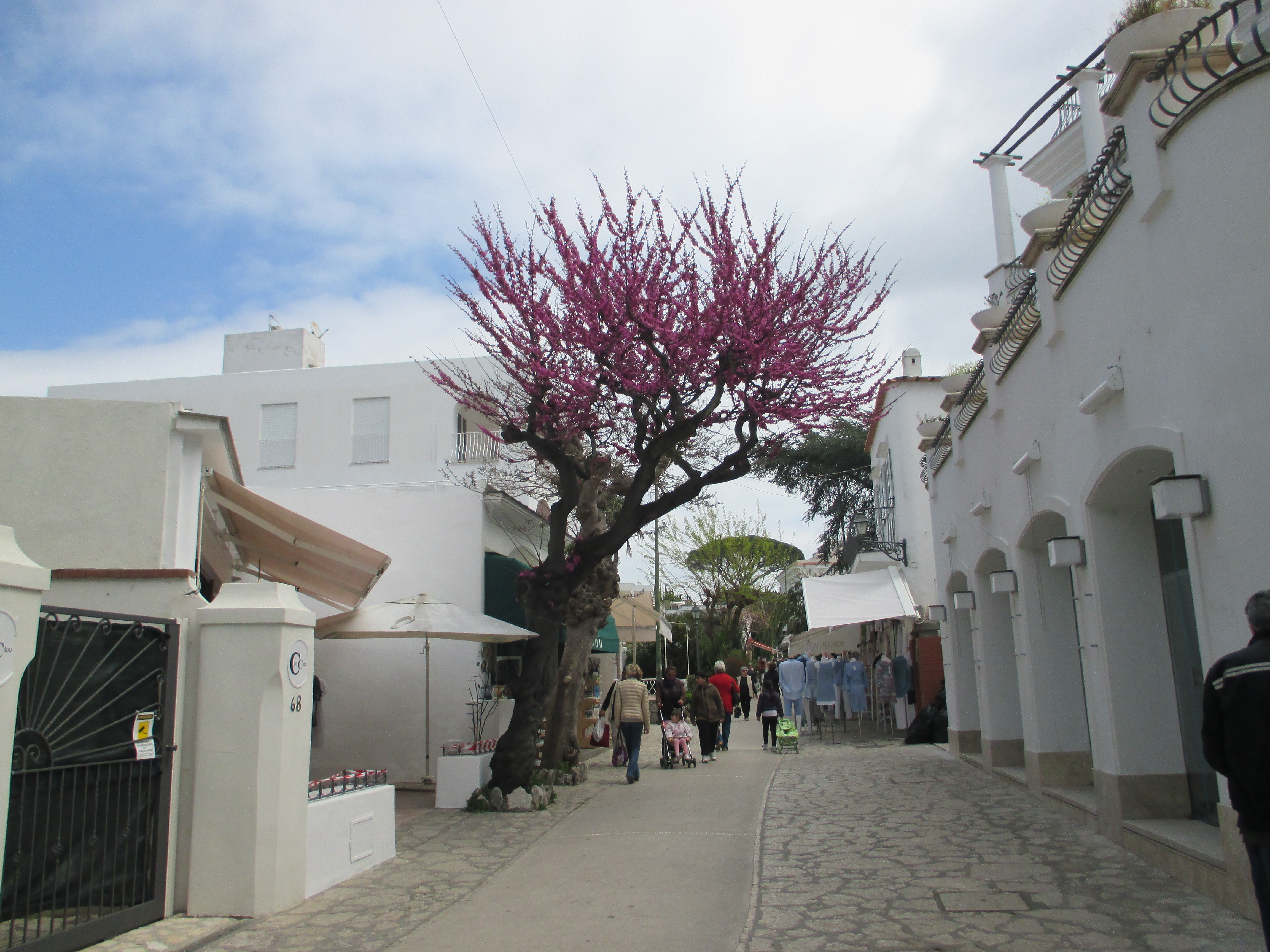
(Left) A south american lady asked to have a photo with me (not sure if it’s because she learned I am from the Philippines or I am just naturally charming lol; (right) who says only Japan and Korea have cherry blossoms?

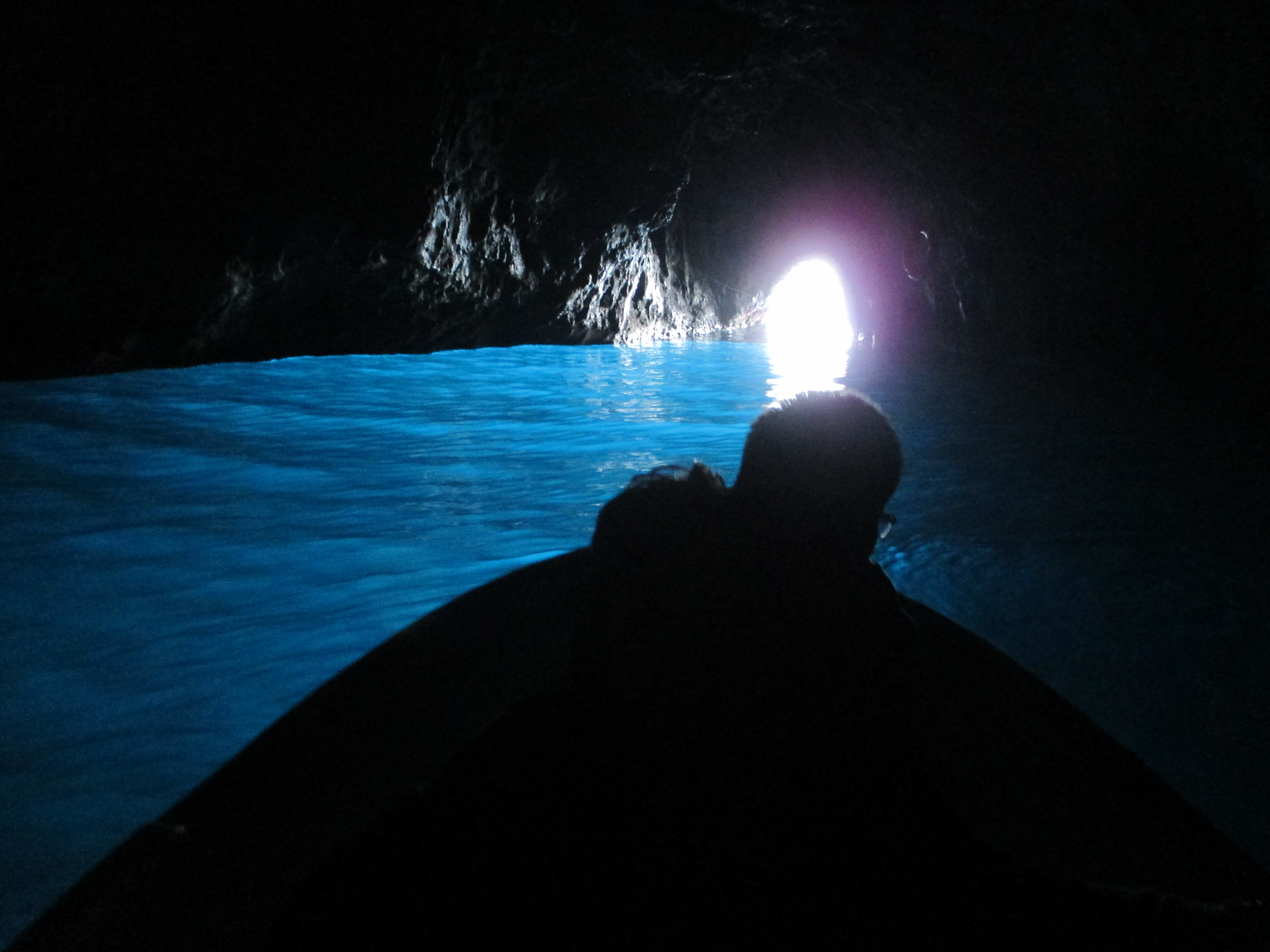
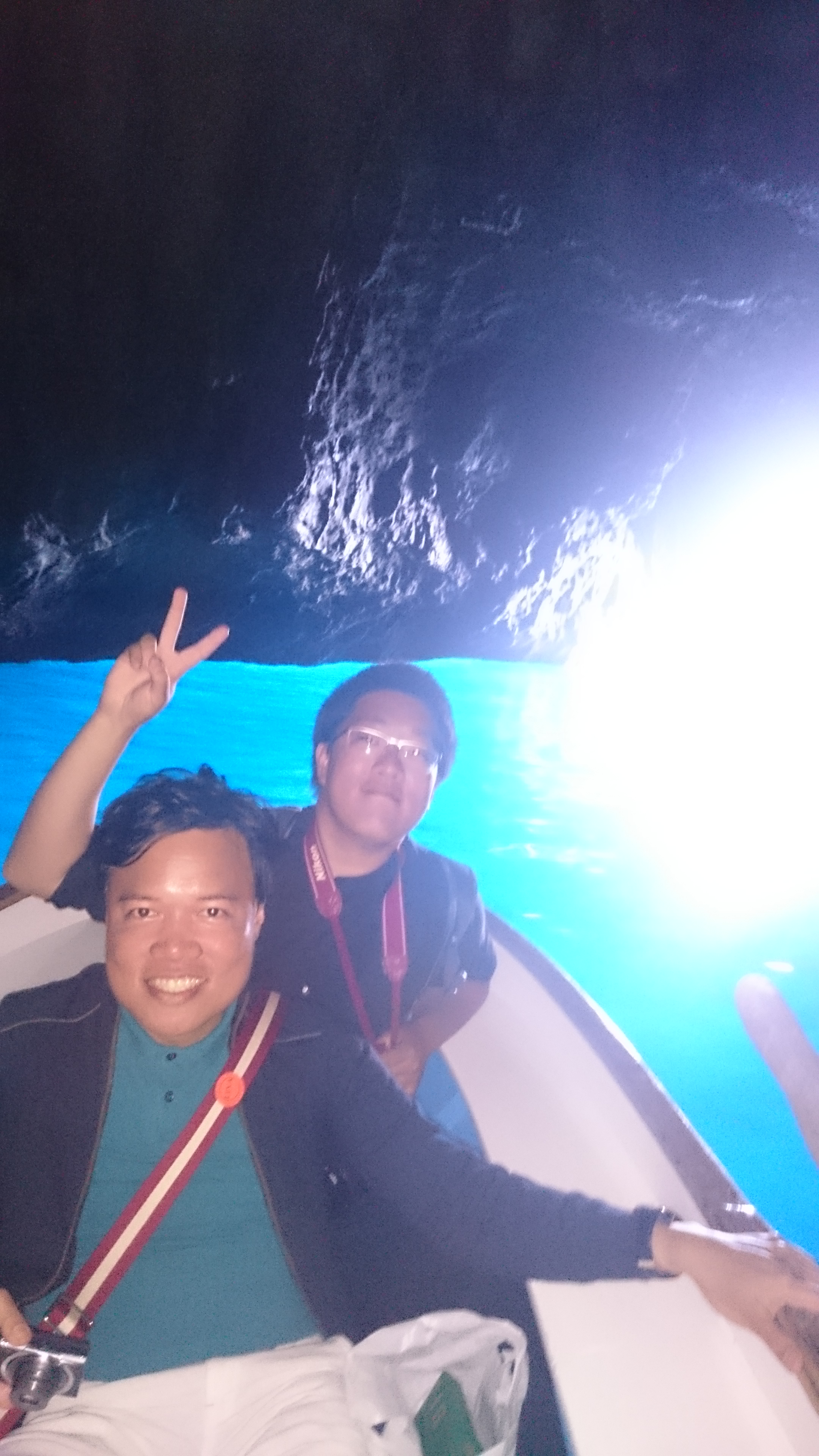
Funny though that in spite of all his travels, Matthew hasn’t heard of tiramisu. Each of us had one and he can’t stop raving about how good it was that I ended up giving him my own plate. Tiramisu is pretty common in the Philippines, so I thought since this guy just discovered how delightful the said dessert was, he might as well go crazy on it. After lunch, we went to the other town (Capri) and this is where most of the shops and restos are, selling anything from clothes to ceramics to souvenir items. We also went to see the Blue Grotto, a cave on the other side of the island where we have to take a speedboat to get near the entrance then transfer to a smaller boat that could fit into the cave. Once inside, you’ll probably be awed with the most beautiful shade of blue water that’s very sharp up close and piercing thru your senses. The last time I’ve experienced that wicked blue color was in Malta’s own Blue Grotto.

Blue Grotto with Matthew (Capri)

On the trip back to Naples, we met this German couple who struck a conversation with us. They shared stories about their own travels, how they love South of France (another dream destination of mine) where roads and parking lots are filled with luxury cars (of course, Germans love their cars). They said it’s everywhere. Matthew has just been there (where he mentioned that you can actually see the sea floor with corals, that’s how crystal clear the waters are which actually explains why I fell in love with Mediterranean sea in the first place), so they told me that I should also visit. Yeah, cool. Then the guy shared how he and his wife can afford all their travels, by taking us thru their investment strategies. See, who says travel is all leisure?

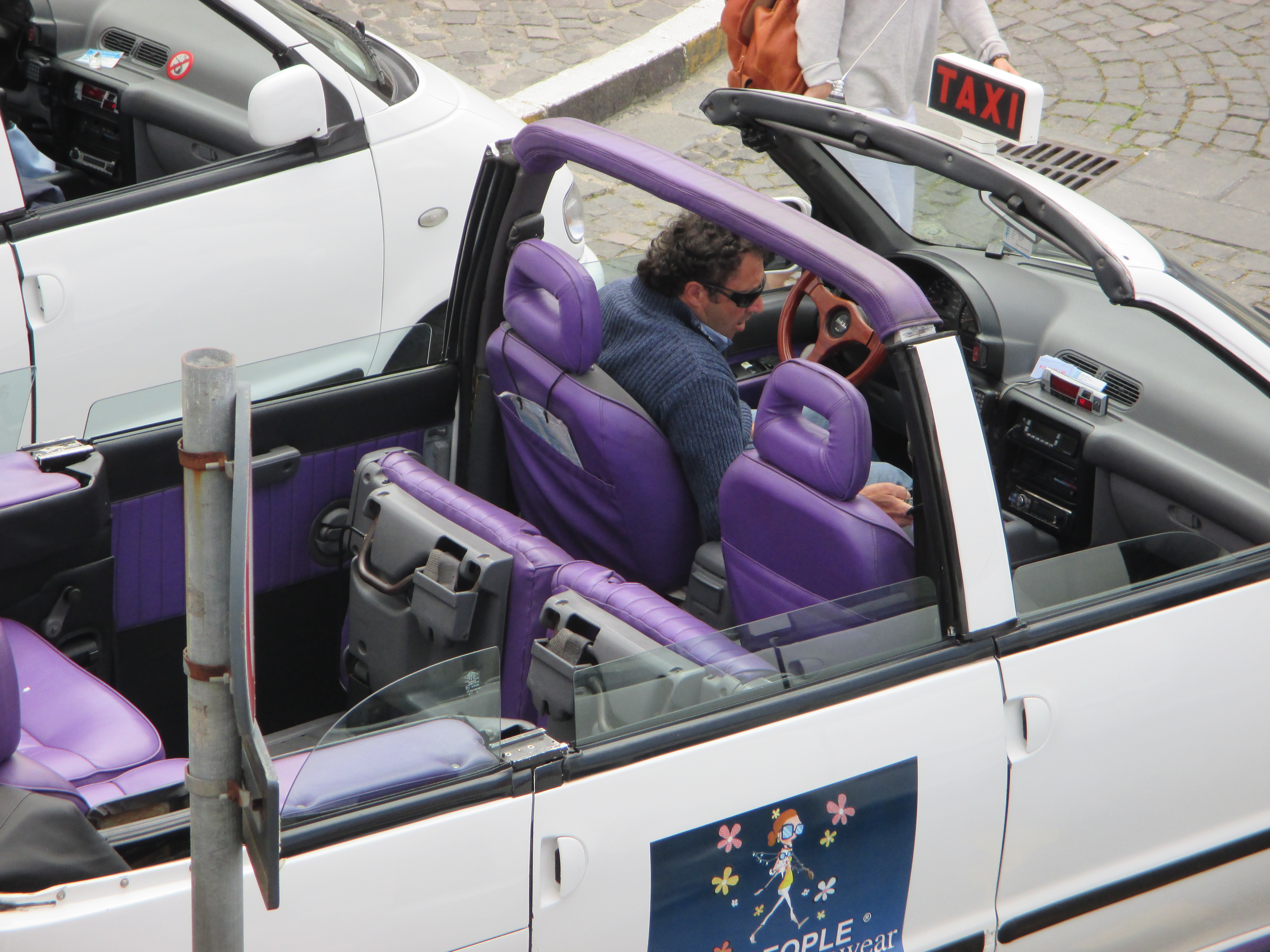
Capri cabs and speedboat

Looking back, that’s one of the trips that I truly enjoyed. Though I have already counted the ways I love Italy in the first part of the article, yet there are still so much more why I keep coming back. The country is a complete package. Its natural beauty is already worth a visit, the harmony between the land and Mediterranean sea is just enticing to feel and see. The magical effect of the sea on me is why I love to be anywhere near it, and Italy’s coastlines are just perfect spots to commune with the sea. But again, more than its beauty, I love Italy because of what it offers for the mind, the body (did I mention that Naples is the home of Neapolitan pizza and ice cream?), and the soul, which makes it, hands down my favorite country.

I love Italy!

Italy: How Thou I Love Thee? (Let Me Count The Ways) – Part 1 of 2

Travel and Positivity Buzz

Rome, Italy

I’ll be going to Italy again in spring so I thought why don’t I write something about my past trips to this beautiful country that I consider my favorite. It would be my 3rd trip and this time, with a purpose. Since the start of the year, I’ve been feeling down. I don’t know exactly what it is. Maybe because most days I was under the weather, but it’s not just that. It’s not also the occasional bad days (who hasn’t?). I was able to find some answers when I’ve finally found a copy of my favorite annual feng shui book. It’s the Fortune and Feng Shui by Lillian and Jennifer Too (I used to buy the one authored by Master Joseph Chau Kam Shing, but since it’s hard to find in local bookstores, I discovered the one by the Toos and both feng shui masters share similar forecasting skills and writing styles). Unlike Filipino feng shui masters who would come out with very commercial versions (you need to have this and that to activate your luck which you can buy from our stores) and tend to come off as negative rather than turning negative into positive, their Malaysian and Chinese counterparts would focus more on what’s in store for the year so that one can be prepared. It’s not that it’s going to happen, but more of being prepared when it happens.

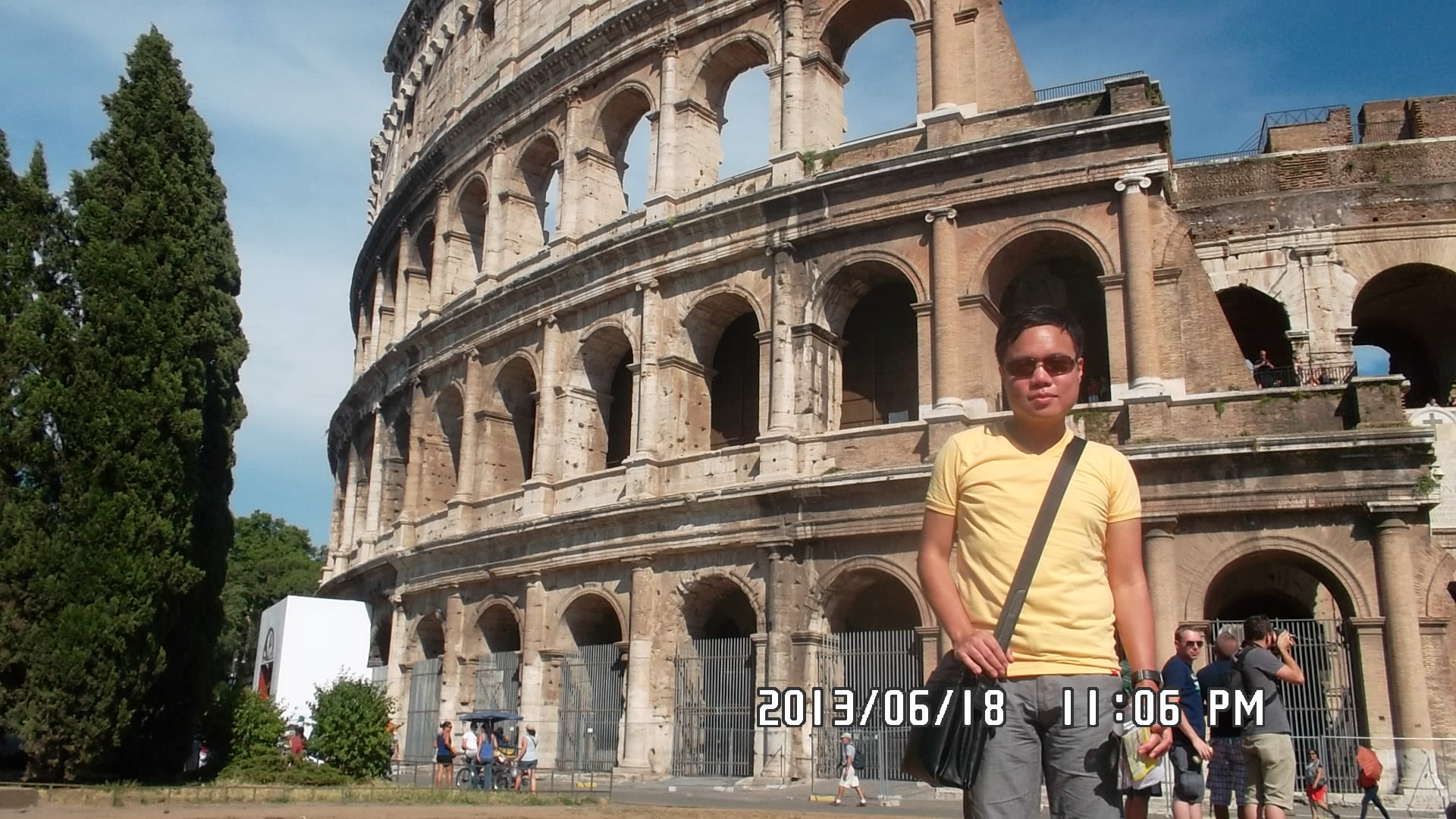
Colosseo, Rome

So my feng shui confirmed what I thought and felt all along. My spirit essence is weak. Though I have a good life force, what I was feeling these past few days is a result of what the book says as “while on the surface you come across self-assured and strong, inside, you have pockets of uncertainty about your abilities.” In other words, lack of self-confidence. The book continues: “Perhaps something happened early in the year that shook this confidence – a betrayal, a disappointment, or even a downright bad turn of events that upsets your sense of stability. Whatever it is, dig in your heels and stay strong.” Very true indeed. Something happened in the workplace that shook me a bit, that even with a strong and stable core, it created a void and emptiness inside.

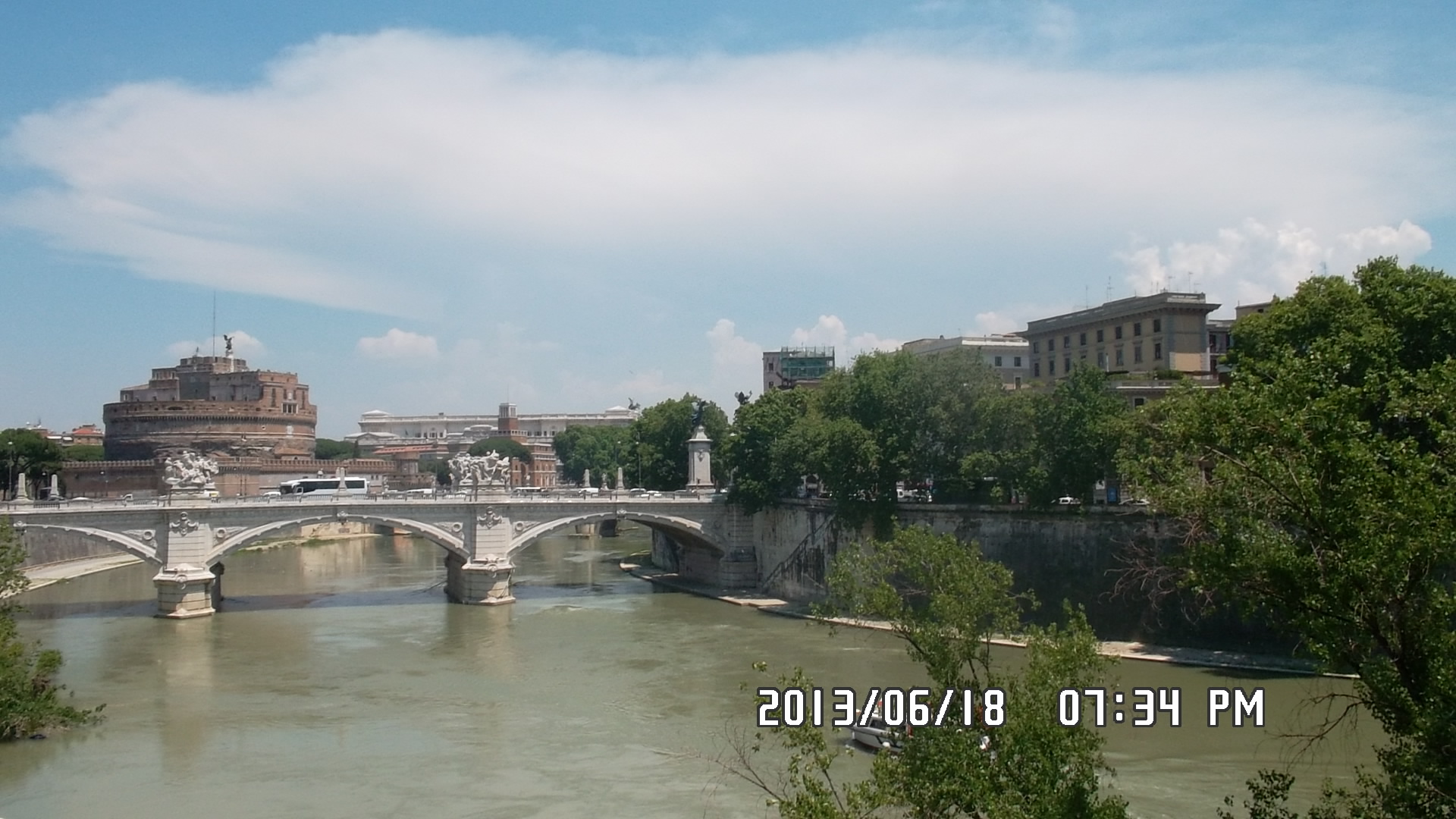
St. Angelo Castle and Bridge (Rome)

What the book suggest is to travel more this year. That’s what I actually intend to do. So my first order of the year was to book a flight to my favorite country. The purpose is to go on a pilgrimage. The last time I did that was on the 100th year anniversary of the apparition of the Blessed Virgin Mary in Fatima, Portugal in 2017 (which I wrote about in my earlier article “Dear Mama Mary”). It’s been almost 3 years since then. This year, I intend to go back to Assisi, the place where the tombs of two of my favorite saints (St. Francis and St. Claire) are enshrined. The first time I was there (almost 7 years ago), it was more of a destiny fulfilled. This time, it is to regain my good spirits. What better way to fill that void and emptiness than feeding one’s spirituality.

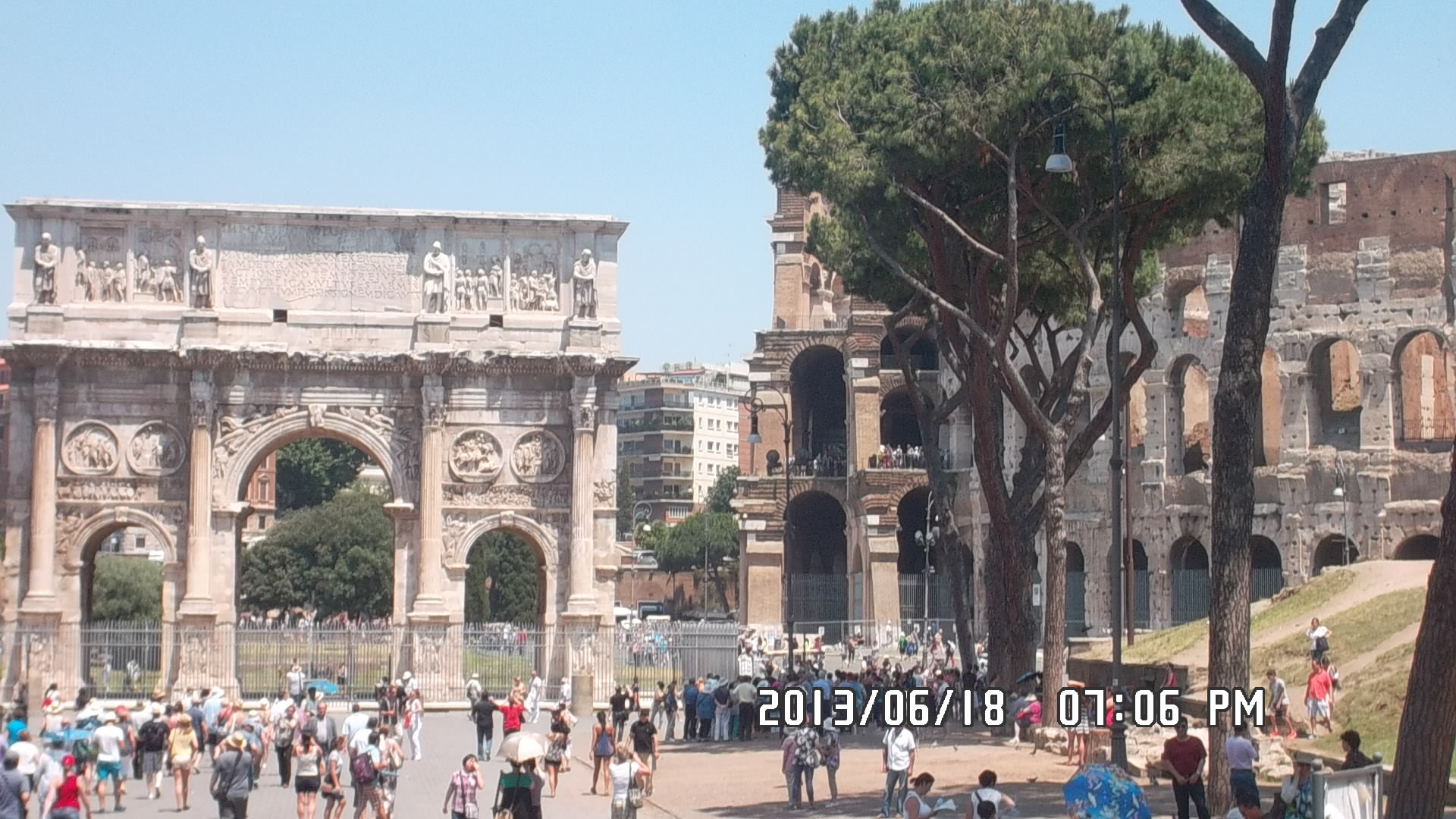
Arch of Constantine and Palatine Hill (Rome)

So I’m going on a short retreat, a spiritual journey. But before that, let me share my past trips to Italy. My first time was with my folks, who were also with me in Assisi. We flew to Rome from Manila and stayed there for a week (including the side trip to Assisi). That was the time when Air China was offering business class seats for $999 (before taxes and surcharges) which I got during the annual travel expo. Preparing for that trip wasn’t a walk in the park. First was getting my folks the visas. I hate to admit it, I had to tap family connections for that (I’m unapologetic though, knowing that I did it for my folks and not for myself). I was particularly concerned for my Dad, since it would be his first travel abroad (my Mom has a US visa and has traveled a few times before). Unlike me who is a wanderlust, my Dad is the exact opposite. He doesn’t really like leaving home. The last time he moved was when he left his hometown to marry my Mom. He never went back. Not that he dislike traveling, he just like the stability of being at home (that’s probably where I got my sense of stability). Second, because of their advance age, it was hard to find an insurance company that can cover their travel insurance. I have to shop from different travel agencies for the best coverage (only a few insurance companies cover senior citizens) and it doesn’t come cheap. So I did all these while still being very effective at work. I should get an award for being very good at multi-tasking.

Rome and Vatican City

Vatican City

In Rome, we stayed at Mercure Roma Piazza Bologna using my Accor card. Odd thing happened upon check-in. I thought the rate published online (member’s rate) is the price of the room regardless of occupants. So while booking the room for my folks, I may have inadvertently placed 1 occupant (since I’m used to just booking for myself). I was told that the price is different if the room is occupied by 2 persons. Tired and weary from the long flight, I didn’t argue anymore and paid the extra surcharge for their room. I thought this can only be true in Italy. So off we went to our separate rooms to get that much needed rest from jetlag (especially for me who did all the lifting and dragging of our luggages).

St. Peter’s Basilica and Square

The following day, I could sense during breakfast that Dad was excited to go sightseeing. Our first stop was St. Peter’s Basilica and Square in the Vatican City. In pictures and on TV, it seems grand and humongous in scale. While there, it wasn’t really, visually. That’s the first of many feelings of being underwhelmed that I went thru while in Rome. Maybe I have put my expectations of Rome at such unreasonably high levels that I may have overlooked how beautiful and right-sized it was. As they say, TV adds ten pounds to a person on it, so maybe it made an average sized basilica and square look like large structural wonder on a massive square. When we arrived, the square and the surrounding areas were packed mostly by bikers. Initially, I thought we were in the wrong place (the underwhelming scale and the crowd of leather attired bikers made us wonder if we were in the right place). It was actually the canonization of the patron saint of bikers (if I remember it right) with Pope Francis leading the rites. We stayed a while in the vicinity and after the rites have concluded and the crowd started to disperse, we made our way to the square. A few photo ops later, my Mom asked “So where is St. Peter’s Square?” I said, “Mom, you’re standing right there.” She laughed, but still had that confused look, probably still wondering whether we are in the right place (she later said that the square looks larger on TV). Aside from the usual tourist crowd that was bustling in the square, there were also robe and rosary beads attired beggars doing their thing. I saw Mom giving alms to every beggar that approaches her that soon started to build up around her. She was giving at least one euro coin each and I was petrified. I said “Mom, why are you wasting money on alms?” Giving me that quizzical look, she retorted by saying that we should give something because they look holy. Huh? (place face palm emoji here) Rather than start an argument, I let her be, until she ran out of coins. A few visits to the square later, she probably realized that not only she’s giving some 60 pesos or more worth of alms to each beggar (which you can already buy a McDo Happy Meal in the Philippines), but that they are no different from street beggars at home, most likely ran by a syndicate. I let out a sigh of relief when she started saying no even if they look “holy”.

Meet my folks, the fashion appropriate Mr. & Mrs Smith (kidding). Thank you for the good genes (and not so much for the bad).

I was able to secure skip-the-line tickets for me and my folks and we were ushered directly to a private door of the basilica. Inside, it was beautiful. Just like every other church, cathedral, or basilica in Rome, the interiors are adorned with murals, intricate sculpting, and mosaic windows. Probably overwhelmed with the beauty and sacredness of the place, I saw Dad in tears. It was my first time to see him cry. Both my parents are devout Catholics, so I would understand if he’s a bit upset because of the impact of being at the center of Catholicism. So I asked “Dad, why are you crying?” He replied “Indi ko ma imagine na makalab-ot ako diri” (I never imagined that I could be here). Those were definitely tears of joy. I’m not sure whether it’s because he just experienced for the first time the joy of travel, being in a sea of tourists from around the world, or that in the deepest recesses of his mind he had always wanted to see this place every time he sees it on TV only that he didn’t have the opportunity. So having seen him that happy was priceless.

The Colosseo Arena (Rome)

We went to see other religious spots as well. Not very far from the basilica and square is the Sistine Chapel, famous for the art work that Michelangelo did on its ceiling. Outside of Vatican, we saw a lot of chapels, churches, and cathedrals (as in a lot). Two of my favorites are St. John Cathedral (Basilica di San Giovanni in Laterano) and Basilica of St. Mary of the Angels (Santa Maria degli Angeli e dei Martiri). I like the former because to me, it has the most beautiful interiors. It’s like being in a museum or a palace filled with works of art. The latter was special to me, coz when I entered the place, there was this whiff of cold air that welcomed me, something that I’ve never felt before, like a soul or spirit that has been waiting for my arrival. Maybe my guardian angel’s way of telling me that I’m in a holy place, a very good place. I’ve never felt so peaceful and calm and blessed.

(Left) Dining al fresco; (Right) Trevi Fountain

Of course we didn’t miss the must-see tourist spots. There’s the imposing and very popular Colosseum. The ruined facade is as magnificent as the concrete arena. I’m just awed with everything inside and outside of this ancient ruin. Not to be missed is the Trevi fountain (where you throw in a coin and make a wish), where one of my wishes was to return someday, and looks like it’s going to happen. Other notable spots are the Pantheon and Piazza Navona. Another spot, the Spanish Steps, is attractive not so much for the steps but for the dining options around the area (we’ve found some good restos around Vatican and Trevi fountain as well). One thing that I love about Italy is the food. Anything Italian is just delicious. From pasta to pizza to gelato, My Dad’s eyes would light up every time he hears gelato, like a kid in a toy store (though my Mom would always remind him of his sugar levels). We tried different restos and dishes that there were times that I would crave for fastfood because we ate Italian all the time, but I know for a fact that my folks are not really fond of junk food. Maybe that’s the reason why they were able to endure all the walking, particularly with my Dad who had a mild stroke a couple of years earlier and has mobility concerns since then. It just amazed me how much walking he did without any untoward incident. Maybe the Italian or Mediterranean diet did wonders for him.

Assisi

Approaching Assisi (Italy)

When I was younger, I dream of visiting Assisi. I don’t know why and why I’m fascinated with the place. All I know was that it’s the birthplace of St. Francis and St. Claire, two of the saints I would pray to especially in times of need. Maybe it’s some kind of a religious or spiritual calling, but the two have been good to me that both have been my go-to when I pray for divine intervention. So I made sure that I had Assisi in our itinerary in my first trip to Italy. I have to face that calling. I have to fulfill that destiny.

Assisi, Italy

I booked a chauffeur driven limo to take us to and around Assisi. Though there were cheaper options, I cannot put my folks on a train or in a tour bus from Rome. The former would be grueling for them, the latter would deprive us of the time to reflect and savor the place. The driver picked us up from the hotel. Mom and Dad were already waiting in the lobby when he arrived and as usual I was running fashionably late. While waiting for me in the car, Mom struck a conversation with him and like any typical Filipino mom, she shared that I’m an accomplished finance professional back home. So the driver’s initial impression was that he’ll be meeting an older, respectable, gentleman. When he saw me come out of the hotel, wearing a collared shirt and shorts and got into the car, he was surprised. He said I looked like a 28 year old yuppie (well, he didn’t exactly say yuppie, but you know what I mean). So after all the pleasantries, he took us to a 2 hour drive to Assisi.

St. Francis Basilica (Assisi)

While approaching Assisi, I can see this old city perched on a hill. I know then why I was drawn to the place. It looks and feels familiar, like I have been there before. You may call it deja vu, but I can’t shake off that feeling that maybe I have lived there before, in my past life. Or maybe it’s just faith that’s messing up with my mind. Whatever it was, it can’t be denied that the place is beautiful. When we arrived, we could already feel the warmth, tranquility, and serenity and the gentle breeze of fresh air that welcomed us. In spite of its old charm, the feeling was refreshing.

St. Francis Basilica facade (perched on top of a hill)

So I finally paid my respect and homage to the tombs of St. Francis and St. Claire enshrined in their respective basilicas. St. Claire’s remains are still intact, a miracle by itself. Mom thought it was a statue, but I have to explain to her that St. Claire’s body hasn’t really decomposed over the centuries and just preserved by wax.

Dad checking out his sandwich while Mom chatting with the driver

Over lunch, the topic of conversation was my youthful looks and truffles (not the chocolate but the garnish). The driver can’t get over the fact that I was not in my 20’s anymore. So I told him that he’s just sweet talking me, but to prove that he’s not, he called the waitress and asked her how old does she think I was. She said I look late 20’s. Not satisfied, he called another resto staff. She said I look like a 21 year old lad. Flattered with all the compliments (who wouldn’t?), I shifted the subject to truffles, since most of the dishes we ordered were garnished with the same and I was very curious about it. Apparently, truffles are harvested by hand underground, like root crops, and it’s not something that can be grown or cultivated like in a garden or farm. Since it’s very organic and rare, it’s very expensive. But most Italian dishes, particularly pastas and meats are garnished with it, as it seems to elevate flavors and aromas. If you have tried truffle pasta, you’ll surely know what I mean.

St. Claire Basilica (Assisi)

My first trip to Italy left a good and lasting impression on me. It is first and foremost a family destination. The memories that I had with Mom and Dad in this country I will cherish forever, knowing that I’ve spent and witnessed some priceless moments with them. Second, this is the mecca of Catholic faith, belief, and spirituality. With plenty of sacred grounds to cover, this is a good place to embark on a spiritual journey, to find oneself in times when one is feeling at the crossroads of life. Third, we love the food as much as Italians do and it’s not just because of the flavors and aromas but the health benefits of Mediterranean diet. Fourth, the ancient charm and abundance of ruins and artifacts are lessons of humanity that today and future generations can learn from. I love Italy not because of its beauty, but because the country feeds the mind, the body, and the soul.

Up next: Naples, Pompeii, Amalfi Coast, and Capri

Columbusbee says “Thank You Dear Readers!”

Positivity Buzz

Global footprint of columbusbee.blog

Five months in and 17 articles after (plus one re-publication and one welcome post), columbusbee.blog has reached its first milestone by breaching one thousand views/visits from 23 countries in 4 continents. Columbusbee’s heart is full coz what started as a hobby is now a blog that is being read from the four corners of the world.

(Left) Breaching one thousand views/visits as of November 2, 2019; (Right) top 10 countries

As a neophyte blogger, the biggest satisfaction that I could get is not only that my articles are being read but readers find the same helpful…

and inspiring…

and getting the best compliment yet that sums it all up.

So thank you dear readers from Australia, Canada, Cyprus, France, Germany, Greece, Hong Kong, Hungary, India, Indonesia, Japan, Malta, Pakistan, Philippines, Portugal, Serbia, Singapore, Slovakia, South Korea, Thailand, Turkey, United Kingdom, and United States and to everyone else out there. Travel, food, health, and positivity are truly universal languages that resonate well among us.

The smile says it all (Rockefeller Center, Manhattan)

Continue to join me in this journey and relive the articles (click on the permalinks below) or find an interesting one that you may have missed to celebrate this milestone. If you have any questions on any of the articles (or anything in general), feel free to contact me at franz8.cinco@gmail.com.

Happy reading!

“Hey, it’s me”

https://columbusbee.blog/2019/05/19/hey-its-me/(opens in a new tab)

“Deconstructing A Myth: Travel Is Only For The Rich?”

https://columbusbee.blog/2019/05/20/deconstructing-a-myth-travel-is-only-for-the-rich/(opens in a new tab)

“How To Apply for Schengen Visa – Embassy of Greece in Manila”

https://columbusbee.blog/2019/05/21/how-to-apply-for-schengen-visa-embassy-of-greece-in-manila/(opens in a new tab)

“Mendokoro Ramenba: Arguably The Best Ramen in Manila”

https://columbusbee.blog/2019/05/25/mendokoro-ramenba-arguably-the-best-ramen-in-manila/(opens in a new tab)

“How to Apply for Turkey e-Visa”

https://columbusbee.blog/2019/05/30/how-to-apply-for-turkey-e-visa/(opens in a new tab)

“The Joys of Travelling (Solo)”

https://columbusbee.blog/2019/06/01/the-joys-of-travelling-solo/(opens in a new tab)

“Travel In Style (Without Breaking The Bank) – Part 1 of 2”

https://columbusbee.blog/2019/06/11/travel-in-style-without-breaking-the-bank-part-1-of-2/(opens in a new tab)

“Travel In Style (Without Breaking The Bank) – Part 2 of 2”

https://columbusbee.blog/2019/06/29/travel-in-style-without-breaking-the-bank-part-2-of-2/(opens in a new tab)

“#ihaveflaws”

https://columbusbee.blog/2019/06/15/ihaveflaws/(opens in a new tab)

“Greece: Of Myths, Mediterranean Food, and Beaches – Part 1 of 2”

https://columbusbee.blog/2019/07/14/greece-of-myths-mediterranean-food-and-beaches-part-1-of-2/(opens in a new tab)

“Greece: Of Myths, Mediterranean Food, and Beaches – Part 2 of 2”

https://columbusbee.blog/2019/07/21/greece-of-myths-mediterranean-food-and-beaches-part-2-of-2/(opens in a new tab)

“Istanbul: The Ancient City That Never Sleeps”

https://columbusbee.blog/2019/08/10/istanbul-the-ancient-city-that-never-sleeps/(opens in a new tab)

“The Danna Langkawi: A Brief Escape to Remember”

https://columbusbee.blog/2019/09/07/the-danna-langkawi-a-brief-escape-to-remember/(opens in a new tab)

“Dear Mama Mary”

https://columbusbee.blog/2019/09/14/dear-mama-mary/(opens in a new tab)

“Remembering Miriam Defensor Santiago”

https://columbusbee.blog/2019/09/21/remembering-miriam-defensor-santiago/(opens in a new tab)

“The Contrasting Colors Of Tokyo And Kyoto – Part 1 of 2”

https://columbusbee.blog/2019/10/14/the-contrasting-colors-of-tokyo-and-kyoto-part-1-of-2/(opens in a new tab)

“MLNRD at St. Luke’s Medical Center-Global City: The Good, The Bad, and The Ugly”

https://columbusbee.blog/2019/11/01/mlnrd-at-st-lukes-medical-center-global-city-the-good-the-bad-and-the-ugly/(opens in a new tab)

Coming Soon: “The Contrasting Colors Of Tokyo And Kyoto – Part 2 of 2”

MLNRD at St. Luke’s Medical Center-Global City: The Good, The Bad, and The Ugly

Health Buzz

St. Luke’s Medical Center – Global City (Photo courtesy of Wikipedia)

Before I could write the second part of my article The Contrasting Colors of Tokyo & Kyoto, I was diagnosed with sciatica (pain affecting the lower back, right buttock, and down to the back of the right leg due to the compression of the spinal nerve root). If you have read my article #ihaveflaws, you would deduce that this is a deterioration of my disability (slip/herniated and dessicated disk). Apparently, over the years, the nerve keeps adjusting until such time that it can no longer work around the protruded disk, hence the excruciating pain, particularly when I’m inactive (lying in bed at night and upon waking up in the morning). So my orthopedic surgeon, who was the same surgeon at St. Luke’s Medical Center-Global City (SLMC) who first diagnosed me to have slip disk, asked me to undergo another MRI and X-ray (the last time I had the same was 8 years ago). As expected, the MRI results showed that the slip disk has worsened, where disk matter has already flowed out (the medical term they used is caudal migration) instead of just protrusion and constricting the nerve canal. Imagine a peanut butter and jelly bottle (yum) where the top layer has spilled over after accidentally shaking the bottle. The disk matter looks like a dripping peanut butter and jelly from the jar, occupying the space where the nerve root passes. My surgeon broached again the option of undergoing spinal surgery (which was one of the options he raised 8 years ago) and after further research on the other options (physical therapy and nerve injection), I’ve come to a conclusion to give it a go.

The reason why it took 8 years for me to consider the surgical option is because I am fully aware of the risks. Just like any surgery, these are not just plain, ordinary risks. Spinal surgery, if not done right for whatever reason, may potentially result to paralysis (an invasive procedure close to the spinal cord and would actually be in contact with the nerve root), not to mention infection and clotting that can move to the lungs and cause serious complications. Even if I consider the non-invasive options, I would probably still end up undergoing surgery eventually since the other options will not be able to remove the matter that is compressing the nerve. So I thought why not fix it now while the nerve is not totally impaired yet (it’s only been 5 weeks since I started feeling the incessant pain, dragging myself to work just to keep myself active to minimize the pain, notwithstanding the difficulty and discomfort I have to go thru when driving) rather than wait another 8 years where the risk of nerve damage is high and would result to long term rehabilitation post surgery and worst, permanent nerve impairment. So I’ve discussed with my surgeon the different types of surgery and have decided to do the Micro Lumbar Nerve Root Decompression (MLNRD). In layman’s terms, the surgeon will do an incision about an inch long (micro) in that portion of the lower back (lumbar) where the degenerated disc is located, drill into the bone to reach the nerve root, carefully scoot the nerve root over to unveil the protruded disk, shave off that dripping matter and also a portion of the bone at the other side to decompress (free up) the nerve, suction the disc and bone fragments, gently return the nerve to its place and then stitch up the muscle and skin. Since different body parts/tissues are impacted, healing and recovery will take weeks (at least 3 weeks for the muscle to heal, 3-6 months for the bone to form and fill the gaps, and healing/recovery period varies for the nerves depending on the extent of the damage).

After confirming and scheduling the surgery at SLMC (you have to schedule it in advance since the operating room may not be always available), my surgeon then asked me to go thru a battery of tests to see how fit I was for surgery. So I had complete blood work, ECG, 2D Echo, urinalysis (including creatinine), and chest X-ray. Some of these tests are scheduled as well (where the next available date can be in weeks), but if you tell the labs that you are due for surgery, they will prioritize you and squeeze you in. So I passed all tests but I also learned that I have a congenital heart defect (if you have read my article #ihaveflaws, then I could add this to the list in the context of travel). All the tests show though that my heart is in good shape in spite of (I even have a heart rate similar to that of athletes which I could probably attribute to the herbal/organic supplements that I’m taking, which is another story) so my newfound heart condition was not a showstopper. So after the risk assessment of my overall state of health, the cardiologist issued a “low risk” (from potential complications) rating for the surgery that I was scheduled to take.

Executive Private Room (St. Luke’s Medical Center-Global City)

I read somewhere that the cost of this particular type of surgery would be about half a million pesos (give or take) where 200 grand is for the hospital bills and the rest for doctor fees. Apparently, this does not include the outpatient costs (ie the battery of tests plus the MRI and X-ray pre-surgery, where those alone cost about 30 grand, and post surgery tests, medicines, physical therapy, and consultations) and if there are complications post surgery, then it could be higher. That’s a whole lot of money involved (I could already buy a new car with that) so good thing I have not one but two medical (HMO) insurance plans, one from the company I work with (Intellicare where the annual limit for a single illness is only up to 250 grand) and the other a personal insurance I took a couple of years back for greater coverage (which has higher limits but also very expensive premiums and this is where a large part of my annual bonus goes to, which I would consider as investment for my health). Since the latter has higher limits (especially the room limit where the former cannot even get me a semi-private accommodation, so if you want to have a private room and you only have Intellicare, then you should be ready to shell out some of your own funds). So we decided to make use of the latter for in-patient expenses (and any outpatient extensions of it) and use the former for other outpatient expenses.

I was admitted the day before the surgery (scheduled 6AM the next day). Upon admission, you’ll be asked if you have any allergies or are allergic to any food and medicines. So I told them that aside from the fact that I have a history of asthma, I am also allergic to Ibuprofen, a non-steroidal anti-inflammatory drug or NSAID which was prescribed years ago by my dental surgeon to manage the pain from dental surgery (impacted tooth extraction). I told them that my whole face swelled where my eyes look like slits on an evenly bloated face that made me look like an alien. Aside from the name band (which they will attach on your left wrist if you’re right handed), they will also attach a red band with the list of meds that you are allergic to (in my case, the band has “Ibuprofen” written on it). They also attached a yellow band for “risk of fall” coz I told them I could be a klutz sometimes (lol). I got admitted early (around 2PM that day) so that the pulmonologist can still assess me on what type of anesthesia would be best for someone with a history of asthma. There are two types of anesthesia, one is general anesthesia (GA) where you will be put to sleep and your brain won’t be receptive to pain as well as no memory of what is on-going, but will put a lot of stress on your whole body (especially your lungs) that it may trigger asthma during surgery. The other one is regional anesthesia where you’ll be temporarily paralyzed from waist down. The latter will keep you awake, but a catheter will be attached to you to help you urinate post surgery until the anesthesia wears off (which could take days). I shudder at the thought of the catheter alone, so it was no brainer for me to choose GA, in spite of the risks. The risks are real, since I’ll be operated face down in prone position, so if for whatever reason that I will have difficulty breathing, they cannot just flip me over with the incision at my back. So choosing GA means that they will insert a tube in my mouth while I’m under just to ensure that the risks are mitigated and the pulmonologist will monitor my condition throughout the surgery. So I have the orthopedic surgeon, anesthesiologist, and pulmonologist on board for the surgery, not to mention the bedside nurse and other surgeons and nurses that will get invited to the soiree.

There should be no food or water intake at least 8 hours before the surgery. That means my last intake should be at 10PM. The nurses will also attach the IV (intravenous) before then, so a few minutes past 9PM, I decided to take the Esonex bath (it’s the bath that they require you to take before surgery to keep the bacteria on the body in check and lessen the risk of infection). I brought in with me my Amiki shampoo (a honey based shampoo which I got from New Zealand in one of my trips and I only use it if it will take more than 24 hours til my next shampoo such as while I’m travelling long haul coz it keeps my hair easy to manage and stay fresh) and my A La Maison body wash which I use as my facial wash. I thought I wanted to go into surgery feeling clean and fresh. Since I have the bands on my left wrist covered in plastic (so that it won’t get soiled and ruined while in the shower), it was a bit hard to shower with only one hand. Feeling refreshed from the bath, I was met by the nurse in my room with pre-surgery meds on hand at around 10 past 10. I asked her what are those and who prescribed the same, so she told me one is for the nerve pain (pregabalin, which I am already taking), two 500mg of paracetamol for the pain, one tablet of Ketesse, and another tablet of Omepron and all were from the orders of the anesthesiologist based on the standard pre-surgery meds that are given to patients of my orthopedic surgeon undergoing the same type of surgery (which is a loose term given that not all patients are alike). The last two meds I wasn’t familiar with, so I asked the nurse if I could keep the packaging that came with it so that I could google it. I have formed this habit of checking out any meds that I’m not familiar with (ie what it is for, side effects, drug interactions, etc.) from my experience with my Mom who was in and out of the hospital last year, as well as my Dad who’s taking at least half a dozen of daily drug maintenance. It also helps that I have my own cocktail of herbal/organic supplements that I had made thorough ‘research’ before taking them, so checking out pharmaceuticals (which I haven’t had any in the last few years after I have shifted to herbal, organic, nutriceuticals even when I’m sick) comes like second skin to me. So I checked out Ketesse, which looks like another pain killer, and Omepron, which reduces the acid in the stomach (to prevent any from going up while I am face down in prone position during the surgery). What I was a bit concerned about was the two large doses of paracetamol along with Ketesse where the latter should not be taken with another pain killer (based on my readings) as it may potentially have adverse effect. But I trusted my doctors, so I shove that concern aside as well as any worries from the impending surgery. I was feeling clean and fresh from the bath and trying to think only of happy thoughts before getting a good night sleep a few hours before the surgery.

Severe allergic reaction a few hours before the surgery (St. Luke’s Medical Center-Global City)

But alas, it wasn’t a sweet dream. Not even a good night sleep (since I could hardly sleep). I started to feel odd and I know right away there was something wrong. My lips started to swell and then I noticed that there were reddish patches on my face that were starting to swell, mostly under my eyes and partly on the sides of my nose. This was around midnight. So I buzzed the nurse’s station right away, knowing fully well what I was going thru. When the bedside nurse came, I told her that I think I’m having an allergic reaction, not sure from what but I initially suspected the high doses of paracetamol. So I asked her to bring me an antihistamine and she asked me which one in particular. I told her the last time I had the same reaction, I only took Claritin, and the allergy eventually subsided. So she left to see what she can get. While she’s gone, the mucus started to build up like a big incubus, congesting my sinus. I blew my nose every now and then, and started to have that feeling of being sick. My throat started to constrict where I had a hard time swallowing my saliva and the swelling of the face was getting worse. My eyes were watery, my neck and chest have hives. The worst part was when I could hardly breathe. It was a nightmare. I started to google the two meds again thinking that it can’t be the paracetamol that could have caused the allergic reaction and that I may have missed something. Then my attention was caught by the generic name of one of the meds: Dexketoprofen. Eureka! When the nurse came back (she was gone like forever) with the antihistamine (which I later found out to be Benadryl) and a resident in tow, I told them that I think my allergic reaction was triggered by Ketesse. I told them I don’t understand why they would prescribe me that drug. I didn’t like the answer of the resident (or the on duty anesthesiologist, not sure which one she was) and reminded her that there is a vast range of NSAIDs which name does not end with profen. If I’m allergic to Ibuprofen, then I would likely be allergic to Dexketoprofen. So they administered Benadryl thru IV. Before the effect started to kick in, I was miserable for about a couple of hours. I didn’t only suffer from difficulty of breathing, I was also anxious and worried that because of my current condition, my orthopedic surgeon may call off the surgery and set it on a future date if my condition doesn’t improve in a couple of hours (I’m scheduled to be wheeled into the pre operation holding room around 4:30AM and it was already around 2 in the morning). I thought I don’t want to go thru this all over again. Finally, the Benadryl may have kicked in and made me fall into a nap, which was short-lived coz I was awaken by heavy sweating, feeling hot when the aircon was at a steady temperature. I thought there goes the clean and fresh feeling, there goes the Amiki shampooed hair. It wasn’t long when my sister dropped in (she only learned about what I went thru when she noticed that my face was still a bit swollen when she arrived and as a doctor, she was also worried whether the surgery would still be a go and even frowned on me for not calling her that night) and the staff came in to wheel me out and into the pre-operation holding room.

After answering the same set of questions for the nth time (“What’s your name, birthdate, and the procedure you’ll be undergoing?”) to different staff from the time I got admitted, I met the anesthesiologist who gave the order for the pre-surgery meds at the holding room. She apologized and admitted that when she got the nurse’s text message that night about the pre-surgery meds to be administered, she didn’t ask for my background. In her defense, the nurses should have also checked given that they have with them all the necessary information about me (not to mention those bands on my wrist). I was calm and collected and even had a chit chat with her (she was probably impressed with my conversational English and thought I was originally from the US) and was just ready to get the surgery done and over with. When I finally met my orthopedic surgeon, he apologized to me, not because of what I went thru earlier, but because I was made to sign the general consent twice, one which I submitted right after admission, and the other when I was already in the holding room where my annoyance was very transparent to the bedside nurse (when he asked me to sign that other general consent form) who may have relayed that annoyance to him. That’s when I realized he has no idea of what happened hours earlier (no staff has informed him of what transpired earlier). So I told him that the reason why I was irritated that early morning (right after I was wheeled in the holding room and before I met the anesthesiologist) was because I just had a severe allergic reaction to a drug that the hospital has administered, suffered the whole night, and didn’t get sleep at all. He was surprised to learn about that and apologized on behalf of the hospital and I was just glad that after getting me into the nebulizer and checking that I wasn’t allergic to the antibiotic that they plan to administer, he gave the go signal to wheel me in the operating room. That was the last time I could remember being conscious.

I woke up feeling sore but my mind was alert. I buzzed the bedside nurse and when she came, I asked where I was and what time was it. She told me I’m in the recovery/recuperating room and it’s 10:30AM, and I asked how’s my bp (blood pressure). She said 120 over 80. I then asked whether my twisted position in bed (both legs bended at the knees were lying flat on my left while my right shoulder was lying flat on my right with the bp instrument attached to my right arm) was ok given that I just went thru spinal surgery. She didn’t answer the question but instead asked me if I was in pain, and I said yes. She left and came back with the anesthesiologist on duty. The anesthesiologist asked me if other than Ibuprofen, what other meds am I allergic to. That’s when all that has happened the night before came rushing in, and out of my annoyance, I snapped at her by saying “Why don’t you freakin check my charts? Your hospital administered a drug that I was allergic to a few hours earlier and you’re asking me that question?” So she and the bedside nurse went to check my chart and left (probably to get paracetamol for the pain). While both were gone, there’s another patient moaning in pain right next to me (only separated by a curtain) and a village of staff were around him (not sure why they were all there when it didn’t look like an emergency or critical situation, except that he was just vocal about his pain) where one of them bumped my bed. I was not only in pain but already furious, past being annoyed. When the bedside nurse came back to check my bp (125 over 80, 15 minutes after the last reading), I asked her that I be moved back to my room. I thought the longer I stay in that so-called recovery/recuperating room, the more likely that my bp would shoot up. She left and after what feels like eternity, I buzzed her again and I asked what’s taking them so long and told me that they still have to administer the paracetamol. So I told her “Can’t that be administered in my room?” She left again. After waiting and enduring the moaning on the other bed, she came back with the yellow band and told me that they were ready to wheel me out and started to put the yellow band on my right wrist. Then I raised my left hand telling her that I already have it, and that’s when I started to cry.

(Left) IV dextrose and antibiotic injection; (Right) the colored bands (St. Luke’s Medical Center-Global City)

I cried out of frustration (not out of pain). I cried because no one seems to even bother to check on the wrist bands. I cried because even with the red band on, I still suffered from severe allergic reaction which was what the band was supposed to prevent and consequently has to take additional meds (Benadryl and God knows what else did they pump into my system that night) that I don’t need if not for the hospital inflicted allergy a few hours before my surgery. I cried because I even protected the bands by taking a shower with only one hand, only to be ignored and neglected (I mean what’s the point of having the bands if no one cares to look?). I cried because no one seems to bother to check my charts, that staff seems to be lazy and just tend to rely everything on the patient. I cried because all my preparations hours before the surgery were wasted. I cried because I was miserable the night before when I should have been relaxed and calm before the surgery. I cried because I didn’t have sleep. I cried because no one in the recovery/recuperating room seems to care that I too was in pain, in spite of my stable condition and quiet demeanor. I cried because of questions that I have to answer right after waking up from GA. I cried because of the insensitivity and lack of inclusivity in that room. I cried because I just had too much.

But my travails didn’t end there. While I was being wheeled out of the recovery/recuperating room, there was a brief stop at a staff station. The staff put a tool/tackle box right next to the area of the surgery (it is not uncommon in Philippine hospitals to use the bed to transport not just the patient but the tools/supplies as well). I was still in that same twisted position since I woke up from GA where the area of surgery was exposed. She then asked me “What’s your name, birthdate, and procedure that was performed?” In a matter of seconds, the emotions that were running high (upset and crying) before that brief stop have now transitioned into anger and spite. I blasted her off by retorting “Before I answer your questions, what the hell is this tool box doing right next to my surgery? I could slap you right now!” (ok, I’m not a violent person, but in a fit of rage, I could have said that but what I probably meant was that I could slap the stupidity out of her). In panic mode, she hastily removed the box (which looks like a mechanic or handyman tool box) and signaled the bedside nurse to carry on, without even waiting for my answers. I thought she was courting disaster by placing the box next to my area of surgery and anything can happen while in transit between the 3rd (where the recovery/recuperating room is) and 16th floor (where my private room was). When I reached my room, I was so distraught that I started crying again when my sister called to check on me (her housekeeper who was watching over me and witnessed the whole incident at the staff station got the call and told her that I was crying and my sister was worried why I was so distressed coz she knows that I don’t or rarely cry). Hours later, I told the housekeeper “Fe, uwi na tayo bukas, na stre-stressed na ako dito” (“Fe, let’s leave tomorrow, I’m so stressed here”). That pretty much sums up my feelings toward the hospital and its staff.

In my desire to leave early, I started to stand up and walk just a few hours after the surgery (my surgery was done at around 8:30AM and I was already standing and walking around 2PM). My orthopedic surgeon even caught me eating while standing when he dropped by that afternoon. I was hungry and thirsty (not to mention emotionally drained and wrecked) that I can’t wait to have my bihon (a Filipino dry noodle dish which is one of my favorite comfort food) and Coke Zero. He asked me to lie down on my back so that he can do some physical tests, which I passed and signified that the surgery was a success. He told me the day after when he was about to give me my discharge clearance that I’m one of those who belong to the top 96% success rate. Though I am immuno-compromised (due to the GA) and vulnerable to risk of infection (and possible bleeding) from the surgery, he thought it would be better if I stay at home to heal and recover (and just call him if there is an emergency) rather than in a hospital where hospital acquired diseases/infections are pretty much common. I couldn’t agree more. I literally walked my way out of the hospital the day after my surgery (only wearing my sacro lumbar support without the need for a wheelchair). Am I not a real trooper or what (haha after being a cry baby)?

There are plenty of good stuff in this experience. Going into the surgery, I knew that I’ll be in good and able hands. My orthopedic surgeon pioneered this type of surgery in the country and he has been easy to work with. Plus the fact that he’s quite animated when he explains things to me, which is the same way I would explain things at work, so he resonated well with me. I was also well protected, when I made an investment on my health when I took that second insurance a while back that defrayed my medical expenses, which was one burden that I don’t have to worry about going into the surgery. Then there’s my sister, a doctor who I can bounce off ideas with from a medical perspective, that gave me comfort and confidence in every decision that I have made for this surgery. Of course, there were bad stuff too. The ordeal I went thru before and after the surgery could have been avoided if only the staff were more adept in their jobs. I am sharing this experience not with the intent to fire people (which I told my orthopedic surgeon when he informed me that an investigation of what happened was already underway on the day of my discharge), but to learn from it and immerse themselves in understanding what patient care truly means. I’m not a doctor or pharmacist or nurse but I’m pretty sure that Ibuprofen and Dexketoprofen belong to the same family of NSAIDs. A little sensitivity won’t hurt, like trying to minimize questions and getting answers from a patient who just woke up from GA and/or recovering and recuperating in a room that was designated for that purpose. I mean what’s with “What’s your name, birthdate, and procedure undertaken?” if the patient is still drowsy and groggy? I know it’s a standard question that a patient has to answer a hundred times during confinement (just like what a call center agent would ask from a scripted phone conversation when they accept food delivery orders, but hospital staff are not call center agents) but this is where appropriateness and common sense should come in. Imagine saying “Mi-cro Lum-bar Ner-ve Ro-ot De-com-pres-sion,” or just the thought of having to say that right after surgery when you are still in pain. That’s painful, right? Just like hotels, hospital staff are front desk staff, receptionists, concierge, or what we call frontliners who can be deal breakers from a hospitality perspective. Knowing when it is appropriate to ask these standard questions is essential. Coz no matter how good or topnotch your surgeons, doctors and specialists are, or how cutting edge and game changing your facilities and services are, but if you lack the basic values of care, understanding, and common sense (including sensitivity), then you cannot really take pride in marketing yourself as a top medical center in the country or one of the best in the region.

(Left) Waking up at my sister’s guest room (where I’m currently staying while recovering from the surgery); (Right) Netflix binging (#netflixbinge I’m currently hooked with “The Crown”)

Then the ugly part. This whole experience brought out the worst in me. I have a Kardashian moment (#kardashianmoment) and Godzilla demeanor at the same time (toxic combination) that I wasn’t really proud of. I never had that sense of entitlement coz I do understand how people work hard to get to where they are now (coz that’s me). But I’ve been to hell and back, so can you blame me for my actions (or more appropriately, words)? On hindsight, I could have been kinder and more understanding, which is also a learning experience for me. On the other hand, people who know me understand that I have low tolerance for stupidity (if you have read my article “Remembering Miriam Defensor Santiago,” then you’ll understand that it runs in the family). Like what I told my orthopedic surgeon, I can bear the pain of surgery but I can’t bear the pain of stupidity. I have high tolerance for pain but low tolerance for insensitivity, ineptness, inappropriateness, laziness, or simply lack of common sense. Too much of these leave you feeling a little….

…unhinged.

(Note: Thanks to Dr. Mario R. Ver, my orthopedic surgeon, who was a delight to work, collaborate, and partner with and whose Midas touch gave me freedom from sciatica. My gratitude as well to the Sisters of Carmelite for all the prayers.)

Remembering Miriam Defensor Santiago

Positivity Buzz

(Initially published last June, this post is re-published to commemorate the 3rd death anniversary of Miriam Defensor Santiago on September 29)

MIRIAM DEFENSOR SANTIAGO (photo courtesy of Wikipedia)

June 15 marks Miriam Defensor Santiago’s birth anniversary. To foreign visitors of this blog, Miriam was the first Asian (from a developing country) and Filipino elected to the International Criminal Court (ICC). She was a Senator, cabinet official, and trial court judge in the Philippines. A Ramon Magsaysay Awardee (Asia’s equivalent of the Nobel Prize), she has dedicated her life to government service. Just last December, she was conferred by both houses of Congress and affirmed by no less than the President himself the Quezon Service Award, the highest national recognition that the Republic can bestow to its citizen for exemplary service to the nation. She was the first and only woman and 6th Filipino to receive such award since its inception in 1946. Internationally, she was conferred with the Grand Cross of the Order of Civil Merit from King Juan Carlos I of Spain and was named one of The 100 Most Powerful Women of the World by The Australian magazine.

So why am I paying tribute to Miriam? I thought I would rather remember Manang Miriam (Manang is a Filipino word used as a sign of respect to an older person, like a big sister or auntie) on her birth rather than death anniversary. As what Manang Nini (Miriam’s younger and closest sister) said in her dedication during Miriam’s interment, she thanked God for bringing her into this world, coz there is only one Miriam Defensor Santiago. True, almost three years after her passing, the country still awaits for a Miriam 2.0 and we are not even sure if he/she has been born yet.

Did I inherit Miriam’s “shapeliest legs” title? Or maybe just her sense of humor lol (Miriam’s photo courtesy of Philippine Daily Inquirer while my photo is courtesy of GoPro Hero7 Black)

You might be thinking why I’m putting Miriam out there like I know her a lot. Like, what’s my connection with her? Not a lot of people know this, but she was my first cousin. We may be generation apart (she was the oldest among the cousins while I am among the youngest) but my memories of her are still vivid up to this day. I remember every time she would visit Iloilo City for an official or personal engagement (she was a regional trial court judge then), she would leave her kids Archie (about my age) and AR (about my younger sister’s age) in our house. I remember her being very close to my Mom (my Mom is just a few years older than her which explains the closeness), where sometimes just by looking at each other, they would both laugh without even uttering a word. She would have so much trust in my Mom that she would leave her kids to play with us. Our house is like a sanctuary to her. Not only her. Every year, our house is the venue for Christmas family reunion. My siblings and I would call our house The Switzerland. It’s the most neutral place in the world where family members who don’t see each other eye to eye would converge and be civil with each other even for just a moment. So every family member including Manang Miriam would be in our house for social visit, to reconnect, let out anger and frustration, temporary shelter when under personal crisis, or just simply to see us and have a good time.

Manang Miriam (far right) and the precocious toddler on the foreground center is me

In one of her visits, it was right after my graduation. I brought some of my college friends to our house. When she got there, she was delighted to see so many young faces. That’s her fascination with young minds and that’s what actually endeared her to the young generation. She almost had the Presidency way back then because of the youth vote. Anyways, my Mom, who would be happy to brag about her kids accomplishments (which Mom doesn’t?), mentioned to her that I just graduated from the very same university where Manang also graduated from and with honors at that (not same with hers though, Manang graduated magna cum laude while I got only the last two words). I remember Manang saying “Ga saler gid noh?” (It runs in the blood, huh?). That mere mention of my academic achievement would have sat in the back of her mind that a few years later, she would ask me in at least two separate occasions to work for her in the Senate.

I always maintain a personal policy of not working for or with a family member. Not that I don’t like working for or with them, but I want to succeed in this life in my own terms. This is why up to this day, not a lot of people really know that I am related to her and people would see now that what I have accomplished in this life is thru my own sweat and blood and not because of my family connections. That’s why when Manang offered me those opportunities, no matter how tempting those were particularly to work for and with one of the brilliant minds of her generation, I politely declined. Besides, politics is not really my cup of tea. As a young student, I campaigned for her when she ran for President. When she was not proclaimed, that was my first and last foray into politics.

Years went by that even if we rarely see each other, there were still moments where her caring and generous nature would manifest. Every time we would send her family Christmas hampers, she would not be remiss in sending us back a personal thank you note. We would get invited to her family’s Christmas parties here in Manila (reminiscent of the old family reunion in our house). Just like my Mom, she looks after her family members where she even has a dedicated staff to attend to family matters.

Brother & Sister Act: Manang Miriam with her brother Bennie (leftmost, with their spouses) and me with my sister in one of Manang’s Christmas parties

To my country, she was an icon, a national treasure. To Asia, she was the Iron Lady. To the world, she was one of the most powerful. To me, she was just my thoughtful, caring, and generous Manang.

Happy Birthday Manang Miriam. We miss you.

(Note: Thank you to Senator Grace Poe, a fellow Ilonggo and a ‘student’ of Manang in the Senate, Senator Sonny Angara, who considers Manang as a mentor too, Senator Juan Miguel Zubiri, Senator Richard Gordon, and the Youth Reform Movement a.k.a Youth for Miriam Movement, for your efforts in making the Quezon Service Award possible. Much love to all of you.)

Dear Mama Mary

Travel & Positivity Buzz

Our Lady of Fatima

Last Sunday (September 8) was the feast of the Nativity of the Blessed Virgin Mary, or simply Mama Mary’s birthday. It’s the time of the year when Marian devotees celebrate our Mother’s special day in their own way. For me, it was going to church to hear mass and to say my prayers of thanks. My devotion to our Mother has been influenced by my own Mom’s devotion to her (she built not one but two grottos in our house, the second one apparently from her dreams) and Filipinos love for her, as we are probably the only nation in the world where Mama Mary has a very special place in our day to day lives.

Lourdes, France

I am not really someone you can describe as a devout Catholic or a practicing one. In fact, I have already shed some religious traditions and beliefs that to me do not make sense at all, even after being raised in a religious and conservative family and years of blindly following traditions. In its place are beliefs taken from other religions, beliefs that are relatable and make more sense to me. You can say that I try to embrace snippets of certain religions or beliefs that resonate well with me. Like the concept of reincarnation, for example, from Hinduism. I am fascinated with past lives and what’s in store for me in my next life. The Hindu concept of karma is also very much a part of my pragmatic life. These are not teachings of the Catholic faith, but nonetheless I would see as having the same or even greater significance particularly on finding answers to or explanations for why certain things happen in our lives. I also subscribe to the teachings of Confucius, particularly the concept of filial piety. Although some of these are overlapping with Catholic beliefs, but there is just beauty on how certain religions depict and manifest these concepts and provide reason for being.

The Sanctuary of Our Lady of Lourdes and the holy water fountains

But one thing that is non-negotiable is my unwavering faith in Mama Mary. It’s not so much because she is our Christ’s Mother, but more on her being one of our own. Her story is simple as her character, but has immense impact as her presence. I don’t think I would have live this much or have gone thru life without her. There are challenges in this life that I have survived mainly on my belief in our Mother and her divine intervention. We always try to search for someone to look up to, someone who we think can guide us through. For me, there is no other higher power that I could relate to more than Mama Mary. The concept of her being a Mother to all of us cannot simply be ignored.

Grotto of Massabielle (Grotto of the Apparitions)

This is why even in my travels, I still have her even in just a few of my itineraries. In one of my trips to Europe a few years ago, I visited Lourdes (France) together with my folks. This is one of the places that our Blessed Virgin was said to have appeared in. It’s a quaint but scenic town with hilly areas and a river that snakes through the countryside. There are a lot of shops selling religious memorabilia and plastic containers for the holy water. The grotto that was built to serve as a marker of the probable location of her apparition is now where regular masses are held outside of the huge cathedral. The waters that come out from the fountains around the area are said to have miraculous powers that can cure the sick. The baths in the shrine offer the same miracles apparently, but it was very cold then and were closed for public use after it got flooded a few weeks earlier. Mom & Dad were quite disappointed (though even if it was open, I won’t let them take a public bath at that cold weather), so we ended up filling plastic bottles with holy water (I still have some up to this day). My belief though is that it’s not the water per se that is miraculous, but the strong, unadulterated faith in our Mother that she can cure us of our ills is the miracle that some people may have experienced.

The Sanctuary of Our Lady of Fatima (Fatima, Portugal)

Two years ago I also went to Fatima (Portugal) to commemorate the 100th year of Mama Mary’s apparition. In that small town, she was said to have appeared to three young kids Lucia, Jacinta, and Francisco multiple times that year starting May 13, 1917 and culminated on that fateful day when the extraordinary event now known as the Miracle of the Sun occurred on October 13, 1917. I traveled solo that time, since my folks were already too old to take that trip, though they would love to join me then if not for their mobility concerns. Fatima has that same idyllic setting as Lourdes but what ruins the vibe are the number of commercial establishments sprouting around the area. It doesn’t feel like a quaint town anymore but a modern town bidding for cityhood. Being in a holy place, there is nothing much to do but to hear mass and pray. I ended up attending at least two masses a day (morning and night) and participating in the night procession. I went at a time when the expected huge pilgrimage hasn’t arrived yet, so the area wasn’t that crowded. Just the right time to have that peace and space conducive to praying solemnly and life reflection. A special place and time to feel connected and closer to our Mother.

The Big Holm Oak

Translation: “Under this tree the little shepherds prayed while our Lady waited. The Holm of the apparitions was where the small column is today on the little chapel porch.”

I’ve mentioned about challenges in my life and how faith has kept me going thru these hard times. Last year was one of those difficult times for me personally. My Mom had several bouts of pneumonia and she was in and out of the hospital during that year. The first time I saw her in her critical state, tears started flowing and felt like the floodgates have been opened where I just couldn’t stop crying. She looked so frail and in vegetative state-like appearance, a face and a body that I could hardly recognize, like life has been sucked out of her. Gone were those hyper demeanor and huge kisses and hugs every time she sees me home. I remember flying in and out of Manila almost every week just to see her and ensure that everything is being taken care of in the hospital before flying back to Manila. While here, I would call the hospital every night after work just to check on her stats and condition. It has been a nightly routine (no matter how late and tired I was from stress from work) that nurses on duty would already expect my calls and are already prepared what to report to me. As if that wasn’t hard enough, my sister underwent transplant that same month when my Mom was in ICU for weeks. Like real troopers, these women in my life are now recovering nicely. Not so much due to medical science, but I could attribute these recoveries, which are nothing short of a miracle, to all the help I had from prayer warriors in my life: relatives and the Sisters of Carmelite, the former Marian devotees while the latter has the Blessed Virgin as their patron. They all came through for me.

Holy Mass at the Little Chapel (Fatima, Portugal)

That’s the beauty of faith and faith-based relationships. It seems like Mama Mary has put us together to serve a purpose and understand her workings. She may not manifest her intervention directly, but most of the time thru a vessel and comes and happens when you least expect it. This is the reason why I believe she lives among us, in us, through the pureness of one’s heart. That’s the ultimate mystery revealed, at least in my own little spiritual world where she is my core, my center.

My Mama, our Mother, and only worthy of our devotion, admiration, and respect. Dear Mama Mary, Happy Birthday. We love you.

The Danna Langkawi: A Brief Escape To Remember

Travel Buzz

Entrance to the infinity pool

This happened last year days before my birthday. I have Enrich Miles (Malaysia Airlines) expiring and it was only enough for a short haul return flight (from Manila) so I thought what better way to spend my birthday than fly to one of its local destinations. I thought it would be nice to stay in a beach resort where I could sit back, relax, have a quiet day to celebrate my birthday while enjoying the sun, sea, and sands. That is how I would usually spend my birthday, either in one of our islands (like El Nido Resorts Palawan two years earlier) or abroad (like Guam the year before). As usual, I googled ‘best beach resort in Malaysia’ and came across a list from an international travel magazine. The Danna Langkawi topped that list and made it easier for me to decide where to go. So I booked a flight to Langkawi using my expiring miles.

Hotel exteriors and grounds

Like my last trip to Athens, the trip to Langkawi didn’t go without hiccups. When I got to Langkawi, my luggage didn’t arrive with me. I already had a feeling that there’s a possibility of that happening, since my outbound flight (from Manila) to Kuala Lumpur was delayed by more than an hour that ate up my layover time in KL before my connecting flight to Langkawi. Given that I’ll be only staying for a couple of nights in Langkawi, it’s quite stressful to know that I only had the clothes on my back in an island in a foreign country until the airline could sort out the exact location of my luggage, not to mention the paperwork at the lost baggage section of Langkawi airport. Tired, weary, and worried about my luggage, I checked in at The Danna thinking that I don’t want my birthday to end up like that, stressful. Even with the refreshing welcome drink and wet towel, my mind was still with my missing luggage. When the receptionist learned about my luggage situation, she assured me that the hotel will handle it. All I have to do is just to surrender the copy of the paperwork that I did at the airport and they will be the ones to do the follow thru. That’s when I started to relax.

Oasis inside with a pond full of colorful carps and the immaculate infinity pool

After checking in, they ushered me to the receiving area and gave me a free 15 minute massage. I found my worries slowly dissipate with the relaxing massage. I would have wanted more time, but that would cost me already. So I decided to proceed to my room. Before reaching my room, I was already pleased with the wide hallways along balconies. The hotel building is like a square from an aerial view, where the internal balconies are facing a hollow center where sea breeze can freely flow thru and external balconies have either city or sea views. When I got to my room, I was glad that it was spacious and has that resort vibe. It also has nice views of the marina and the beach.

Marina view and the bathroom

The hotel wasn’t crowded that time so I freely moved around, checking out every nook and cranny. I fell in love with the colonial design amidst modern amenities like the infinity pool. My favorite part aside from the pool and the beach was the lounge, with high ceilings that exude classic ambiance and a baby grand piano as the centerpiece. There’s also a lush garden inside, an oasis in a predominantly white concrete setting. There’s a pond that extends around the garden, where colorful carps have plenty of space to freely swim and enjoy regular feeding from hotel staff at different spots and snacks from hotel guests. It seems like these gentle creatures have become smarter, knowing exactly where to go and get second helpings from different feeding spots. Very clever indeed.

Lounge and bar

Then there’s the infinity pool. The loungers are sitting on shallow pool water, so it’s something different than the typical dry ones. It was so enticing to take a dip, but unfortunately, I wasn’t ‘dressed’ appropriately, so I decided to go to the beach instead. Just before the beach is a garden where tables, chairs, lighting, and sound system were being set up for what looks like a wedding reception. It was no doubt a wedding, as there were chairs already set up on the beach for the ceremony as well as an arch for the exchange of vows. I was about to witness another beach wedding I thought, similar to what I’ve seen a couple of years earlier at Shelly Beach in Sydney. Guests started to descend to the beach in their cocktail dresses and tux, while I was there lounging on the side with the same clothes I had since that early morning flight. Pre-wedding cocktails were served and a few minutes later, the ceremony started. Lovely, I thought, and perfect weather too.

Garden reception, beach wedding, and the uninvited guest who wasn’t dressed appropriately for the occasion.

After enjoying the scene and daydreaming (yeah, I’m a hopeless romantic), I decided to go back to my room. I wasn’t expecting to be met by a nice surprise: the hotel staff transformed my room by setting up balloons and ribbons on the four bed pillars. In one of the tables, there was a mini birthday cake and a bottle of chilled champagne, with a note greeting me on that special day where the gifts are “compliments of The Danna.” Overwhelmed by the kind gesture, I took it all in and was very grateful of the blessing. The hotel staff probably noticed the birth date on my passport upon check in and discreetly passed it on to hotel management and decided to make that birthday memorable. As if that wasn’t perfect enough, I saw my luggage sitting on the luggage holder. Wasn’t I so happy to be reunited with my luggage in a beautiful room setting with celebratory decor, all courtesy of the hotel. What more can I ask for.

My room (before and after the surprise transformation) and the birthday gifts ‘compliments of The Danna’

When I checked out a couple of days later I thanked the staff for the kind thoughts, pleasant surprise, and tremendous gestures. They went over and beyond to make my stay a fabulous experience and a birthday I would cherish in a long time. What the hotel management and staff did was a perfect example of what hospitality and value added service are all about. It went beyond limits that left a lasting impression, finding solutions and creating memories to make every stay count. No matter how brief an escape that was, it was a birthday to remember, thanks to The Danna.

Some of the meals I had in the hotel (seafood pasta marinara, stir fried seafood chinese noodles, and filet mignon)