
Travel Buzz
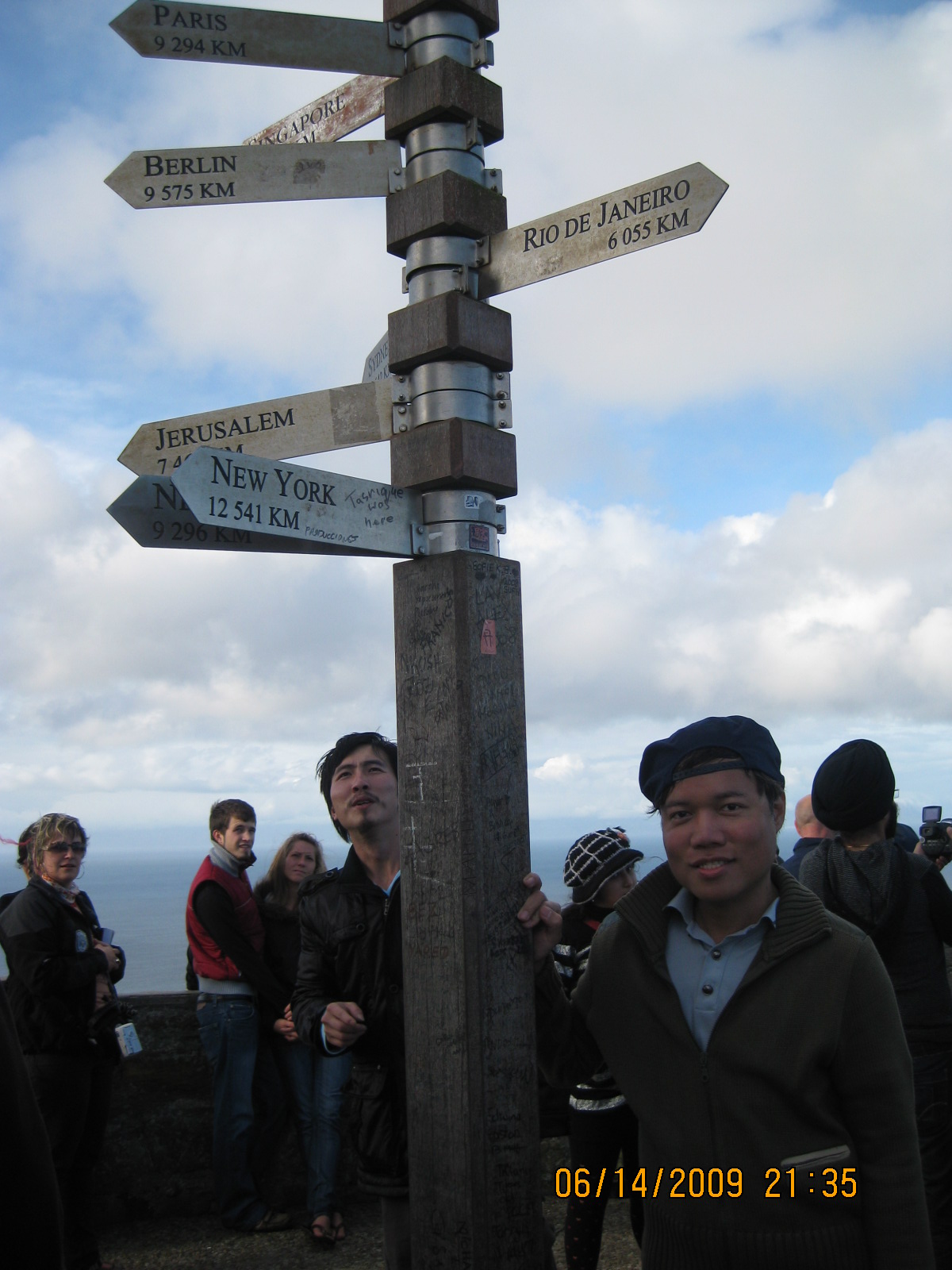
Every time I bumped into a Filipino abroad (which is often as Filipinos are everywhere), the first question that would normally be asked is “Kabayan, taga rito ka ba o bakasyonista?” (Hey mate, are you based here or just vacationing?) to which I would say the latter. What would follow after that big smile normally will give me the cringe: “Siguro mayaman ka sa atin, noh?” (You’re probably rich back home, huh?) to which I would respond “No, I just have enough.” Which is actually true, coz my perception of rich (or wealthy) is Crazy Rich Asian, and I was not born with a silver spoon. But that common notion where travel is only for the wealthy is just something that I need to break down and prove that even with a 9-5 job, one can still get to travel. So before anyone thinks that I belong to Philippine royalty or its equivalent (re rich kid of a political clan), I will let you in to some of my ‘secrets’ on how I actually do it (re travel the world without breaking the bank).
Save and Go
Yes, I save money to travel. When I do my budget, it will always be allocated to these 3 items: monthly expenses, travel fund, savings. Monthly expenses are essentially the ‘needs’ (food, utilities, transport, etc.) while travel fund is the ‘want’. Savings, on the other hand, is a ‘must’. That’s for the rainy days ahead which may also be tapped for future investment (ie house), emergency, and retirement. So say you’re a single yuppie earning 30,000 pesos a month and still lives with your parents. You allocate 10 grand for each of the three items and at the end of the year, you will have 120 grand for your travel fund. Throw in your 13th month pay of say 30 grand (give or take), so in a year, you now have 150 thousand pesos. In dollar terms, that’s about $2,850 at current exchange rate.
Planning is Key
Now you have a travel fund. Where can that get you? How do you stretch that fund to cover your airfare, hotel, and incidental expenses? Travelling on a budget requires planning ahead. Airfares and hotels are usually cheaper if you book those long before your actual travel date. That means at least 4 months earlier. But you need to know where you want to go, how long you like to stay abroad, what minimum level of comfort you require, what food you will be happy to live with, and what activities are you willing to spend on. The timing of the trip is also crucial, as seasons dictate prices.
Europe Here I Come
So say it is always your dream to see Europe (of course after starting small with typical Filipino fare Hongkong, Singapore, and Bangkok, and Korea or Japan after your last promotion). Is $2,850 enough? Depends, but I can draw a budget that will make it enough to get you by. Let’s start with airfare. Early in the year, you will see a lot of airlines having promotions usually in partnership with credit card companies (hence it is essential to have a good credit card, which you will need anyway when you travel). I will write soon separate articles on this (so watch out for it). I could easily get you a coach fare to a European destination for less than $600 roundtrip. To ensure that you can stretch your budget further, avoid going to Europe on summers (July – September). Go there springtime (May – June) or autumn (October – November) where you will enjoy the same long daytime (sun sets at 9PM and even at 2AM in the Nordics!) but cooler air. During these off peak periods, you can actually book a 2-3 star hotel for less than a hundred bucks. So for 10 nights, that will set you back for about a grand.
For your first Europe trip, you would probably want to see more than just one city or country. My advise is to look for adjacent countries where you can easily access thru Euro train. If you like to see Paris, then you can bundle that with Amsterdam and Brussels (Netherlands – Belgium – France). On the map, these 3 countries are just adjacent to each other and Euro rail have stops in several cities, including those three. This will save you some intra Europe airfares (though airfares are sometimes cheaper than train tickets, depending how early you can book your airfare). Your train fare would probably cost you about $200. At this point, your expense budget is now $1,800. That leaves you with more than a grand for meals and incidental expenses. For a 50-dollar daily meal allowance, you can actually have a decent meal in a restaurant ($10 for breakfast, $20 for lunch and also for dinner). You won’t subsist on fastfood (though you will sometimes crave for it even if you have enough money for a resto). For this first Europe trip, avoid UK or Scandinavia coz your 50 dollars would only be enough for a single meal. Don’t even think about the peso equivalent as it will only drive you mad and will suck the joy out of the otherwise very satisfying dining experience.
You’re now left with a little over 500 bucks. I suggest you spend some on hop-on-hop-off bus to get yourself acclimatized to your new environment. A 48-hour ticket would be about 40 dollars so in 3 cities, that’s about $120. Since you’re in Europe, museums are best to get some culture and entrance fee would be about 20 dollars (some though are free), or $60 for 3 cities. Airport transfers would be less than 50 dollars, or $100 for a return trip. So you still have more than $200 left, which you can spend on subways/buses (once your 48-hour tickets expire), travel SIM cards, grocery for your midnight snacks, a couple of drinks in a bar, souvenirs, and chocolates at duty free to bring home to Mom.
So there you have it. A dream come true without living off your parents’ money (or lack of). Coz your social status does not define your travel opportunities. It’s your passion to travel that will drive it coupled with hard work, savings, and smart spending.
 columbusbee
One thought on “Deconstructing A Myth: Travel Is Only For The Rich?”